Support WBUR
Wu and Mamdani campaigned hard on free transit. But it's tough to deliver on
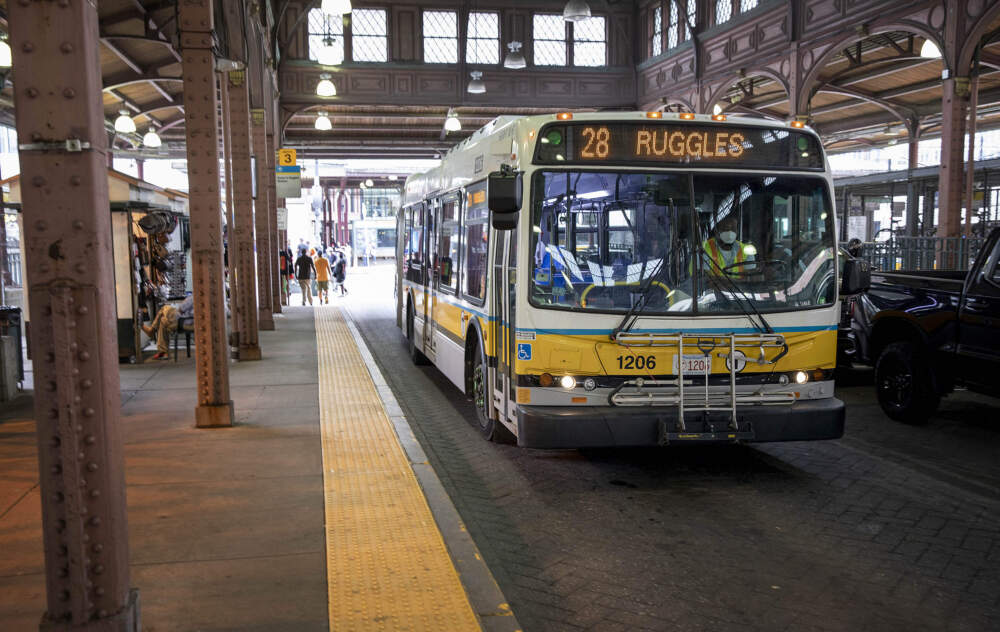
Boston Mayor Michelle Wu has been a staunch advocate for making public transportation free since her days as a city councilor.
During her first mayoral campaign, she vowed to champion fare-free transit. Some political strategists credit her with igniting a national conversation about the policy; New York City Mayor-elect Zohran Mamdani made free buses a key part of his 2025 campaign.
But as Wu enters her second term as mayor, Boston has just three free bus routes, and free transit across the system seems to be a pipe dream.
Even transportation advocate Caitlin Allen-Connelly, the executive director of the Boston-based group TransitMatters, is skeptical that making MBTA buses free is the best way to attract more people to use them.
“We believe that people need to know that they can rely on a bus to come and that is going to be more important to them than how much they paid,” she said.
Hitting a roadblock
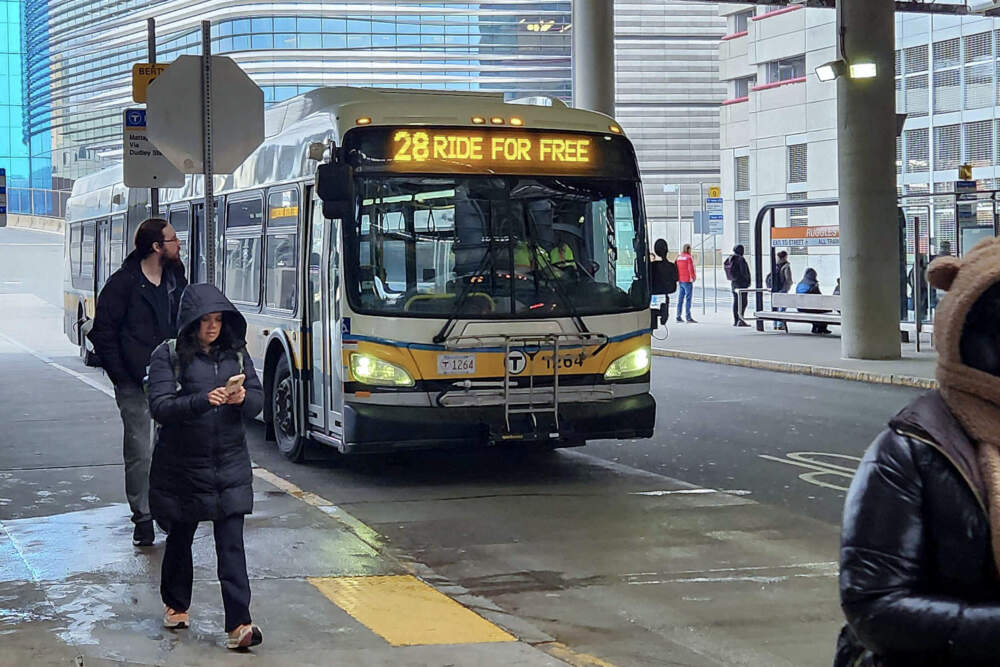
When Wu was a councilor in 2021, the city of Boston began running a fare-free pilot program. The initiative with the MBTA’s 28 bus, a line that runs through Roxbury, Dorchester and Mattapan.
When she became mayor in November that year, Wu unveiled a plan to expand free buses to include line 23, serving Dorchester and Roxbury, and the 29, serving communities in Roxbury, Dorchester and Mattapan.
The Wu administration used funding from a federal pandemic relief program to pay for the project. She described the move as an investment “in communities who have been hardest hit” by the COVID pandemic. But the money, pulled from a $16.9 million pot for this purpose, is dwindling. It's unclear how the city will fund the initiative moving forward.
The uncertainty is a blow to a policy Wu campaigned hard on.
She and some transit advocates have pushed free public transportation as a way to help riders with the cost getting everywhere from work, school and doctor’s appointments to stores and entertainment.
Early evidence shows the free lines have had a positive effect. An analysis from the city found ridership on those routes climbed 35% in the first year of the program. The city also said that as of fall 2023, about half of riders saved an average of $35 per month.
But the T needs more revenue, not less. A report released this year by the Massachusetts Department of Transportation found making MBTA buses free across the system would cost between $72 million and $121 million per year. A sustainable way to cover those costs has yet to be identified, and the T currently relies on passenger fares to help cover the cost of maintaining buses and trains and paying the people who operate and fix them.
David Zipper, a senior fellow at the MIT Mobility Initiative, said offering free transit introduces “new fragility” into transit systems by forcing them to find other sources of income. And in transit, he said, “the future is very, very uncertain” when it comes to funding.
The transit authority has been in a precarious financial position for years, facing budget gaps and an estimated $24 billion maintenance backlog.
When it comes to the free bus program, the city pays the T about $350,000 per month out of the federal COVID relief funds. The current agreement is slated to last through February 2026.
Wu told WBUR “it's looking like there may be” enough funds in that pot to sustain the program for an additional three to four months.
“We're going to try to stretch it as much as we can into the new year and figure out new sources of funding,” she said.
Democratic political strategist Doug Rubin said it makes sense for mayors like Wu to zero in on free fares when affordability is top of mind for many voters. But he said it’s a challenge for them to deliver on this campaign promise because “they don’t control all the levers around this issue” and must look to the Legislature and governor to make their case.
In New York City, just days after Mamdani won the mayor’s race in November, Governor Kathy Hochul threw cold water on his vision for free transit. Hochul told reporters she’s open to making the system more affordable, but she “cannot set forth a plan right now that takes money out of a system that relies on the fares of the buses and the subways.”
Wu faces a similar problem. Massachusetts state Sen. Brendan Crighton, a Democrat and co-chair of the Legislature’s joint committee on transportation, said in an interview he’s “not closing the door” on the idea of a free MBTA. But Crighton said with uncertainty at the federal level, now is not the time to work on this transit funding puzzle.
"We certainly want to make sure that the T is stable, reliable and affordable," Crighton said. "Just maybe not free until we have a little bit more data to work with and a little bit more certainty that we're going have partners at the federal level that will work with us on a wide range of transportation issues."
The state has taken steps to address transit affordability more broadly. With the Legislature's approval, the MBTA last year launched a reduced fare program for people with lower incomes. In addition, the state budget passed this year contained funding to make Massachusetts' 15 Regional Transit Authorities fare-free.
Money better spent elsewhere?
Meanwhile, some transit advocates say the city should focus more of its resources on improving the bus experience.
This year, two of the free bus lines were among the top 10 slowest, with buses often bunching up together leading to longer wait times, according to an annual analysis by TransitMatters.
Allen-Connelly, the group’s executive director, said installing more bus lanes and investing in technology that prioritizes buses at stop lights would improve performance.
The MassDOT report on free T fares concluded that system-wide free bus service “has the potential to provide several material benefits to riders, improving transit accessibility, increasing ridership, and reducing congestion.” But route-specific, limited-time free buses, like those the mayor has endorsed, “are unsustainable and not recommended by the authority,” the report said.
Wu describes the three current free bus routes as a “good start,” and she still believes the city can both improve the ride for passengers and make it free.
“We keep making the case with real data and experience that this makes a difference in people's daily lives and it is worth fighting for,” she told WBUR.
And as Boston's mayor, she hopes the city will find a way to spread the policy before rival New York City.