Support WBUR
Spring bird migration in Concord now a week earlier than in Thoreau's time, study finds
American naturalist Henry David Thoreau wrote that “all the laws of nature will bend and adapt themselves to the least motion of man.”
More than 150 years later, Thoreau's assessment has proven true.
New research suggests that birds migrating through Concord may adapting to climate change, which has warmed New England 2.5 degrees Celsius since Thoreau's lifetime.
A study published in The Wilson Journal of Ornithology suggests that migratory birds stop to nest and feed in Concord about a week earlier on average than what Thoreau observed more than 150 years ago.
The study joins other recent research on creatures from squirrels to polar bears that suggests animals may be able to adapt in some ways to the effects of climate change.
While scientists said it’s good news that birds appear to be adjusting to warming temperatures, they cautioned the shift might not be happening fast enough to keep up with how quickly the birds’ food sources — like plants and insects — are responding. A growing body of research suggests that climate change is accelerating the first spring blooms of trees and flowers by 10 to 14 days.
“Evolution works very slowly and the warming is not going to stop any time soon,” said Trevor Lloyd-Evans, senior fellow at Manomet Conservation Sciences and a co-author on the study.
Every spring, birds migrate through New England to take advantage of a boom in insects and plants that comes with seasonal warming. But a potential mismatch in timing could disrupt this cycle and lead to population declines in some bird species because they miss this boom, the study’s authors said.
“It's possible that the birds will be arriving too late for the really big peak of insects, which they need to feed their nestlings in the spring,” said Richard Primack, professor of plant ecology at Boston University and the study’s senior author.
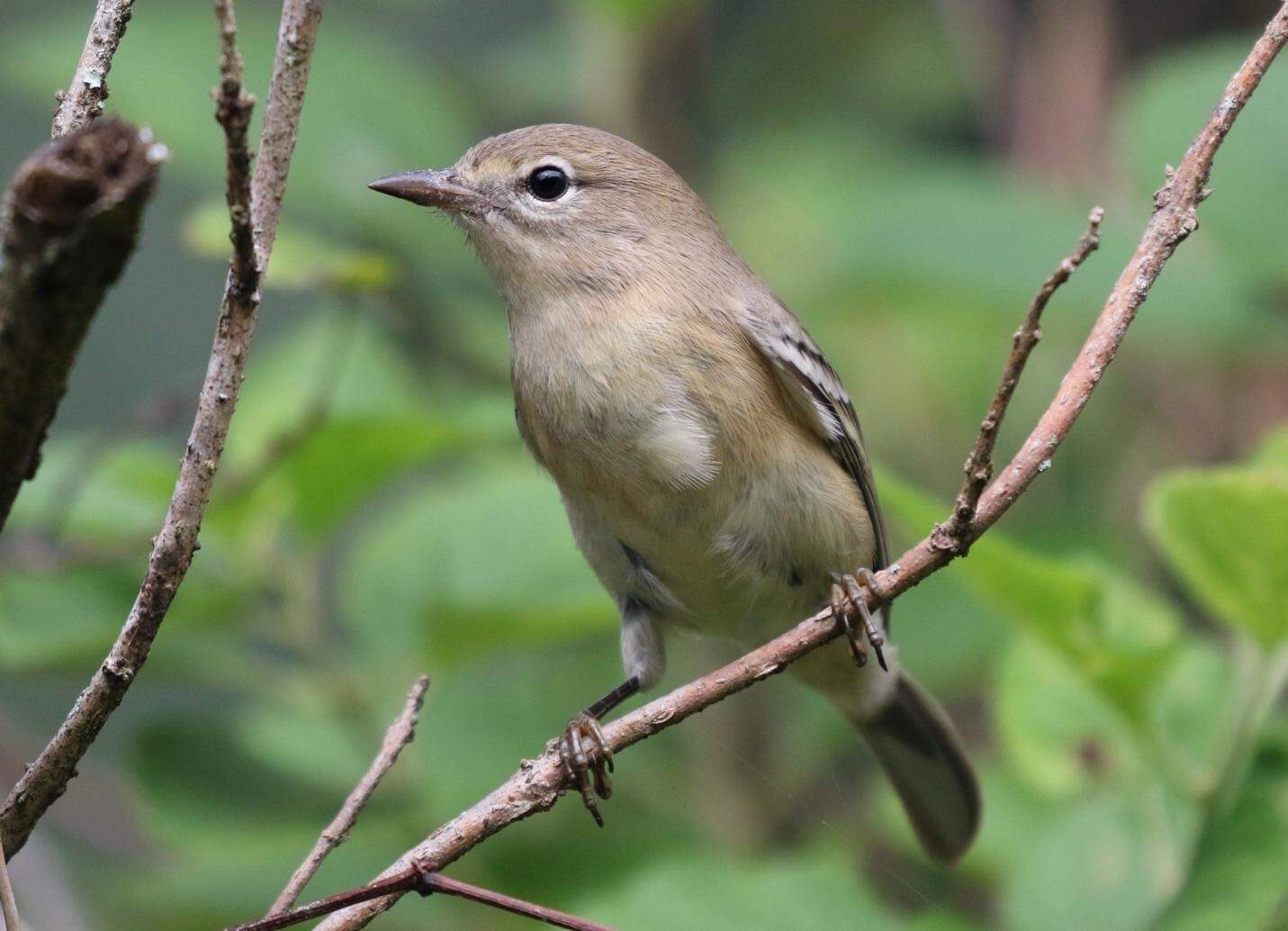
Researchers looked at the spring arrival dates for 18 species of birds from the past 150 years in Concord. They used historical records collected by Thoreau and others, then compared them to modern observations from the app eBird.
The researchers found that in the past decade, birds’ average spring arrival in Concord occurred 1.4 days earlier with each degree Celsius of local warming.
Arrival dates varied by species. Birds migrating from a short distance — like the pine warbler traveling from the southeastern U.S. — tended to arrive in Concord earlier than more distant travelers from the southern hemisphere.
This suggests that local species are better at gauging cues about changing temperatures, giving them a stronger chance at aligning with the boom in spring food, said Amanda Gallinat, ecologist at Colby College in Maine and the study’s lead author.
Birds wintering in Central and South America "are really at a loss" when it comes to predicting temperatures in far-away Concord, Gallinat said. "And so evolutionarily, it's been in their best interest not to vary their arrival times with temperature, but to follow other cues like daylight."
And as temperatures continue to shift plant behavior, she worries that these long-distance travelers, which already face habitat loss and declining numbers, will be more at risk for missing the time that their food is most abundant.
“This is one more way in which human activity could be driving their populations down,” she said.
The study relied on some of the oldest and most detailed sets of long-term data on local climate and biology in the country. In addition to observations made by Thoreau, the researchers mined notations from ornithologists William Brewster and Ludlow Griscom during the 19th and 20th centuries, along with those from Concord schoolteacher Rosita Corey, who collected data from 1956 to 2007.
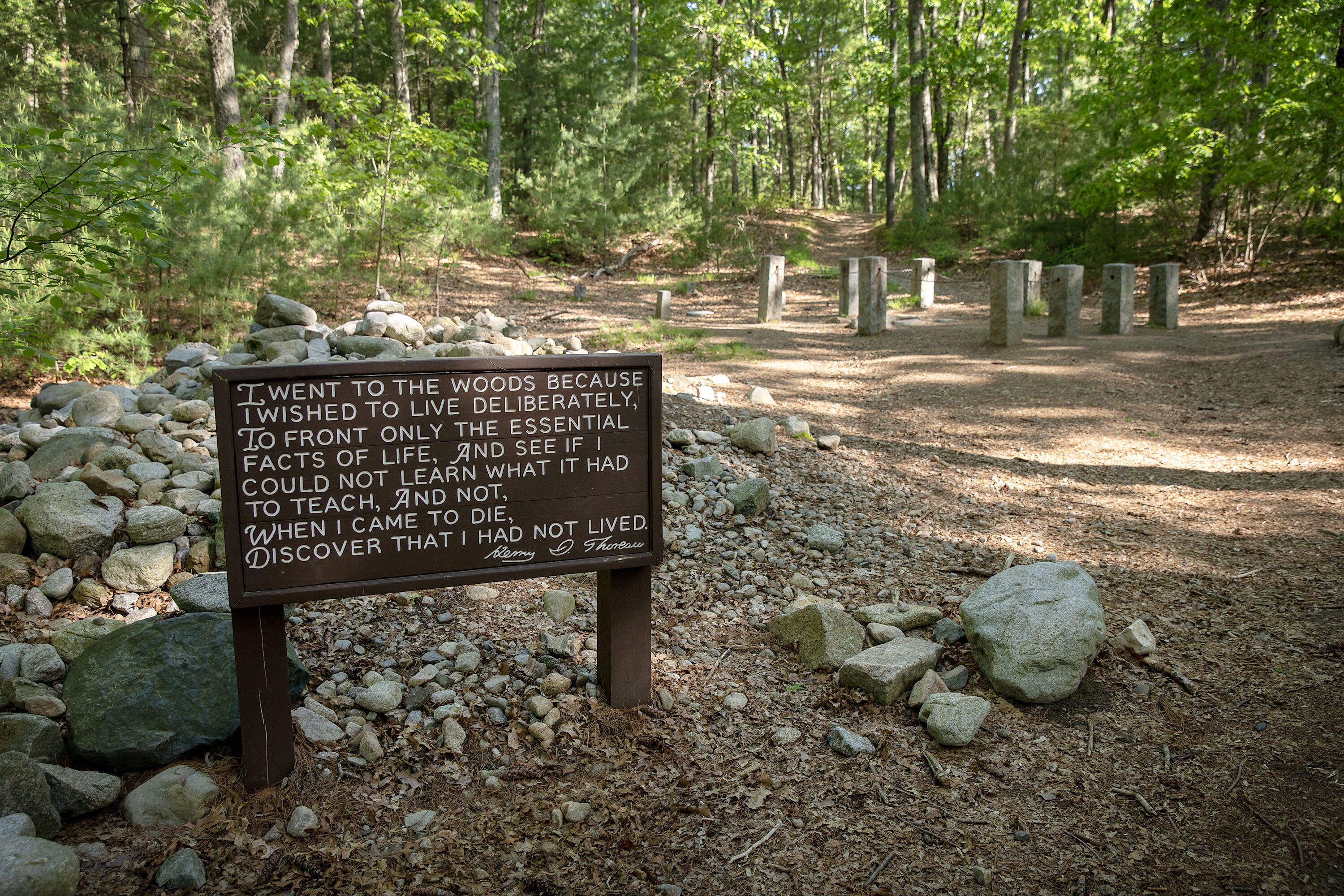
Gallinat said that tradition has continued into the present day, and a lively community of online birders contribute thousands of observations every year to an invaluable dataset for researchers.
“That kind of deep observation that eBirders are doing is really similar to the kind of historical deep observation that our birders of the past were doing,” she said.
However, merging past and modern data presented some challenges. For instance, birders of the past often only sought out the first spring arrival of a species, said BU's Primack, while modern birders record every bird they see for weeks.
“It's a very different methodology, and so the challenge is figuring out how you can combine those,” he said.
In fact, a 2010 study using this historical data found little to no change in arrival dates across this 156-year span. In the new analysis, researchers limited their data to the top five eBirders’ first detections of the year to better mirror the efforts of historical observers like Thoreau.
“Evolution works very slowly and the warming is not going to stop any time soon.”
Trevor Lloyd-Evans
Nate Senner, an assistant professor of environmental conservation at UMass Amherst who was not involved in the study, said the new methodology to merge past and modern data was done "thoroughly," and that the study's use of citizen science data could open up opportunities for future research.
“It's only with these kinds of datasets being available that we can actually really start to pinpoint what might be going on,” he said.
And, he adds, studies like this offer citizen scientists the chance to follow in the footsteps of Thoreau and other famous naturalists.
"To be a birder in Concord, that's pretty darn cool,” he said.
Editor's Note: Boston University owns WBUR's broadcast license. WBUR is editorially independent.