Support WBUR
Review
'The Great Privation' uses humor to explore a grim chapter of American history
Sometimes, humor can act as a salve to cope with and heal from harm.
Playwright Nia Akilah Robinson banks on it in “The Great Privation (How to flip ten cents into a dollar)” (though Jan. 31). The play explores a tough but significant subject in America’s past: grave robbing. In the thought-provoking, and entertaining show – presented by Company One Theatre and Woolly Mammoth Theatre – Akilah’s sharp writing centers on 16-year-old Charity Freeman and her mom . The two women fend off grave robbers while standing vigil at Charity’s dad’s gravesite at the African Baptist Church’s graveyard in Philadelphia in 1832.
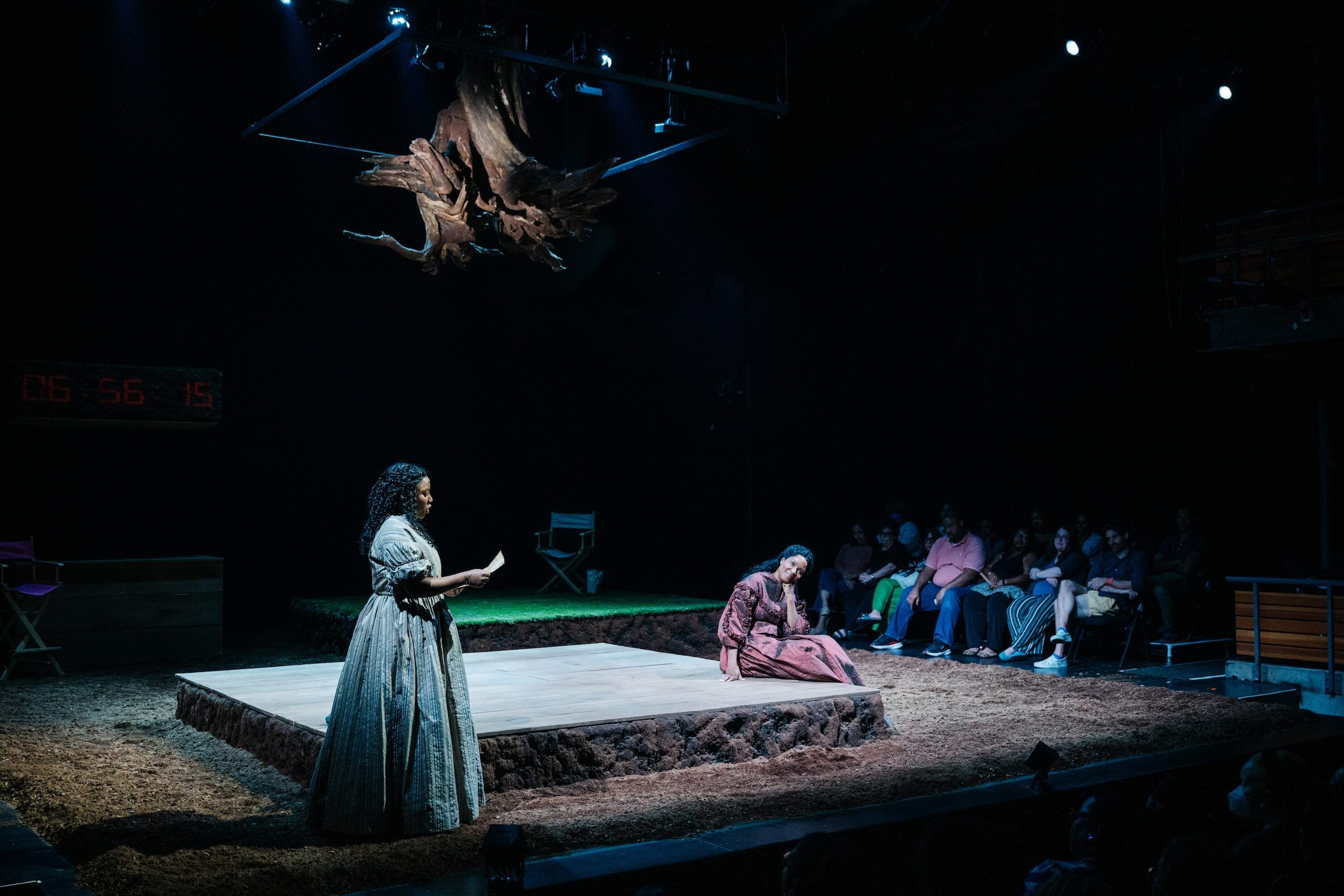
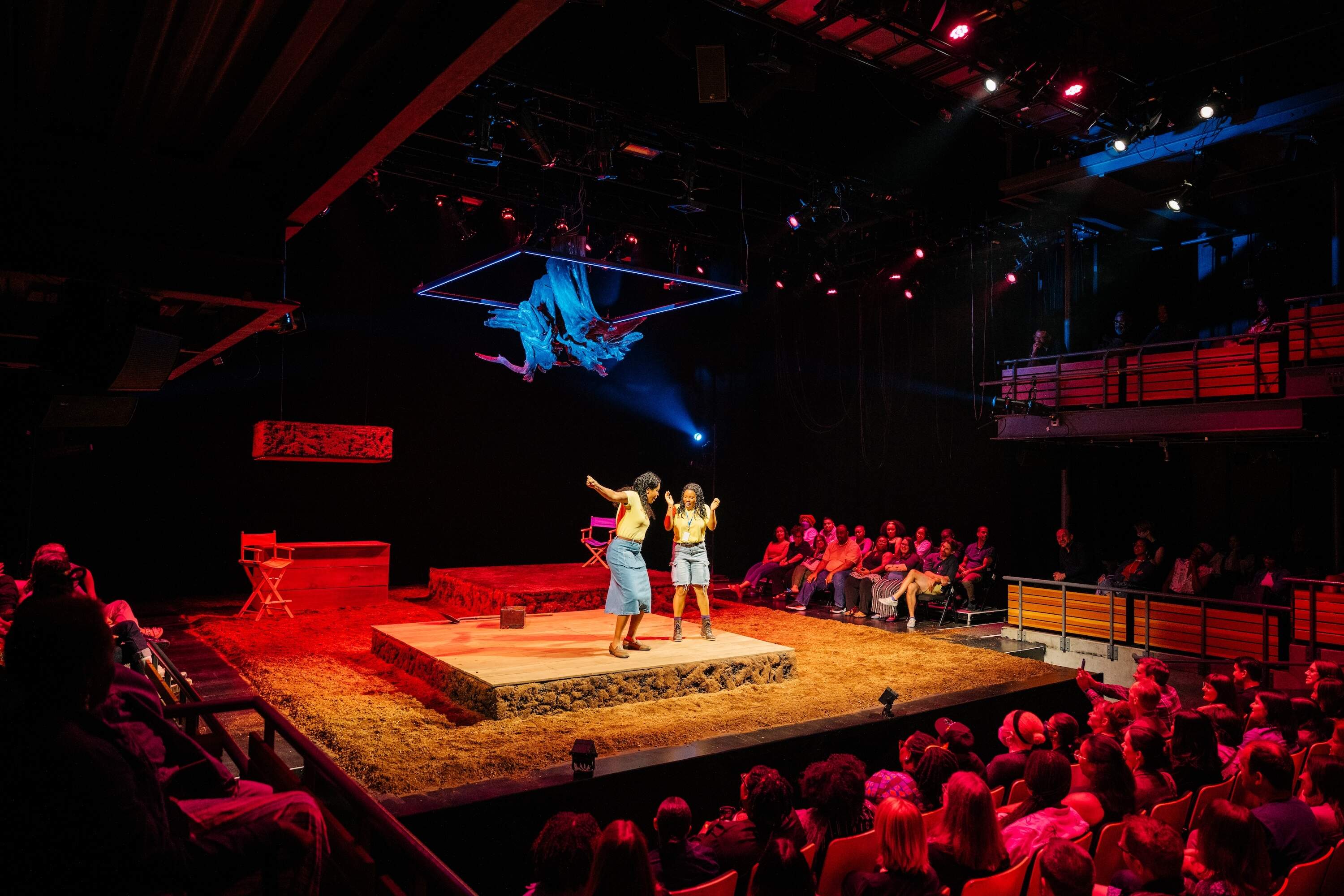
Onstage, dirt covers the ground. There are two platforms, one covered in plywood, the other in grass. A large tree trunk stands high above the platform, woven with lights. A suspended clock hangs by the tree, counting down 72 hours. Missy Freeman, or Mother, tells Charity that if they can keep Mr. Freeman’s body safe in the ground for three days, the grave robbers won’t return.
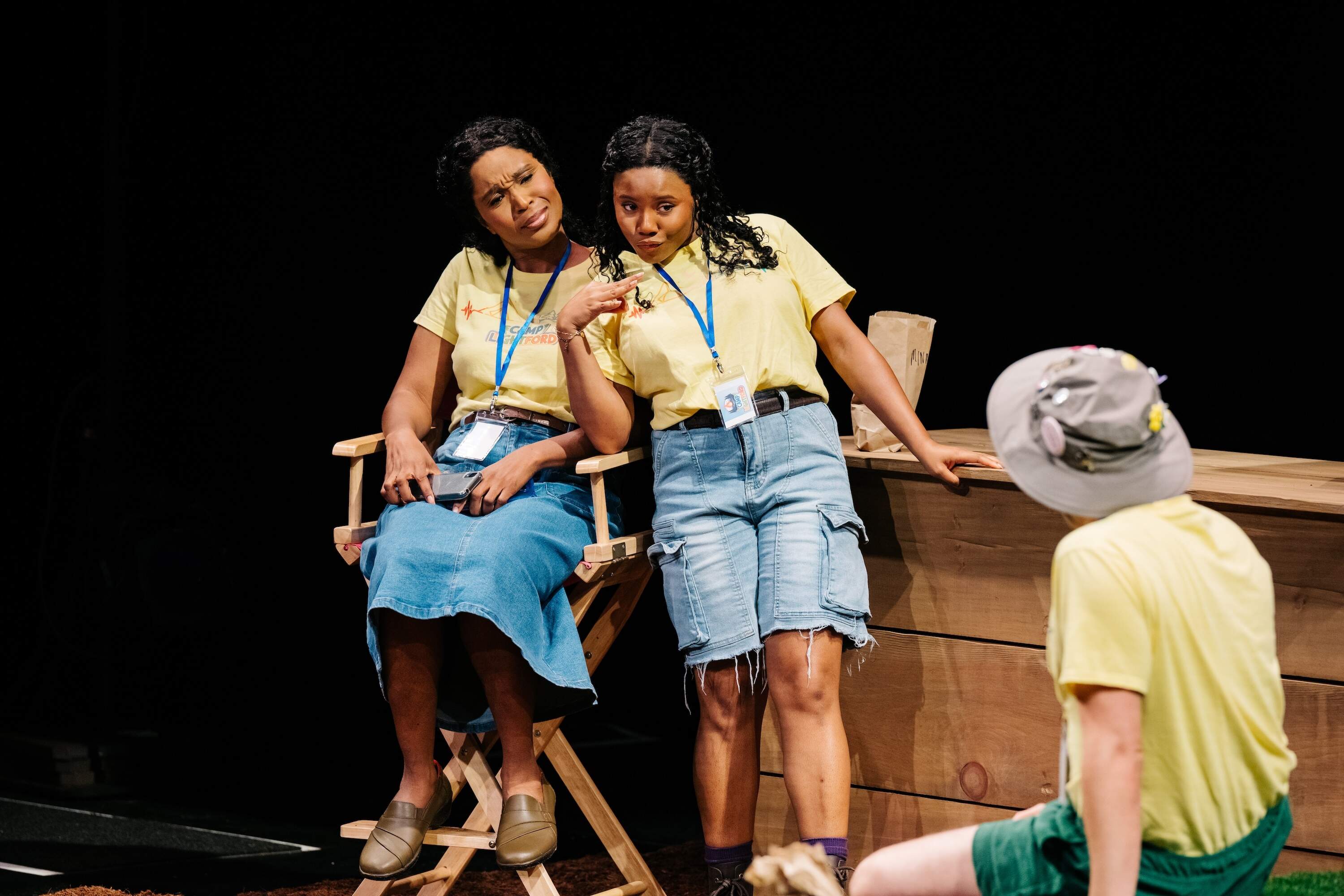
As the story unfolds, the action flashes between 1832 and present day, where another mother and daughter with the same names, face what happened to their ancestor long ago. Charity and Mother of the present work at a Philadelphia summer camp.
Victoria Omoregie lights up the stage as Charity (past and present), a vivacious and curious teenager who is utterly devoted to her mom. Charity, with her big dreams, intelligence and unrelenting joy helps serve as a reprieve or counterpoint to the dark deeds the play grapples with.
The entire cast — Omoregie, Marc Pierre, Yetunde Felix-Ukwu and Zack Powell — possesses great talent and comedic skill. Pierre portrays a janitor in the past and Cuffee, the camp supervisor in the present. Zack Powell portrays John, who is a grave robber in the past and presently, a camp counselor haunted by a box of bones his family owns. Felix-Ukwu renders the role of Mother, or Missy Freeman, in both time periods.
During downtime at the camp, Charity, who is a bit of an activist and an avid TikTok’er, expresses her desire to know more about her maternal lineage for her college essay. She spouts off the accomplishments of her friends’ families and wonders why she can’t point to anything of note in her own family. Soon though, she learns about her brave ancestors who fought against grave robbers seeking Mr. Freeman’s body for the nearby medical school.
The practice of using Black people’s bodies — both alive and deceased — for medical research without consent or compensation is no secret. There are myriad examples like the stolen cells of Henrietta Lacks, the Tuskegee Study of Untreated Syphilis in the Negro Male, and grave robbing in the 18th and 19th centuries — including New York City’s Doctors’ Riot of 1788 and Philadelphia’s mass-grave robbing uncovered in 1882 — for medical schools to attain bodies for research.
Many instances of troubling practices like this have affected Black people, and other marginalized groups too. Akilah Robinson’s play, with Mina Morita’s smart direction, acts as more of a spotlight and less of a preachy history lesson.
The dialogue brims with references that the curious viewer might want to explore after the show. There’s a quick name drop of Nat Turner and the rumors surrounding the fate of his body (and others like him) posthumously, death-mask rituals, historic health breakouts, and the use of cuffee, a derogatory term, as a character’s name. There’s even a moment where Mother asks Charity if she ever goes to places only to sense a feeling of sadness. Charity shares there are places where she feels troubled, including Central Park, the former home of a thriving free Black community, Greenwich Village which was home to one of the earliest settlements of free Black people and Lincoln Center, which through its construction, displaced Puerto Rican and Black residents.
Though the show overall is entertaining and spurred lots of laughter from the audience, Robinson weaves in much to contemplate. At its core, the show asks how we live with a history we cannot change.
I’m not sure there’s one winning answer to that. But perhaps the first thing we must do is remember.
“The Great Privation (How to flip ten cents into a dollar)” runs through Jan. 31 and is presented by Company One Theatre and Woolly Mammoth Theatre Company.