Support WBUR
Remembering the thrilling theatrical world of Shakespeare & Company’s Tina Packer
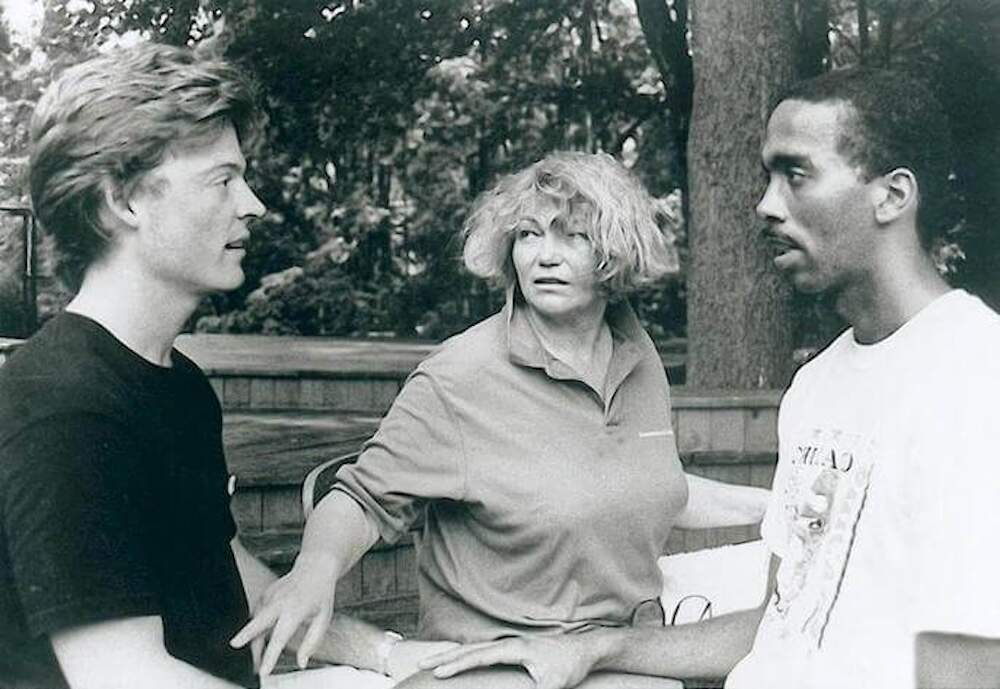
Theater in New England was never more alive than when Tina Packer was involved in one of her myriad ways — as founder and retired head of Shakespeare & Company in Lenox, an extraordinarily gifted director, a take-no-prisoners actor, a provocative educator. Packer, who died at 87 Friday night, was certainly in the pantheon of great theater professionals I covered while writing about the arts for the Boston Globe, Berkshire Living magazine and WBUR during the past 35 years.
I got to see the English expatriate in all her guises, none more dramatic than when she invited me to attend one of her classes at MIT in the ‘90s. Her assignment for the class of about 25 over the weekend was to bring in a line from Shakespeare and recite it in front of their fellow students. She would then ask them about their weekend and how the Shakespeare line might relate to it. The idea, a variation of the “dropping in” technique she and Kristin Linklater used at S&C, was to relate the loftiness of Elizabethan language to their personal lives. The result she was looking for was to get them to speak Shakespeare in one’s natural voice.
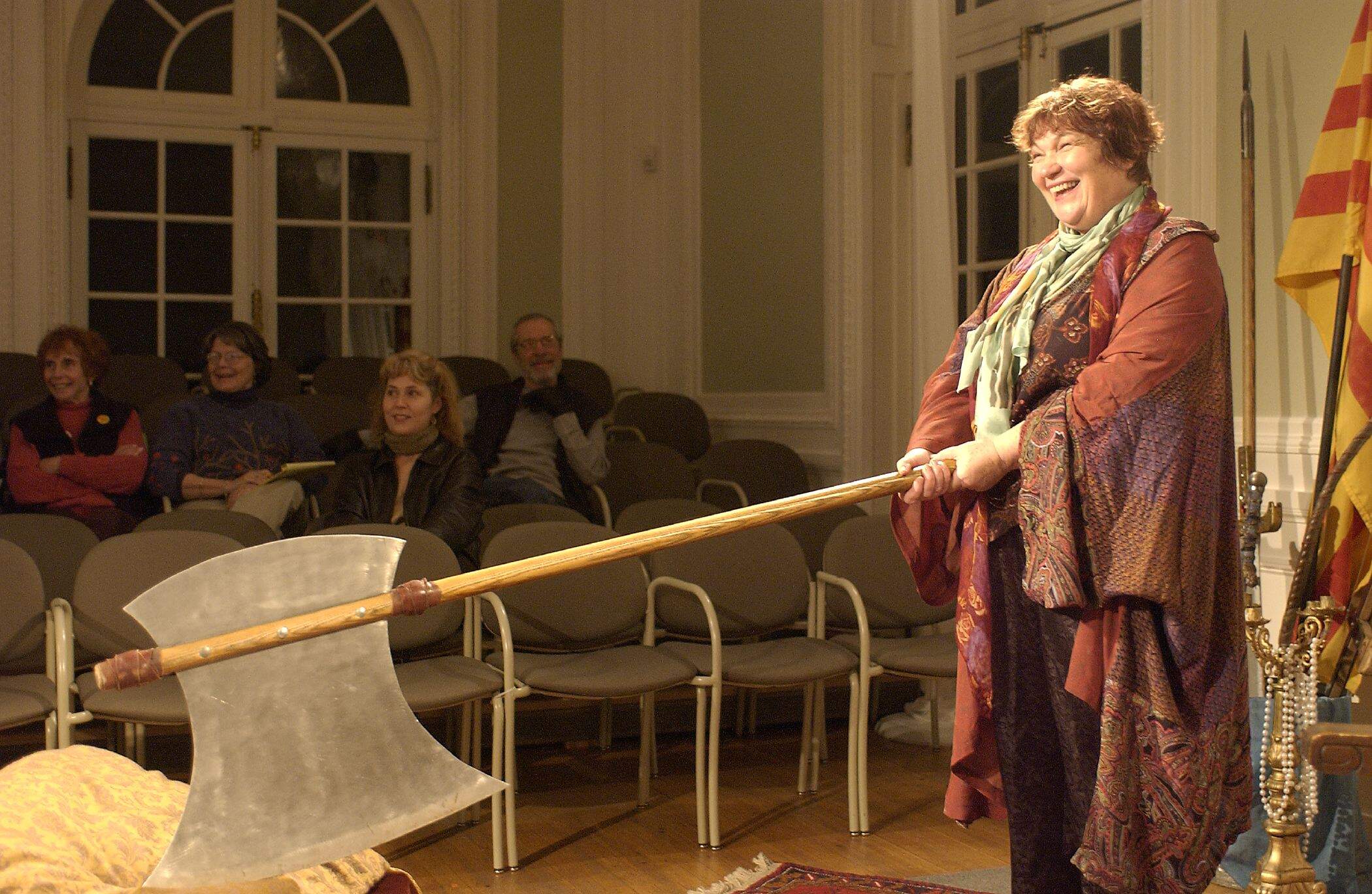
She would quiz them about both their lives and their acting techniques and the results when they repeated their lines were invariably better. A young Australian man brought in Hamlet’s rumination, “I have of late, but wherefore I know not, lost all my mirth” and he delivered it in a faux Olivier accent. (She was not Sir Larry’s biggest fan.) She tried loosening the young man up, getting him to speak from the neck down not from the neck up, even tapping on his chest to free his voice while talking about his weekend.
It turned out that he had recently been in Australia where he had to report to the authorities on a regular basis after being charged, unfairly he said, with sexual abuse by his cousin’s mother. “Well,” said Packer, “that would cause one to lose one’s mirth.”
After a guarded response to how he felt about all this she asked him to step into the center of the large rehearsal space and repeat what she said in increasingly strident words.
“I am angry about this.”
“I am angry about this.”
“I am mad as hell.”
I am mad as hell.”
“I AM F… FURIOUS.”
“I AM F… FURIOUS.”
By this point they were both red-faced. Another young student ran out of the room in tears and Packer dispatched a classmate to check on her while she asked the now totally mirthless actor to repeat the line. His delivery was terrific; he had channeled all his emotion into the line. Goodbye Laurence Olivier, hello Dustin Hoffman (whose differing acting styles became legendary in “Marathon Man”).

Safe spaces were not for Packer, despite her political leftism. When the young woman came back into the rehearsal space she talked about her alcoholic father and after Packer asked how she felt about it she said, “I’ve learned to love the man and hate the disease.” “That’s exactly right,” said Packer, adding, “You should love the man and hate the disease — outside the class. Inside the theater, hate the man as well as the disease.” (It related to her line, though I don’t remember what it was.)
This kind of psychodrama is not for everyone and a couple of American Repertory Theater folks I talked to at the time were dismissive of the process, saying you didn’t need to go through all that to get results. She would say “Yes you do, you have to find the murderer within you to play a murderer.”
All I can say is that the results were often spectacular. Packer’s troupe delivered performances that made Shakespeare’s language accessible and his plays as vital and contemporary as works by Tony Kushner. And what a troupe — Jonathan Epstein, John Douglas Thompson, Tod Randolph (a superb Virginia Woolf), Corinna May, Johnny Lee Davenport, Michael Hammond, Dan McCleary, Elizabeth Aspenlieder, Merritt Janson, Annette Miller, Nigel Gore, Packer’s successors Tony Simotes and Allyn Burrows, her son Martin Jason Asprey and her late husband Dennis Krausnick, who also wrote excellent adaptations of Edith Wharton’s work. Wharton’s mansion, The Mount, was their artistic home before they moved down the street in Lenox. The word many used for her outdoor productions in The Mount space abutted by a wooded area was “magical.”
Her actors delivered the Bard’s words with such clarity, delicacy, nuance, precision and passion that many a Shakespearephobe would describe a production as an epiphany. She was not shy about inserting her view of the way the world works into Shakespeare’s milieu. And it worked, whether it was a “Much Ado” with a female Don John, May’s Dona Gianna (highlighting how women were left out of the power structure). She would go on to decode the growth of Shakespeare’s writing through the lens of his insights into his female characters in “Women of Will,” performed first with Davenport and then, in a book and expanded five-part theater series with Gore. The company also mounted outstanding productions of more contemporary playwrights.
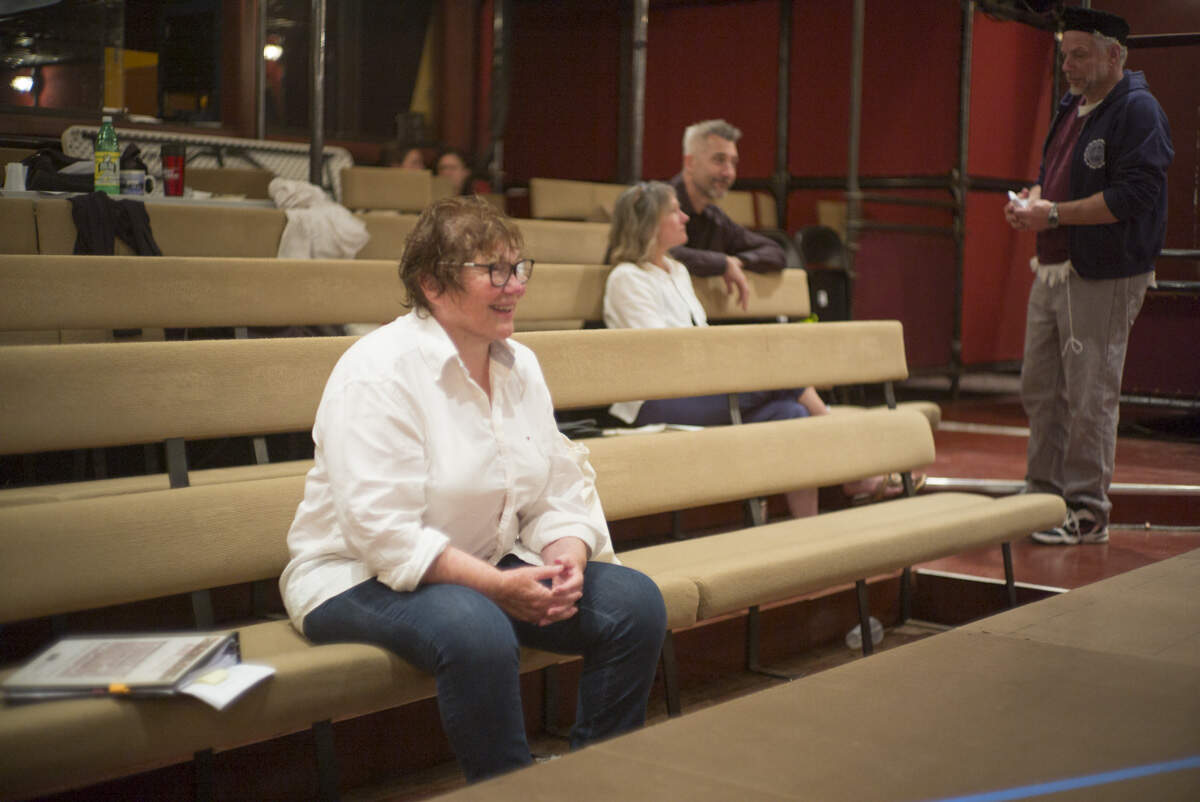
My favorite production of hers was another outdoor production at the Mount, “The Merchant of Venice,” in which Epstein played a Shylock, more a victim of Elizabethan antisemitic and anti-other cultural norms than victimizer. But she never used a sledgehammer to make her points and she did justice to Shakespeare as well as Shylock. I somehow picture the playwright nodding his head, saying “You got right what I got wrong.”
Packer, who directed all of Shakespeare’s plays, always swung for the fences and like all home run hitters she had her share of strikeouts, more as an actor than a director. She was not a convincing Cleopatra in “Antony and Cleopatra” and her performance as the mother in “Beauty Queen of Leenane” missed all the black humor in Martin McDonagh’s excellent play. On the other hand, she was great in “Lettice and Lovage” and a moving Gertrude in “Hamlet,” which starred her son. (I hate to think what personal feelings he might have drawn on for that part.) I, alas, missed her in what is considered her tour de force, “Shirley Valentine.” In England she was a member of the Royal Shakespeare Company and guest-starred in “Dr. Who” and “The Avengers.”
But she was never boring. And she never held back. After leaving The Mount following a bitter battle with Edith Wharton Restoration I asked her if the company was better off with a space of their own at their new digs. She said, “Yes, I know that this is an opportunity. Otherwise, I have to think about killing people.” And then she let out a roar of laughter, one of her greatest personal calling cards.
And I imagine Will laughing along with her. He has rarely been in as good company as with Tina & Company.