Support WBUR
Boston's Saturday Morning Newsletter
Not just socks: New England's wool industry is finding new ways to use fleece
Editor's Note: This is an excerpt from WBUR's Saturday morning newsletter, The Weekender. If you like what you read and want it in your inbox, sign up here.
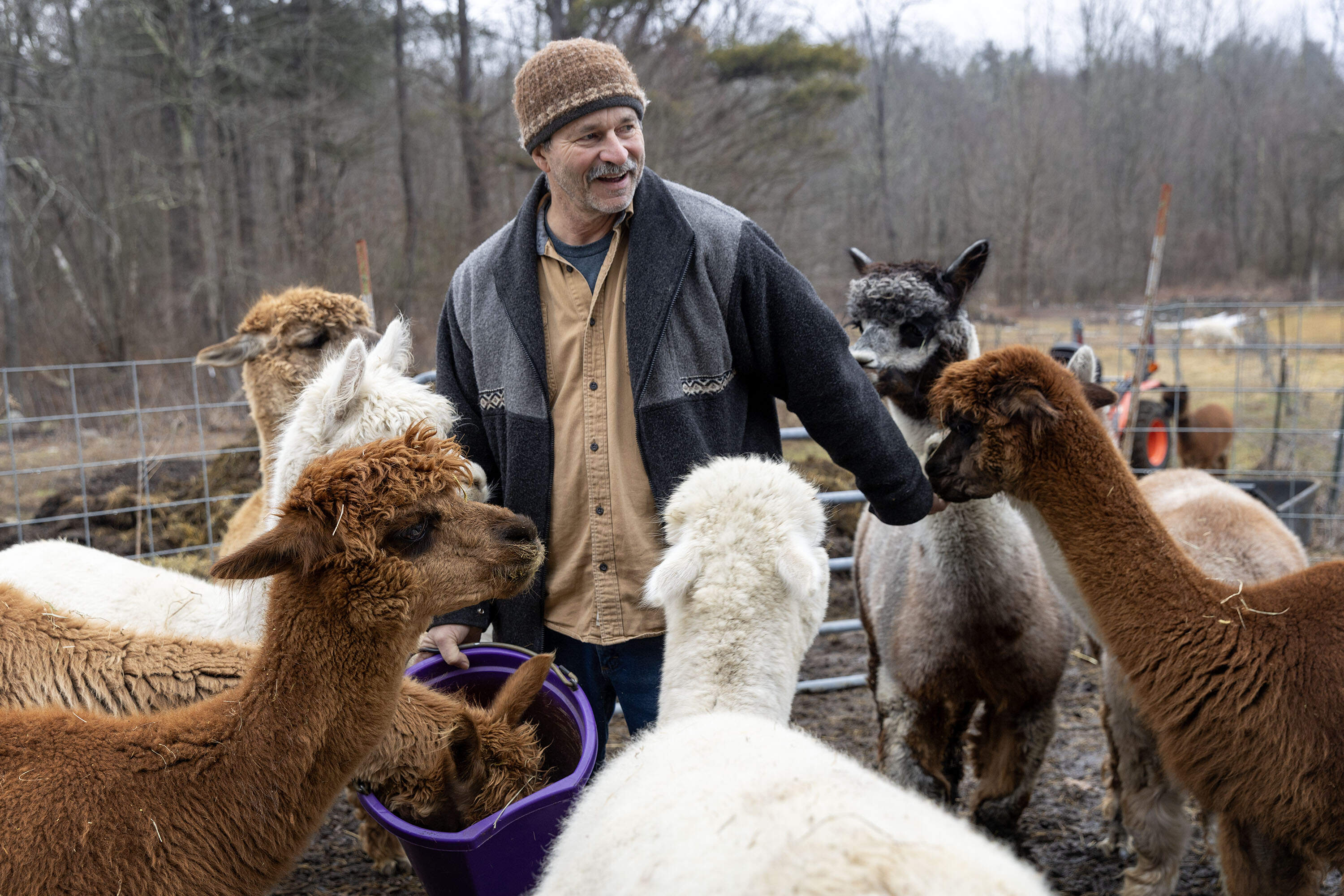
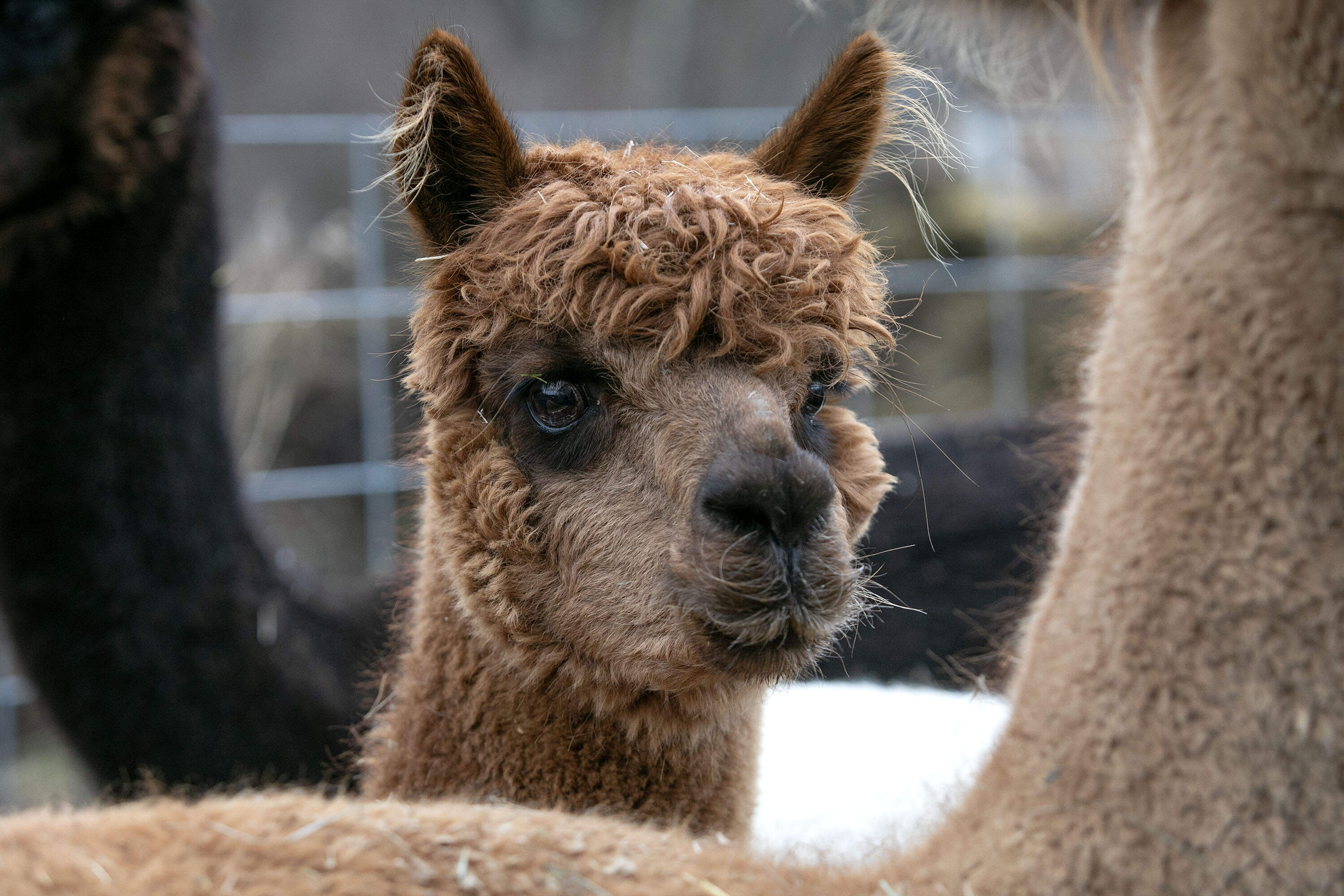
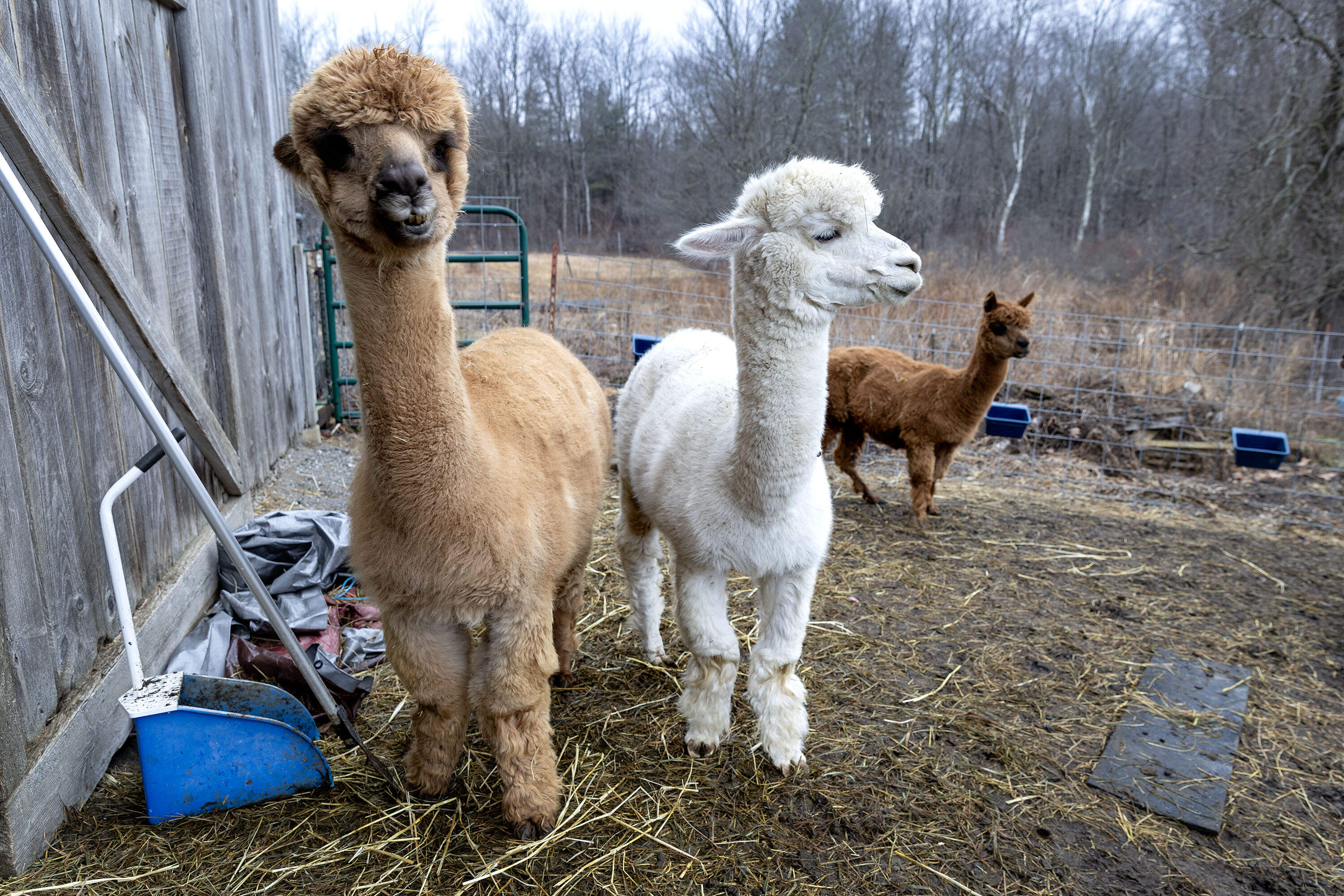
Keith Tetreault is an animal lover. He’d have to be, of course, to live alongside 20 alpacas, three llamas and several chickens on his farm in rural central Massachusetts.
Owning a farm with llamas and alpacas had been Tetreault’s dream for decades. Fifteen years ago, in the midst of a career remodeling bathrooms, he bought Plain View Farm in Hubbardston, along with his first four alpacas. “My original business plan, I thought, would be raising and selling alpacas and maybe I’d sell a pair of socks now and then,” Tetreault, who is now 64, told me.
It wasn’t that simple.
While alpacas’ fleece is prized for its softness and lightweight warmth, Tetreault learned that a lot of it couldn’t be used for products like socks and sweaters.
Globally, about 50% of shorn wool is thrown away, according to Amy DuFault, who studies methods to repurpose waste wool as a part of her role as director of the Southeastern New England Fibershed. “There’s a big difference in the quality of the fiber and the staple length of the fiber,” said DuFault. “ So when you get those really nice soft wool sweaters or you get a scratchy wool sweater, you start understanding the classing of fiber and what's more luxurious than another.”
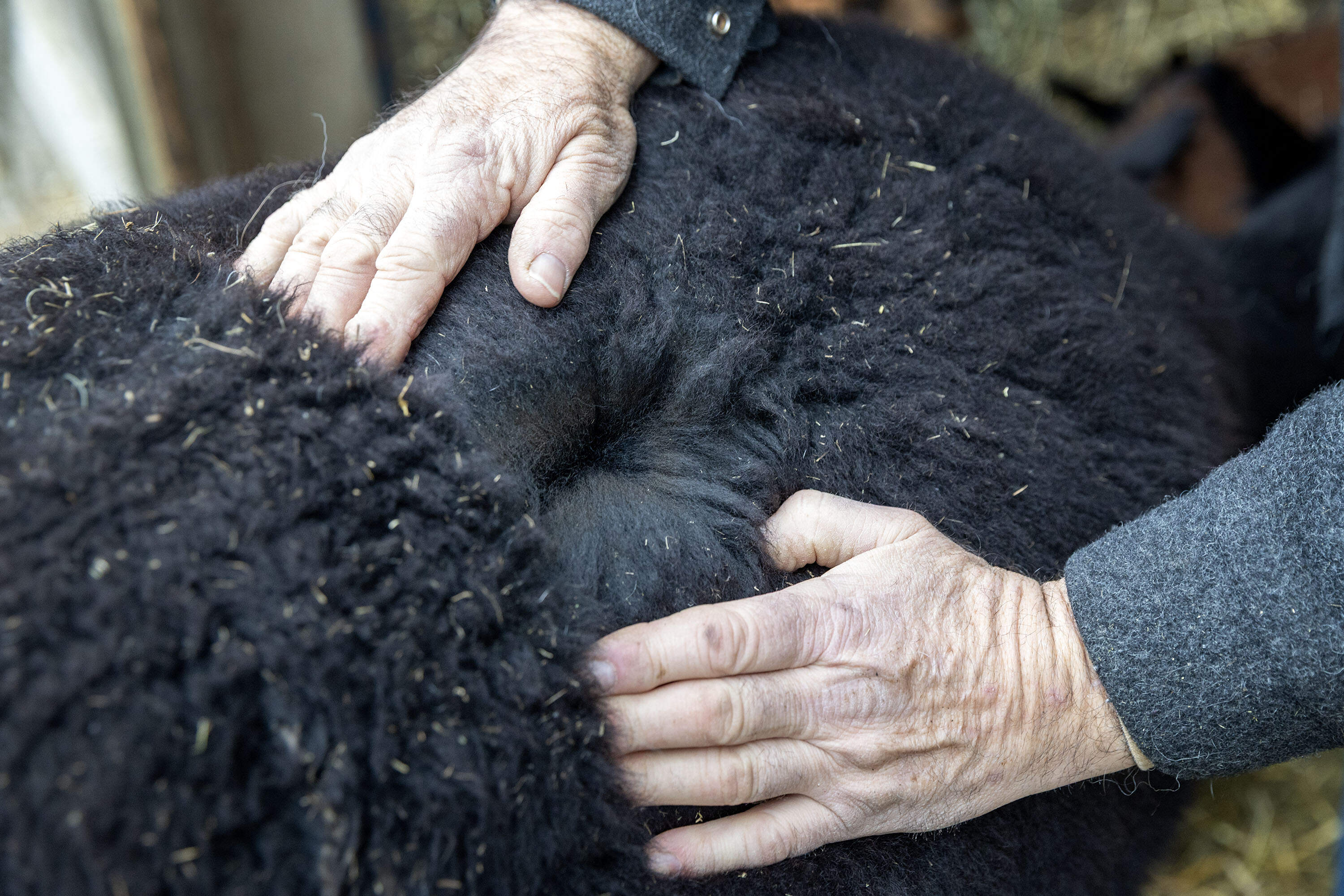
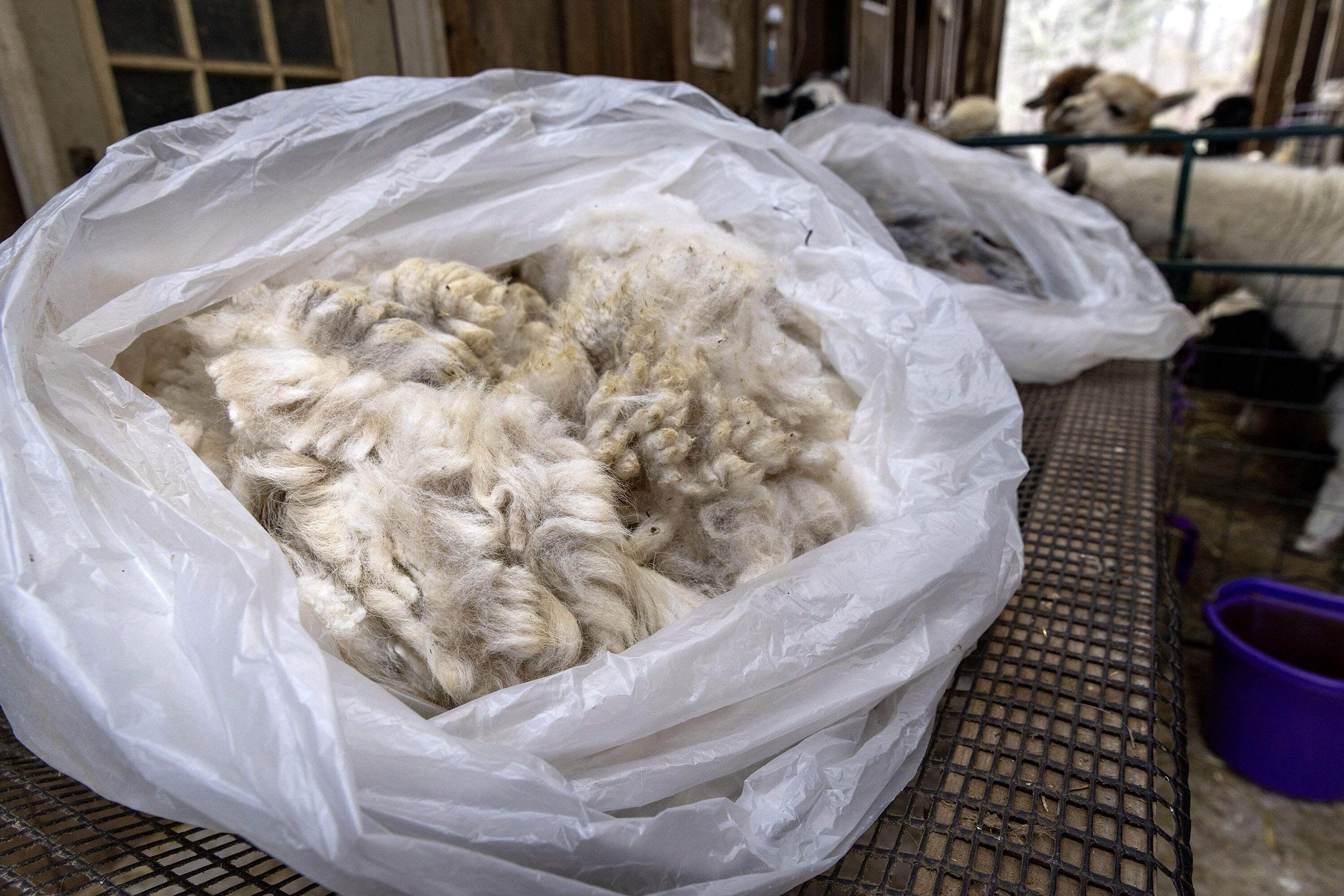
During the spring shearing season, Tetreault collects around 10 pounds of fluffy fiber from each of his alpacas. The softest, longest fleece — from the animals’ sides and back — fetches around $4 to $8 per pound wholesale. Spinning mills that buy the fleece for yarn also tend to prefer white fleece, he added, since it can be dyed.
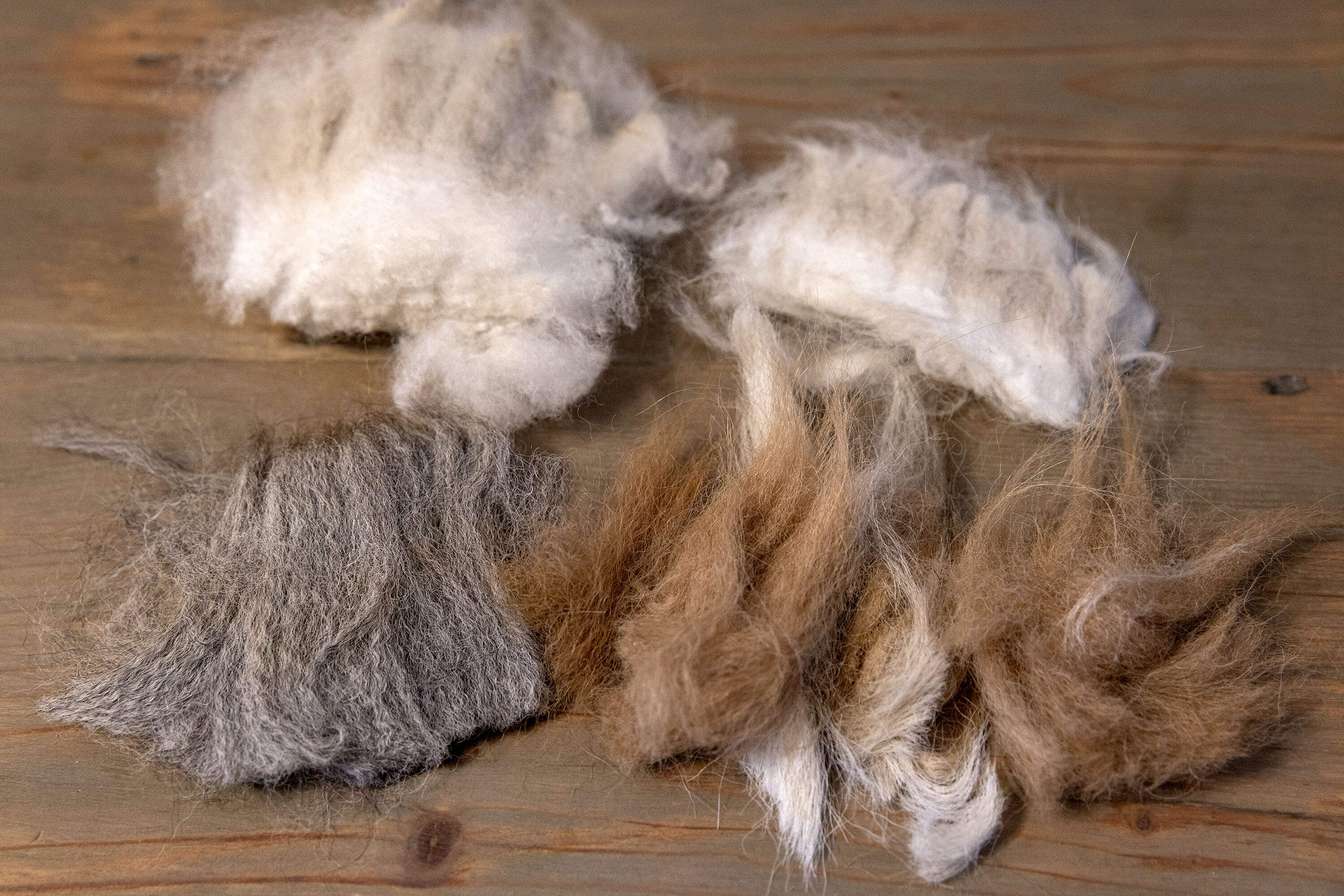
What’s shorn off the alpacas’ legs, belly, head, neck and butt is less than ideal for sale, since it is shorter and coarser (and in the case of sheep, occasionally caked in dung). Spinning mills give preference to fleece that has already been cleaned, and though local farmers can send their product off to be “scoured” before sale, the turnaround time locally can be anywhere from months to a year.
“As a fiber person, I end up hoarding fiber,” said Tetreault. “ And unfortunately, what ends up happening, if I don't care for all of it — and I don’t, some of the fiber in my barn is very old — it will eventually get moths,” he said.
Hearing similar stories from other fiber farmers is what inspired DuFault, formerly a sustainable fashion journalist, to start the Southeastern New England Fibershed, where small fiber farmers like Tetreault can get connected with locals interested in buying their fleece. One such local buyer is Draper Knitting Mill, based in Canton, that produces everything from garden filtration pads to paint rollers to shoe inserts with fleece that would otherwise go to waste.
Industrial mills can’t easily process dung-covered wool, said DuFault. But the manure — combined with the wool’s waxy lanolin — actually makes for an amazing fertilizer. It’s a discovery that’s led to a “pelletizing craze” in recent years, said DuFault. Factories will buy alpaca fleece and sheep wool to process into garden fertilizer pellets, which also hold lots of water thanks to the fiber’s absorbent properties.
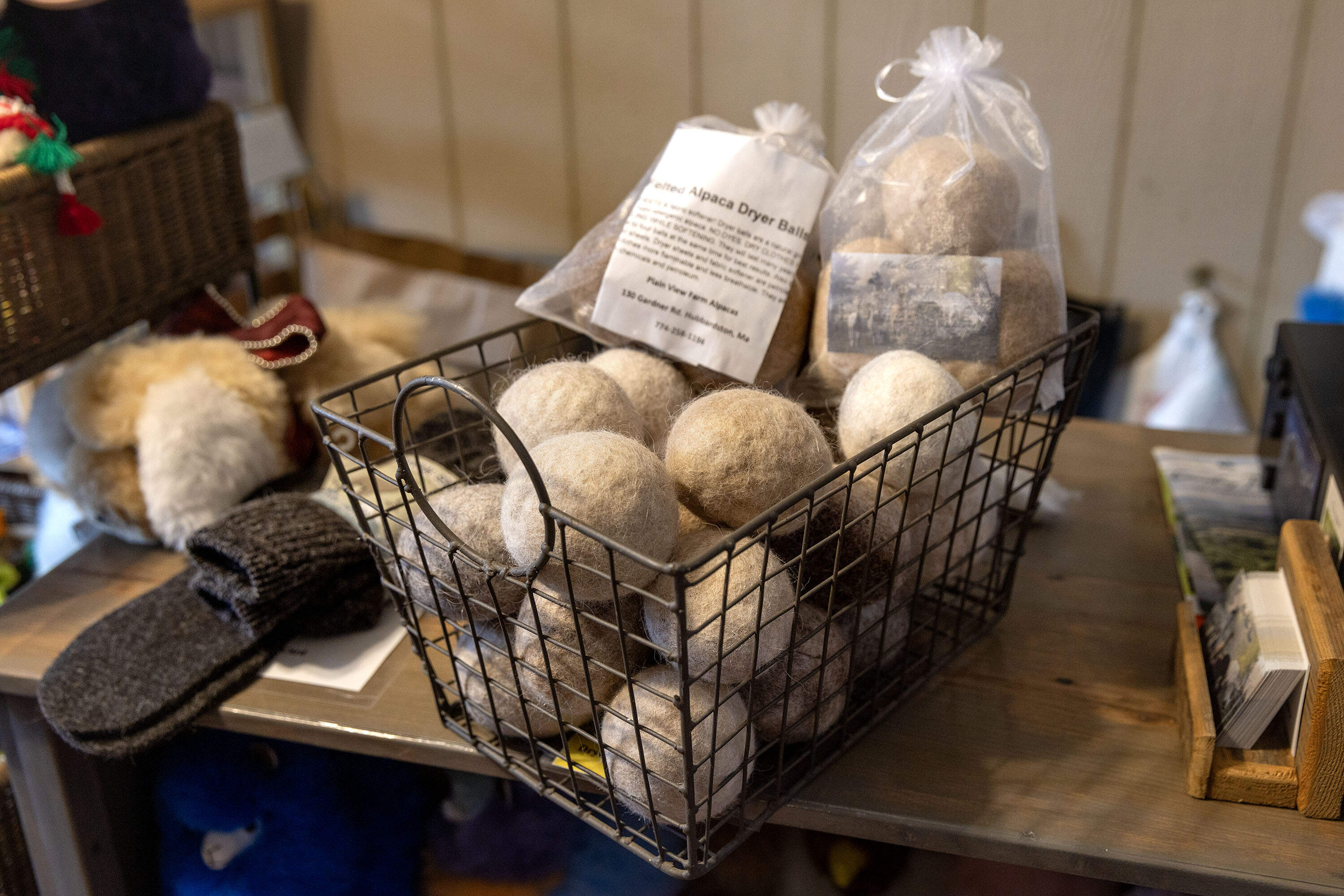
There’s just one hitch: Fertilizer pellets can’t be made purely from alpaca, since their fleece does not have lanolin. (Companies will still buy it, but blend it with wool to make their product.) So Tetreault prefers to make dryer balls from his excess alpaca fleece — an alternative to dryer sheets. “There is some time and effort that goes into making them,” said Tetreault. “But versus getting, say, $4 to $8 a pound wholesale for my fleece, I get to make a product that gives me $70 to $80 per pound.”
Spinning new ideas
Researchers involved with the Fibershed say there’s even more that can be done with waste wool and fleece — it’s just a matter of making it easier for farmers to offload their material.
New England’s fiber industry is growing, but for the fashion industry, “ it's much easier to import the perfect wool packaged, dyed and cleaned from New Zealand,” said Markus Berger, professor of interior architecture at the Rhode Island School of Design.
Peru, the world’s leading producer of alpaca fiber, also harvests more fleece than a local farmer ever could. On a trip to the country in 2017, Tetreault and his wife visited a fiber warehouse. “They had these 600-pound bales of alpaca fiber stacked six, seven, eight high,” said Tetreault. “Just, you know, warehouse bigger than a football field.”
Berger leads an architecture lab where students experiment with creating materials from fibers like hemp, flax and fleece. He believes that local fiber producers may have more luck selling their waste material to make products like insulation, soundproofing panels, and even as a strengthening additive for wet construction plaster.
“ Many materials, like insulation materials, come from the petrol industry,” said Berger. “They take a lot of energy to produce. And when they're disposed, they're kind of just microplastics.” Wool, on the other hand, is biodegradable, he said.
Berger can’t speak to wool’s affordability as a building material. Understanding that would require more large-scale testing of its material properties, and solutions to mitigate potential moth infestations. But he says he can see a day where much of society prefers wool building materials to synthetic alternatives. “I think we already see that happening,” said Berger. People are searching for material “we can touch, we can trust, that has a narrative to tell,” he said.
“When you can actually imagine and connect a sheep and a farmer and the local region to a product that is crafted,” said Berger, “I think people will start accepting these kind of things.”
P.S. — Devotees of WBUR’s content may recall Keith Tetreault from our short video at Waltham’s Sheepshearing Festival, which I attended in 2024. Click here to watch it, and learn more about how local farmers get the fleece off their animals.