Support WBUR
Boston police did not take action on any ICE civil detainer requests in 2025
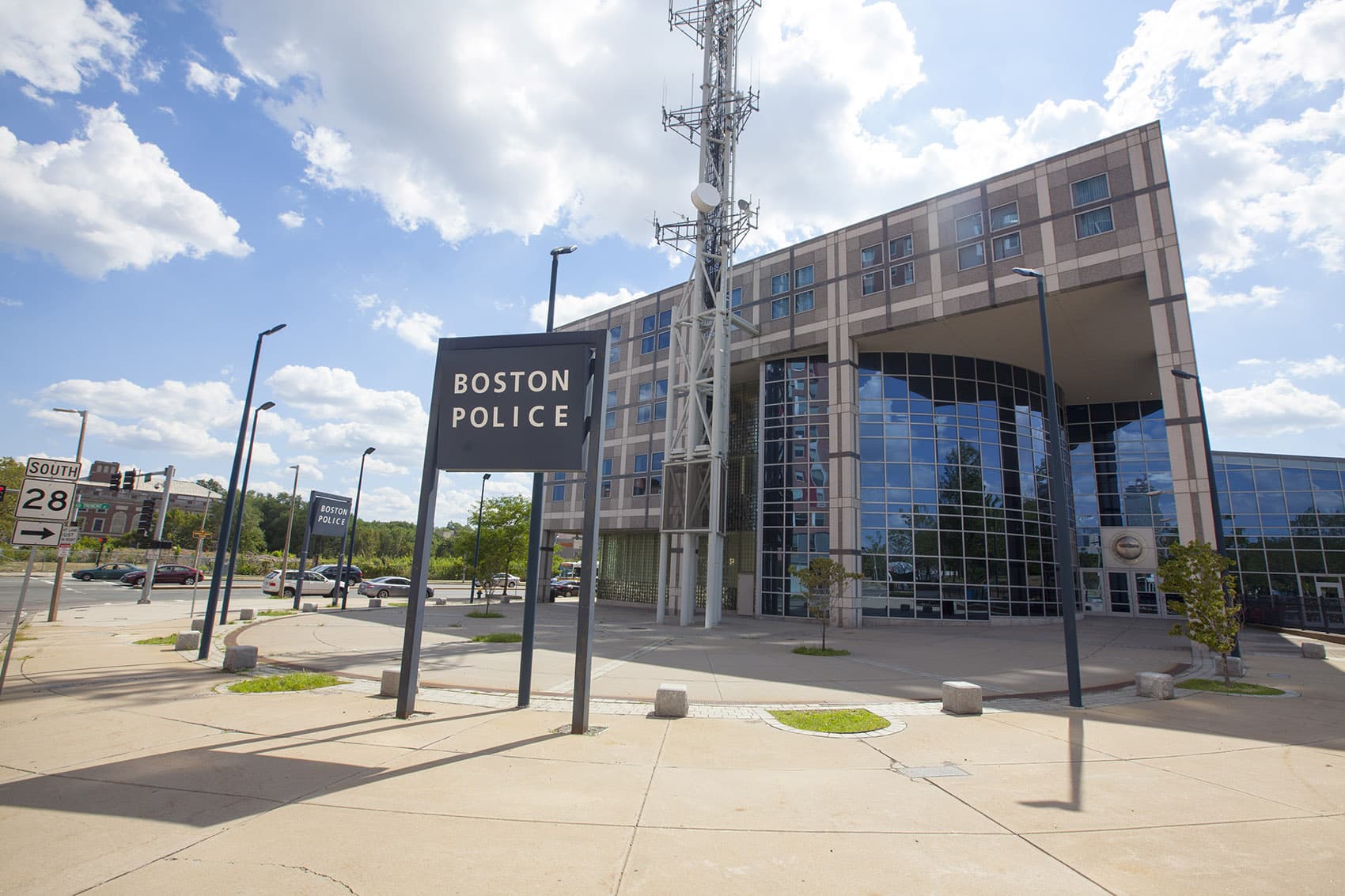
As immigration enforcement ramped up in 2025, and Boston faced a federal lawsuit over restrictions on police cooperation with ICE, the Boston Police Department did not take action on any ICE request to hold people for civil immigration violations, according to Police Commissioner Michael Cox.
In a letter to Boston's city clerk, Cox indicated the department received 57 civil detainer requests from U.S. Immigration and Customs Enforcement last year, several times more than in previous years. In each of the 57 cases, Cox said, the Department of Homeland Security gave the same reason for its request: "DHS has determined that probable cause exists that the subject is a removable individual."
Cox’s letter is required annually by the city to show compliance with Boston’s Trust Act.
Under that law, Boston police cannot detain someone after they’re eligible for release, unless ICE has a criminal warrant for the person. That means Boston police can’t honor civil detainer requests, or administrative warrants signed by agency officials. The Boston law is bolstered by a 2017 Supreme Judicial Court ruling that bars local law enforcement from detaining a person for ICE past their release time.
In September, the Trump Administration sued the city over what it called "obstructionist" immigration policies, saying the Trust Act violates federal law. The lawsuit alleges Boston police don’t allow agents to access detention areas, “even when ICE agents are present at the police station and capable of taking custody of that alien."
The suit also claims Boston honored ICE's detainer requests up until 2015, after the Trust Act was first adopted.
Boston officials have said the city is among the safest in the country, in part because immigrants can feel safe cooperating with police.
“The Department remains committed to complying with the Boston Trust Act, as well as State Law, and to building and strengthening relationships and trust with all our communities across the City,” Cox wrote in his letter to the city.
Under the Trust Act, Boston police are allowed to partner with ICE on criminal matters. But they are not empowered to do the work of federal immigration enforcement when people are in the country illegally but are not accused of breaking other laws.
ICE Acting Director Todd Lyons has said that he gets intel from friends on the Boston police force, though Mayor Michelle Wu has warned that any officer leaking information to ICE in violation of the Trust Act would face punishment.
Joshua Dankoff, with the nonprofit Citizens for Juvenile Justice, is analyzing the relationships between ICE and local police departments across Massachusetts. Dankoff applauded Boston police for not honoring detainer requests from ICE, but he said more safeguards are needed to ensure police aren’t assisting immigration agents informally — within, or outside of, the restrictions of the Trust Act.
Dankoff also sits on Boston’s Civilian Review Board, which was set up at the height of the Black Lives Matter movement to investigate complaints against the police department. He said he wants the board to turn its sights to BPD’s relationship with ICE.
“The biggest question is: Is there formal or informal communication between BPD officers and ICE officers?” Dankoff said. He noted that his efforts to obtain public records from Boston police on the department’s relationship with ICE have yielded only a copy of the city's Trust Act.
Neither BPD nor ICE immediately responded to requests for comment.
Amid protests over ICE's killing of a second protester in Minneapolis, White House Press Secretary Karoline Leavitt recently alleged that the deaths were the result of local and state leaders' refusal to cooperate on immigration enforcement.
"Local police must assist federal law enforcement in apprehending and detaining illegal aliens who are wanted for crimes," Leavitt said.
Both Wu and Gov. Maura Healey have said repeatedly that law enforcement in Massachusetts routinely assists ICE in criminal matters.
ICE and BPD have previously been at odds over communication. Cox’s report from 2024 indicated the department had received 15 detainer requests via fax, while ICE said it had issued 198 detainers. After BPD requested agents use email, the department set up a dedicated fax line to avoid future discrepancies.
Cox faulted ICE for failing to send detainer requests through the proper channels: Only 28% of requests received in 2025 came through the fax line.