Support WBUR
Can't get a law passed on Beacon Hill? Float a ballot question
For Noemi Ramos, executive director of the housing-focused New England Project, pushing state lawmakers to approve rent control in Massachusetts has been a years-long battle.
It’s a political fight that Ramos and other housing advocates say is critical to helping people afford to live in Massachusetts. But with stiff opposition from developers and real estate associations, the effort has yielded little success.
Rent control “has been the dirty word of politics for many, many, many years,” Ramos said in an interview.
After repeated setbacks on Beacon Hill, Ramos and her coalition decided to take the matter into their own hands and push forward a ballot question for the 2026 election. It’s increasingly how the business of lawmaking is getting done in a state where people on both sides of the political spectrum argue the Legislature gets little done.
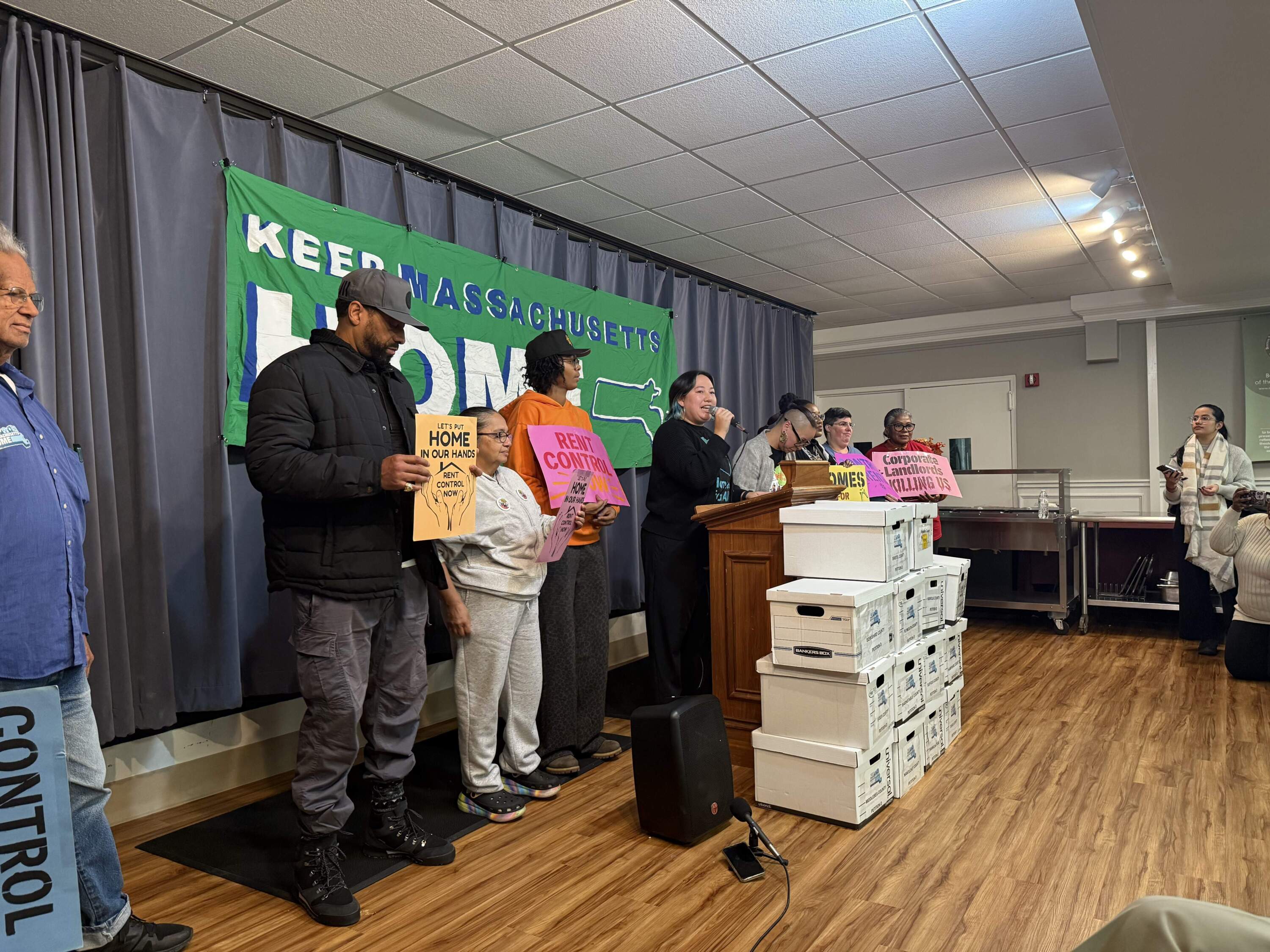
Groups submitting ballot initiatives broke a record this year, with 11 questions certified by the Secretary of State William Galvin’s Office. Questions ranging from rent control and funding for nature conservation to cutting the state income tax and giving public defenders the right to unionize may be resolved directly by voters.
State lawmakers now get a chance to pass the proposals into law. If they don't, the groups that introduced the questions must collect thousands more signatures so they can be eligible for a spot on the November ballot.
A 12th ballot question to repeal a major gun law is already set to go before voters because supporters gathered enough signatures in 2024.
As state workers wheeled boxes of signature sheets from Galvin’s office to a storage room in the State House earlier this month, Galvin said the large number of ballot questions this year will put a strain on his office and cost taxpayers an extra $5 million to process.
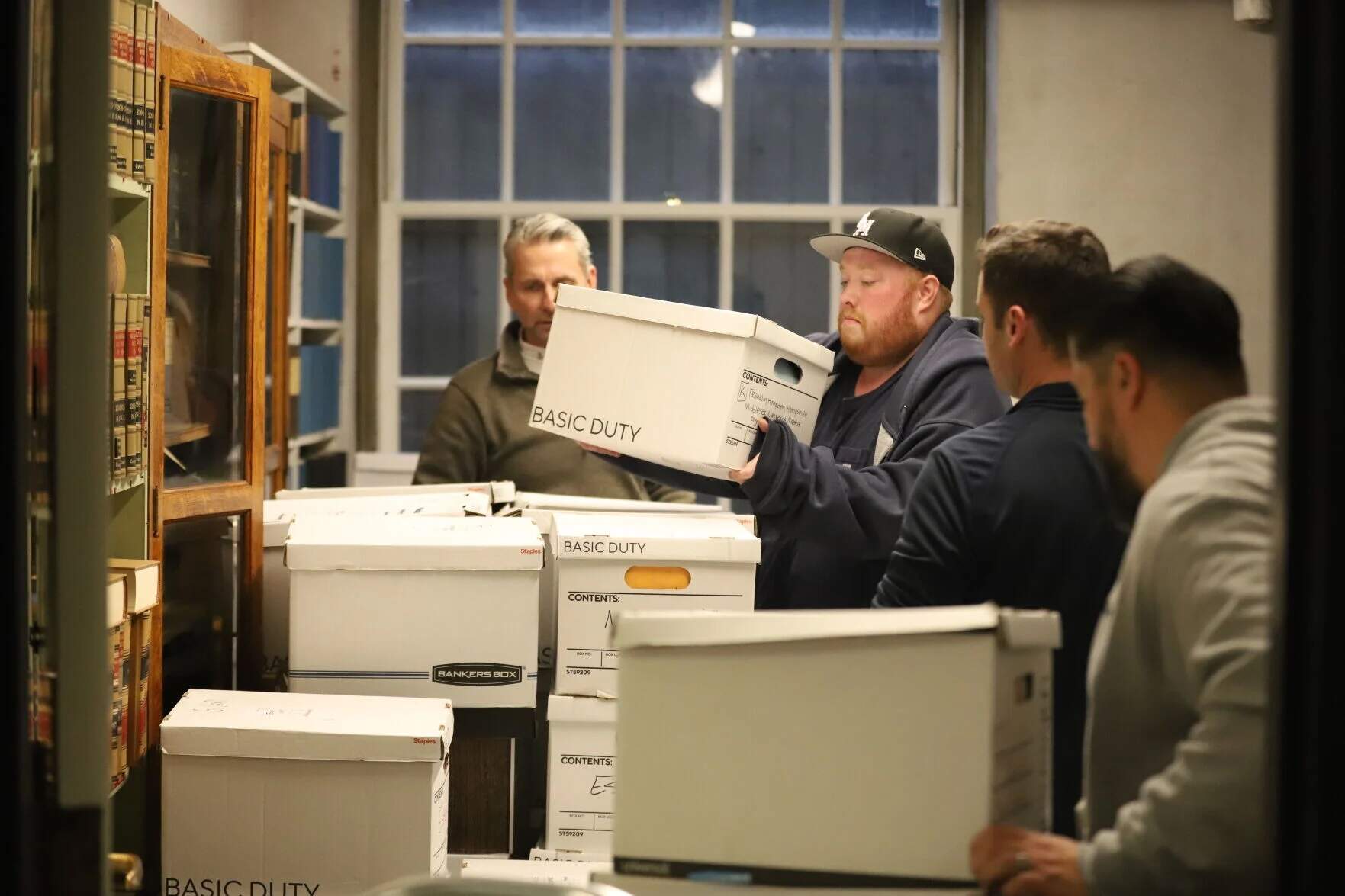
He said the record number of proposals is almost certainly because “there’s been no action in the Legislature on a wide variety of topics.”
“People have decided that, apparently, whatever the cost of getting the signatures to get on the ballot, it's probably a more efficient use of their resources,” he told reporters.
He counts himself among those who’ve spent years lobbying an issue on Beacon Hill, only to see his proposal lose steam each legislative session. He, too, has turned to the ballot question process to advance a question that would let eligible voters register on Election Day or update their address.
“If there's a common theme, the proposals that have ended up as ballot questions had been before the Legislature in various forms,” Galvin said. “Same with Election Day registration. I mean, that's been before the Legislature for years, and it's been stalled.”
Meanwhile, the leaders of the Legislature seem unmoved by the latest wave of ballot questions. Senate President Karen Spilka and House Speaker Ron Mariano have been critical of the process this election cycle, including casting skepticism on groups paying companies to help collect signatures.
In a statement to WBUR, Mariano knocked the ballot question process as “absolutist” and “profit-driven.”
“The House continues to believe that building a consensus between folks on different sides of an issue is often the only way to produce strong, lasting legislation,” he said.
He did not respond to criticism that advocacy groups are turning to the ballot question process because they can't make headway on Beacon Hill.
“If there's a common theme, the proposals that have ended up as ballot questions had been before the Legislature in various forms.”
William Galvin
A spokesperson for Spilka defended the Senate’s record, pointing to “key policies” the chamber has passed related to taxes, housing and the Trump administration.
In a statement, the spokesperson said Spilka “respects the constitutional right for residents to pursue ballot initiatives and is closely watching the questions that will be posed to the residents of the state.”
Advocates behind the ballot questions say their policies are urgent.
Michael Prentky, a musician and music teacher for Boston Public Schools students in East Boston, lives in Medford with a roommate. He said he moved to the city in part because a former landlord in Somerville tried to raise his rent by thousands of dollars.
Prentky said Boston is tough to afford as a musician because of high rents, the cost of living and a lack of opportunity for artists.
He also said lower-income residents could afford housing in Massachusetts if voters were to approve the rent control ballot question. Developers and real estate groups argue the measure would impose the most restrictive statewide policy in the country.
"The evidence is clear … you get rid of the rent control, and the whole housing market goes haywire. And now we're 30 years later, and you can see what happened," Prentky said in an interview.
Some people behind the ballot questions told WBUR they chose to go this route instead of lobbying for a bill on Beacon Hill because of the Legislature's reputation for moving slowly.
That includes the Coalition for Healthy Democracy, the group behind ballot questions that would end party-specific primary elections and subject the Legislature and the Governor’s Office to the public records law.
“We didn't want to get caught up in the slow pace of legislative lawmaking because we think the problem is urgent, and we know that this is one of the types of reforms that is most challenging to have elected officials opt into because it changes the system by which they were successful,” said Jesse Littlewood, the coalition's campaign manager.
Lawmakers have filed bills for years to include the House, Senate and Governor’s Office in the public records law. But top Democrats have shown no interest in moving those proposals across the finish line.
“I couldn't tell a volunteer, an activist or a potential donor that it was a reasonable path to move through the Legislature on public records,” Littlewood said.
Christopher Anderson, president of the Massachusetts High Technology Council and organizer of ballot questions to lower the income tax and trigger more tax refunds, said the business groups he represents chose to draft ballot questions in order to avoid drawn-out legislative fights over tax policies.
Anderson pointed to the $1 billion-a-year tax cuts bill Gov. Maura Healey signed into law in 2023. It was a bill largely championed by former Gov. Charlie Baker before he left office — a measure that took almost two years to become law.
“In order to move the needle faster, we decided to bring these questions directly to the voters, and it is informed by how difficult it's been in the Legislature” to push through “even the most modest and marginal tax reforms,” Anderson said.
Anderson said his campaign is open to striking a deal with lawmakers to end the ballot campaign, in exchange for commitments to pass policies that create “a better climate for investment, job growth, and recognizing that people who live and work here have a high cost of living.”
Other ballot question campaigns view their strategies differently.
One ballot question would direct state taxes on the sale and use of sporting goods, recreational vehicles and golf courses to natural resource conservation efforts.
Sam Anderson, director of legislative and government affairs at the conservation group Mass Audubon, said the point wasn’t to circumvent state lawmakers.
“We certainly would prefer to go through the Legislature. And the truth is, we're trying,” he said. “But we felt that as sort of an alternative path forward, that this was an appropriate step to take.”
This segment aired on February 2, 2026.