Support WBUR
Republican candidate for Mass. governor uses AI-assisted ad in unregulated landscape
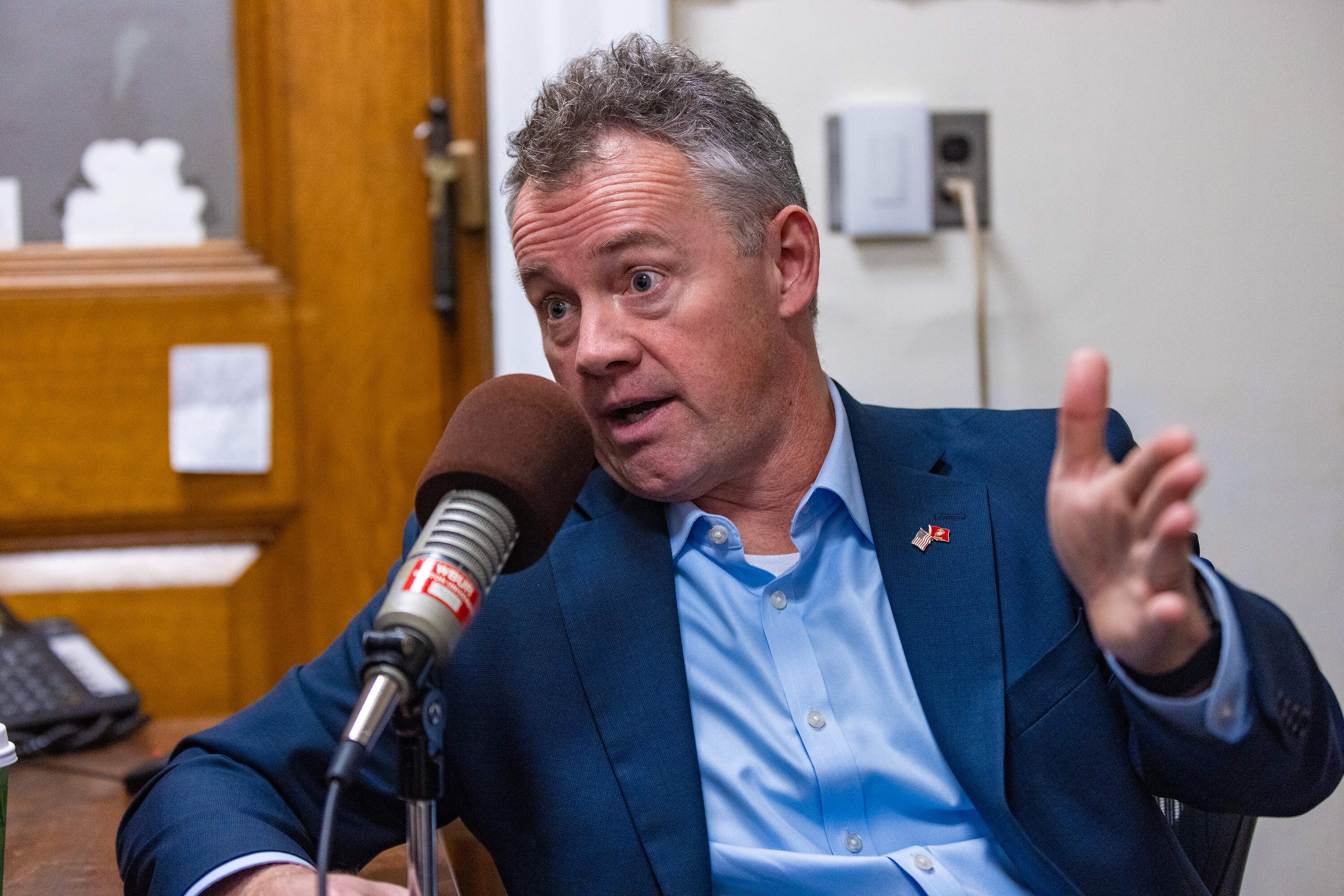
In a new twist on campaign tactics, a Republican candidate for Massachusetts governor posted on Instagram a fake radio ad that included an AI-generated version of Gov. Maura Healey's voice.
Brian Shortsleeve posted the video with the caption: "Here's what one of her radio ads might sound like - if she was honest."
The artificial intelligence-generated voice, mimicking Healey's, says: "I'm Governor Maura Healey and I'm proud to announce my reelection campaign today, working with our one party rule on Beacon Hill, we have accomplished so much in our first term. We have one of the highest electricity rates in the nation thanks to me for slapping on excessive fees to fund my climate agenda. We are the second most costly state to retire in; more than 5,000 employers have closed their doors, and we have sent more than 12,000 private sector jobs to Republican states."
The video was posted on Jan. 20, the day Healey launched her second run for governor. Shortsleeve is one of three Republicans running in this year's primary. Healey faces no Democratic opponents.
The AI radio ad goes on, in Healey's voice, to say Massachusetts is "50th out of 50 in job growth" and "ranks in the bottom five states for one-way U-Haul customer exits." The Shortsleeve campaign confirmed that it used AI to produce the video.
Asked for a comment about the video, the Healey campaign directed State House News Service to the Massachusetts Democratic Party.
"SlowZone Shortsleeve has to create alternative realities to pretend he has any shot in this race,"said Steve Kerrigan, chair of the state's Democratic Party. "He should stop lying to voters and tell them the truth — he will be a rubber stamp on President Trump's harmful agenda."
Shortsleeve spokesperson Holly Robichaud said: "While this ad is a parody, there is nothing funny or fake about its substance, which highlights Maura Healey’s failed record of killing jobs and making Massachusetts the most expensive state in the nation."
The emergence of generative AI is beginning to transform elections around the nation, from political ads to speechwriting, according to the National Conference of State Legislatures.
Twenty-six states have enacted laws regulating the use of so-called deepfakes in political campaigns, according to NCSL.
"Deepfake technology uses artificial intelligence (AI) to manipulate audio or video to create a false but realistic video of individuals doing or saying things they did not actually do or say," says a policy summary from NCSL. "For example, a person's face can be swapped with another's, and lip syncing can be added. Machine learning and sophisticated technical tools have made deepfakes relatively easy to create and increasingly commonplace in recent years, creating an impetus for new legislation."
Massachusetts' campaign finance laws do not address AI or deepfakes, according to the Office of Campaign and Political Finance, other than requiring ad expenditures to be disclosed. There is nothing about video, audio or web ads in the election laws overseen by the Elections Division in the secretary of state's office.
State Sen. Michael Moore filed a bill last year (S 44) to "protect against election misinformation." The Senate side of the Joint Committee on Advanced Information Technology, the Internet and Cybersecurity in October voted 6-0 to approve a redraft (S 2631) of Moore's bill that is now in the Senate Ways and Means Committee, with Republican Sen. Peter Durant joining five Democrats in support.
The bill defines "materially deceptive election-related communication" as media that contains "verifiably false information" about the date, time or place of an election; how to vote; deadlines for voting; certification related to an election; or the endorsement of a candidate or ballot initiative by a political party, elected official, nonprofit or other person.
The legislation adds a carveout for "materially deceptive election-related communications that constitute satire or parody" and suggests anyone whose voice or likeness appears in a deceptive election communication "may seek injunctive or other equitable relief prohibiting the distribution of such communication."
The states that have enacted laws against AI in political ads have generally taken two approaches, NCSL said: prohibitions and disclosures. Minnesota and Texas prohibit the publication of political deepfakes a certain number of days prior to an election.
In California, one of these laws was struck down on First Amendment grounds in August 2025, as it prohibited any speech that is "reasonably likely" to harm a candidate's electoral prospects. It required satire and parody deepfakes to include a disclaimer statement, which the court found to be overly burdensome.
Other AI-generated political videos and photos have begun to crop up on social media as well. It's now up to Massachusetts lawmakers to decide whether they want to wade into the territory of regulating the fast-moving technology.