Support WBUR
Trump claims grocery prices are falling. Boston-area shoppers say they don't feel relief
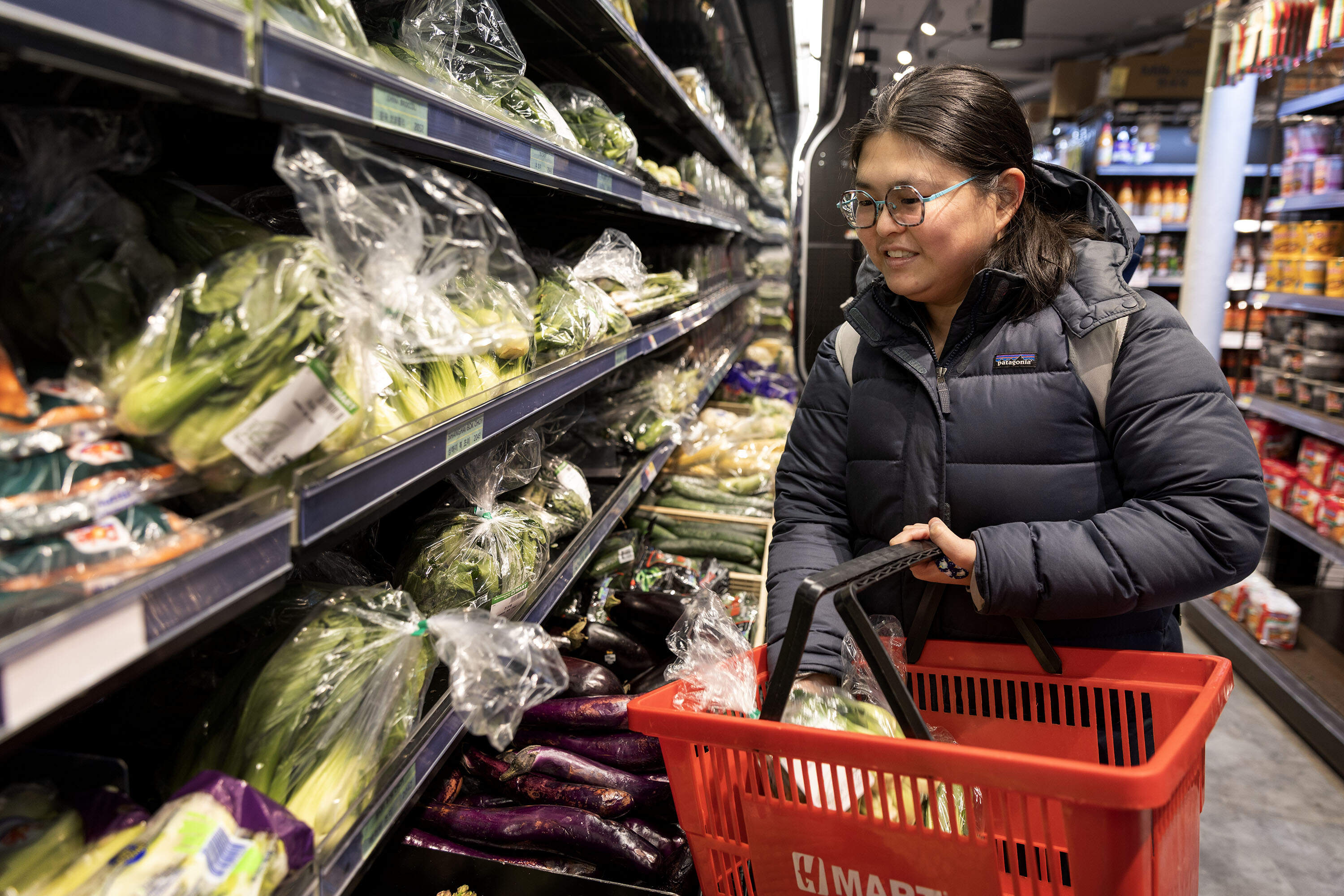
Every grocery run for Somerville resident Tina Caruso is like a puzzle.
She counts on about $200 a month in food assistance benefits. And she worries about how to make a set budget work when she feels like prices keep going up.
Browsing H Mart in Davis Square, she groaned at the prices of fresh produce. A bundle of bok choy was priced a little over $6; a bag of mandarin oranges, the same.
In the past year or so, Caruso said, grocery prices have "gone up significantly depending on where you shop.”
She is far from the only consumer fretting about prices. The increasing cost of everything — particularly food — has weighed heavily on Americans’ minds these past few years.
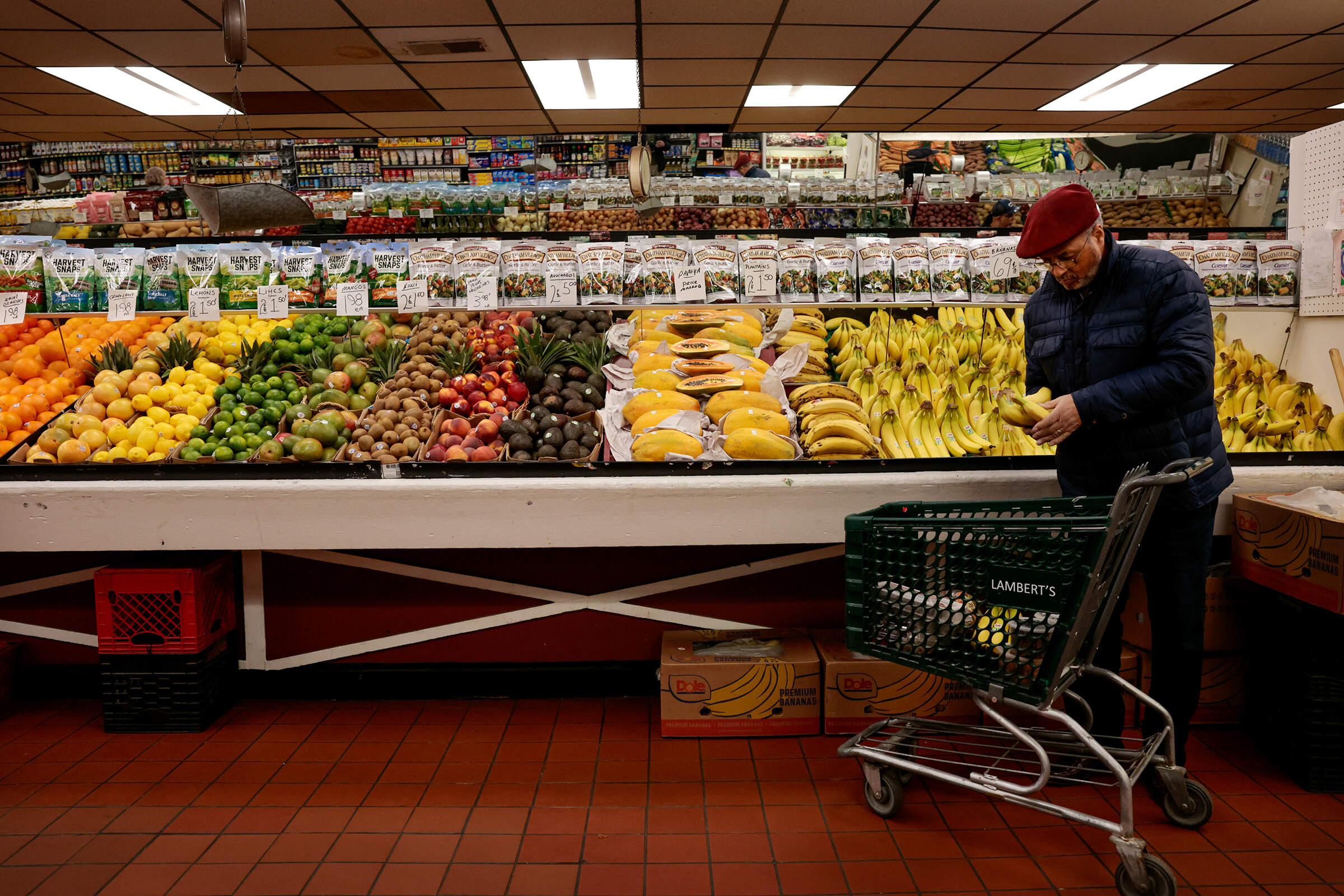
Donald Trump tapped into the potency of the issue during his most recent presidential campaign. At an August 2024 press conference outside his golf club in New Jersey, his staff piled Oreos, ground sausage and Campbell’s soup cans onto two big tables.
Trump blamed the Biden administration for rising grocery costs. And he told Americans what they could do about it: “Vote for Trump. And we’re going to fix it.”
In December, as Trump approached a year back in the Oval Office, he claimed victory on the issue, saying food costs are “falling rapidly.”
But over the past 12 months, grocery prices for most items have not fallen — in fact, they are slightly higher.
The grocery price index created by industry data analyst Datasembly shows that most groceries — except for eggs — have held steady or are slightly more expensive than a year ago. The notable outlier is the cost of eggs, which dropped after skyrocketing last winter as bird flu strained supply.
A December Politico poll found more Americans are worried about paying for groceries than housing or health care.
Shoppers in Greater Boston are having a similar experience. WBUR tracked food prices at three supermarkets in different communities. The items included a gallon of milk, a loaf of bread, a dozen eggs, chicken, beef, salmon, a can of beans, potatoes, bananas, an avocado, carrots, corn, ground coffee, maple syrup and flour. The costs were based on website figures.
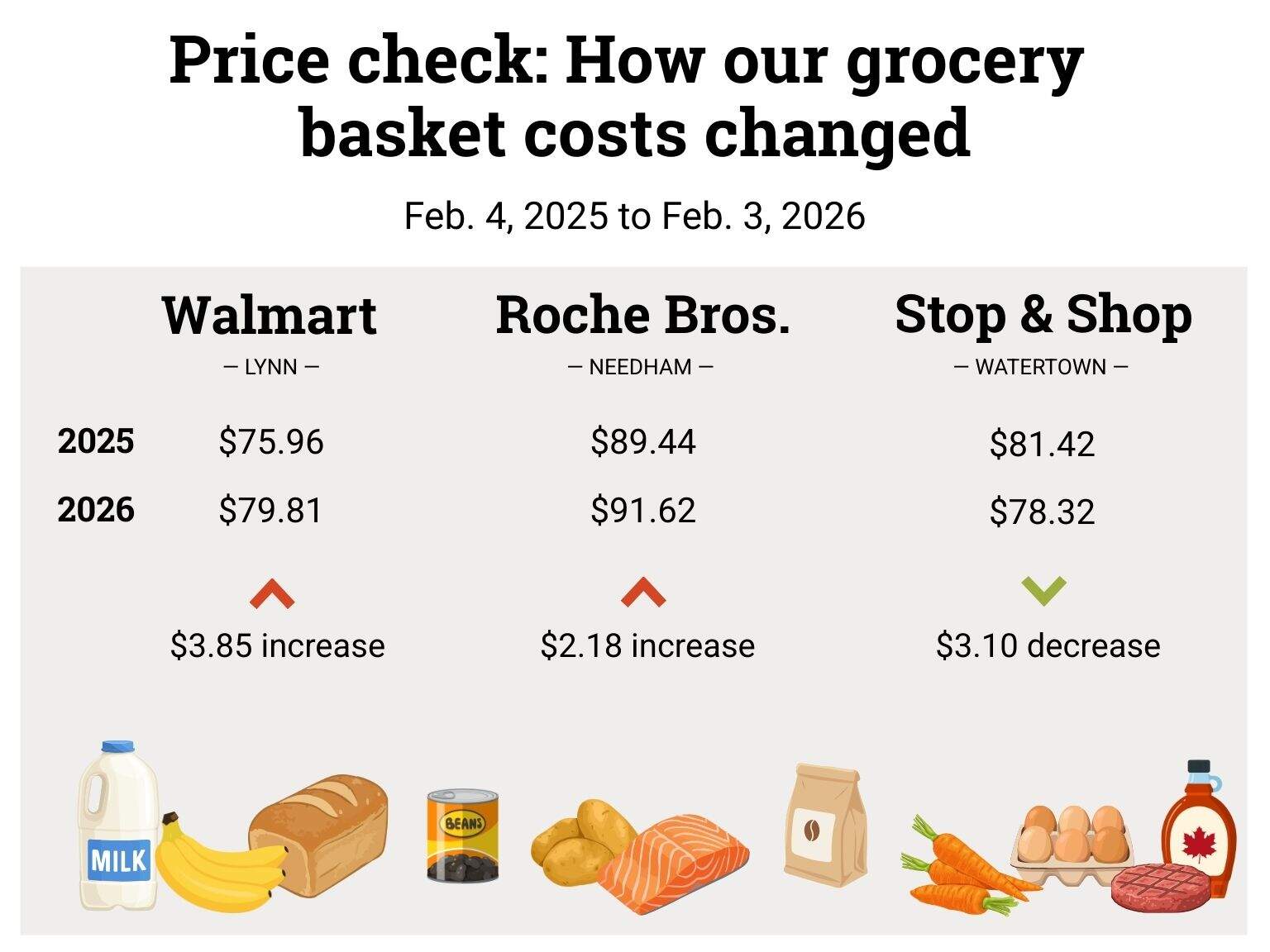
A basket of the same, or substitute, items, increased by almost $4 at Walmart in Lynn year over year. The bag decreased by about $3 at Stop & Shop in Watertown; the chain announced in August an initiative slashing prices thanks to an infusion of cash from its parent company.
At Roche Bros. in Needham, where the cost of that basket has gone up by over $2, shopper Carol Williams bemoaned high prices as she loaded groceries into her car.
Costs are “creeping up,” she said. Williams added that she’s trying to "buy less, and be more judicious about what I buy."
Williams said she feels federal policy favors the wealthy — not average people. She’s not optimistic things will improve soon.
“I don’t feel too good about it,” she said. “But what can you do?”
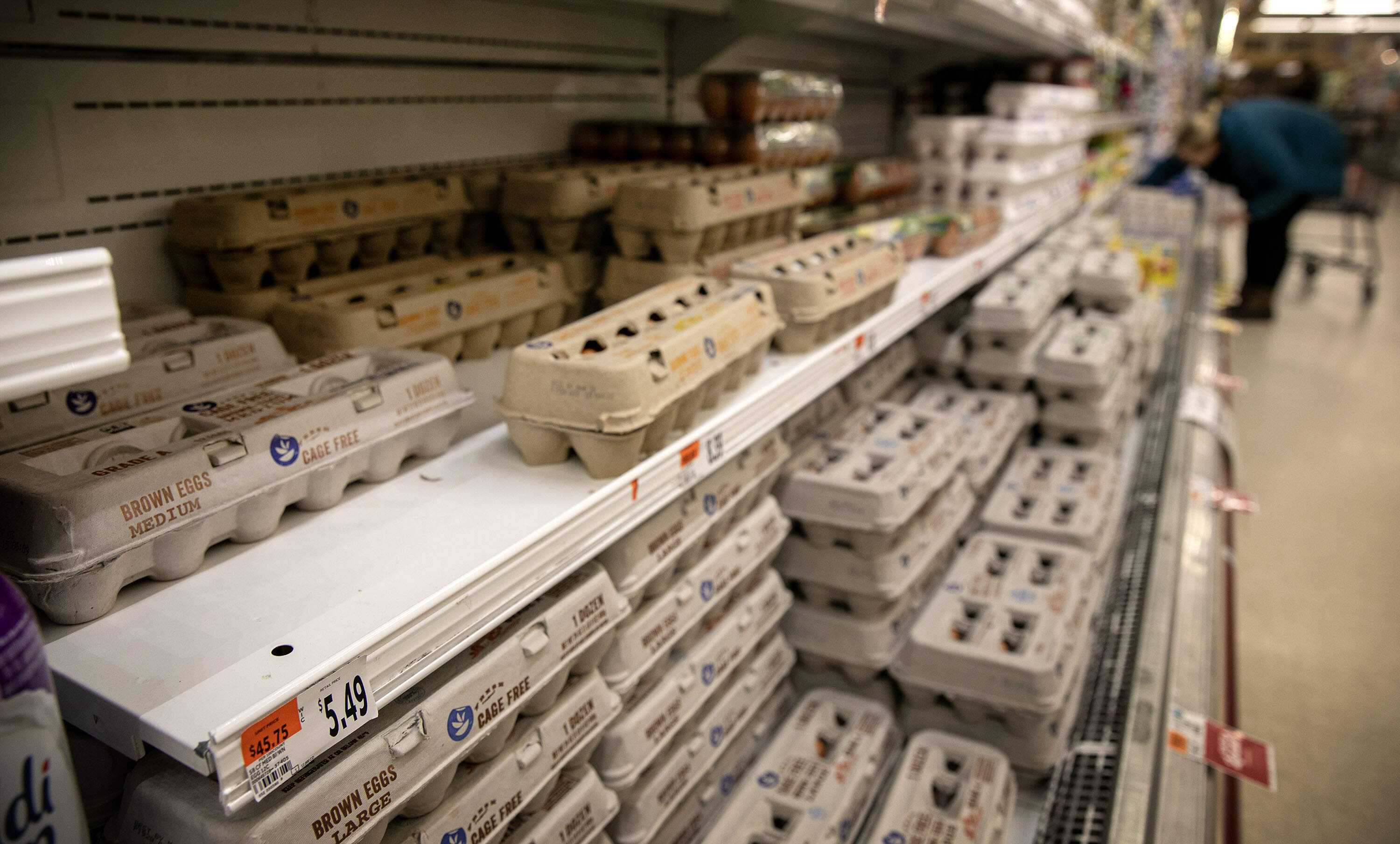
While grocery costs aren’t plummeting, they’re not skyrocketing either, said Parke Wilde, an economist at Tufts University.
“Food cost inflation over the last year has not been higher than normal,” he said.
Some factors, like Trump’s tariffs and severe weather, have pushed food prices up. Other factors, like cheap gasoline, are pulling prices in the other direction.
Overall, year-over-year grocery inflation is in a normal range at 2.4%, according to the Bureau of Labor Statistics.
Wilde suspects the power of grocery prices as a political issue will linger — that a hangover from pandemic price spikes will leave people feeling disgruntled about costs for a while.
And he notes that SNAP recipients in Massachusetts, like Caruso in Somerville, face added challenges because the federal government issues food benefits based on a national index of grocery prices — not a state-by-state analysis.
“Food prices are, on average, higher in Massachusetts, and that’s not accounted for in the food assistance benefits,” Wilde said.
In general, he said, he doesn’t expect people on tight budgets to feel relief from news that inflation is merely slowing.
“You don’t really want some economist on the radio telling you, ‘Oh, don’t worry about the food prices — the Bureau of Labor Statistics says food price inflation is normal,’ ” he said.
This segment aired on February 4, 2026.