Support WBUR
Criminal immigration charges in Mass. increased sixfold in last year
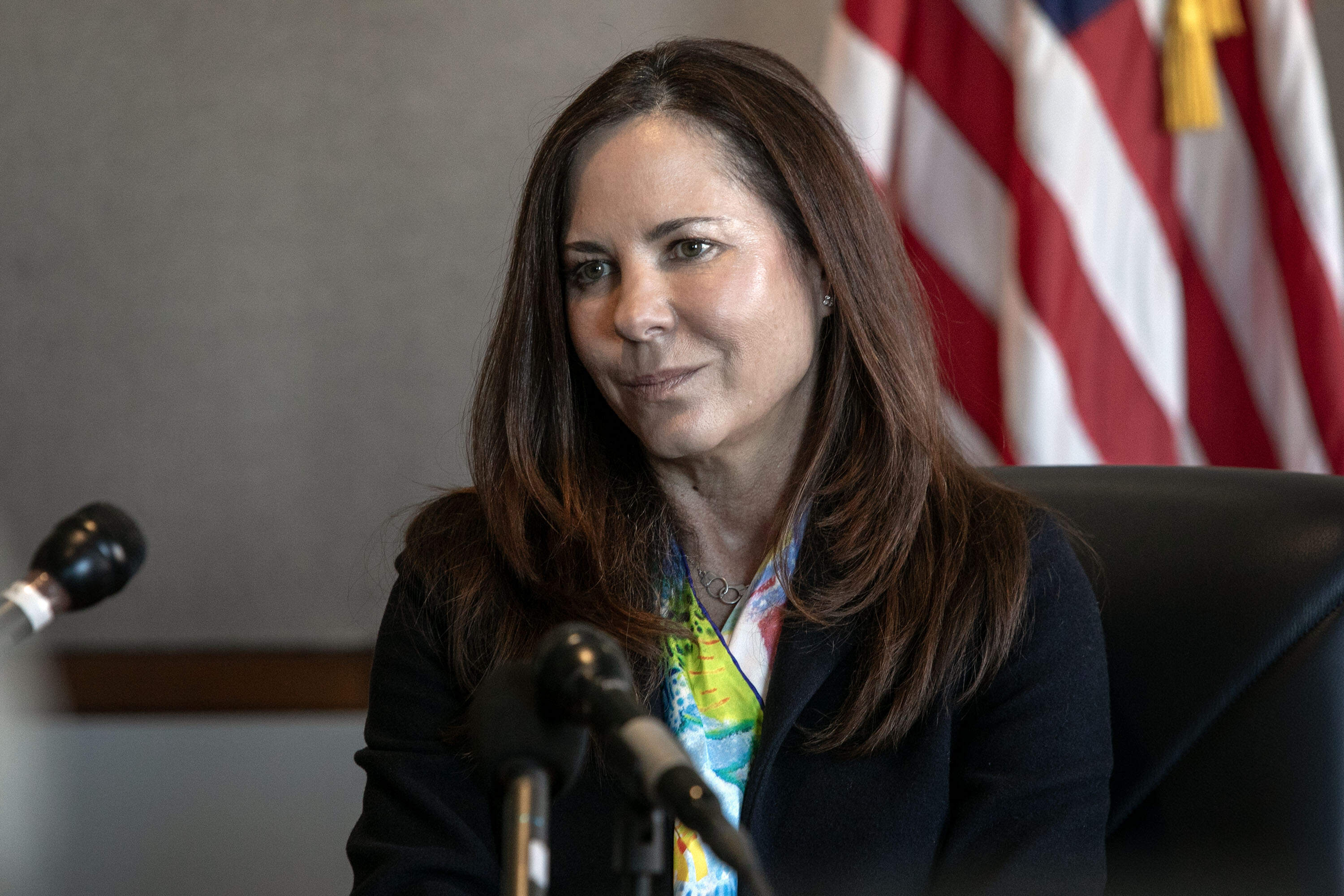
Massachusetts U.S. Attorney Leah Foley has overseen a more than six-fold increase in the number of federal criminal immigration cases prosecuted in the state in the year since she was appointed, according to data she provided Thursday morning.
The spike in immigration-related charges comes as President Trump has ordered enforcement surges across the country, including in Massachusetts and Maine, and has complained that local law enforcement doesn't help federal agents enough in detaining people.
In a roughly hour-long discussion with reporters at her Boston office, Foley said federal prosecutors pursued 139 criminal immigration matters in 2025, up from 22 the prior year, a jump she attributed in part to two immigration enforcement surges here.
“Nearly 4,000 people who had violated federal law were arrested, and the 139 cases that we brought here were people who had been previously deported from the United States, returned to the United States without authorization and were charged with illegal reentry,” said Foley, who was appointed under Trump.
Federal immigration officials said an enforcement surge last May netted nearly 1,500 arrests in the state. A second crackdown in September resulted in an additional 1,400 arrests, they said.
The Trump administration has argued that federal agents are pursuing and arresting people with “significant criminal convictions.” But officials at U.S. Immigration and Customs Enforcement have said roughly half of the people detained in the Massachusetts operation last May, and less than half of those detained in September, were involved in what the agency described as “significant crimes.”
Foley said the immigration enforcement surges in New England also have led to a large increase in habeas petitions, the legal mechanism that allows people detained by government authorities to challenge their detention in court.
There were seven habeas petitions in 2024 and 850 in 2025, Foley said. Over 100 of the petitions filed in 2025 followed the Maine immigration enforcement surge, Foley said, because some of those immigration cases ended up in Massachusetts federal court.
“There is a tension between how [the Department of Homeland Security] views the law and how the courts [do] when it comes to mandatory detentions,” Foley said. “We believe that a lot of these matters need to be resolved in immigration court and not the District Court of Massachusetts.”
Elected Democrats in Massachusetts have criticized the Trump administration for how it's enforcing its immigration agenda. The issue also became a flashpoint for state lawmakers and the Congressional delegation after federal immigration agents killed two U.S. citizens in Minnesota.
A 2017 high court ruling bars local law enforcement in Massachusetts from detaining people on civil immigration detainers after they have been legally released from custody. Gov. Maura Healey and Boston Mayor Michelle Wu have signed executive orders that further restrict where federal agents can stage arrests.
Foley said police chiefs across the state and the Massachusetts State Police do cooperate with the federal government on criminal immigration matters. She also said state prisons and county jails give immigration agents notice when someone they are looking for is completing a sentence.
She argued that more cooperation between the federal government and state and local police would result in “a lot less chaos on the streets, or a lot less ICE operations on the streets.”
“You would also see less collaterals being taken into custody, because the collateral arrests occur because the ICE officers are on the street trying to do surveillance, trying to find their target," she said.
Collateral arrests is how ICE refers to the people agents detain while looking for someone else.
"They discover that the target actually has in the same car, the same house, whatever, people who have violated the laws by coming here illegally and have no legitimate right to stay,” she said.