Support WBUR
Healey lifts southeastern Mass. travel ban as tens of thousands remain without power
Last updated Feb. 24, at 4:00 p.m.
The blizzard has passed, but its impact could linger for days, especially in southeastern Massachusetts and Cape Cod.
Tens of thousands of customers remain without power Tuesday after the storm dumped well over two feet of snow on some parts of the state and left damage in its wake.
As of noon Tuesday, Gov. Maura Healey lifted the non-essential travel ban in Bristol, Plymouth, Barnstable and Dukes counties. She had put the ban in place Monday to allow crews space to clean up the roads.
The Department of Transportation is deploying extra snow removal equipment in hard hit areas. State Highway Administrator Jonathan Gulliver told WBUR this is the most difficult storm he's had to manage in at least 15 years.
"We're in this for a few more days of cleanup and people need to use caution if they're out and about at night, especially," he said.
Healey said she has asked for additional snow clearance support from Vermont, New York and New Hampshire. The governor's office said 350 National Guard troops have been activated to help with storm response.
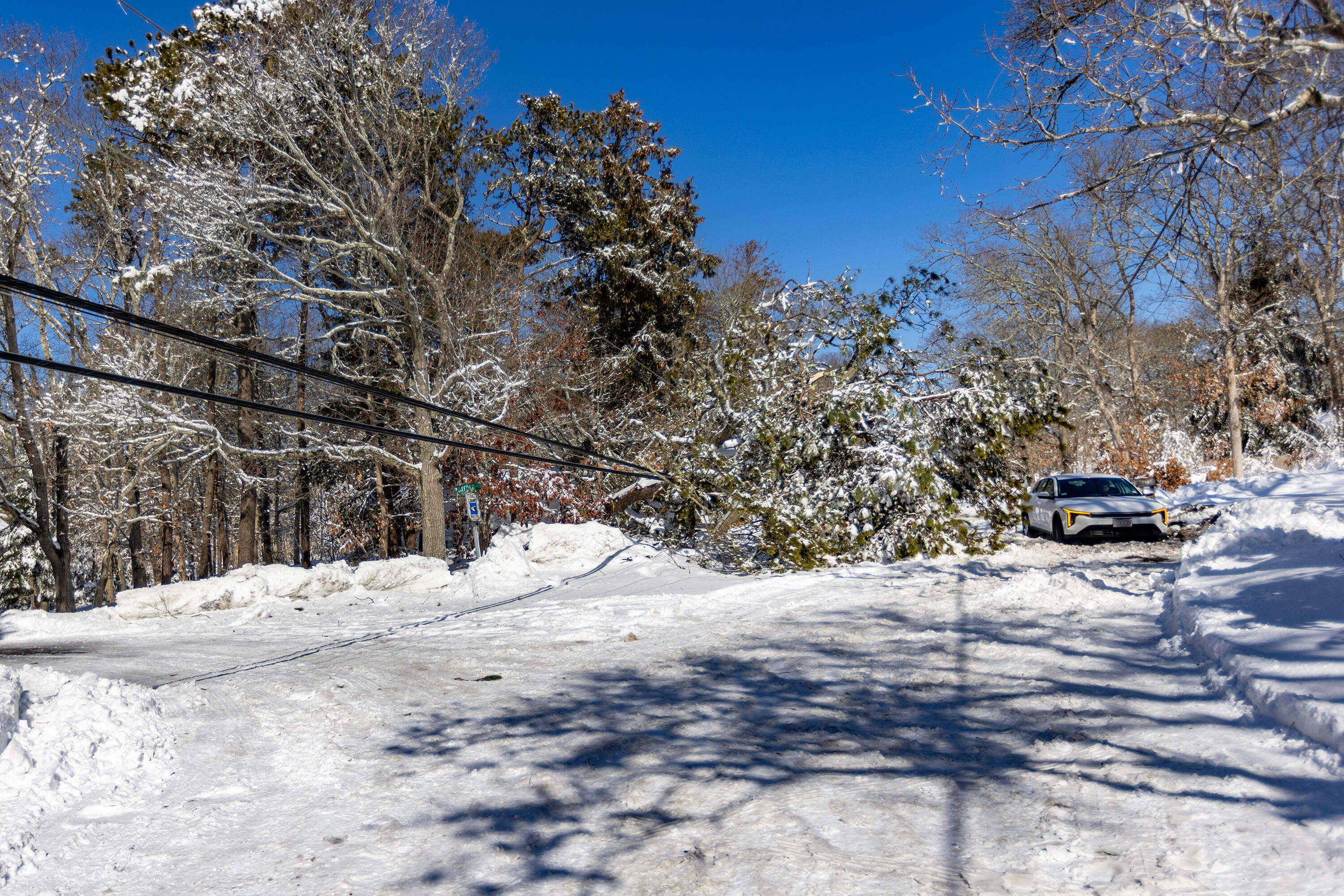
Power remained out Tuesday afternoon for over 230,000 customers in Massachusetts. Much of the outer Cape was completely without power, after hurricane-force winds battered the area.
Orleans Fire Chief Geof Deering said the biggest concern for residents are the power outages and a lack of heat. He said the town is working with Eversource on restoring power, but noted the damage is serious.
" I would characterize the damage as some of the most significant I've seen in my 25 years here at the fire department," Deering told WBUR's Morning Edition. "And my colleagues that have been serving the community longer say it's in the top few storms that we've ever had for the amount of damage that we're seeing right now."
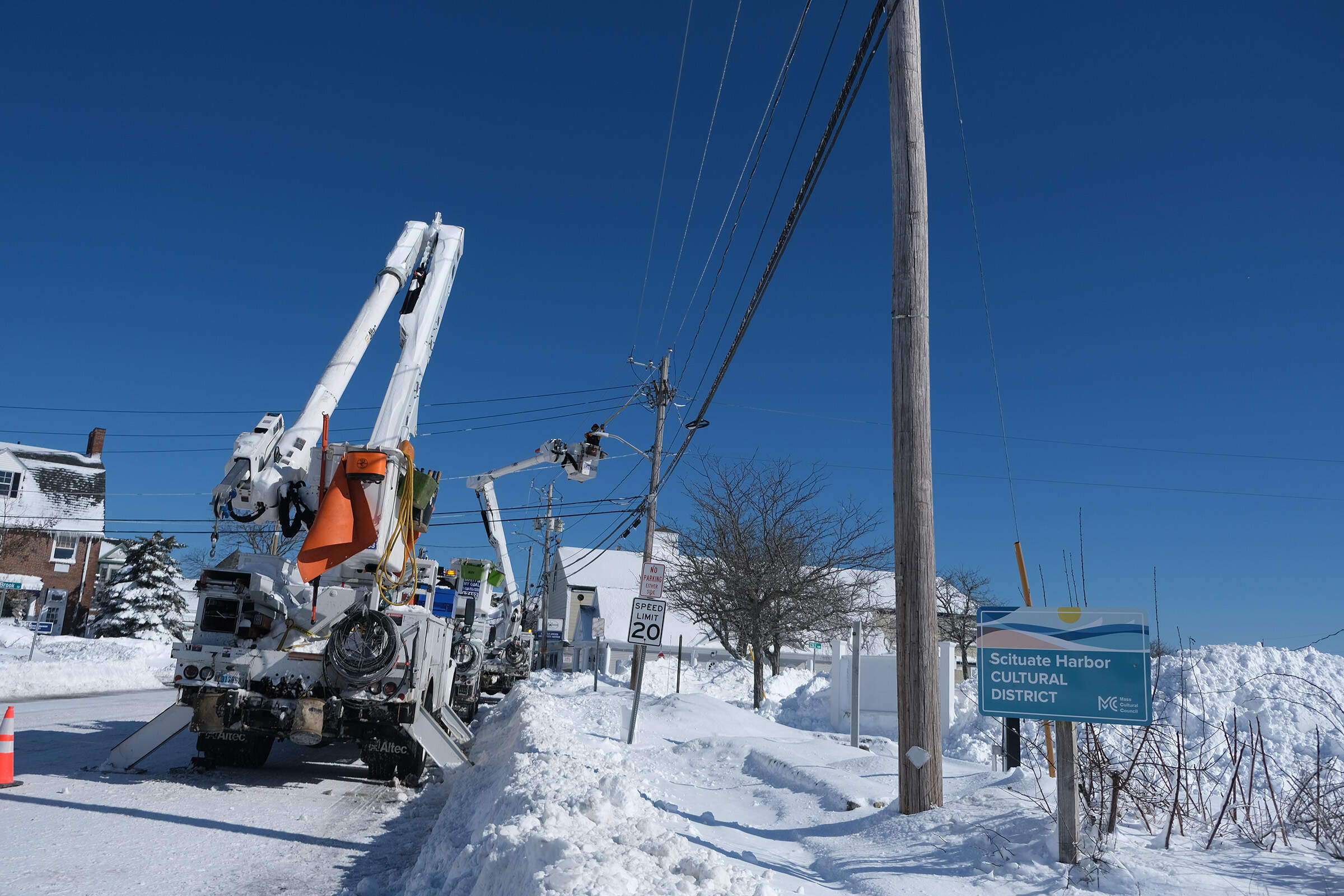
Doug Foley, head of Massachusetts electric operations at Eversource, said Tuesday it could be a few more days before every home has power restored, especially in smaller neighborhoods.
"As we get into the backyards, it's a little bit difficult for the crews to trudge through the snow, identify what's wrong, and then make the repairs," Foley said. "So just the fact that we're dealing 27, 30 inches of snow, it's just going to take time."
He added that Eversource has called in crews from as far away as Michigan, Ohio and Canada, in addition to Western Mass. and New Hampshire.
National Grid New England Electric Chief Operating Officer Christopher Laird said about 16,000 of the utility's customers are still without power — down from nearly 100,000 at the height of the storm. Crews, he said, are working 16- to 18-hour shifts.
"We're doing that because we know it's hard for customers to be without power — especially when the temperatures are colder like this," he said. "So, while it may be tough for us, we know it's tougher for customers."
Officials across Cape Cod shared concerns during a virtual coordination meeting on Tuesday morning about warming centers and overnight shelters filling up and needing more resources.
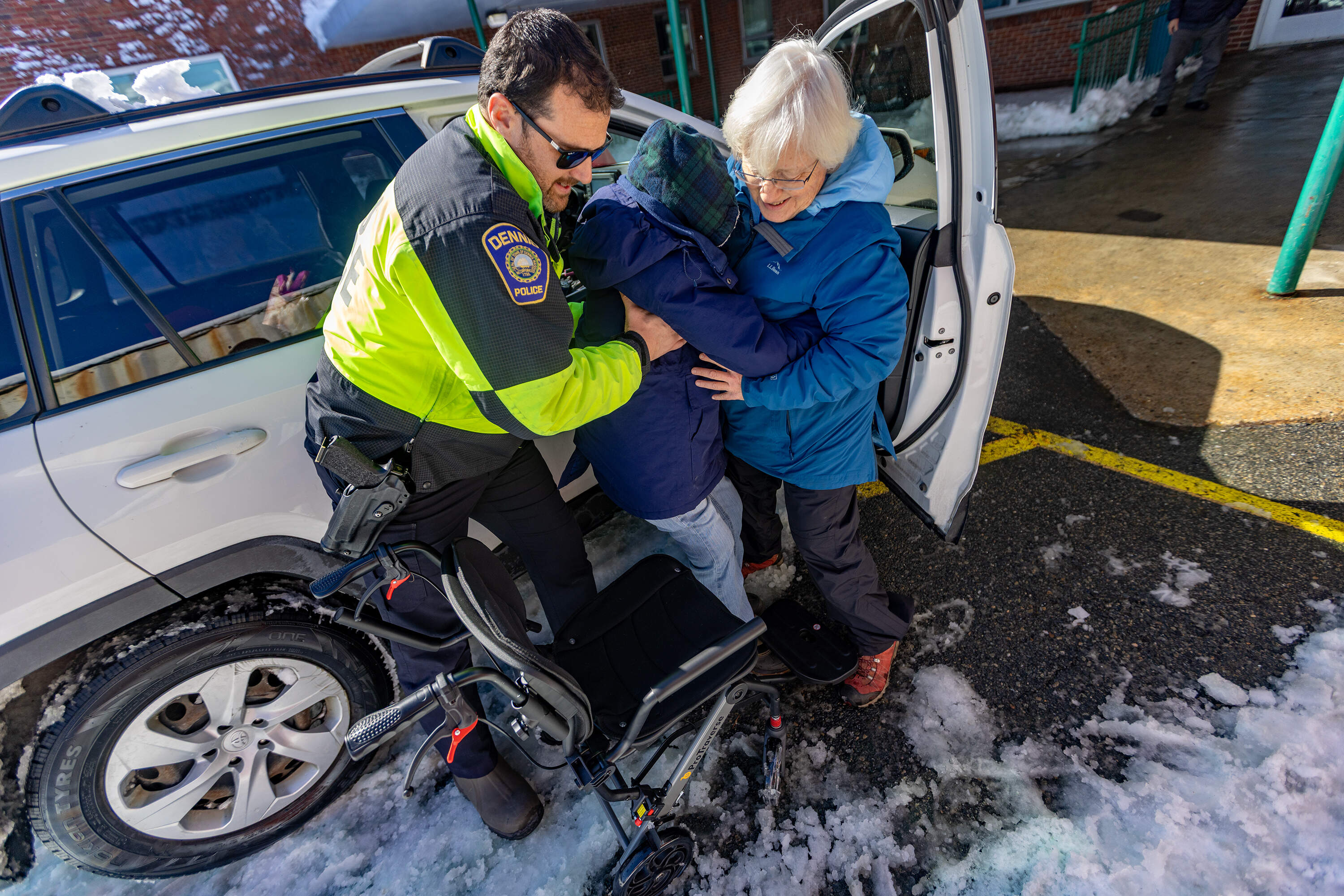
A Nauset shelter was having power problems and had to shut down; about 45 people sheltering there were being transported to a shelter at Dennis-Yarmouth Regional High School. The Cape Cod Regional Transit Authority is driving people to warming centers and shelters who need help.
In Provincetown, Town Manager Alex Morse said that they had over 40 people sleeping at their shelter last night and were concerned more might arrive Tuesday night.
Morse said the town is planning to prioritize people based on age and health. Some people are on oxygen or have chronic illness issues, he said.
Officials said they are looking to move people with health issues closer to Cape Cod Hospital. At Outer Cape Health Services, officials said staffers lack power at their homes and there are difficulties accessing pharmacies and dispensing medications.
"I would characterize the damage as some of the most significant I've seen in my 25 years here at the fire department."
Orleans Fire Chief Geof Deering
Many of the shelters are permitting pets. John Kennedy of the regional transit authority said they, too, are transporting pets with their humans.
“We’ve had dogs, cats and even a parrot — so that’s a first for us,” he said.
The MSPCA-Angell Cape Cod animal shelter was expected to run out of generator fuel by midnight Tuesday, the shelter posted on social media. Workers are moving the nearly 50 animals to other shelters — and looking for a diesel fuel or commercial generator fuel provider to help.
People who deliver food to seniors and those with health issues said they were scrambling to get meals out. Jeni Wheeler, of the Family Table Collaborative in Yarmouth, said Meals on Wheels would not be able to get out Tuesday.
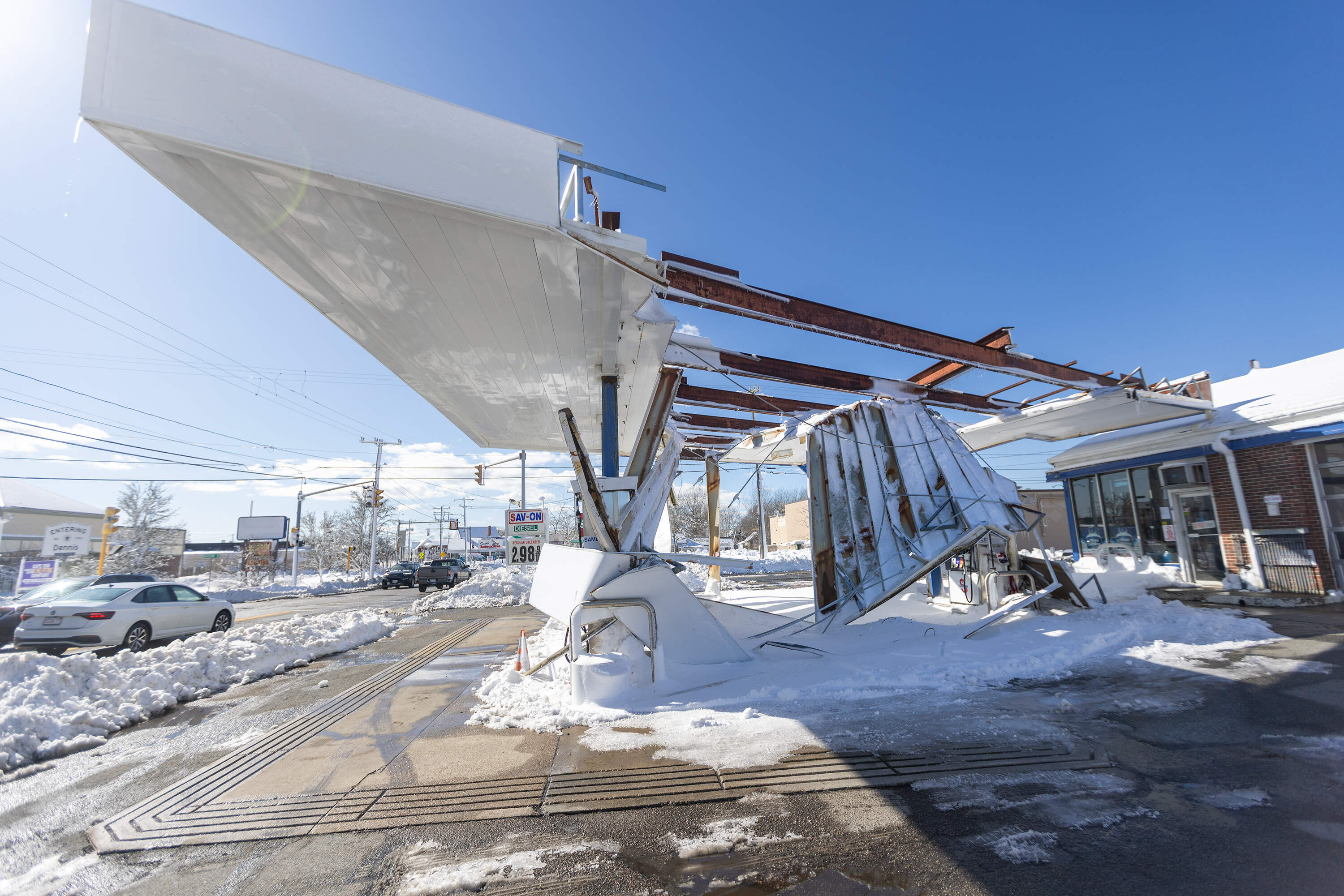
Getting gas was also a challenge in southeastern Massachusetts and on the Cape Tuesday morning.
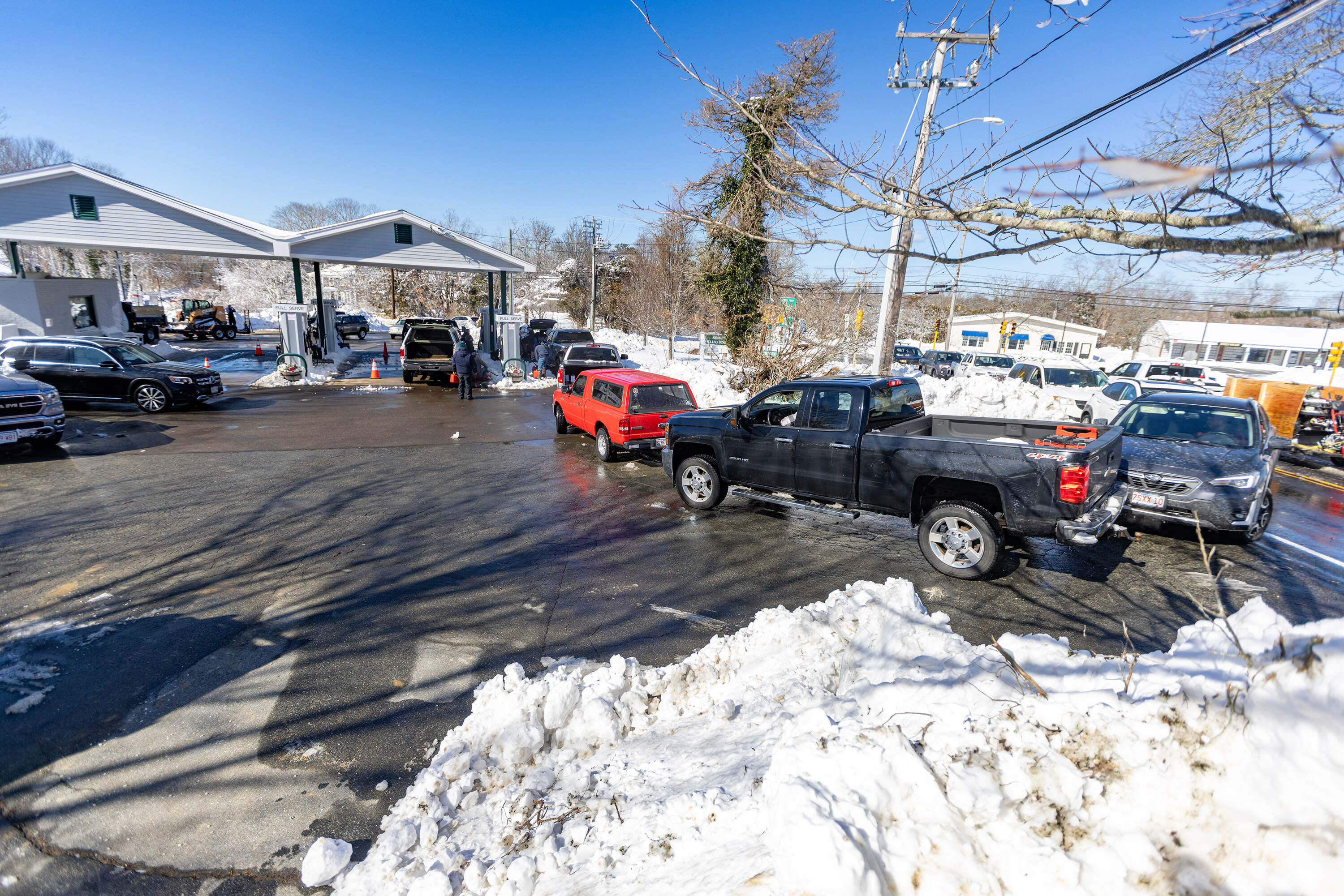
WBUR staffers found closed stations, gas pumps frozen over and not functioning. At a Marshfield station, there was a long line of cars and people filling up extra gas tanks. In Yarmouth, one station had a line of some 30 cars.
Cell towers are down in many parts of the Cape. Verizon said most of its sites are operating on generators. Comcast and AT&T indicated they have major outages.
The southeastern part of the state was hit the hardest by snowfall, with three feet falling in parts of Bristol and Plymouth counties. The National Weather Service recorded 37 inches of snowfall in Dartmouth by 8 p.m. Monday.
In Rhode Island, the snowfall broke the previous record held by the much mythologized Blizzard of '78. The weather service said that 37.9 inches fell on T.F. Green Airport in Providence, well eclipsing the 28.6 inches from the 1978 storm.
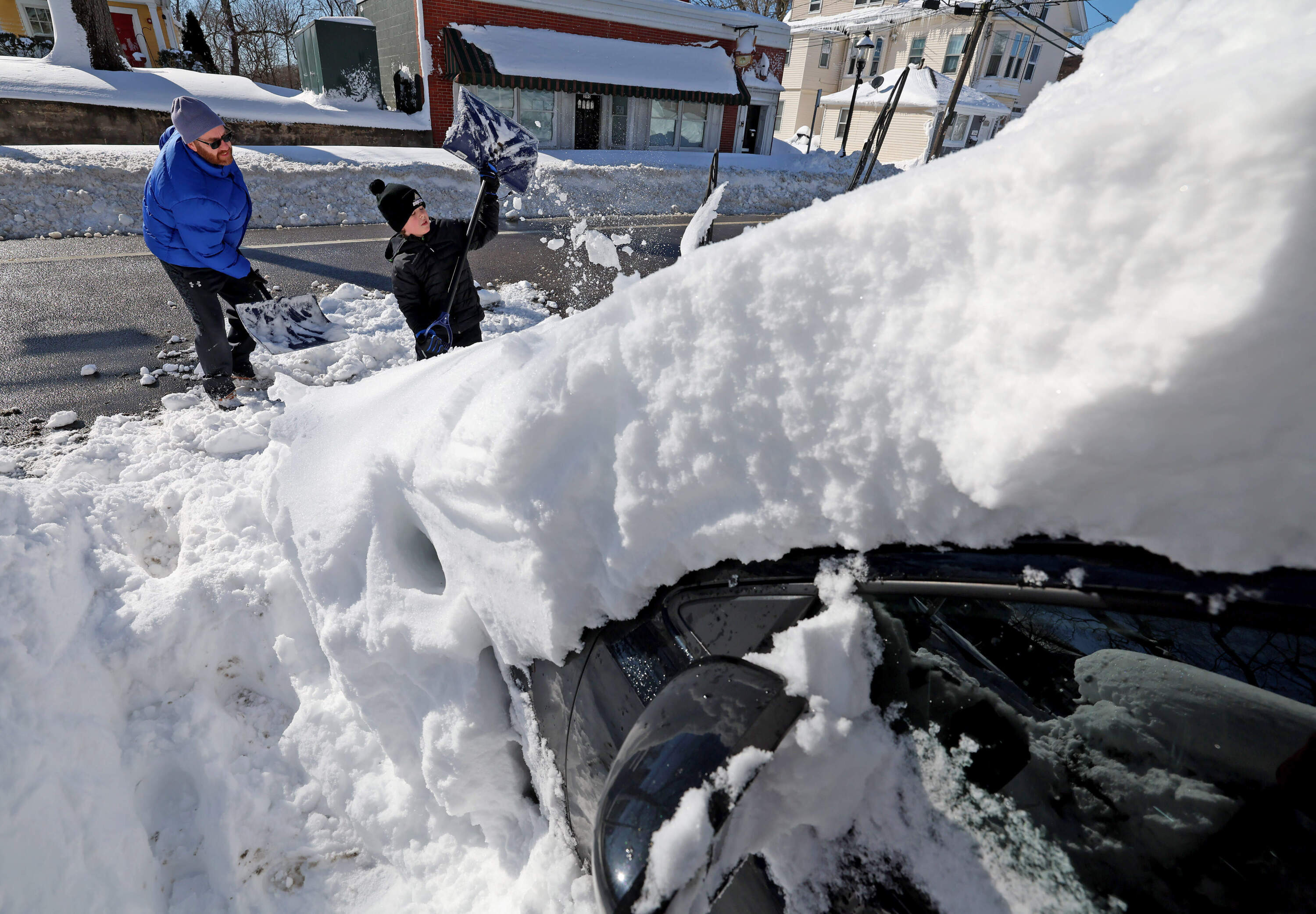
Logan Airport in Boston recorded 16.9 inches of snow. Boston, along with districts across the state, canceled school for a second day Tuesday. Mayor Michelle Wu said at a press conference Monday night that the snow emergency and parking ban will remain in effect until at least 6 p.m. on Tuesday.
" We know that this takes a ton of patience from everyone. Our number one goal is to make sure that everybody is safe," Wu said. "And then we want to get the city back up and running, get schools back open as quickly as possible, and make sure that we remember that we are a winter city, we're a New England city, we know how to do this."
The MBTA will run on a sharply diminished schedule again on Tuesday. The bus, subway and commuter rail will run reduced service, and the paratransit service The RIDE is canceled for the day. Ferries will run on a modified weekday schedule. The transit authority asked for riders to be patient while cleanup is underway and anticipate longer wait times for service.
Flights are resuming at Logan on Tuesday, but according to website FlightAware, nearly half of incoming and outgoing flights are canceled — and many others delayed.
Amtrak has canceled numerous trains Tuesday scheduled to run on the Northeast Corridor between Boston and New York.
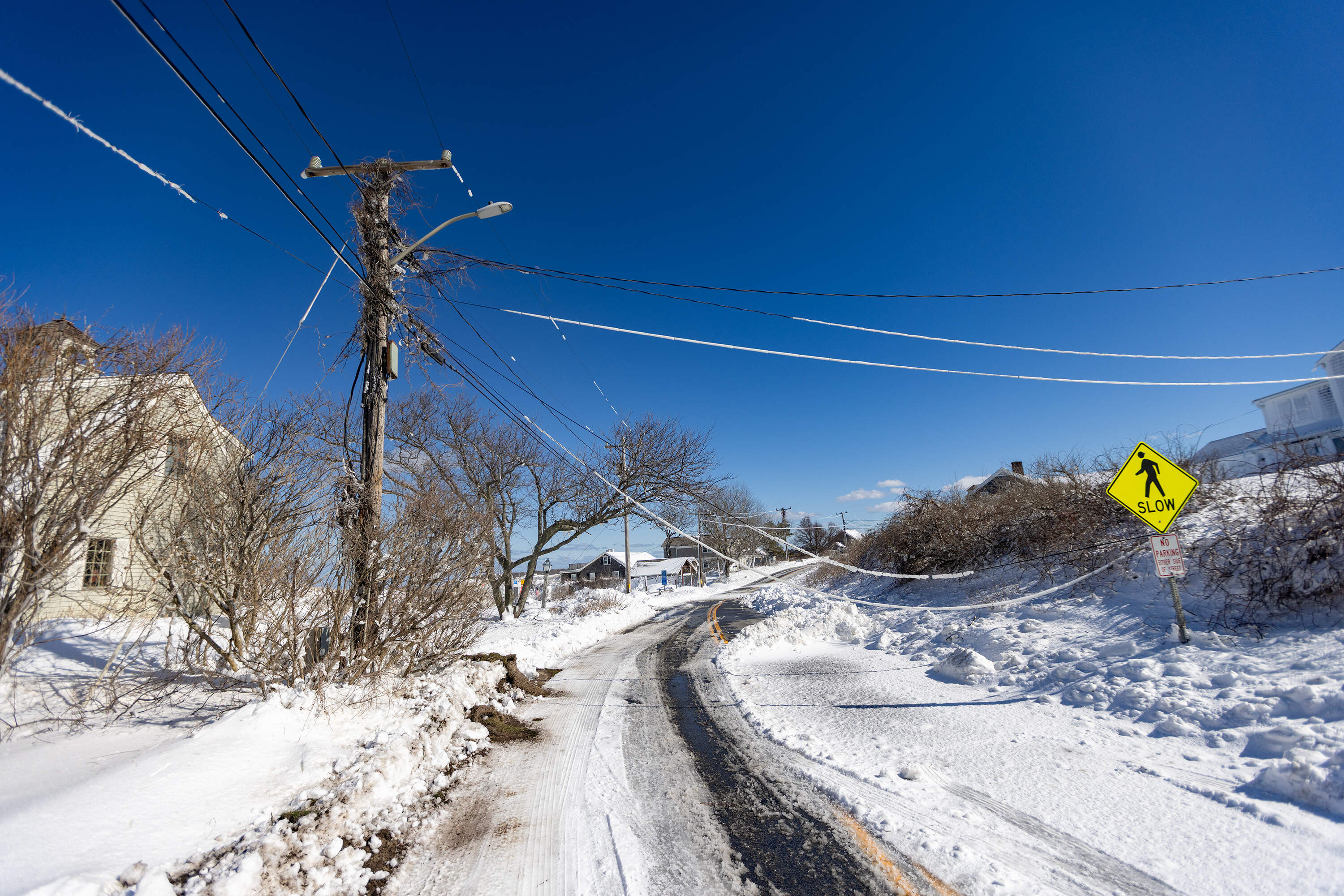
The storm caused a host of issues for towns around the state.
In Winthrop, power outages caused a series of water main breaks, flooding streets and forcing the town to temporarily shut off water. On the North Shore, the Hamilton police station lost power and phone service Monday morning, causing the department to move their emergency dispatch operations to neighboring Ipswich. Power and phone service have been restored to the station since.
Medical personnel said those without power should not try to warm their homes by bringing in a gas generator, charcoal grill or camp stove. Open, unventilated flames will release a colorless, odorless gas called carbon monoxide that can cause flu-like symptoms and death.
Dr. Kavita Babu at UMass Memorial sees patients from warmer climates who don’t understand the risk.
"Many New Englanders are familiar with the threats because we’ve been through this," Babu told WBUR. "Unfortunately, in several of the carbon monoxide poisoning cases that I’ve seen personally, it’s been among people who did not have that familiarity."
Babu has one more caution, if you get into a running car to warm up, make sure the tailpipe is not clogged and has space to vent so that carbon monoxide doesn’t flow back into the vehicle.
With reporting from the WBUR Newsroom.