Support WBUR
Boston's Morning Newsletter
Meet the new E-ZPass transponder in Massachusetts: It's just a sticker

Editor's Note: This is an excerpt from WBUR's daily morning newsletter, WBUR Today. If you like what you read and want it in your inbox, sign up here.
TGIF! It's going to take more than a historic blizzard to stop Sullivan's Castle Island from opening on schedule this weekend.
But first, let's get to the news:
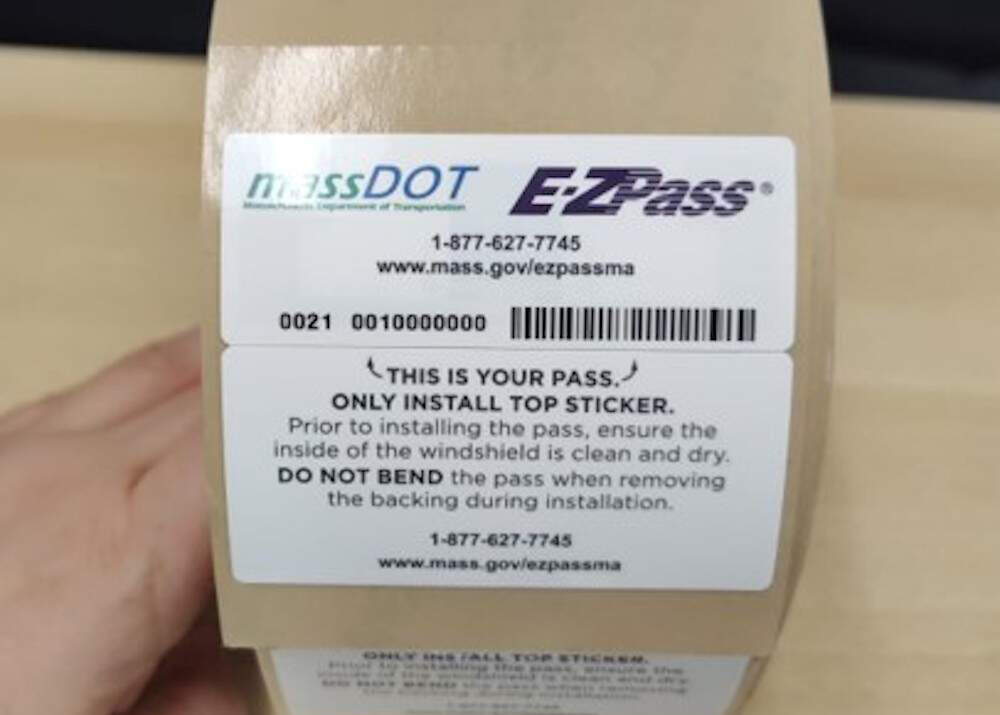
So long, plastic rectangles: Massachusetts is phasing in a new type of E-ZPass transponder. Beginning this Sunday, the state will no longer hand out the hard-plastic transponders that Bay Staters have been using for years to pay highway tolls. Instead, you'll get a small E-ZPass sticker to put on your windshield.
- Why? For one, they're "much cheaper," according to Massachusetts Highway Administrator Jonathan Gulliver. The current transponders, which MassDOT gives out to new customers for free, cost the state $7.05 each. The stickers cost just $0.37, which officials estimate will save nearly $1.4 million a year.
- They're also smaller — and perhaps less of an eyesore. "For folks who don't want to have something apparent that's messing up their windshield, if you have somebody who has a sports car or whatever, and you don't like the look at that thing, this is going to be something that's a smaller footprint for you," Gulliver said during a MassDOT board meeting this week.
- How do they work? The stickers have a RFID chip embedded in them that's read by the overhead toll gantries — just like the plastic transponders. Gulliver said many other states in the national E-ZPass network have already switched to the stickers, and that Massachusetts was one of the ones that were "lagging."
- Who can get them? The stickers will be given out to new E-ZPass customers, as well as people who need a replacement. That doesn't mean you have to give up your plastic transponders — those will continue to work.
- One bonus perk: Currently, it costs $20 for existing customers to replace their E-ZPass if their transponder breaks or gets lost. But when the stickers roll out, replacements will be free, according to a MassDOT spokesperson.
Heads up: A nine-day partial closure of the Orange Line begins this weekend. From this Saturday, Feb. 28 through next Sunday, March 8, there'll be no train service between Forest Hills and Back Bay. The reason, as you might have already guessed, is the T's latest focus: modernizing that old signal system.
- Free shuttle buses will make stops at every closed station between Forest Hills and Back Bay. But T officials warn that a trip downtown from the end of the line will take an additional 30 minutes on the shuttles.
- The faster option is the commuter rail, which takes just 10 minutes between Forest Hills and Back Bay (on the Franklin/Foxborough, Needham and Providence/Stoughton lines). It will also be free to ride between Forest Hills and South Station during the nine-day disruption. Check the schedule here.
Coverage cutbacks: Massachusetts is rolling back GLP-1 drug insurance coverage for more than 400,000 state workers and retirees. In a somewhat contentious vote yesterday, the state's Group Insurance Commission board decided to eliminate coverage for drugs like Ozempic for obesity, due to the surging costs.
- The vote affects 22,000 GIC members taking GLP-1 drugs for weight loss — at a cost of $46 million to the state. However, it does not affect those taking GLP-1 drugs for other conditions, like diabetes (or for multiple conditions).
On Beacon Hill: As environmental activists protested in the State House hallways, the House passed its rewritten energy affordability bill late last night. Rep. Aaron Michlewitz, the House ways and means committee chairman, told reporters the bill would deliver "immediate savings" to Bay Staters who have been hard hit by high energy costs in recent years. But environmentalists argue its proposed $1 billion cut to the Mass Save energy efficiency program's marketing and administrative budgets is short-sighted. State House New Service has more details on what's in the bill here.
- What next: The bill now heads to the Senate, where leaders have signaled they may take a harder stance on combatting climate change. The two chambers will then have to figure out a compromise to send to Gov. Maura Healey. "I will not back off from our climate," Senate President Karen Spilka said earlier this week.
P.S. — What happened in Massachusetts for the first time in 153 years due to this week's big snowstorm? Take our Boston News Quiz and test your knowledge.
Editor's note: This post was been updated with new figures from MassDOT.