Support WBUR
Mass. lawmaker pushes for naloxone at MBTA subway stations after previous effort lapsed

A Massachusetts lawmaker wants to re-start and expand a program to make the overdose-reversal drug naloxone available to the public at MBTA subway stations, claiming T officials did not follow through on a previous effort required by law.
Sen. John Keenan of Quincy is the chief sponsor of a bill to require accessible cabinets carrying naloxone at all stops along the Red, Blue, Green and Orange lines. The bill is currently before the Legislature's transportation committee, which has a March 31 deadline to act. Two other lawmakers co-sponsored the bill.
"Somebody in an overdose situation on an MBTA property is certainly foreseeable," Keenan said. "So I think we have a legal obligation and a moral obligation to make sure that there's a proper response to that, to prevent a death."
An earlier budget amendment sponsored by Keenan, signed into law in 2023, required the naloxone cabinets in all stations along the Red Line and appropriated $95,000 for one year of the effort.
Keenan pushed for that law after he was approached by Harvard students who had researched overdoses in Cambridge. They had learned overdoses were clustered around a handful of T stations in the city, and they proposed making naloxone available in those facilities.
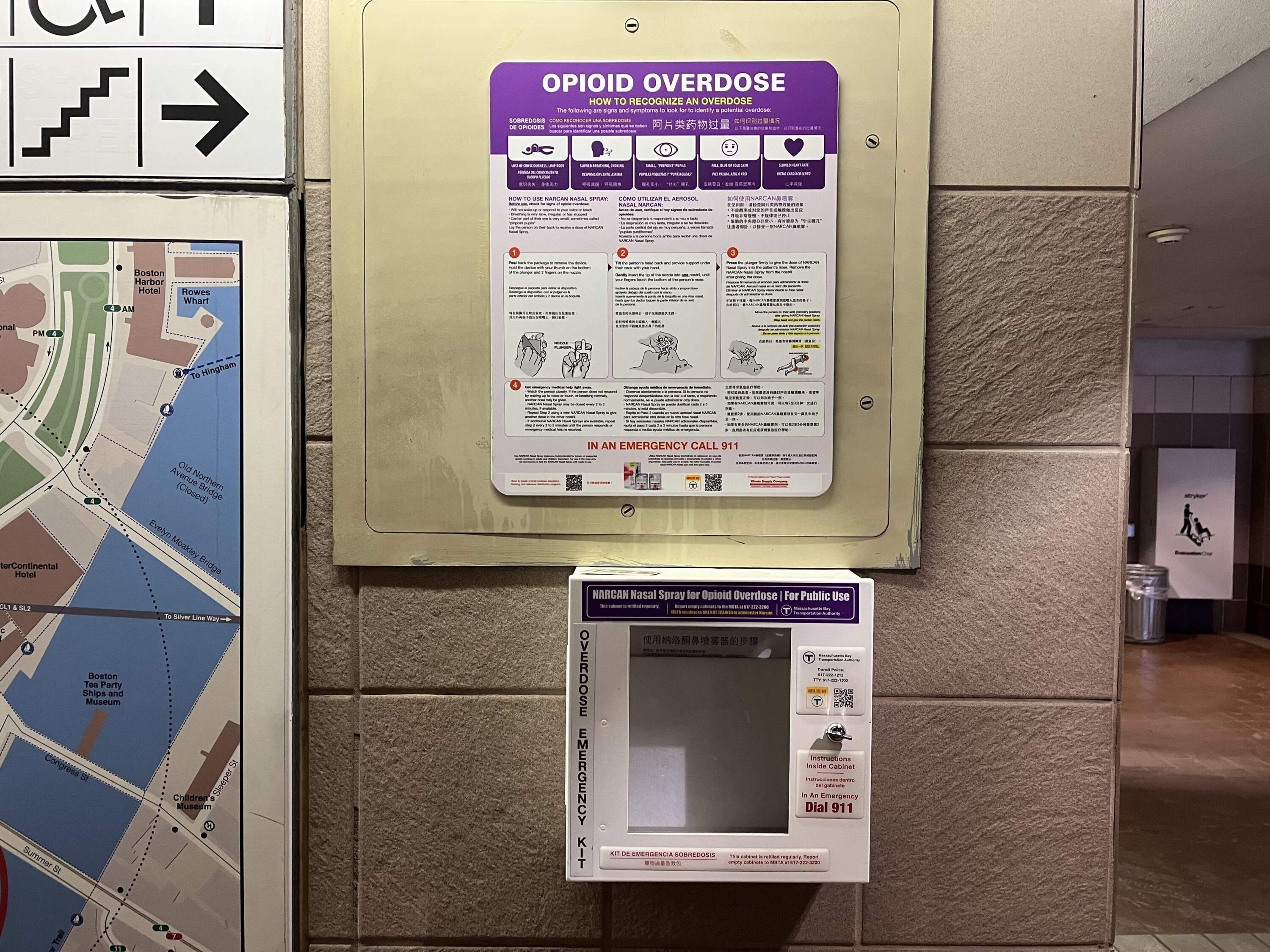
The MBTA rolled out the program in the summer of 2024 at only five stations — Quincy Center, Ashmont, Andrew, South Station and Harvard — installing a total of 15 cabinets, along with signage explaining how to administer naloxone. The agency ended the program about a year later, even though it had only spent $55,515 of the $95,000 that was appropriated, it later reported.
At least some of the naloxone cabinets remain on the subway station walls to this day, though they are empty. Some are broken or partially covered by trash bags.
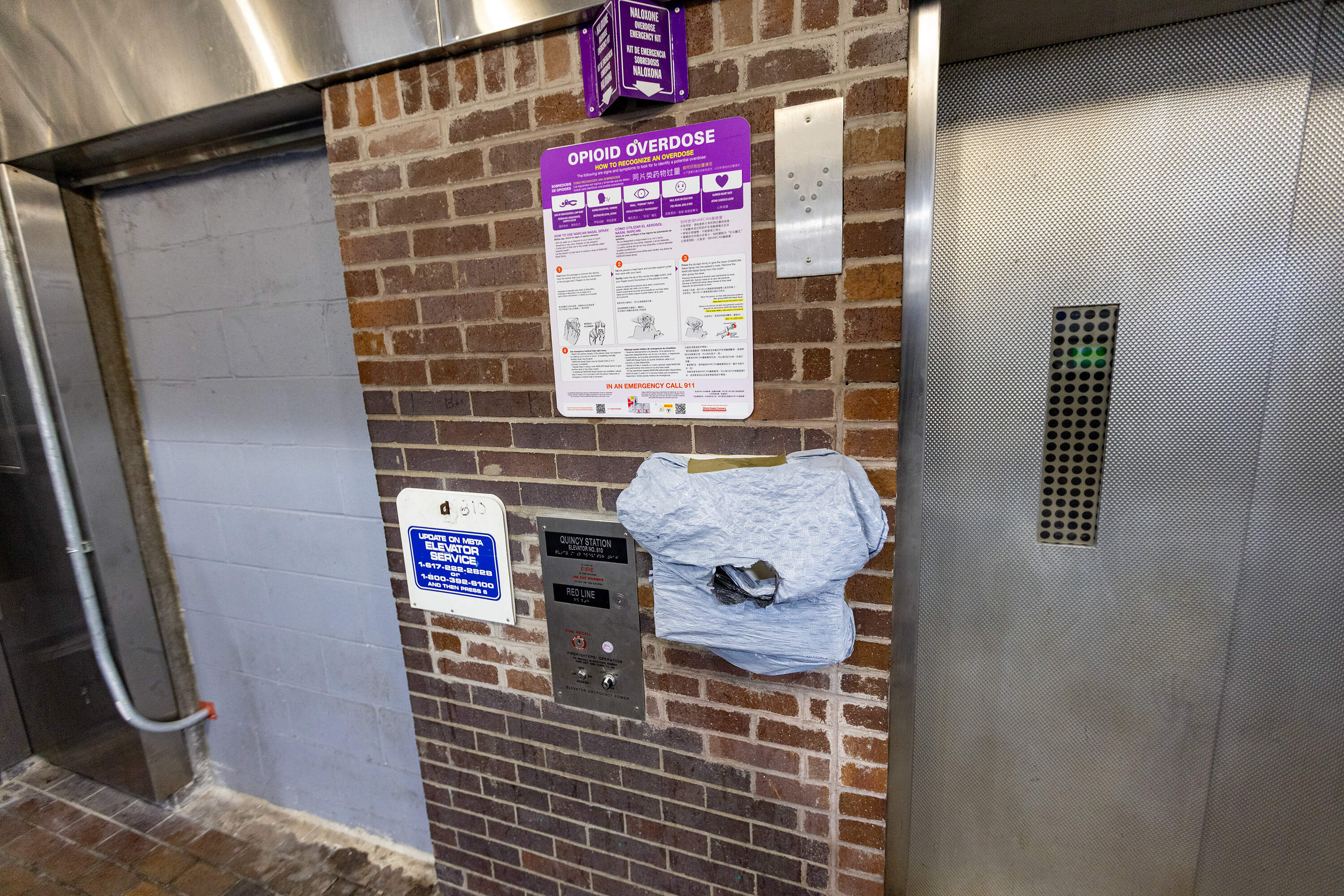
There's disagreement over the intent of the original program and law.
In response to questions from WBUR, the MBTA said it originally planned to try it as a pilot for at least three months, but ultimately ran it for a year. According to Keenan, the funds were for one year with the hope of renewing the funding and continuing to provide the naloxone, which is also known by the brand name Narcan. Keenan's office said it never received a request for more funding to continue the program since the original amount appropriated wasn't spent down.
The MBTA was later required by law to issue a report on the naloxone program. In the report, T officials said they didn't have the resources to sustain the naloxone effort.
"The MBTA recognizes and supports the importance of promoting harm reduction efforts and increasing public access to lifesaving medication that can reverse an opioid overdose," the report said. "As a result of this pilot, the MBTA has determined that it does not currently have sufficient resources or appropriate personnel needed to manage the day-to-day administration of such a program."
The report went on to say that transit police officers would continue to carry naloxone. According to MBTA Transit Police Superintendent Richard Sullivan, the majority of officers carry it.
The MBTA said during the year-long naloxone effort, the cabinets were checked daily and the packages of medication were replaced promptly. It supplied more than 500 doses of naloxone over the course of the program. The MBTA said it didn't know of any situations in which the medication was used to reverse an overdose on T property, so that suggested the medication was carried off site by the members of the public who removed it from the cabinets.
Providing naloxone for people to use during emergencies on T station property is the priority, Keenan said.
"But if somebody is taking Narcan [from the cabinets] because they anticipate they will be in a situation where it could be used outside of a train station, on their way walking to a station or home, or in their community, and they save a life with it, then I think the MBTA should say, 'Hey, I'm glad we did that.' "
The MBTA said it does not have data readily available on overdoses that happen at its stations, because those incident reports are lumped together with all reports of "medical emergencies." But Sullivan spoke publicly in 2017 about a growing number of overdoses at T properties, which had led to the decision to issue naloxone to officers.
The senator said he understands the MBTA has "a lot on their plate," but he pushed back on the agency's claim that it didn't have the staff to keep up with monitoring and stocking the naloxone cabinets.
"You have people who do maintenance in the stations throughout the system every day. You have people on site at most stations every hour of every operating day. And so it shouldn't be that difficult," he said.
According to the MBTA, record-keeping required under the original law, as well as temperature-control requirements for the storage of naloxone, further complicated its ability to sustain the effort.
In its October report, the MBTA recommended that the program be managed by a third party, "such as an agency whose mission is aligned with such an important program and that has the resources and personnel" to carry it out. The T said it had reached out to the Massachusetts Department of Public Health Bureau of Substance Addiction Services and Cambridge Health Alliance for assistance and suggestions.
Both CHA and DPH said they had a discussion with the MBTA, around the time it issued the report, about its attempt to find an agency to run the program — but that they have not been involved since then. An MBTA spokesperson said the efforts to find a third-party contractor are ongoing. The agency declined an interview request from WBUR.
Dr. Scott Weiner, an emergency and addiction medicine physician at Brigham and Women's Hospital and associate professor of emergency medicine at Harvard Medical School who has studied overdose clustering and initiatives to reduce overdose deaths, has worked with Keenan on the naloxone effort. Weiner worked with the Harvard students who originally proposed the idea and published a journal article with them on the subject.
Weiner said the wide availability of naloxone is believed to have played a role in the precipitous decline in overdose deaths over the past few years in Massachusetts and nationally.
There were 1,336 opioid overdose deaths in Massachusetts in 2024, a nearly 37% decline from the year before, according to the state Department of Public Health.
"The harm reduction approach says very clearly, we just want you to reduce harm. We don't want you to die," Weiner said. "No one deserves to die from an overdose."
Weiner said he'd be happy to see naloxone at all MBTA stations, but that it's important to make at least some progress toward that goal — for example, using an "evidence-informed approach" to first roll out the medication cabinets at the 20 or 30 stations with the greatest chance of overdoses happening on or near the properties.
For now, he said, he's concerned there's no lifesaving medication in the T's existing naloxone cabinets.
"The message that we're sending is so negative," Weiner said. "It's a service that we think is important enough to put these boxes up, and then we're just leaving them empty. That's not acceptable."