Support WBUR
Winter is peak oyster time. Deep freezes this season took a toll in Mass.
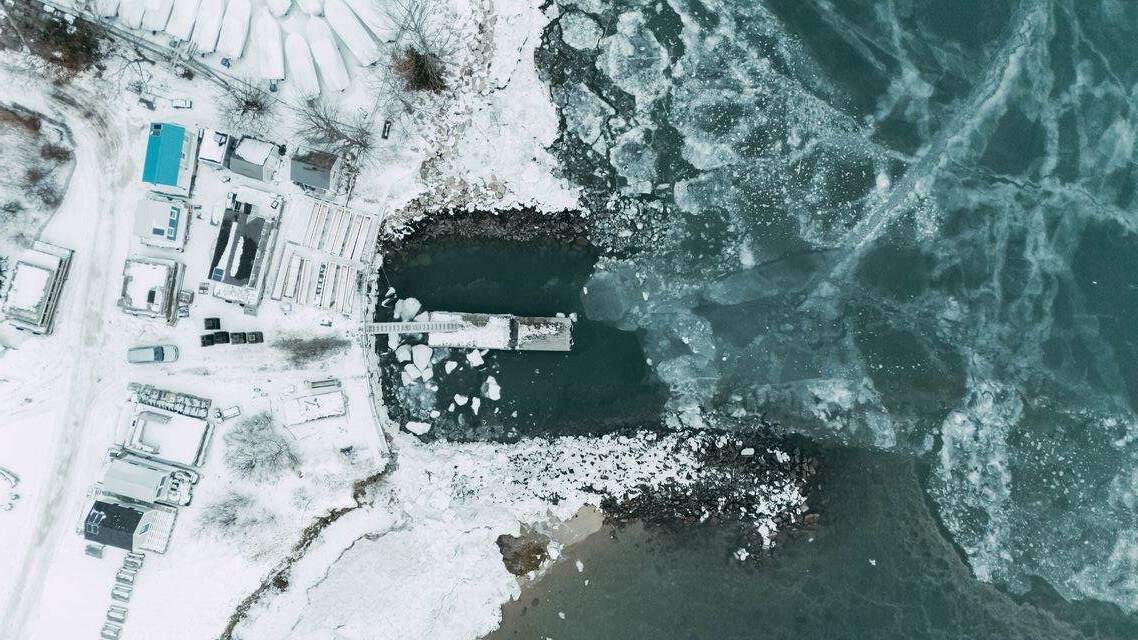
Skip Bennett remembers the winter of ‘04, when the sea ice was so thick, you could drive a truck onto it. This year’s cold has been in the same class, said Bennett, who owns Island Creek Oysters in Duxbury.
The sea ice made the bay look "like a glacier," Bennett said.
"People lost oysters, they lost gear and we probably lost some oysters as well," he said. "That's just a part of shellfish farming, that when there's ice you're gonna lose oysters."
The last few months have been challenging for oyster farmers up and down the eastern seaboard. Ice has destroyed thousands of dollars worth of gear and dragged oysters out to sea as it melts. Not to mention, oysters die when they freeze.
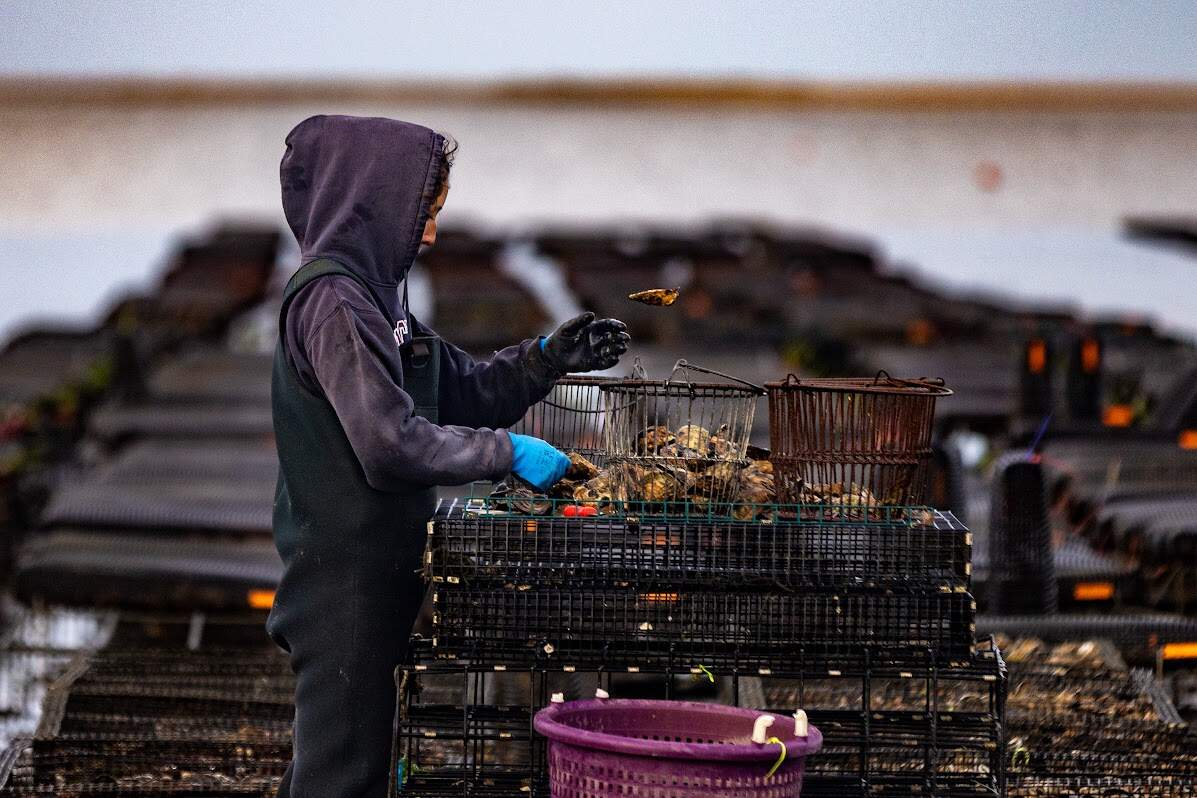
All of this has come during peak oyster season, when farmers across the country expect their highest revenues. The winter months, plus March and April, are considered the best time for eating, and thus selling, these briny ocean treats. (You've probably heard the old adage that advises eating oysters in months spelled with an "r," although they are safe to eat year-round.)
In Massachusetts, a state that loves its coastal fare, oysters are the third-most lucrative seafood item, behind only lobster and scallops. For some farmers, the losses from this winter will likely be felt for years as they work to regrow their crops and their revenue. Others are hopeful they'll rebound more quickly.
The difference is largely due to farming techniques. There are many ways to grow an oyster, but not all methods are equally insulated from harsh winter conditions, according to Seth Garfield, who has farmed oysters on Cuttyhunk Island for 45 years. Garfield is president of the Massachusetts Aquaculture Association, a trade association for shellfish farmers.
Farmers who grow their crop close to shore, in areas that experience tides, are more vulnerable to periods of freezing, Garfield said, because the oysters can be exposed to cold air at low tide.
“Halfway through that cold weather, [the oysters] would be underwater,” said Garfield, so they’d be fine. “And then the tide goes out and [they'd] get frozen,” he added, causing them to die.
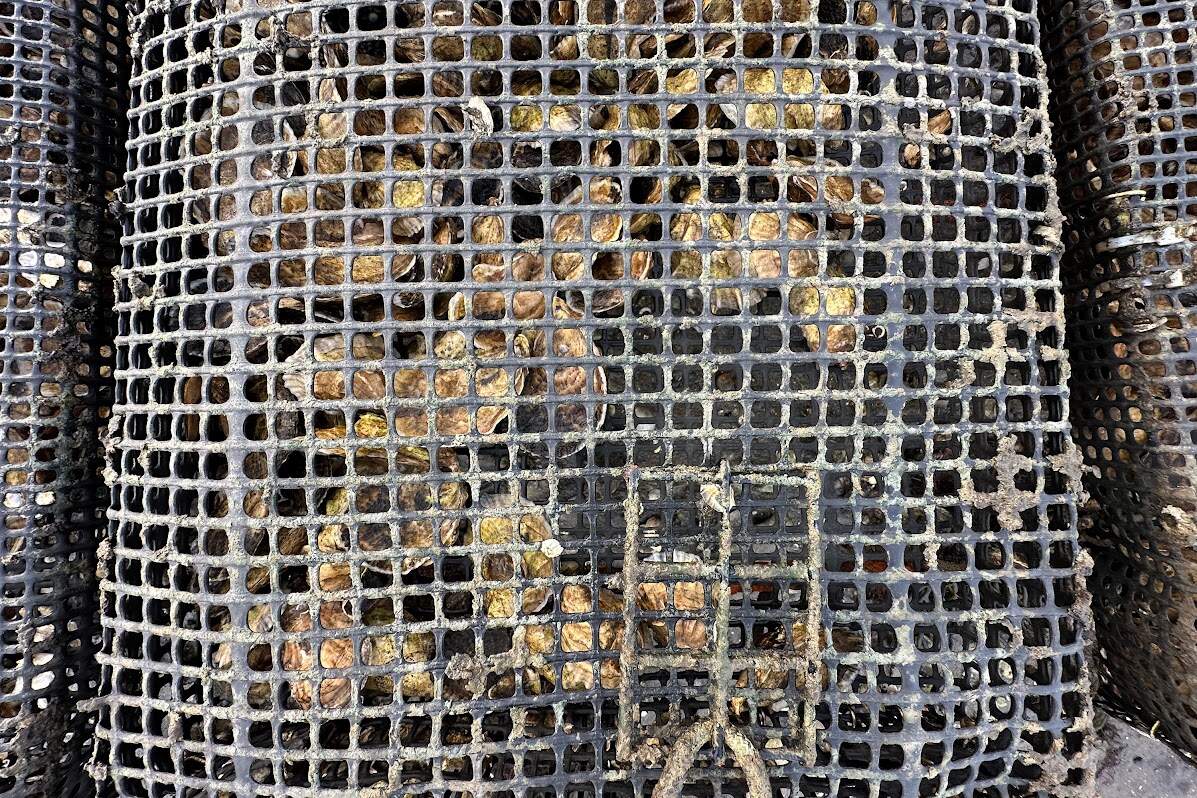
At Field Point Oyster Farm in Wellfleet, most oysters grow in bags elevated above the water's surface. To prevent damage from the cold, owner Michael DeVasto said workers remove the bags each year before ice forms in the water. They take some 600 racks with 2,500 bags, each containing hundreds of oysters, to be stored in shipping containers off-site.
DeVasto also cultivates what's known as a bottom crop, oysters that grow "free range" on the ocean floor, without cages. About half of those oysters — more than usual — were swept away by the ice this year, DeVasto said.
" When there's heavy ice like this, it tends to land on them," said DeVasto. "Then the ice will freeze to the oysters and then sort of carry them off."
Sea ice can also crush and kill the oysters. There's no way to know whether what remains of the bottom crop is still alive, DeVasto said. The Field Point crew will find out once the water gets warmer, when they head out for harvest.
Across the region, the extent of the damage from this winter remains mostly unknown. According to Garfield, some producers still haven’t been able to access their farms due to the deep freeze, so they can’t tell how much their crop has suffered.
Any losses will surely be felt for some time, Garfield said. Not only will those farmers have fewer oysters to bring to market during the rest of oyster season, but they will also have to buy more “seed” — or baby oysters — to get production back up to speed. It takes 12 to 18 months to grow an oyster to eating-size.
During two weeks in February, Garfield said he experienced financial losses. He grows oysters in a saltwater pond, keeping them completely submerged underwater, so he wasn’t expecting this winter to damage his equipment. But the mile-long pathway to the pond was inaccessible until the snow melted. Even when he regained access, the ice was too thick to reach his crop. It took until this month to get his harvesting operation back up and running.
“It's not as though our oysters died or perished, they just didn't get sold that week,” he said. He hopes the upcoming school spring vacations will bring an uptick in restaurant demand, so he can recoup some revenue.
“ I mean, we've got oysters. And if people call us up and need them, then we can increase our sales,” Garfield said.
Bennett, of Island Creek Oysters, also has stock to sell. Remembering the deep freezes of 2004, he had his team submerge the oyster cages deep underwater this winter, below the reach of any sea ice, so they'd have plenty to harvest at this point in the season. Bennett's team has been dutifully breaking through the ice with metal-hulled boats for weeks, so they could pull the shellfish out of the water.
The strategy paid off. In a week where Bennett said his business might normally sell 30,000 oysters, the team sold between 70,000 and 80,000, picking up the slack from other farmers whose crops were frozen out.
And while the icy conditions have been a challenge for many, Bennett said there is one bright spot for oyster farmers this year: The deep freeze should kill off green crabs, an invasive species in the area that preys on oysters.