Support WBUR
Boston's Morning Newsletter
What's next for the Elizabeth Warren-backed housing bill that just passed the Senate?
Editor's Note: This is an excerpt from WBUR's daily morning newsletter, WBUR Today. If you like what you read and want it in your inbox, sign up here.
It's Friday. We have a very green weekend ahead. The Boston Legacy play their first-ever match Saturday at 12:30 p.m. — nationally televised on ABC. More than 20,000 tickets for the game have been sold, but there are still lots of $34 and $46 tickets available in Gillette Stadium's lower bowl. WBUR's Katie Cole has almost literally everything you need to know about the new women's soccer team here.
And then on Sunday — brace yourself — it's the South Boston St. Patrick's Day parade, which will be running in the opposite direction for the first time in decades. Here's what else to know about this year's parade, including the latest anti-"tomfoolery" efforts.
Now, to the news:
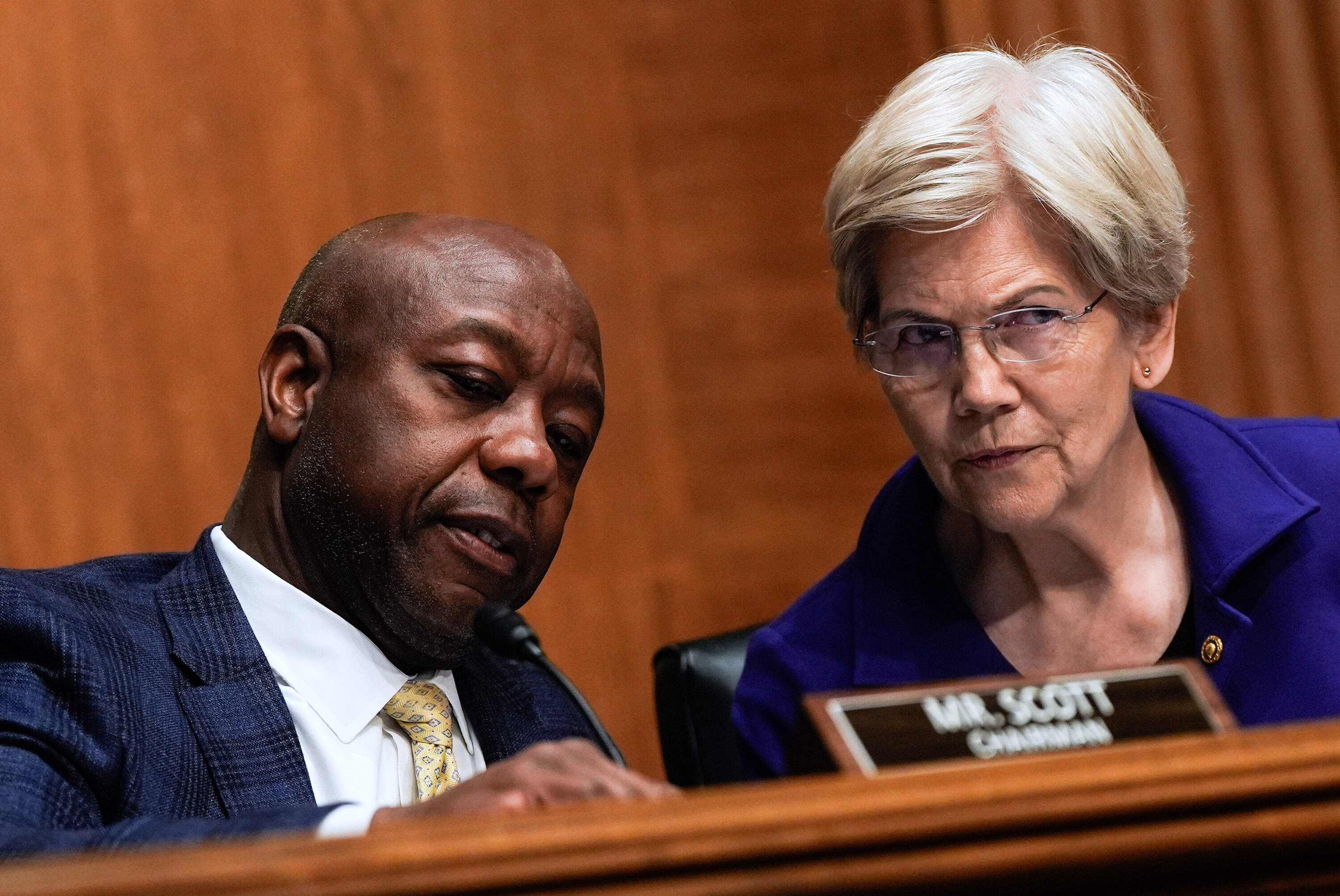
The ROAD to Housing Act's road ahead: Something unusual happened in the U.S. Senate yesterday: Democrats and Republicans came together to overwhelmingly pass the biggest housing bill in decades, co-authored by none other than Massachusetts' own Elizabeth Warren. The Democrat's "21st Century ROAD to Housing Act" — which she originally drafted with Republican Sen. Tim Scott — was approved by a vote of 89 to 10. The House passed a bill earlier this year that is 84% the same, according to Scott's office. But not 100%. And that means there are some differences to work out.
- The details: The Senate bill primarily seeks to put a dent in the nation's housing affordability problems by boosting the supply of housing. And it takes a few different angles at doing that: (1) easing rules on factory-built homes, (2) allowing banks to invest more in affordable housing projects, (3) encouraging more streamlined construction at the local level and (4) putting in new rules against big investors buying up lots of single-family homes. Warren compared the bill to a "meatball," with lots of different ingredients that were key to it gaining bipartisan support. NPR has more details on the recipe here.
- The differences: Perhaps the biggest sticking point is the Senate's proposal to ban investors that own at least 350 single-family homes from buying more. There are exceptions for homes that need serious renovation, as well as new homes constructed for renting. But the developer would have to sell those "build-to-rent" homes after seven years. According to The New York Times, some House Republicans aren't happy with that; in fact, some top Senate Democrats and housing groups aren't either. (There are also some other disagreements around limits on a federal digital currency and community banking lending rules.)
- There's also the Trump factor: The White House issued a statement of support for the Senate bill earlier this month. But more recently, Trump pledged to not sign anything until Congress passes a bill to tighten national voting rules.
- What's next: According to Politico, House Speaker Mike Johnson told fellow Republicans this week that he expects the two bills will need to be ironed out in a closed-door conference committee — which could take weeks or more.
- What Warren is saying: In a speech yesterday on the Senate floor, Warren called on House Republicans to "immediately" pass the bill as-is. "If they do not, they will have to explain to families across the country in November why they refused to lower the cost of housing," she said. Watch the full speech here.
Back in Massachusetts: Police in Greater Boston are increasing patrols around synagogues after yesterday's attack in Michigan. That includes Brookline, home to one of the state's largest Jewish populations. In a statement to WCVB, the town's police department encouraged people to report any suspicious behavior.
Federal funding fallout: A Massachusetts-based green cement startup is laying off two-thirds of its workforce, after the Trump administration canceled an $87 million grant for its plant in Holyoke last year. Somerville's Sublime Systems announced yesterday that roughly 60 people will lose jobs due to the lost funding. Bloomberg reported that it also endangers Sublime's deal to supply Microsoft with low-carbon cement.
Spoiler alert: Boston University's bid to reach the NCAA men's college basketball tournament may have fallen just short, but our March Madness dreams are still alive here in Massachusetts. UMass — yes, UMass! — upset the previously undefeated Miami University (Ohio) in the first round of their conference tournament. The RedHawk's record had been one of the biggest stories in college basketball this season, until the Minutemen stormed in.
- UMass now have to win their next two games to get into the NCAA tournament. The first one is tonight at 5 p.m. against the University of Toledo.
Heads up: DCR is closing a nearly four-mile inbound stretch of Storrow Drive and Soldier's Field Road for three nights early next week. From 9 p.m. until 5 a.m. the next day on Sunday, Monday and Tuesday nights, the parkway will be closed from North Harvard Street (by the Harvard boathouse) to Boston's Mugar Way. DCR plans to divert traffic onto Memorial Drive during the closure.
P.S.— When did the first intelligible telephone call take place? Take our Boston News Quiz and test your knowledge of our recent stories.