Support WBUR
Boston's Morning Newsletter
The Boston City Council puts pressure on Mayor Wu over reported transportation project delays
Editor's Note: This is an excerpt from WBUR's daily morning newsletter, WBUR Today. If you like what you read and want it in your inbox, sign up here.
The Federal Reserve is holding interest rates steady, due to uncertainty over the larger economic impacts of the U.S. and Israeli war with Iran. NPR has more here on the war's latest escalation: attacks on gas facilities in the Middle East.
Now, to local news:
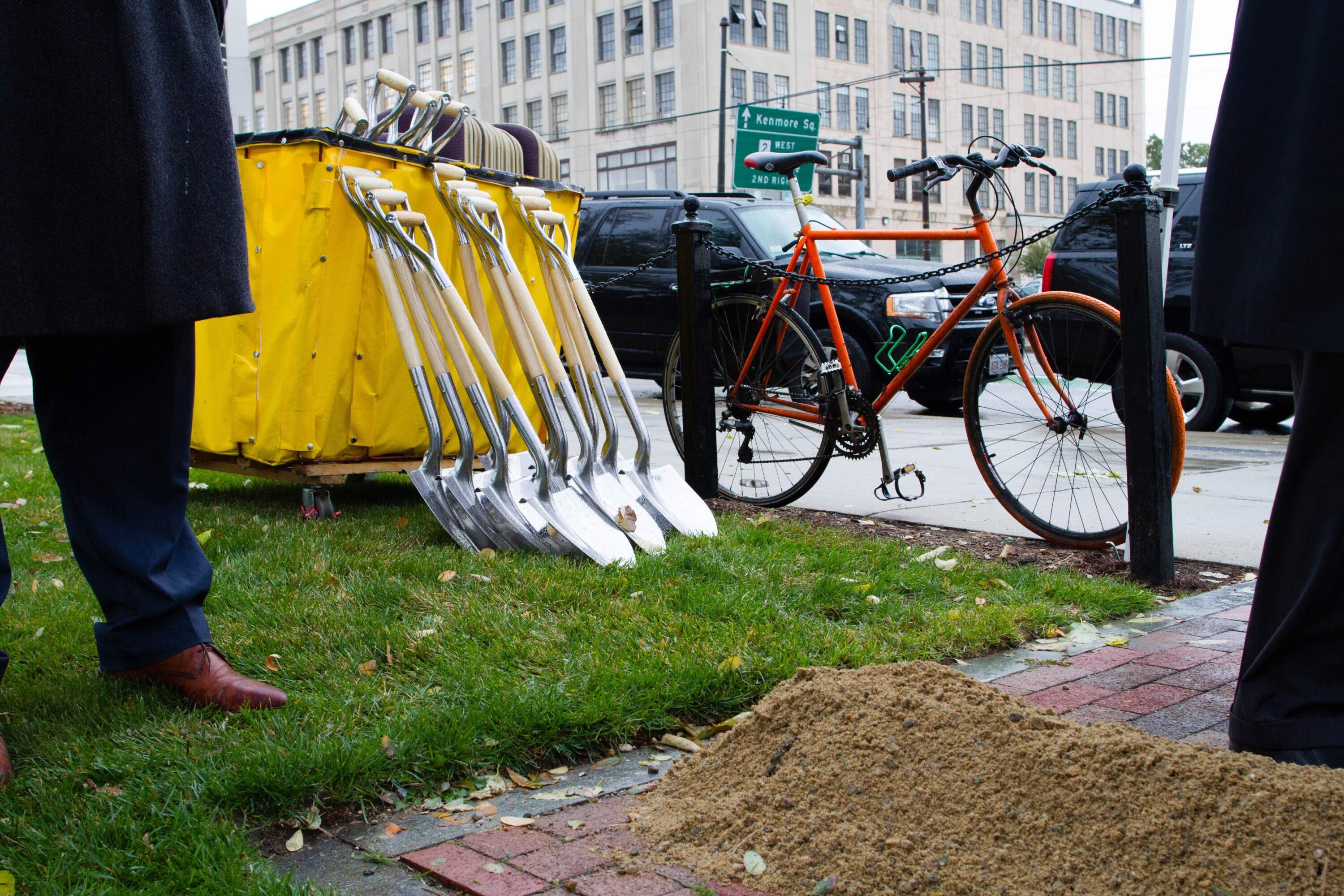
Frustration on the streets: A year ago, Boston Mayor Michelle Wu was facing criticism for acting too quickly on street projects and announced a more cautious approach to new bus and bike lane construction. Now, she's hearing it from the other side. During a Boston City Council hearing Wednesday, several of Wu's allies expressed frustration that the city is moving too slowly on transportation projects — so slowly it could maybe force the city to forfeit funding. City Council President Liz Breadon said some city projects have been "indefinitely paused." After the Trump administration clawed back $327 million for the massive multi-modal project in Allston last year, Breadon said the city "simply cannot afford to make a terrible situation even worse by squandering hundreds of millions of dollars in external funding through our own delay."
- The backstory: In late February of last year, as bike and bus lanes were becoming a flashpoint in her reelection campaign, Wu ordered a 30-day review of all street infrastructure changes made during the first three years of her term. And as The Boston Globe reported over the weekend, the mayor has since required her personal approval on most projects. Wu told the Globe it was to ensure projects had done enough outreach and gotten community buy-in. However, many have stalled, including the planned $162 million revamp of Blue Hill Avenue.
- Zoom in: It's not just big projects, either. City officials told the Globe that fewer than two-dozen speed humps were installed last year, after 600 were added in 2024. "We're not talking about renovations of entire roads," City Councilor Enrique Pepén, a former Wu administration official, said Wednesday. "I'm talking about crosswalk updates. I'm talking about speed humps, I'm talking about sidewalks. Everything that is in question ... I would love to get updates."
- What's next: Breadon's office estimates about $200 million in various state and federal grants could be in jeopardy if the delays cause the city to miss upcoming project deadlines. Nearly the entire Council signed onto her order for a hearing to get more information from the Wu administration, MBTA and other partners on the delays and potential risk. City Councilor Sharon Durkan also filed a hearing order calling for more transparency on the city's street project priorities. " We need to have a conversation about transportation philosophy," she said. Wu's office did not immediately respond to WBUR's request for comment.
On Beacon Hill: Vanna Howard was sworn in yesterday as Massachusetts' newest state senator — and the first Cambodian-American state senator in the entire country. The Lowell Democrat, who won the special election earlier this month for the late state Sen. Ed Kennedy's seat, came to the U.S. from Cambodia at age 11 after her father, siblings and several other family members were killed by the Khmer Rouge regime.
- Meanwhile on the hill: The House advanced a $1.8 billion supplemental spending bill yesterday, and WBUR's Chris Van Buskirk reports that lawmakers are coalescing around legislation that would at the very least ban warrantless civil immigration arrests at courthouses — though the specific bill remains TBD.
In Worcester: Non-essential outdoor water use is now banned in Massachusetts' second largest city due to the ongoing drought — yes, drought. Worcester officials announced the ban yesterday, after state environmental officials upgraded drought conditions for most of Massachusetts to "significant" and "critical" levels.
- How are we in a drought? Despite all the recently melted snow from this winter's storms, officials say most of that water did not flow into lakes or ponds because it was locked in snow and the ground was frozen. Even when it did melt, 3 feet of snow equals only about 2.5 inches of water, according to the state, "which is not enough to fully recharge rivers, lakes, ponds, and groundwater after months of below-average precipitation and overall substantial water deficits."
P.S.— CitySpace is hosting a live taping of Slate's "What's Next" podcast Friday night — including special guest Michelle Wu. Come see the Boston mayor and MIT President Sally Kornbluth sit down for back-to-back interviews on both local and national issues with Slate hosts Mary Harris and Lizzie O'Leary. Get tickets here.