Support WBUR
Three Greater Boston artists receive $75,000 awards
Three Greater Boston-based artists have been selected to receive $75,000 each to build their practices. On Tuesday, Wagner Foundation announced Tomashi Jackson, Lucy Kim and Yu-Wen Wu as its 2026 Wagner Arts Fellows.
The Wagner Arts Fellowship honors mid-career to established artists who are committed to Boston’s creative arts ecosystem and to developing socially engaged, community-focused work.
“It's geared towards contemporary visual artists, but also artists who transform our idea of social change,” said Abigail Satinsky, senior program officer and curator of art and culture at Wagner Foundation. “They challenge our notions of the world as it is and as it could be.”
The three artists are the second cohort to receive the fellowship. Last year, the inaugural recipients included Daniela Rivera, Wen-ti Tsen and L'Merchie Frazier.
“The fellowship started with the idea that established visual artists in Boston, who have made Boston their home and contributed to the culture here, deserve recognition and support,” said Satinsky. “Artists should be able to stay here and thrive. And so in order to do that, we need to recognize them as essential and give them resources to do big things.”
A key component of the fellowship is its unrestricted award. Similar grants available to Boston artists include the Artadia Awards program, which provides $15,000 in unrestricted funding, and the Brother Thomas Fund from The Boston Foundation, providing $20,000 in unrestricted funding.
“If we trust artists, we should give them resources without strings attached to produce and work without needing to have specific outcomes,” said Satinsky.
All three incoming fellows spoke positively of the changes they’ve seen in the Boston art community within the last two decades. Wu mentioned the community growing more supportive of each other, while Jackson mentioned the impact of organizations like the Boston Ujima Project and the Boston Art Review.
Satinsky, who was born in Jamaica Plain and has lived in Boston for the past decade, has seen more efforts to support local artists at an institutional level. She referenced the Boston Public Art Triennial, the Rose Kennedy Greenway, and the Isabella Stewart Gardner Museum’s collaborative exhibits as leaders in these efforts.
At the same time, everyone acknowledged the realities of the high cost of living, precariousness of finding a stable studio space, or the national defunding of the arts and humanities.
“We have a long way to go because we are not an affordable city where artists feel like they can truly be here. We have to do something about that,” said Satinsky.
This year’s Wagner Fellows — Tomashi Jackson, Lucy Kim and Yu-Wen Wu — each discussed their practices, the Wagner Arts Fellowship and their relationship with Boston.
Yu-Wen Wu
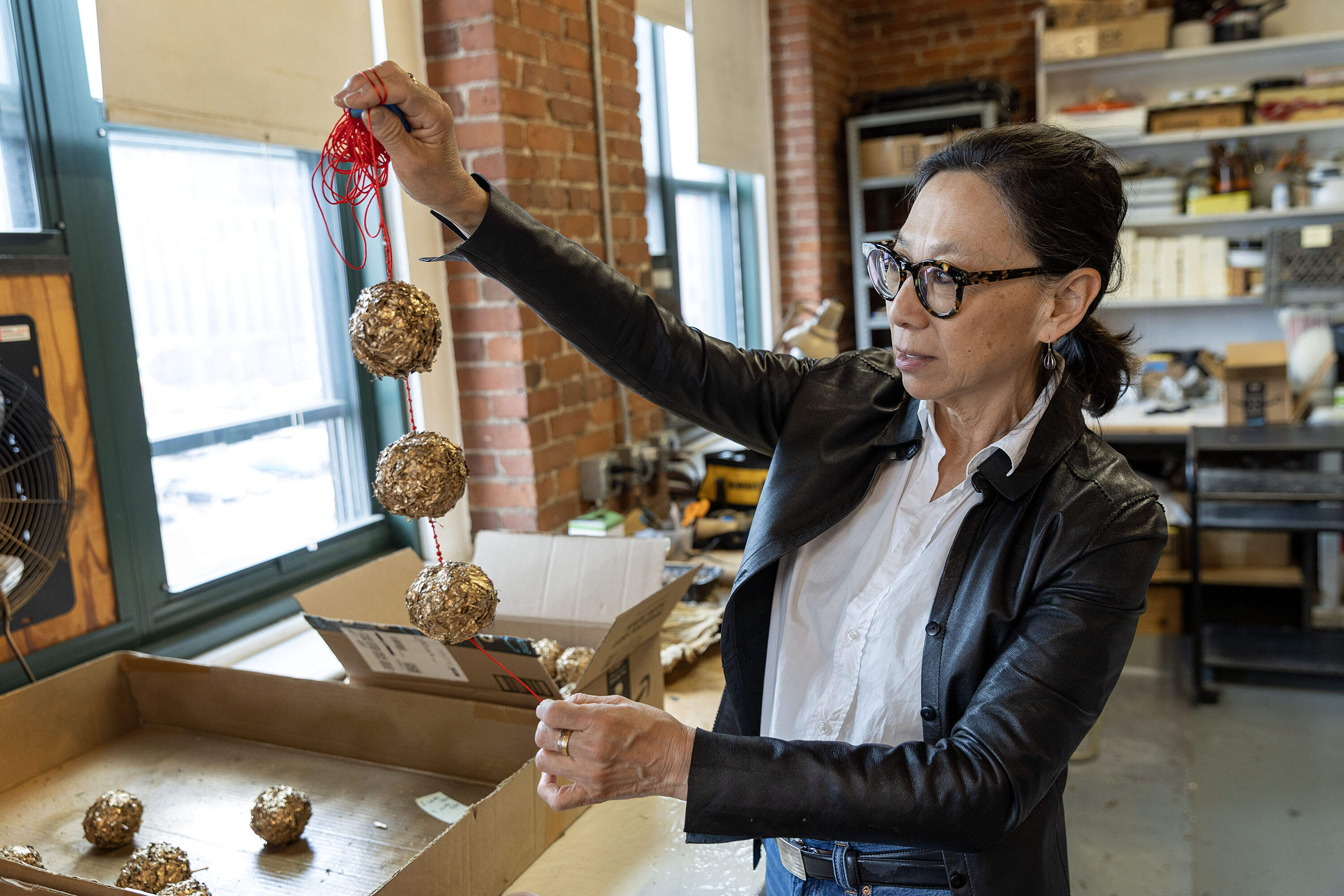
Yu-Wen Wu is an interdisciplinary and multi-disciplinary artist whose practice is informed by her experiences immigrating from Taiwan to the United States. Her work, which spans large-scale installations, drawings, sculpture and public art, addresses themes of migration, displacement, memory and cultural identity.
Wu often uses materials like tea, porcelain, red thread and gold, which reference her cultural identity and memories from childhood.
“In my practice, materials aren’t just a medium. It's also a carrier of meaning. Materials tell me about the history, its industry, its ancestral knowledge,” said Wu. “The materials tell the story and guide what I make.”
Wu has lived in Boston since receiving a masters degree at the Tufts School of the Museum of Fine Arts. In 2019, she moved into 249 A Street Artists Cooperative, an artist-owned live/work studio building in Fort Point.
“My home base is here in Boston. And I've been here for over 20 years, so it feels very much like a community that I know. It's supported me all these years — the people, the artists, the gallerists.”
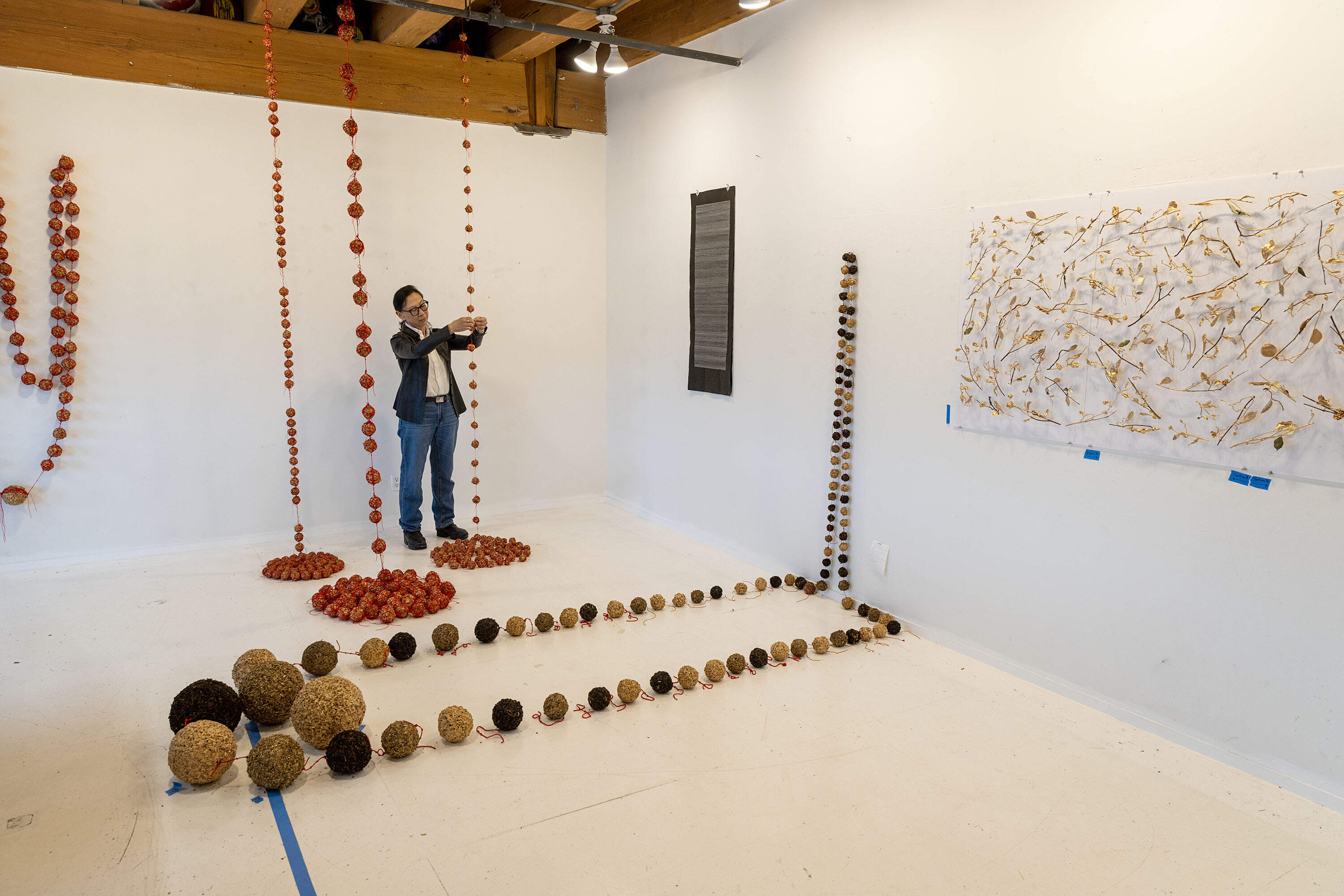
One of Wu’s Boston-based installations was "Lantern Stories," commissioned by the Rose Kennedy Greenway and hung in Chin Park in 2020 and 2022. After holding listening sessions with Boston Chinatown residents, Wu created 31 unique lanterns that reflect the history and voices of Chinatown.
Wu hopes to use the Wagner Fellowship funding to hire a studio manager to help with studio administration and fabrication. With remaining funds, she’d like to purchase a small kiln for her studio.
Prior to being named a 2026 Wagner Arts Fellow, Wu also received a grant from the Trellis Art Fund. She says that both grants will bolster her practice "tremendously."
“I'm starting to be able to reach out to other areas in the country and to expand my work and exhibit more widely," she said. "Ultimately, it's time to make work. That's what it enables.”
Tomashi Jackson
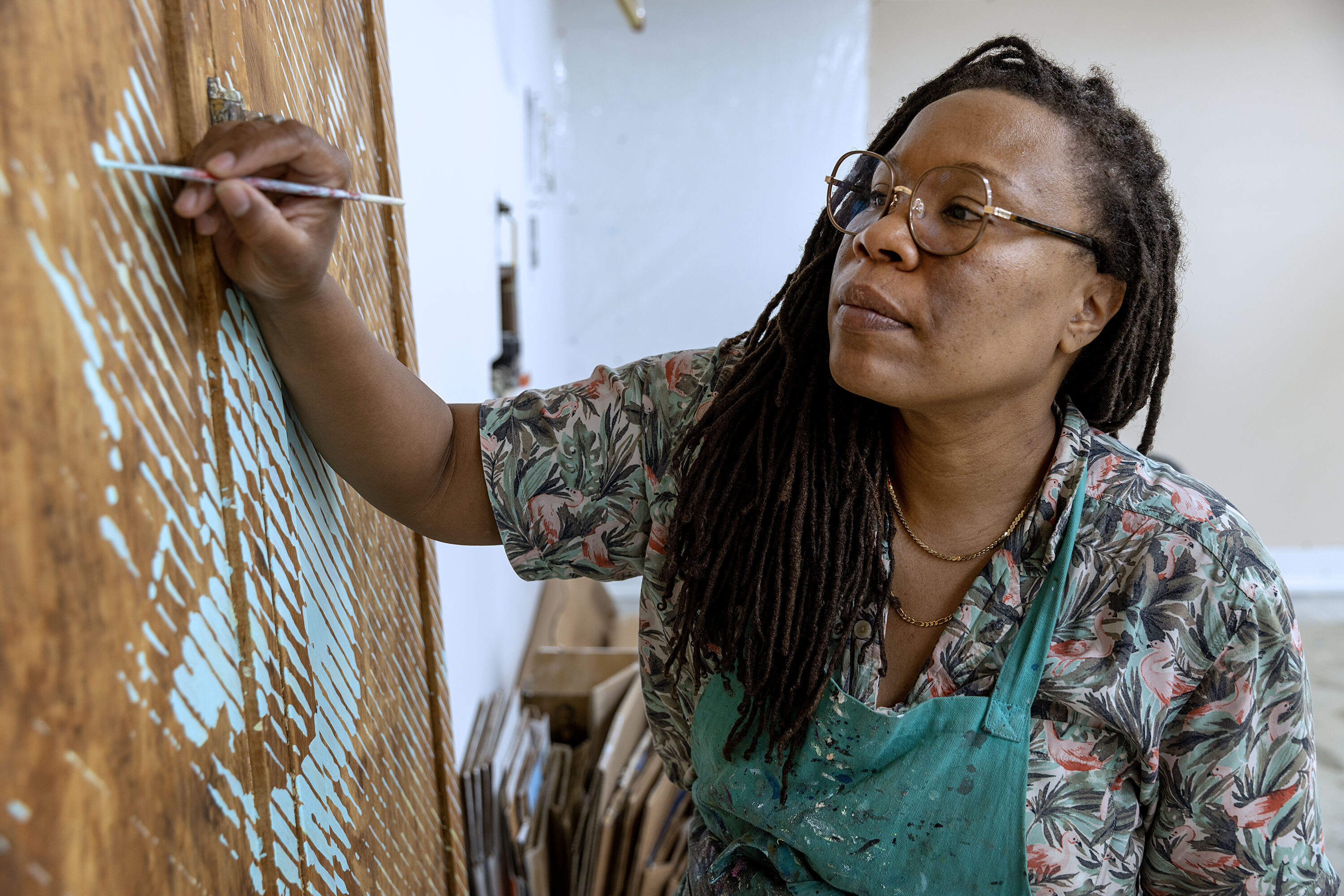
Tomashi Jackson is a visual artist and educator based in Cambridge and New York City. Inspired by California muralists, she works across painting, printmaking, video, photography, fiber, and sculpture. Her research-based practice addresses issues related to public space, which include segregation, voting rights, education, labor, housing, and transportation.
In her Somerville studio, Jackson was working to complete three large-scale works for an upcoming exhibition in Connecticut. Jackson’s work will be displayed together with work by renowned artist Robert Rauschenberg at the Glass House in New Canaan.
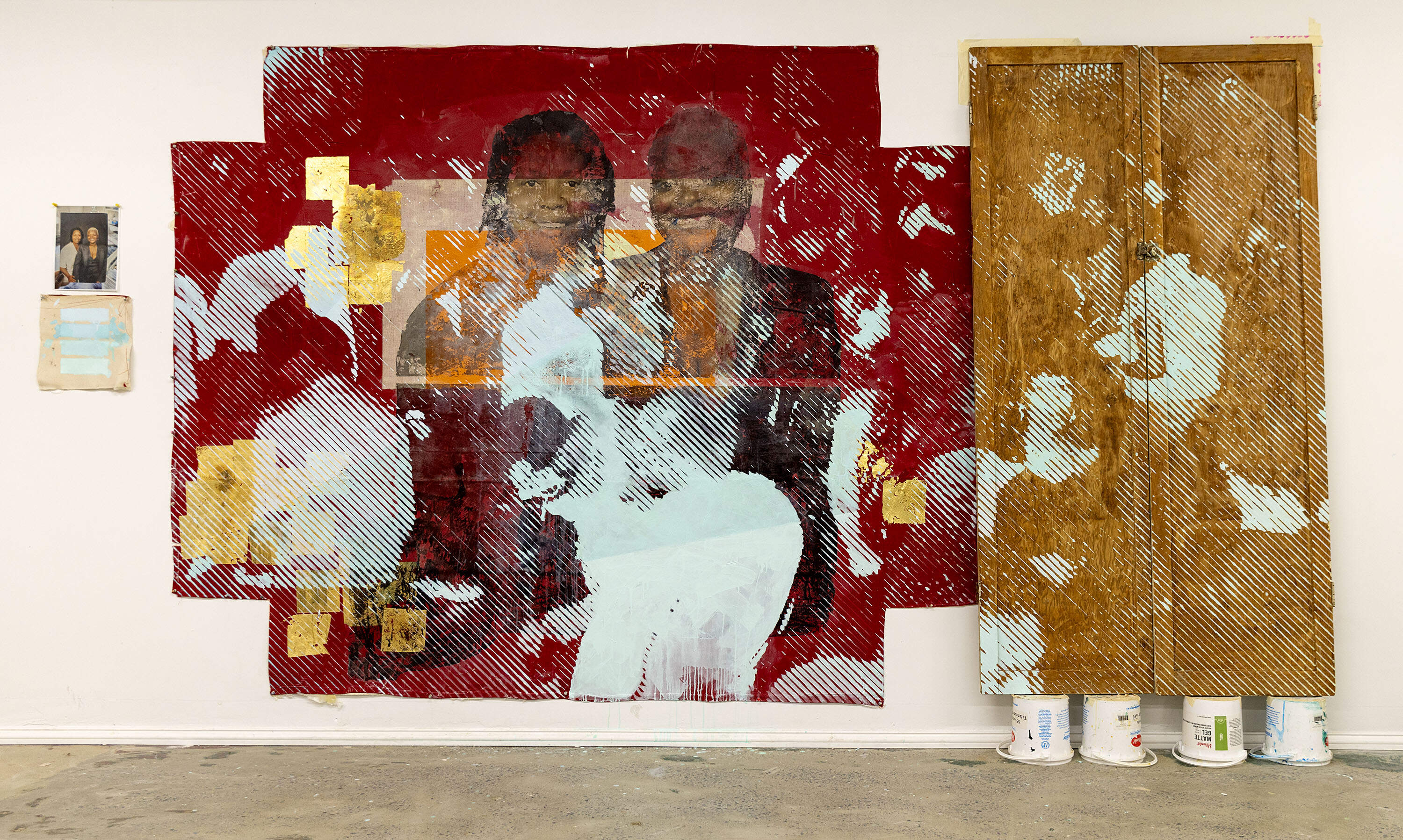
“Sister Outsider (Aver and April and the Dance Floor)” is made up of a fitted bedsheet, a painted piece of gauze from a painting Jackson made in her graduate program, an image transfer of a photograph, and painted halftone-like strokes depicting a dance floor.
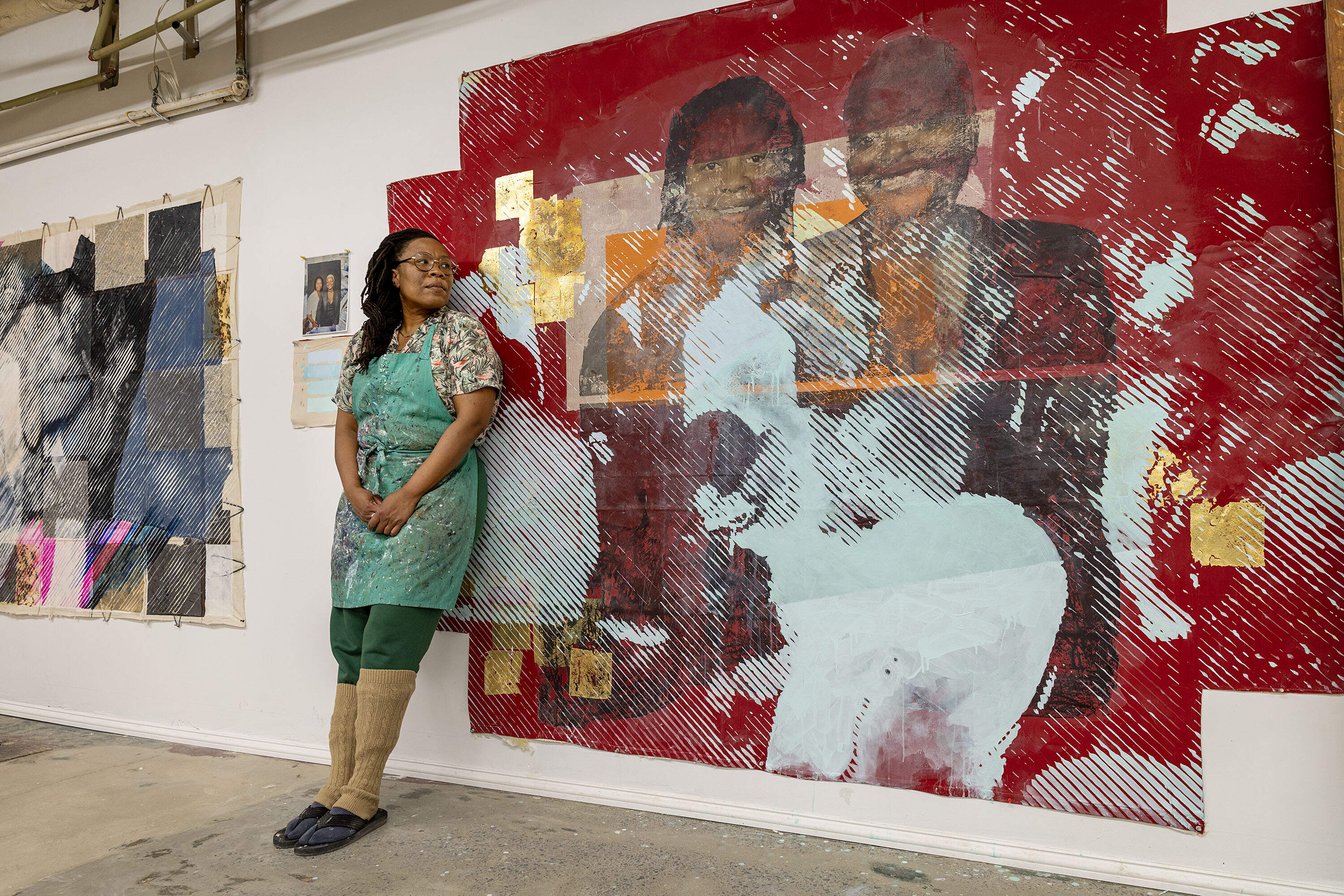
The photograph depicts Jackson’s late mother and her then-partner at Jewel’s Catch One, the black lesbian owned nightclub referenced in the same painting.
“Early on, I became interested in painting that tells large stories of communities and of people. My work explores issues in spaces of public concern, often through areas of governance and legislative policy, in attempts to visualize stories that impact public space.”
Jackson first moved to Cambridge in 2010 to complete her graduate studies at the MIT School of Architecture and Planning. Before moving into her current studio last December, she retrofitted her bedroom into a studio, then a storage space in the same building as a restaurant in Somerville.
With the support of the fellowship, Jackson plans to open her new studio space for community gatherings, such as workshops and reading groups. She also hopes to invest in practical tools that she usually borrows or does without.
This is Jackson’s second year being nominated for the Wagner Arts Fellowship. “They're making the decision every day to nourish rigorous practices. So I'm super honored to be considered under that umbrella,” she said.
Lucy Kim
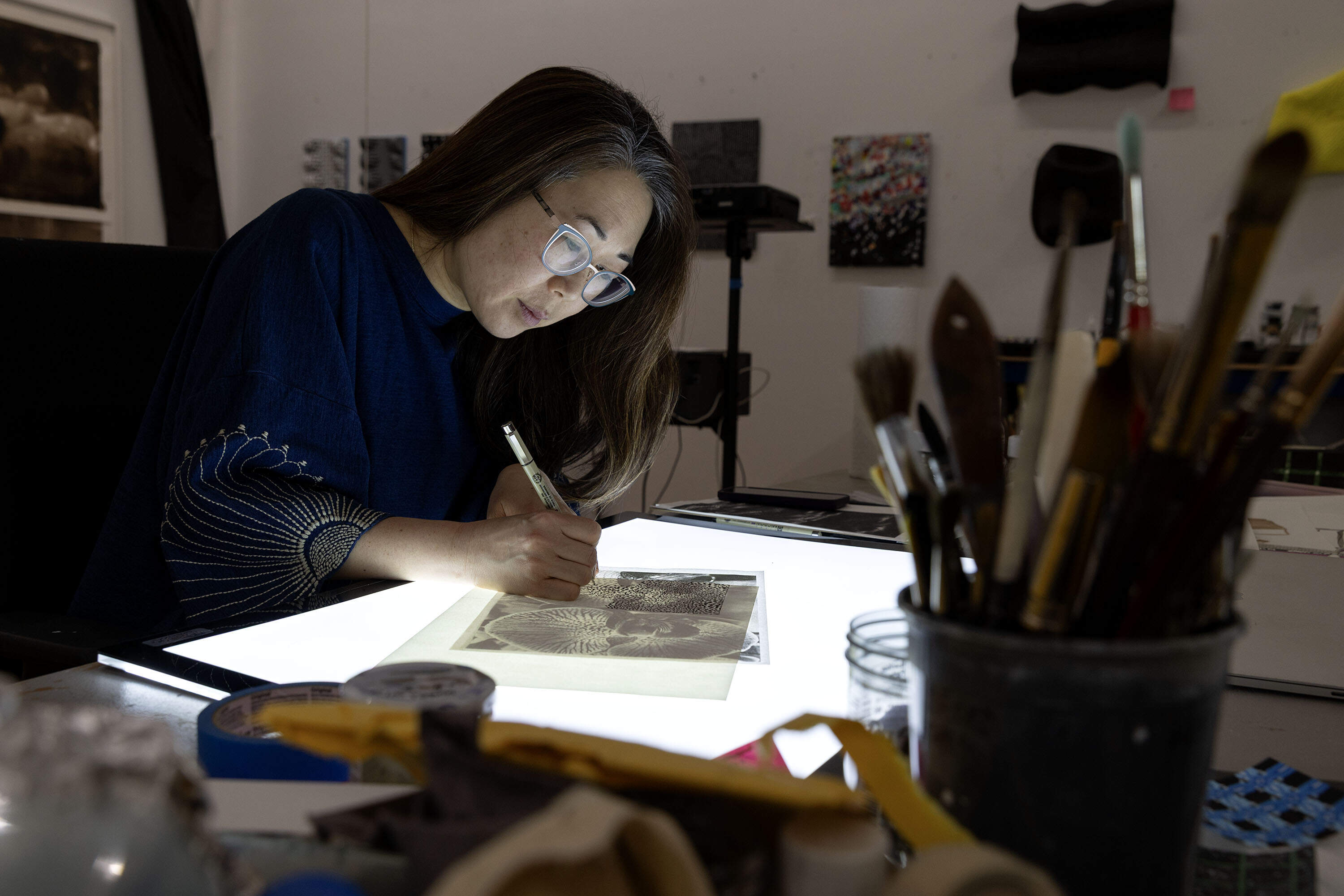
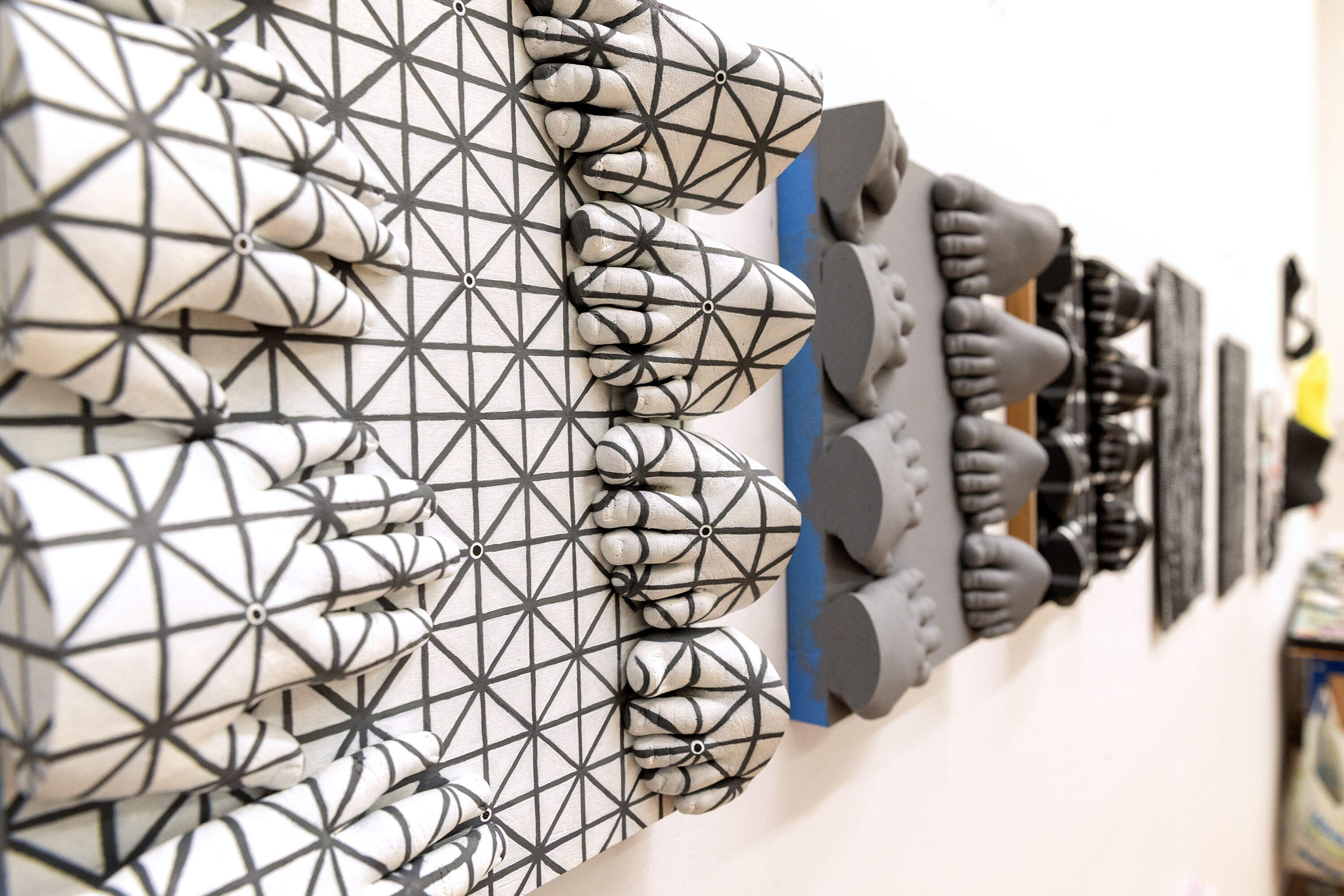
Lucy Kim is an artist and associate professor of art at Boston University. She works across painting, sculpture, and biological media to deconstruct the social and psychological aspects of vision, including how we extract meaning from what we see. Her work considers how vision is exploited to justify social hierarchies such as racism and colorism.
“How we structure the world around us so that it’s coherent is something we learn to do,” she said.
During an artist residency at the Broad Institute of MIT and Harvard, Kim developed a unique process to create images with melanin, the natural pigment determining human coloration. Kim now works regularly in the BU biology department to screen print images with live bacteria cells that produce melanin.
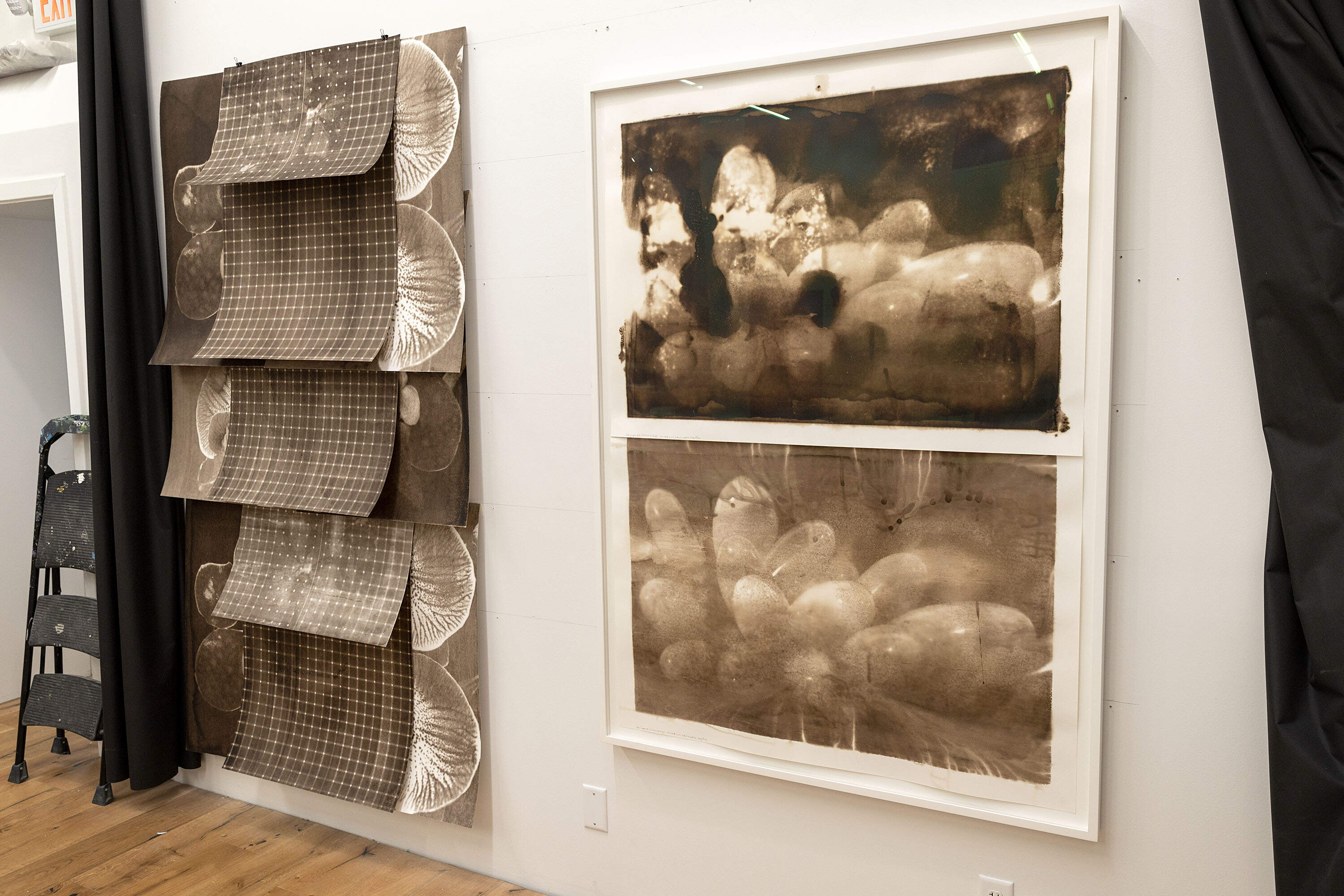
In a recent solo show at the University of Washington’s Henry Art Gallery in Seattle, Lucy Kim: Mutant Optics, Kim used the bacteria cells to print imagery of vanilla bean plants, which has a history rooted in slavery and European colonization.
Kim moved to Boston in 2012. She divides her time between Boston University and her studio in Somerville.
“ I am in academia, and it’s not an accident. I love it. There has always been a component of teaching or pedagogical thinking in art, I think,” she says. ”I don't want to be in a bubble ever. I don’t want to be alone in the studio.”
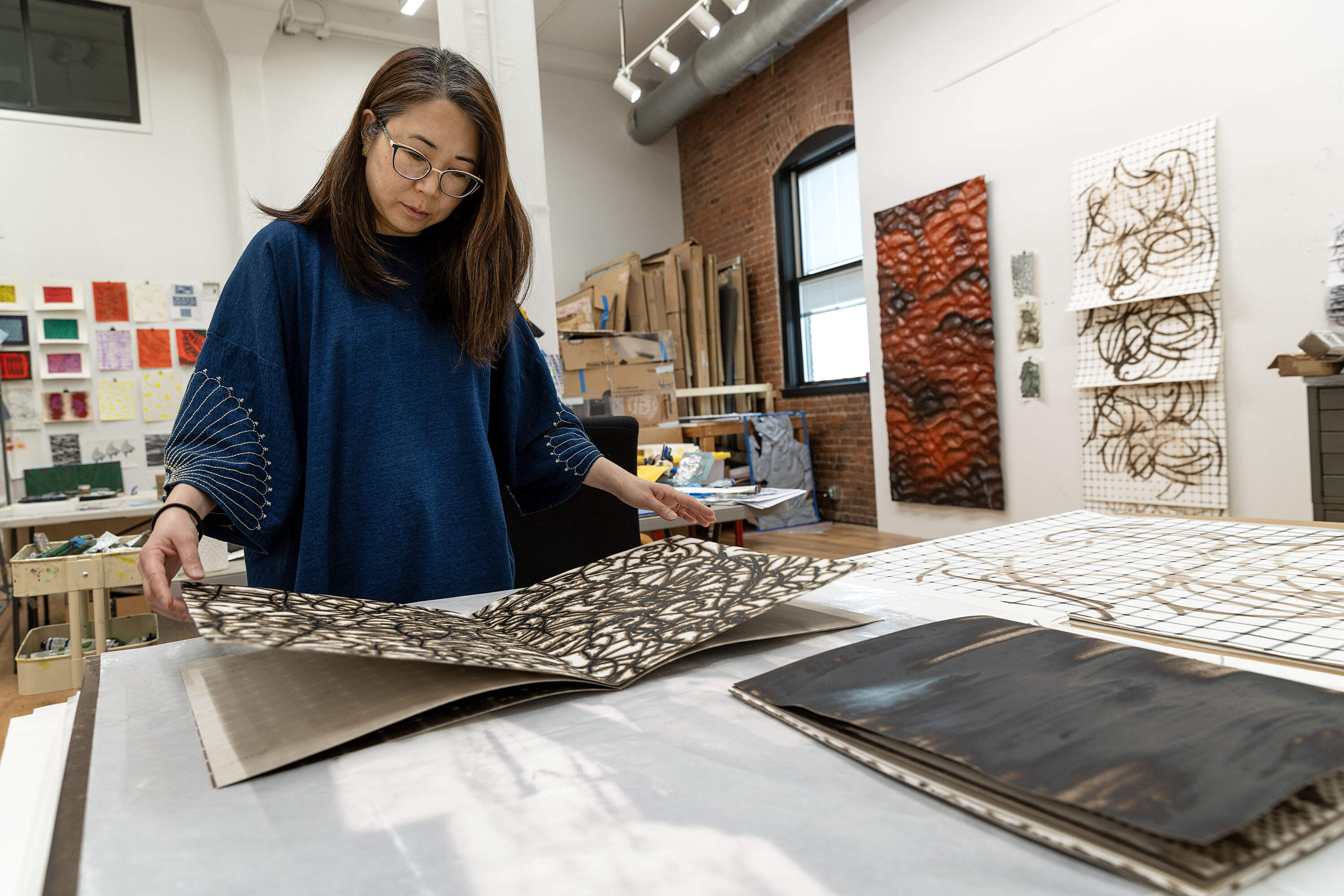
Kim says the Wagner Arts Fellowship funding will go straight toward the materials and studio assistance for her practice, which can be especially labor intensive.
To Kim, receiving the Wagner Fellowship after being nominated a second time feels “affirming” of her relationship with the Boston arts community.
“I feel this is my home. This is where I invest a lot of time and care. And this is where I'm cultivating a culture, trying to help play a part in shaping it,” she said.