Support WBUR
White Stadium project gets support from Kraft-owned New England Revolution
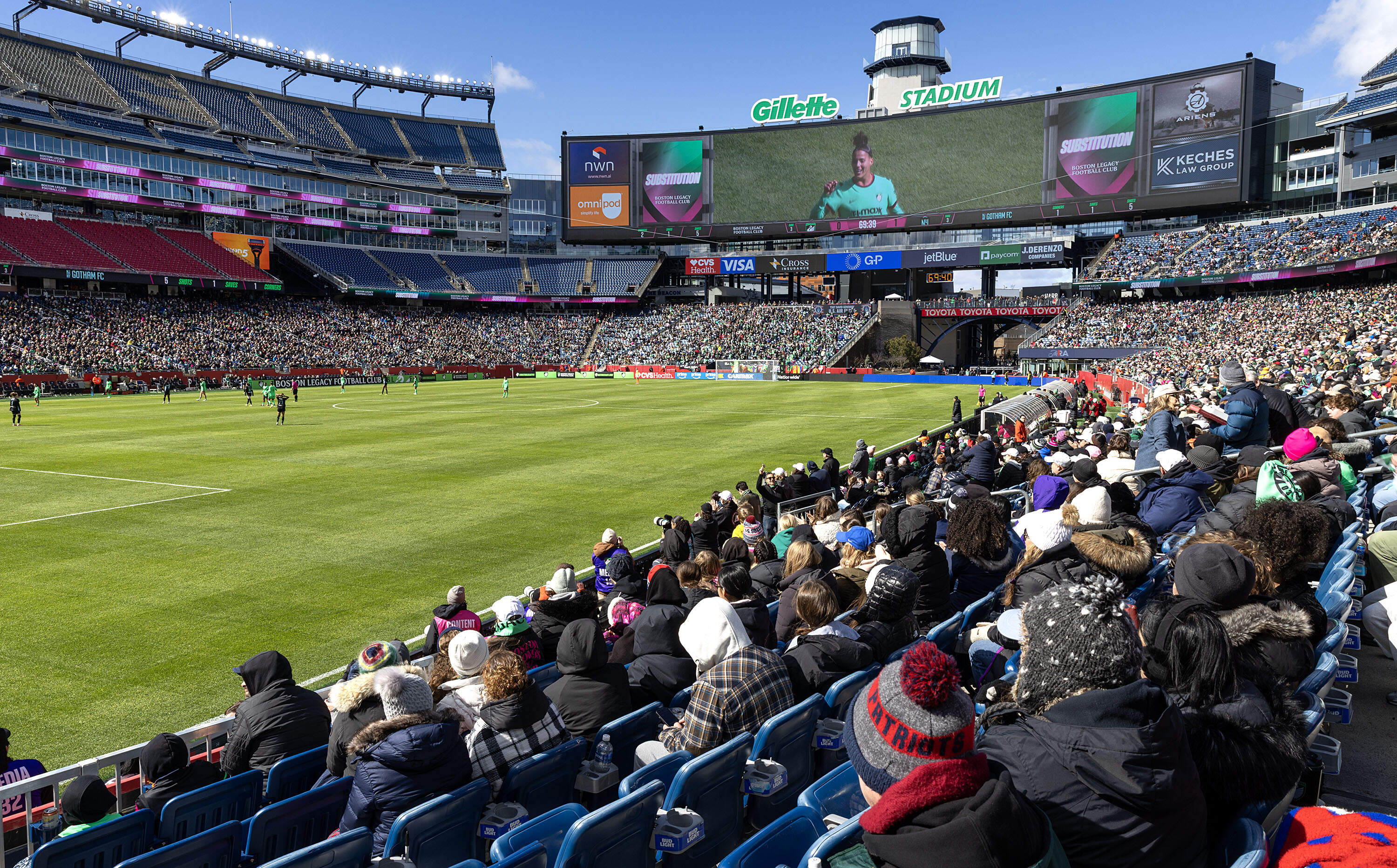
The Wu administration’s controversial White Stadium project has a surprising new ally rooting for it to score big in court next month: the Kraft Group-owned New England Revolution.
The Revolution’s attorneys filed an amicus brief on March 18 supporting the stadium project and Boston Legacy FC as it faces a new judicial review on April 8 in the state’s Supreme Judicial Court.
The men’s soccer team is fully controlled by the Kraft Group, which includes Robert Kraft, the father of Josh Kraft, who was a frequent critic of the stadium project as he mounted an unsuccessful challenge to Michelle Wu last year.
The Revolution and Legacy FC are both playing home games at Gillette Stadium in Foxborough this season. The Legacy plan to move to White Stadium next year and the Revolution have plans to build their own new stadium in Everett.
“Boston Legacy FC and its fan base would suffer if the club is prevented from securing a long-term home,” read the Revolution’s brief. “Yet that threat lingers when lawsuits like this one attempt to rewrite settled legal doctrine to create barriers to socially beneficial public-private partnerships like the White Stadium renovation.”
The Revolution’s attorneys said the team’s ownership cherishes public-private partnerships and hope that Boston Legacy can achieve the same success at they have realized locally. They also said they are concerned lawsuits could upend “soccer culture” in New England.
“The New England Revolution is concerned that this lawsuit might impede development of the White Stadium renovation, jeopardize the broad range of important benefits that the renovation will bring to Massachusetts and will deter future projects as well,” the team wrote.
The Revolution filing was one of several “friend of the court” statements presented to the SJC ahead of a scheduled April 8 hearing. The court proceeding is prompted by an appeal from stadium opponents who continue to argue that the use of the Franklin Park site for a private enterprise is unlawful. Their appeal comes after a Superior Court judge ruled in favor of the city and the soccer franchise last year. The SJC agreed to hear the appeal last December.
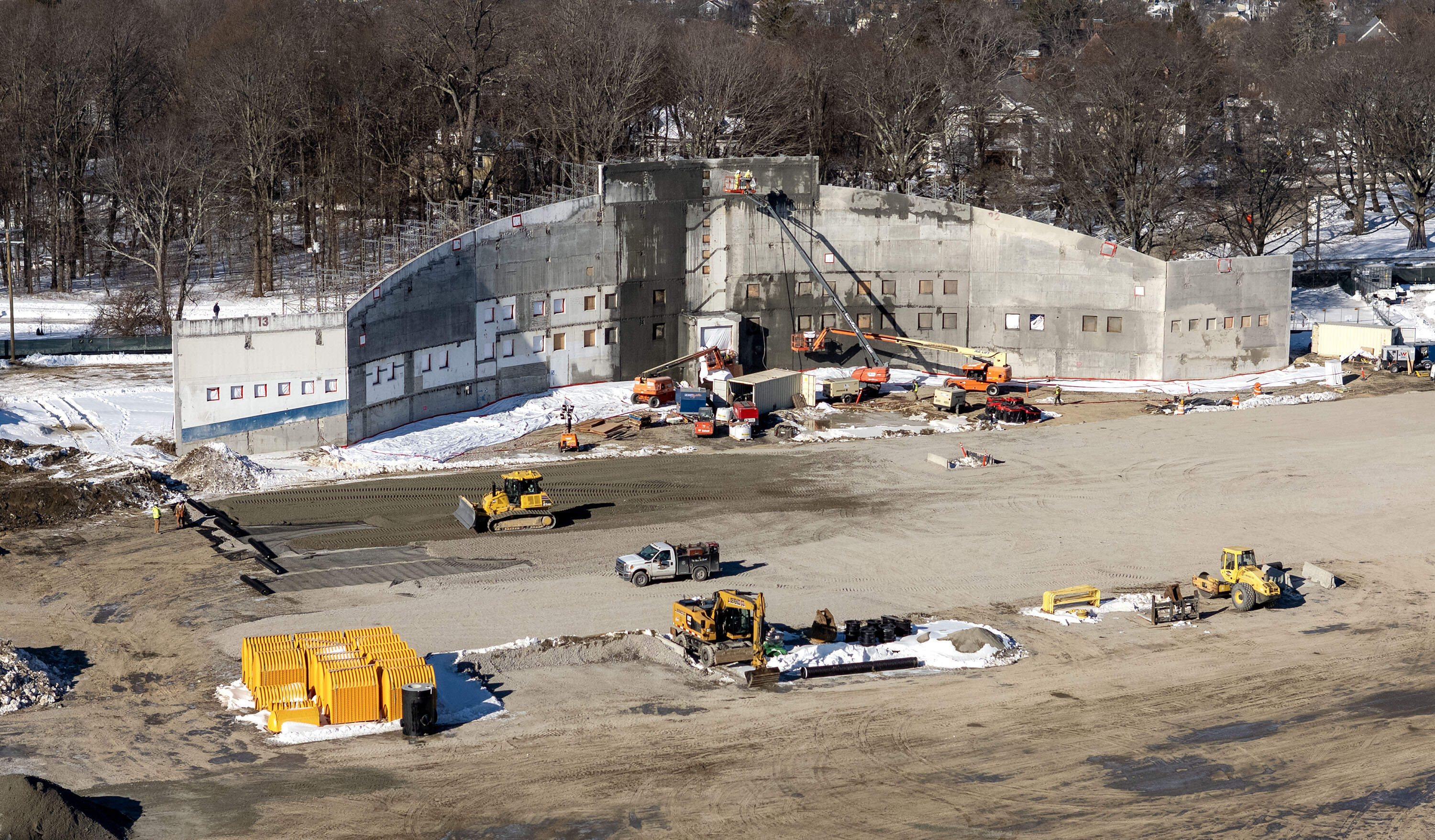
Several other organizations and individuals filed briefs opposing the stadium deal, including the former parks administrator for New York City and the Boston chapter of the NAACP— all weighing in on the legality of the site use and the lease agreement.
The case originated in Suffolk Superior Court between the Emerald Necklace Conservancy (ENC) and the Franklin Park Defenders grassroots neighbor group against the City of Boston and Boston Legacy’s parent company, Boston Unity Soccer Partners.
In preparation for next month’s hearing, the court asked for amicus briefs from the public on specific topics, including whether the defendants have standing to challenge the will of George Robert White and whether the stadium property is subject to the a parklands statute known as Article 97. The city has defined the stadium as a schoolyard, not a park, and therefore not subject to the Article 97 protections. Article 97 requires a vote of the State Legislature to be able to change the use of parkland.
A group of preservationists focused on Frederick Law Olmsted scholarship filed a brief on why Article 97 should be applied, and why the lower court erred. The group included Dr. Charles Beveridge, Dr. Ethan Carr, Dr. Keith Morgan, Elizabeth Saunders (a former Dorchester resident), Brookline’s Hugh Mattison and former New York City Parks Administrator Tupper West Thomas.
“The commercialization and privatization of this stadium will change the character and destroy any semblance of Olmsted’s vision for the area outside the stadium parcel,” they wrote. “The partnership will dispossess area residents of a treasure they have enjoyed for many decades. Article 97 became law through a more rigorous constitutional amendment process for just this reason. Boston, the state’s largest city and capital, must adhere to our current environmental practices and follow the outlined procedures, or it will be allowed to weaken open space protection throughout the entire Commonwealth.”
The Environmental Justice Assistance Network, which includes the Roxbury Neighborhood Council, the Boston chapter of the NAACP, and the Boston Bengals Pop Warner Football and Cheer program, said the public should have a voice through Article 97.
“By deciding the Stadium and Park no longer enjoy Article 97 protection, and not considering the proposed changes in their use, the Trial Court deprived (environmental justice) groups of the right to any meaningful involvement in determining the future of their own neighborhoods and communities,” it read. “This case is not just about the legacy of Mr. White’s gift to the people of Boston and the promise of Mr. Olmstead’s vision for its parks; it is about who has a voice in shaping the future of White Stadium and Franklin Park.”
Land trusts from Worcester to Amherst represented by the Massachusetts Land Trust Coalition also spoke up, concerned that Article 97 protections could be watered down in this case and make their properties vulnerable.
On the other side of that coin, trustees from 19 colleges and universities — including Emerson College, Boston College, Harvard College, Suffolk University and Worcester Polytechnical Institute — voiced approval of the court’s decision for the city and the soccer team.
They contended the case could set dangerous precedent if the defendants are given standing to “interfere” in a private charitable trust. The brief noted all institutions listed receive “large volumes” of charitable gifts with some given to them “generations ago.”
“They must be stewarded over long time horizons and across changing circumstances,” they wrote.
“To permit private parties unrelated to the donor to interfere with the management of charitable trusts would upend the current system and expose (us) to materially increased and unpredictable litigation, higher administrative and legal costs, and disruption to long-term stewardship of their charitable assets, diverting resources away from their core educational purposes,” they concluded.
Attorney General Andrea Campbell’s office weighed in as the overseer of charitable trusts statewide, including that of the George Robert White Fund that is the executor of White Stadium.
“The Attorney General respectfully submits that the trial court did not err in concluding that the Plaintiffs, including the Emerald Necklace Conservancy, lack standing to enforce the terms of George Robert White Fund, and that it appropriately dismissed the two claims brought by the Plaintiffs,” read the AG’s conclusion.
A spokesperson for Mayor Wu said: “White Stadium is a generational investment in youth sports and Franklin Park, and construction is now actively underway. We remain confident in our legal position and appreciative that a wide range of youth-serving organizations, coaches, park advocates, business leaders, municipalities, and Attorney General Campbell have all written briefs in support of the City.”
According to the SJC calendar, the case will be heard on April 8 at 9 a.m. in Room 1 of the John Adams Courthouse in Boston. Presiding justices will include Chief Justice Kimberly Budd, Frank Gaziano, Scott Kafker, Dalila Wendlandt, Dorchester native Serge Georges, Jr., Elizabeth Dewar and Gabrielle Wolohojian.
WBUR and the Dorchester Reporter have a partnership in which the news organizations share resources to collaborate on stories. This story was originally published by the Dorchester Reporter.