Support WBUR
Review
Airy and bright 'Miroirs No. 3' is a stealthy interpretation on grief

One of the great pleasures in modern movies is simply watching Paula Beer. The 31-year-old leading lady of German writer-director Christian Petzold’s last four pictures is captivating in ways that defy easy description. Alluring, but not inviting, she’s a withholding, private presence who always appears to be on the edge of inscrutability. There are feelings rippling across her face that we’re not quite privy to, but you get the sense if you just keep looking a little more intently, they’ll eventually be revealed. Sometimes you can look at her for so long you lose the movie, as was the case with Petzold’s 2020 “Undine,” in which Beer played a mesmerizing, mythical water nymph living on land as a historian and tour guide. She won the Silver Bear for Best Actress at the Berlin Film Festival while the movie around her seemed to drift out into the ocean.
Petzold’s latest collaboration with Beer, “Miroirs No. 3,” makes far better use of her unique gravitational pull. Like the actress herself, the film presents a placid exterior with still waters that run deep. Beer stars as Laura, a music student stuck in an unhappy relationship whose boyfriend is killed in a grisly car crash while they’re on vacation. Miraculously, Laura emerges unscathed. An older woman named Betty (Barbara Auer) witnesses the accident from the porch of her slightly dilapidated seaside cottage and calls for help. The paramedics want to take Laura to the hospital. She asks if she can stay with Betty instead. Somewhat surprisingly, the older woman agrees.

Betty has a spare bedroom and plenty of clothes in Laura’s size. Another young woman lived here before, someone named Yelena. But they’re not going to talk about her just yet. As if via an unspoken agreement with Betty, Laura slips into the absent girl’s clothes, and into her life. The two grief-stricken women intuitively begin to role-play a mother-daughter domestic arrangement that appears to be enormously beneficial for both, no matter how much it makes the neighbors talk. Things are complicated by the arrival of Betty’s estranged husband (Matthias Brandt) and son (Enno Trebs), the latter of whom struggles with when to tell Laura the truth about Yelena.
I realize that in synopsis this might sound melodramatic, but the movie’s approach is glancing and beguilingly light on its feet. As gentle as the cascading Maurice Ravel piano suite from which the film takes its title, “Miroirs No. 3” is airy and bright. There’s nothing insistent about it, leaving room for the audience to bring our own interpretations. Clocking in at a svelte 86 minutes, it’s easy to watch in a way that makes movie critics reach for adjectives like “minor” and “slight,” but a more careful examination reveals a picture that’s anything but.
I came late to Petzold, whose reckonings with German history and musings on the malleability of identity can come off as a mite overdetermined sometimes. You feel the heavy hand behind acclaimed, ambitious pictures like “Phoenix” and “Transit,” muddling through meditations on fascism and Alfred Hitchcock's “Vertigo” — a Rosetta stone for so many filmmakers as it’s basically a film about filmmaking itself, with a twisted protagonist recasting and replaying foundational traumas under his own direction. Petzold didn’t really win me over until 2023’s wonderful “Afire,” a stripped-down summer comedy in the tradition of Éric Rohmer about a mediocre writer unable to get out of his own way. Featuring Beer as an elusive muse, the movie was actually a sneaky warning about how little time we all have left here, so one must use it wisely.
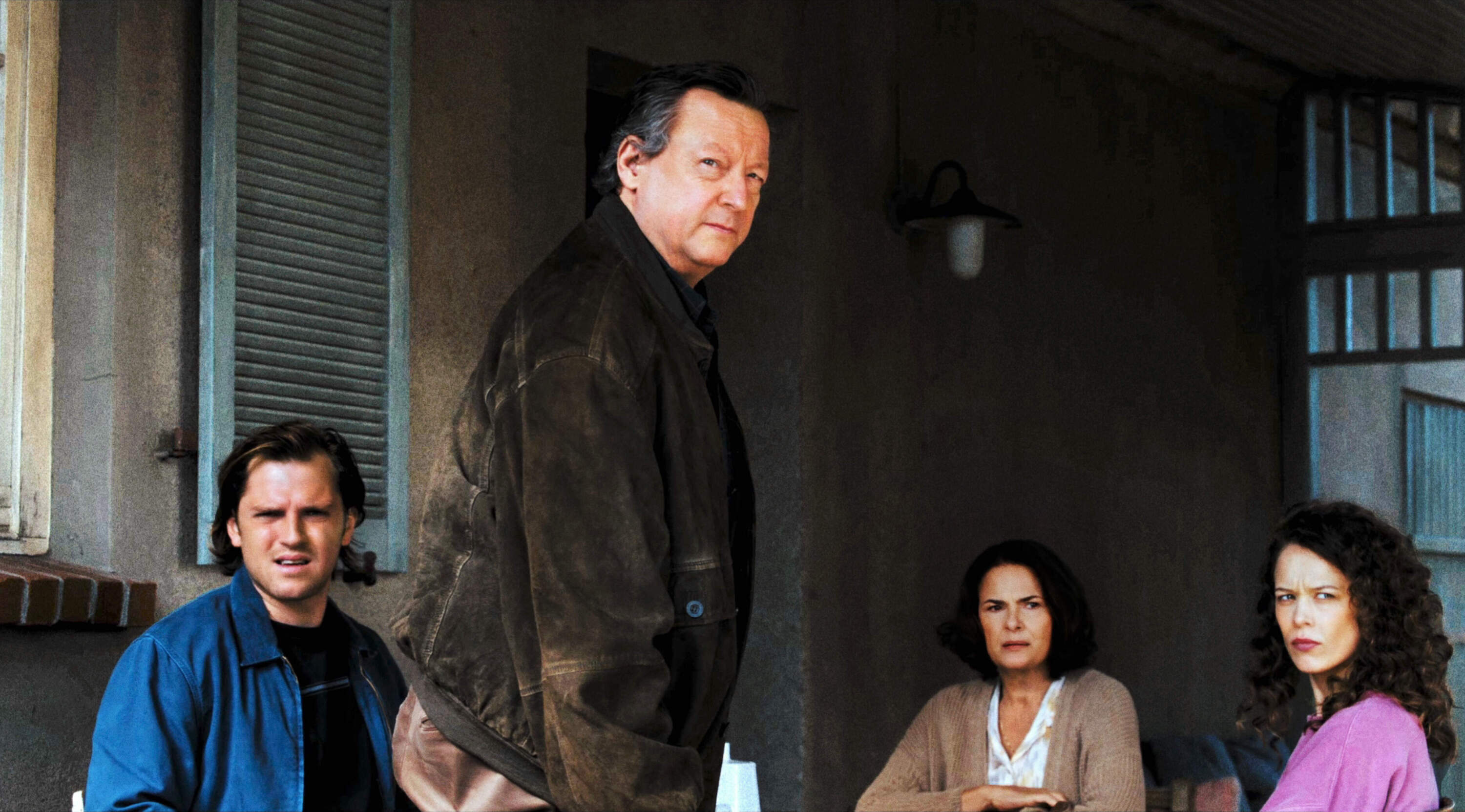
“Miroirs No. 3” isn’t as great as “Afire,” though it’s very good and works in the same stealthy register. Petzold is riffing on “Vertigo” again, with Betty making Laura over into someone she’s lost, but without the Hitchcock character’s toxicity. The names Betty and Laura are obviously intended to ring some bells for David Lynch fans, with the doppelgänger themes employed in a far breezier and more therapeutic fashion. You can chart the characters’ progress by the things getting fixed around the ramshackle cottage as the people living there pull themselves back together. The piano can always be retuned but sometimes the dishwasher is just broken and you have to go buy a new one. Metaphorically as well, I suppose.
Petzold is patient with these people. There’s a marvelous scene during which Beer and Trebs sit and listen to an old Frankie Valli and the Four Seasons song. For the amount of time folks spend listening to music in their everyday life, it’s amazing how seldom we see them do it in the movies. The scene has stuck with me since I first saw “Miroirs No. 3” last fall. Not for any big revelations about these characters or the story, but just for the truth in their behavior and the simple grace with which it is presented onscreen.
After the New York Film Festival premiere, Petzold gave a hilariously candid Q&A in which he confessed that he’d originally written and shot an entirely different final scene for the movie. Before they’d even started filming, Beer told him it was the wrong ending for the story and that it wasn’t going to work. The director didn’t believe her, until six months later when he found himself calling her from the editing room in a panic because she’d been right all along. His new epilogue had to be framed very carefully to conceal the fact that Beer was now massively pregnant during the reshoot. Her face looks a little different, too. She’s glowing. That actually works better for the movie.
“Miroirs No. 3” opens Friday, March 27 at the Coolidge Corner Theatre.