Support WBUR
2026 Spring Arts Guides
10 Greater Boston film festivals to explore this spring
Winter’s snow may be retreating. But not Boston’s film scene. Quite the opposite. More fests and series happen this spring than will fit on my calendar.
On March 19, if you can make your way to the Cabot Theatre in Beverly, Federico Muchnik will screen his anthology documentary “Massachusetts Avenue: Life Along Cambridge’s Main Artery” followed by a Q&A. I spoke with Muchnik in October as he was about to screen the collection of slice-of-life vignettes for the first time. He humbly downplayed what I thought was a remarkably poignant collage, a service to his neighbors, deserving a spot in Cambridge’s public record.
Talking with Muchnik reminded me of the short films Salem residents Joe Cultrera and Perry Hallinan would make each year for the Salem Film Fest. They called their portraits of Salem’s places and people (like The Record Exchange or Salem Willows, for example) “Salem Sketches.” Other filmmakers contributed to the collection of more than 60 films. Starting March 28 and running through August 2027, the Peabody Essex Museum in Salem will show them as “Beyond the Broom: Salem Short Films.”
Another local documentary team has a world premiere of a film four years in the making. Friends Bonnie Waltch and Sara Schley go as far back as high school. When Schley finished her memoir “BrainStorm: From Broken to Blessed on the Bipolar Spectrum,” she gave Waltch a galley copy.
“I was totally blown away,” Waltch said. “I had no idea that she lived with bipolar disorder, that she had gone through all this suffering.” It took Schley 25 years to receive her diagnosis. The process made her want to reach as many people as possible in as many ways as possible. She knew Waltch had produced science programs for PBS and asked her to collaborate.
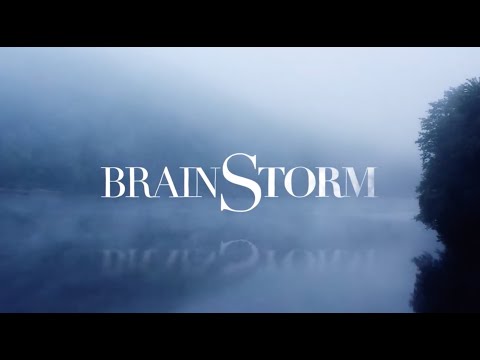
Using the memoir as inspiration, and including Schley’s story, the pair found five others living with bipolar disorder in the U.S. and started interviewing them about their experience. But Waltch also wanted to include experts on the science behind the condition and treatments. The resulting feature documentary, “BrainStorm,” launches with three virtual global screenings on World Bipolar Day, March 30.
Given the team’s regional ties (principal crew live in the Boston area, as do many of the experts interviewed), Waltch said they are hoping to confirm film festival and other in-person events in the near future. And they have even more in the works. “It’s a multiplatform, multiyear project,” she explained. In addition to the feature documentary, there will be a 56-minute broadcast version and several short spinoffs — deeper dives on specific topics such as the relationship between bipolar disorder, postpartum depression and menopause.
“Twenty percent of cases that are considered postpartum depression are actually bipolar and are misdiagnosed,” said Waltch. “There is some good research coming out now, but it's taken a long time.” The pair feels urgency about connecting with audiences across the board, because as Waltch pointed out, everyone knows someone with bipolar. “This topic hits the heart of so many people,” she said.
Below are additional film offerings to consider this spring.
Shared Stories
When: Monthly, March-May
Where: ArtsEmerson’s Bright Family Screening Room, Museum of Science
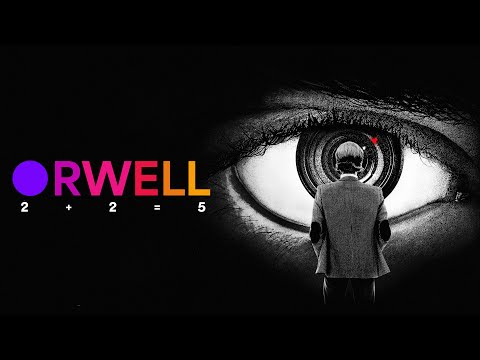
Highlights: This annual screening series unites the forces behind the Boston Asian American Film Festival, CineFest Latino Boston and Roxbury International Film Festival to highlight common experiences across cultures through cinema. Documentary “Orwell 2+2=5” (April 3 at ArtsEmerson) by Raoul Peck reveals the makings of an authoritarian state as predicted by novelist George Orwell. Known for his searing portrait of American Black racial identity through the eyes of writer and intellectual James Baldwin, “I am Not Your Negro,” Peck has likewise racked up several nominations and awards for editing, score and overall film for “Orwell.” The list will likely keep growing until awards season closes. “Beam Me Up, Sulu” (May 15 at the Museum of Science) resurfaces lost footage of George Takei, who agreed to help make a film with “Star Trek” superfans.
Good to know: Both of the previously mentioned Raoul Peck documentaries take on writers’ words and lives, and both pay special attention to those writers’ final works. In the case of Baldwin, Peck consulted an unfinished manuscript about Medgar Evers, Malcolm X, and Martin Luther King Jr. In the case of Orwell, his swan song novel “1984,” published a year before his death, factors heavily into the film’s analysis of the disintegration of truth.
Boston Underground Film Festival
When: March 18-22
Where: Brattle and Coolidge Corner Theatres
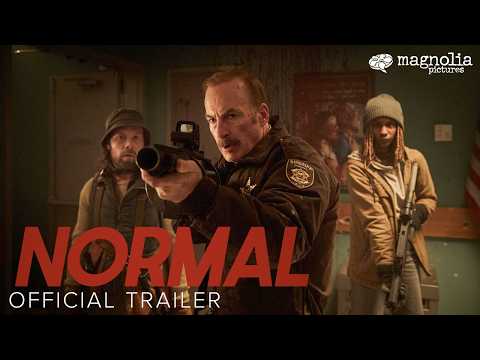
Highlights: Started by Boston independent film champion David Kleiler (chief instigator of the Coolidge’s 1989 group hug), BUFF has a long history of being a home for the weird, unconventional and unique genres other festivals might reject. Think horror, science fiction and exploitation cinema, then scramble that because, delightfully, this fest still delivers what you haven’t yet imagined. After 17 years of involvement with the all-volunteer festival, directors Nicole McControversy and Kevin Monahan decided to shift time to help guide other independent festivals. Each member of the incoming BUFF leadership team (Phil Healy, Adam Van Voorhis, Mark Anastasio and Kim Baillargeon) has a rich and intertwined history with Boston’s film scene. This year, they expand the fest from the Brattle to the Coolidge and will open with a splash – Bob Odenkirk (“Better Call Saul”) attends with “Normal,” a small town crime thriller that he stars in and helped write. BUFF typically has at least five shorts programs. This year, two are devoted to New England filmmakers: The Dunwich Horrors (March 20) and New England Esotercia (March 22). Bottom line, this year’s leadership has infused this offbeat institution with fresh enthusiasm.
Good to know: Like most fests, BUFF gives annual awards for Best Short, Best Feature, Best Debut Feature, etc. They call them their Bacchus Awards. But unlike how most fests hand out virtual laurels or certificates, BUFF sends winners home with a demonic bunny, wearing what looks like a diaper, inside a snow globe. On a related note, this might be the right time to commend BUFF on its bloody logo, which I humbly submit is the best logo of all New England film festivals.
Lois Weber Film Festival
When: March 20-22
Where: West Newton Cinema
Highlights: Now in its fourth year, this event celebrates women’s contributions to cinema past and present, along with its namesake, American director and screenwriter Lois Weber. Weber made films in the silent era (1913 to 1921), and her feature “The Blot” (1921) opens the fest with a score performed live by musician Jeff Rapsis. The following day includes a contemporary international shorts program and the 2025 feature “Riot in Bloom,” made by a “female trifecta” about life after divorce. The festival wraps with the world premiere of Audrey Olsen’s documentary “Punkie,” about comedian and “Saturday Night Live” star Punkie Johnson, and a focus on women filmmakers from the Boston area. An additional shorts program, a panel that explores the concerns of women in film and an awards ceremony cap off the weekend.
Good to know: Jeff Rapsis has been accompanying silent films at cinemas around New England for nearly two decades. He hauls an old Korg synthesizer into the theater and invents the soundtrack on the fly, just as many musicians performed during film’s silent era. The Korg, he told WBUR’s Amelia Mason, is “set up so that I can pretty much get the whole orchestra at my fingertips.”
Boston Turkish Film and Music Festival
When: March 20-April 3
Where: Museum of Fine Arts, Boston and Goethe-Institut Boston
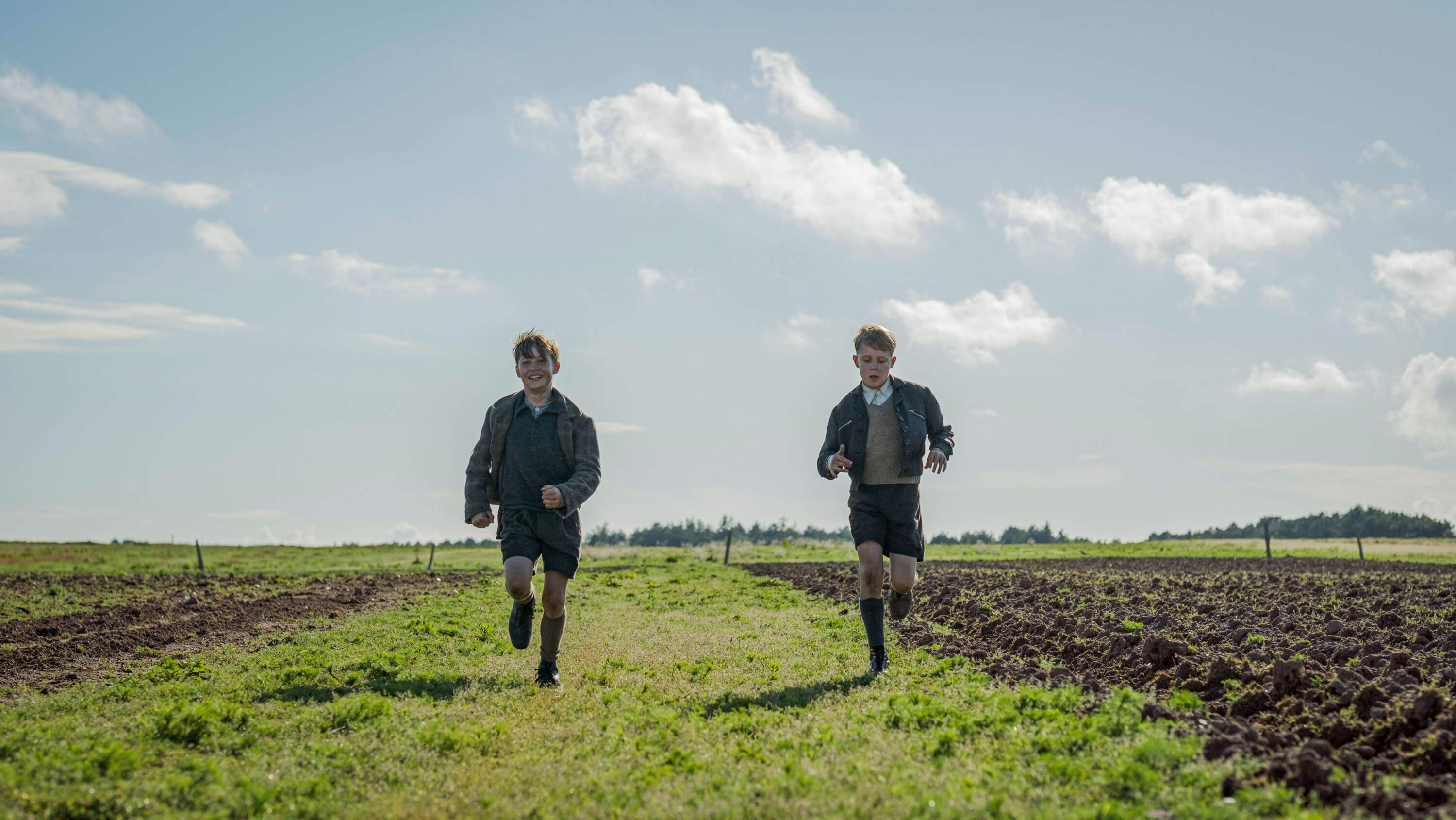
Highlights: To celebrate a quarter century of festivals, this over month-long celebration kicks off with a performance by prize-winning pianist and educator Hyun Sook Tekin and a screening of “Amrum” directed by Fatih Akın and co-written by Hark Bohm and Akın. Akın shot the gorgeously melancholic 1945 period drama, based on Bohm’s childhood on the German island of Amrum, mostly on location and mostly with available light. Director Tayfun Pirselimoğlu will be present this year to screen his latest “Idea,” a convoluted tale about a man accused of a crime who becomes transformed by the accusation. After making a trilogy of films exploring “conscience and death,” Pirselimoğlu received the festival’s Award for Excellence in Turkish Cinema in 2012. Preceding “Idea,” two winners from the 2025 Annual Documentary and Short Film Competition — “Minus One (Eksi Bir)” and the searing indictment of border instability, “Garan” — will screen, also with directors present.
One of my top documentary picks from last year’s competition (as a volunteer juror) also screens with the director present. In Aybüke Avcı’s “Tomato, Pepper, Depression (Domates, Biber, Depresyon),” the director turns the camera on her extended family. The difficult process of making red pepper paste becomes a visually tantalizing metaphor for their strained relationships. A predecessor of another documentary I highly recommend (“Game Changers,” 2024) will also screen. Director Aysun Bademsoy followed a successful Turkish women’s football team in 1995 called “Girls on the Pitch (Mädchen am Ball).” She made three subsequent films to catch up with the players in 1997, 2008 and 2024. The second in this oeuvre, “After the Game (Nach dem Spiel),” with the players at age 20, screens with the director present. The festival continues with other screenings, a panel conversation, and more.
Good to know: Hyun Sook Tekin’s opening night recital will include several pieces of music written for film, such as Ennio Morricone’s main theme from “Cinema Paradiso” (1988) and J. B. Lully’s “March for the Ceremony of the Turks” from “All the Mornings of the World” (1991).
Salem Film Fest
When: March 26-29
Where: Cinema Salem, Peabody Essex Museum and Salem’s National Park Service Visitor Center
Highlights: Film critic Pauline Kael supposedly refused to revise her film opinions after she planted her stakes. I hold no candle to such rigidity. Though I have been kicking myself for failing to include a few films on my best of 2025 list. One of those, “Unless Something Goes Terribly Wrong,” will play this all non-fiction fest with producer Justin Levy in attendance. It takes on the mostly invisible yet utterly relied upon infrastructure – water treatment in Portland, Maine – and reveals its vulnerabilities with earnest, fallible, hilarious characters. “Time and Water” by Sara Dosa (“Fire of Love”) opens the fest with a writer’s elegy for the first Icelandic glacier to “die” from climate change. SFF showed Brydie O’Connor’s short film about lesbian and feminist pioneer filmmaker Barbara Hammer in 2022, and this year will screen the expanded feature “Barbara Forever,” with producer Elijah Stevens and editor Matt Hixon in attendance. (Keep that title on your radar come next awards season.)
An expanded number of shorts includes one block of films made by local artists about local artists. Among those, Boston filmmaker James Rutenbeck (“A Reckoning in Boston”) pairs with Harmon dot aut for the world premiere of their formally adventurous and poetically titled short “Tornado Tastes Like Aluminum Sting.” That follows given Harmon’s work as a playwright. Films by high school and college students screen in two respective programs. At Docs-in-Progress, three film teams (one of which includes me) receive industry feedback on projects in production. The latter three events are free and open to the public.
Good to know: Last year’s SFF included “Perfectly a Strangeness” by Alison McAlpine, a short that observes donkeys among the cosmos. It competes for a Best Short Documentary Academy Award on March 15. SFF also gave McAlpine its American Cinematographer Award for “Cielo,” which revels in the night sky.
Belmont World Film International Film Series
When: March 30-May 18
Where: West Newton Cinema
Highlights: Every Monday for 10 weeks, Belmont World Film transports audiences to international locales through cinema. This year, films from Bolivia, Tunisia, The Netherlands and other nations explore the theme “thicker than water.” Or, as executive director Ellen Gitelman put it, “ties that bind – and sometimes strangle.” Last year was the most well-attended in the fest’s history with five sold-out screenings, prompting her to joke, “We're an overnight sensation after 24 years!”
Not many films take place in Greenland, and the autonomous Danish territory was late to circulate and exhibit films, too. Set and shot in Greenland and France's Jura region, a middle-aged explorer in “The Incredible Snow Woman (L’ Incroyable femme des neiges)” camps on ice floes and faces off with a bear. But humans prove most daunting in this lightly dramatic French comedy. Similarly, few films take place in Armenia. A co-production with France, a woman in “In the Land of Arto (Le Pays d'Arto)” uncovers hidden truths about her husband’s military service when she travels to Armenia to certify his death. The father-daughter, coming-of-age film “Hold Onto Me (Κράτα Με)” picked up an audience award from this year’s Sundance Film Festival. Set in Cypress, the pair bonds with hints of 2022’s “Aftersun” but in more daylight. Several other picks round off this series. In addition, three to-be-announced titles explore the World Cup and immigration and will screen June 1-15 in observance of World Refugee Awareness Month.
Good to know: Greater Boston is home to a significant Armenian American population. The Armenian Museum of America in Watertown holds more than 25,000 artifacts to preserve the cultural history and traditions of Armenian people.
Wicked Queer Film Festival
When: April 3-12
Where: Brattle Theatre, Coolidge Corner Theatre, MassArt, Boston University, Somerville Theatre and Museum of Fine Arts, Boston,
Highlights: This year’s Wicked Queer vibe is “queer audacity,” according to executive director Shawn Cotter. They acknowledged that lots of folks do not feel safe to gather right now, but the persistent threat of anti-LGBTQ violence “speaks to a great need to gather and unify” at film events. With two dozen or so international features and 12 shorts programs, this fest covers a lot of ground. Mystery infuses a handful of selections, such as the Canadian thriller “At the Place of Ghosts (Sk te'kmujue'katik),” where two Indigenous brothers confront nefarious spirits from past generations.
Friendlier ghosts turn up in the Thai-made, candy-colored “A Useful Ghost (Phi Chaidai Kha),” this time in a vacuum cleaner. Things get (delightfully) weirder from there. Another title leans into magical realism. In “The Mysterious Gaze of the Flamingo (La misteriosa mirada del flamenco),” a plague supposedly spreads through “love at first sight.” Set in Chile in the early 1980s, 12-year-old Lidia gets on the case to protect her queer family. Cotter pointed out, “It’s also a good year for lesbian cinema with the anthropomorphic slice of life film ‘Bouchra,’ the romantic comedy ‘Lakeview,’ and the tender tale of love triumphing over immigration incarceration in ‘Dreamers.’”
Good to know: To celebrate Boston’s queer history and activism, this year the fest will deploy the famed Lavender Rhino as a symbol “to remind us all to continue the pushback against capitalist greed and Queer erasure,” Cotter said. Read what WBUR’s Arielle Gray found out about the rhino’s origins, including a life-sized papier-mâché version that won hearts and minds along the 1974 Boston Pride parade route.
National Center for Jewish Film's Annual Festival
When: April 12-26
Where: Coolidge Corner Theatre and Museum of Fine Arts, Boston
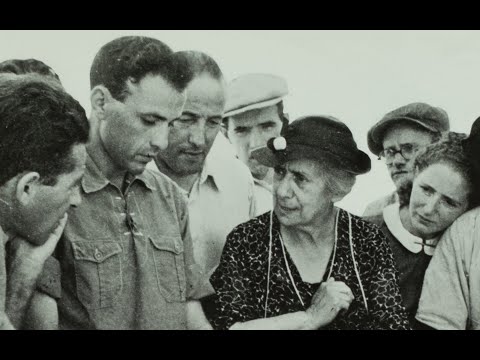
Highlights: Because of the center’s film rescue and preservation work, each year its festival presents both newly restored archival films as well as new dramas and documentaries related to Jewish faith and culture. Several Boston area scholars appear in the documentary “Labors of Love” about Henrietta Szold, who created the influential American Jewish women’s humanitarian organization Hadassah to support health care and education in Palestine, among other services. After the April 12 Boston premiere, director Abby Ginzberg — whose own family history is entwined with Szold’s, according to center co-director Lisa Rivo — will serve on a panel with Jewish Women’s Archive CEO Judith Rosenbaum and Shulamit Reinharz, founder of the Hadassah-Brandeis Institute. Perhaps one of the most well-known and seen documentaries of all time is Claude Lanzmann’s landmark Holocaust record “Shoah,” released in 1985. In “All I Had Was Nothingness” (screening April 14), filmmaker Guillaume Ribot draws on more than 200 hours of previously unseen outtakes shot for “Shoah” in the 1970s. Ribot’s documentary revisits Lanzmann’s tireless pursuit to make the film and his related fears, doubts and resolve.
Traveling back farther in time, “I Have Sinned (Al Khet)” was the first Yiddish sound film made in Poland. Released in 1936, Rivo explained that the film follows a rabbi’s daughter who abandons her child after her lover dies in battle. Complications unfold as Dzigan and Schumacher, a Polish-Jewish comedy team, attempt to reunite mother and daughter years later. “The film’s themes of dislocation and family separation due to war and poverty are, unfortunately, deeply resonant today,” said Rivo. The fest hosts the New England premiere of the 4K restoration of the film, unseen for generations until the center took on the project. Rivo added that two of this year’s contemporary films “are terrific adaptations of best-selling French language semi-autobiographical novels: “Once Upon My Mother (Ma mère, Dieu et Sylvie Vartan)” and “The Safe House (La cache).” Some screening dates and several additional titles had not been announced at press time.
Good to know: The National Center for Jewish Film’s Annual Festival turns 50 this year. Sharon Pucker Rivo started collecting, preserving, restoring, distributing and exhibiting films related to the Jewish experience in 1976. Her daughter Lisa Rivo joined the efforts in 2006 and they’ve worked side by side ever since.
Salem Horror Film Festival
When: April 30-May 3
Where: Nine venues across Salem
Highlights: The number nine factors heavily into this year’s feline-themed (“scratch the surface”) embrace of horror. It’s the ninth festival. Nine repertory films will screen, including opening night’s “Sleepwalkers.” The 1992 shapeshifter slasher’s claim to fame? “The first Stephen King story written expressly for the scream.” Director Mick Garris, who adapted something like nine other King stories, give or take, is one of several festival guests of honor. Nine contemporary features will screen as well, with 40 shorts.
Salem Horror bills itself as a film festival but has always been multimodal. This year, that means that authors will appear, screenwriting will be discussed, live theater will be performed, and two podcast teams will lead conversations about 1989’s “Pet Sematary” and 1982’s “Cat People,” respectively. Victoria Price (Vincent Price's daughter) offers a keynote address and will attend a dinner and documentary event at the House of Seven Gables. (Nine gables, if you squint.) “The Vincent Price Legacy” digs into her father’s cinematic influence, which spanned more than 200 films. Indeed, this summary has only “scratched the surface” because at least nine other surprises will jump out at anyone attending this year.
Good to know: Stephen King based his first screenplay, 1982’s “Creepshow,” on his own short stories and some new material. “Sleepwalkers” was the first movie he penned only (or “expressly” as the movie poster’s elevated vocab points out) for the big screen. Romero directed “Creepshow,” and this fest has a longstanding partnership with the George A. Romero Foundation.
Independent Film Festival Boston
When: April 22-29
Where: Somerville Theatre, Brattle Theatre and Coolidge Corner Theatre
Highlights: Every spring, I look forward to the documentaries made by people from Boston that have their world premieres at this festival. Last year, the program included one of my favorites from 2025: Mary Jane Doherty’s “Cosmic Coda,” a totally unexpected dive into astrophysics that spans 40 years (or maybe it’s 40 million years). Local filmmakers can be found in the fiction and documentary shorts programs, too, right alongside the best of the best in independent cinema. Last year closed with my single favorite movie from 2025, “Sorry, Baby.” Though it’s too soon to announce any official titles, IFFBoston can be counted on to cover all the bases.
Good to know: “Sorry, Baby” filmed in several Massachusetts locations, including at J.T. Farnham’s Famous Fried Clams in Essex. In the film, it appears as Sandy Pete’s Sandwiches, where strangers Agnes (Eva Victor) and Pete (John Carroll Lynch) bond over a finely made sandwich.
Also showing:
- Shared Stories and Projecting Connections - Chinese-American Experiences: Exploring Chinese and Asian American experiences in cinema through May 17 at ArtsEmerson.
- Women Take the Reel Film Festival: Movies through the lens of feminist scholarship at member institutions of the Consortium for Graduate Studies in Gender, Culture, Women, and Sexuality, March 6-26.
- The Lady and the Typewriter: “Dames who type as they talk,” or, films with working women, March 13-March 21 at Harvard Film Archive.
- Boston Irish Film Festival: Three features and a short, March 20-21 at the Somerville Theatre.
- Boston Israeli Film Festival: Four contemporary Israeli films, March 22-29 at JCC Greater Boston.
- The Martha’s Vineyard Film Festival: Independent features and documentaries, March 25-29 in West Tisbury and Vineyard Haven.
- New Bedford Film Festival: All genres of independent and locally-made movies, April 9-12 in New Bedford.
- Boston International Film Festival: April 9-12 at the New England Aquarium’s Simons Theatre in Boston
- Berkshire International Film Festival: The 20th installment of this annual festival takes place May 28-31 in Great Barrington and Lenox, Massachusetts.