Support WBUR
Harvard Film Archive presents 'The Complete Stanley Kubrick' and then some
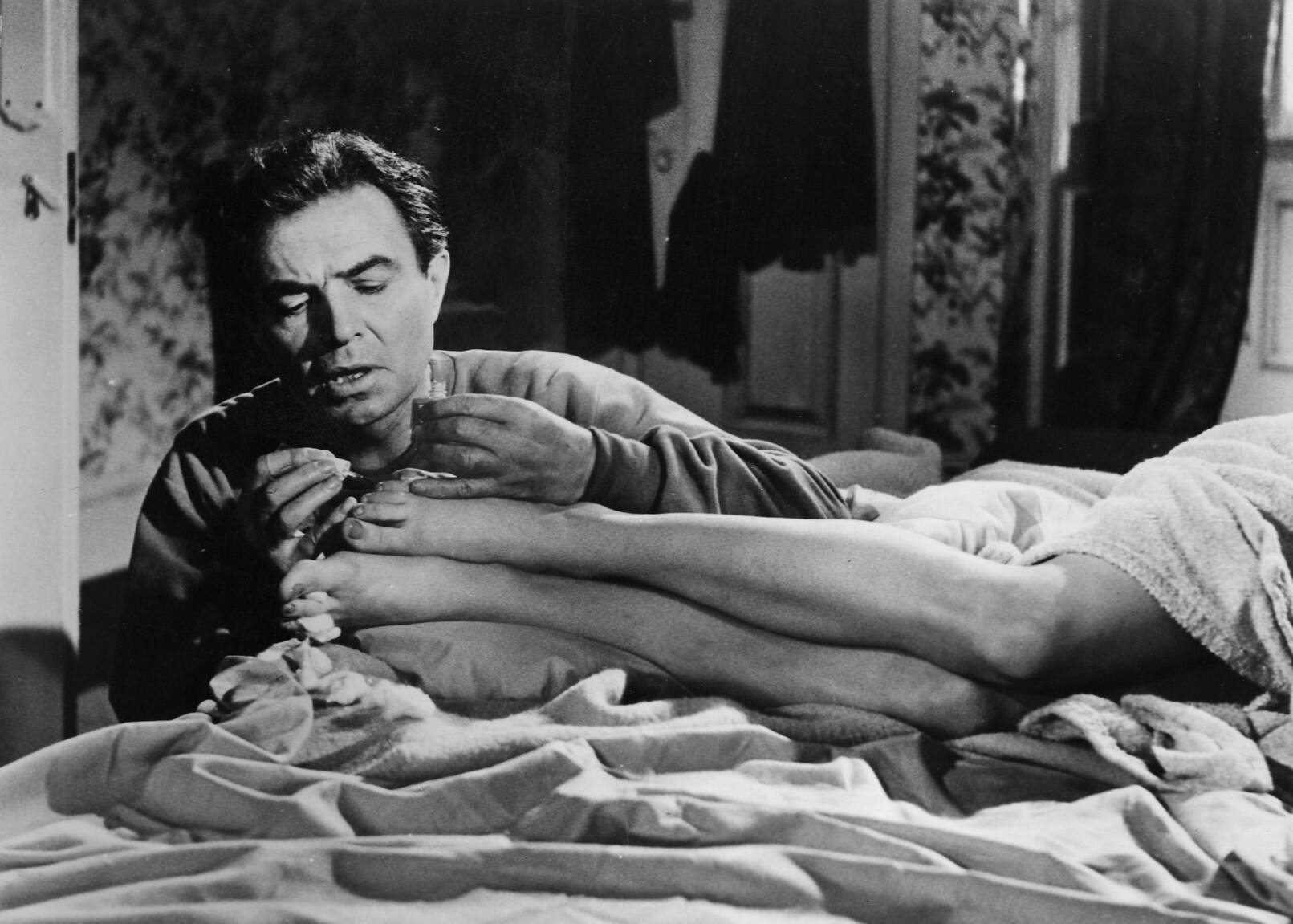
“How did they ever make a movie of ‘Lolita’?” the advertisements asked. It was 1962, and Vladimir Nabokov’s novel was still fairly new to U.S. shores, with the first American edition published in 1958. The original Olympia Press run from three years earlier had been banned and unbanned in France, with copies being seized by customs officers at British borders. The book is one of the most audacious high-wire acts in all of literature — an unspeakable crime retold as a grand romance by an unreliable narrator. Fussy classics professor Humbert Humbert recounts the kidnapping and sexual abuse of his landlady’s 12-year-old daughter, Dolores Haze, with rhapsodic rationalizations via some of the most beautiful passages ever written in the English language. Addressed to “ladies and gentlemen of the jury,” the novel is, in part, the floridly elaborate self-justifications of a deeply guilty man, one who only fleetingly glimpses the depths of his own depravity. It’s also funny as hell.
The book requires readers to hold several ideas in their minds at the same time, which can be tricky in an era when a lot of folks seem to have trouble maintaining one. The central taboo is even more radioactive post #MeToo, and there’s considerable online discourse citing “Lolita” as a “red flag” for folks who never did figure out the difference between depiction and endorsement. (Honestly, it’s easier these days to just tell people my favorite book is “The Sun Also Rises” so we don’t have to get into it.) Among its many virtues, writer-director Eva Victor’s recent “Sorry, Baby” featured a scene in which a college professor and sexual assault survivor urges her students to think a little harder about what they’re recoiling from while reading the novel.
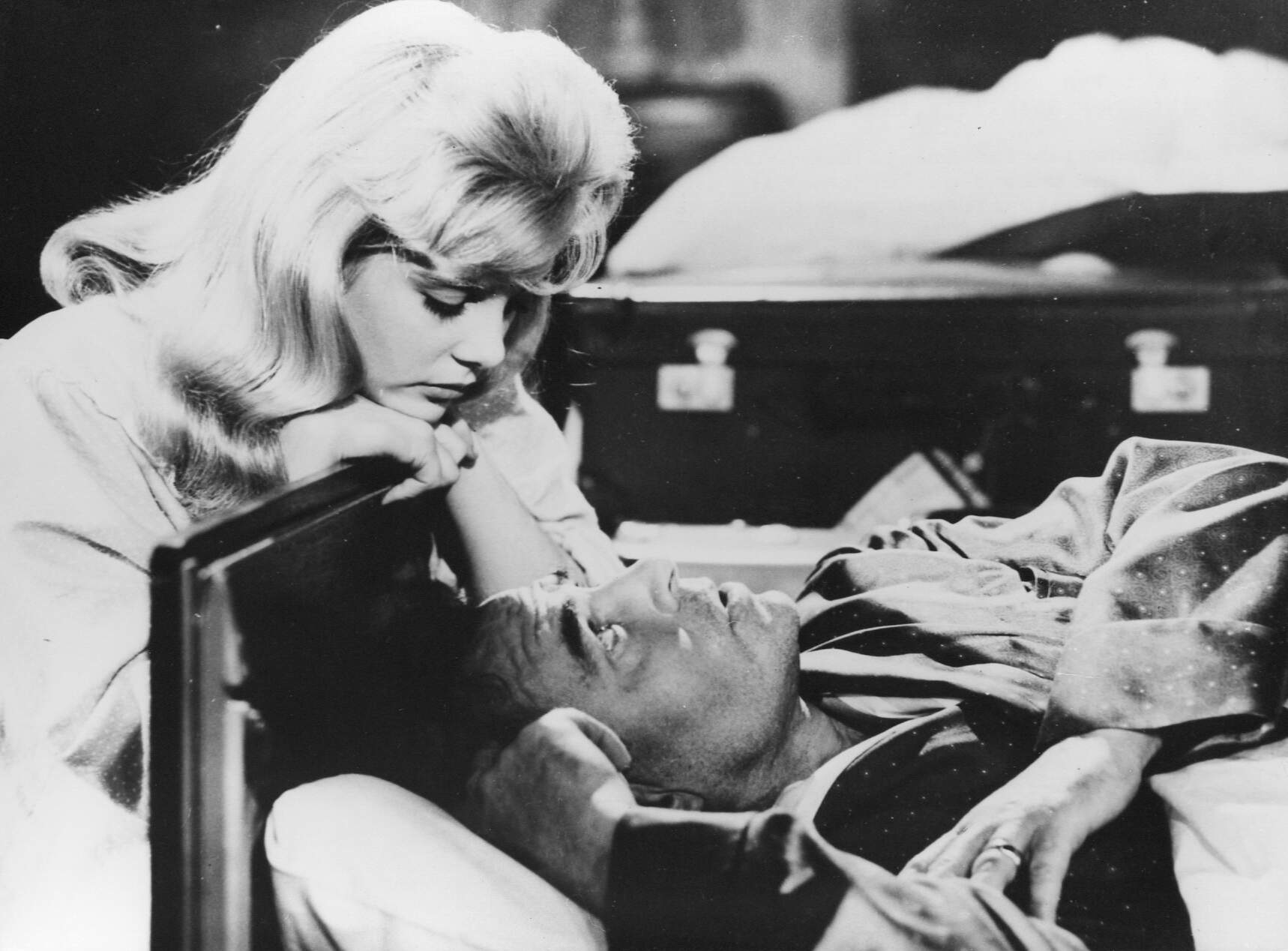
So how did they manage to make a movie of “Lolita”? You can find out at a rare 35mm screening on Friday, Feb. 20, as part of the Harvard Film Archive’s series “The Complete Stanley Kubrick,” which began earlier this month and runs through April 27. The HFA has been hit especially hard by the current administration's attack on higher education, with budget cuts severely curtailing the archive’s mission to bring in new films and filmmakers from all over the world. (They can’t even swing Sunday night screenings or a printed calendar at the moment.)
Out of necessity, this season’s programming is primarily a tour through canonical classics in the archive’s existing collection. The community has come out in droves to support the HFA. A postwar Italian cinema retrospective has done blockbuster business, and I can’t tell you how heartening it’s been for this aging cinephile to see standby lines full of young folks for films by Michelangelo Antonioni, Bernardo Bertolucci and Ermanno Olmi. Kubrick always pulls in the crowds, and “2001: A Space Odyssey” (March 9) sold out more than a month in advance. (Don’t despair if you didn’t get tickets. The Somerville Theatre owns its own 70mm print of the interstellar mind-melter and plays it pretty regularly.)
Despite being cited by David Lynch and Sofia Coppola as their favorite Stanley Kubrick movie, “Lolita” doesn’t screen as often as his other masterpieces, presumably because of the third-rail subject matter and tricky tonal shifts. Working from a screenplay by Nabokov himself (heavily rewritten by Kubrick and producer James B. Harris), the movie plays the tragedy as a cheeky farce, a knowingly inappropriate comedy of manners with James Mason as the floundering British academic waylaid by his lust for Sue Lyon’s young “nymphet.” The dialogue is coy about the character’s actual age, but Lolita is visibly older than she was in the book. Lyon, who turned 14 during filming, is often dressed and styled like an adult to reflect Humbert’s point of view, though she still chomps on her chewing gum and occasionally exhibits child-like mannerisms for maximum queasy dissonance.
Humbert is pursued not by the authorities or police, but by his erotic rival, Clare Quilty. In a role expanded from the novel so Kubrick could give free rein to the comedic brilliance of co-star Peter Sellers, Quilty is Humbert’s shadow self — a secret sharer who also lusts after Lolita, only without the protagonist’s deep-seated shame or delusions of nobility. The shape-shifting Quilty is a creature of undiluted id, and it’s a dark inside joke that Sellers has given him a New York accent that sounds suspiciously like the director’s own. Kubrick’s “Lolita” most resembles his final film, 1999’s “Eyes Wide Shut” (April 20), another pitch-black comedy that likewise follows a buttoned-up protagonist on a surreal odyssey triggered by his wayward desires. Like all of Kubrick’s pictures, these are stories of system collapse, with carefully ordered existences coming undone upon the introduction of ungovernable human emotions like jealousy and eros.
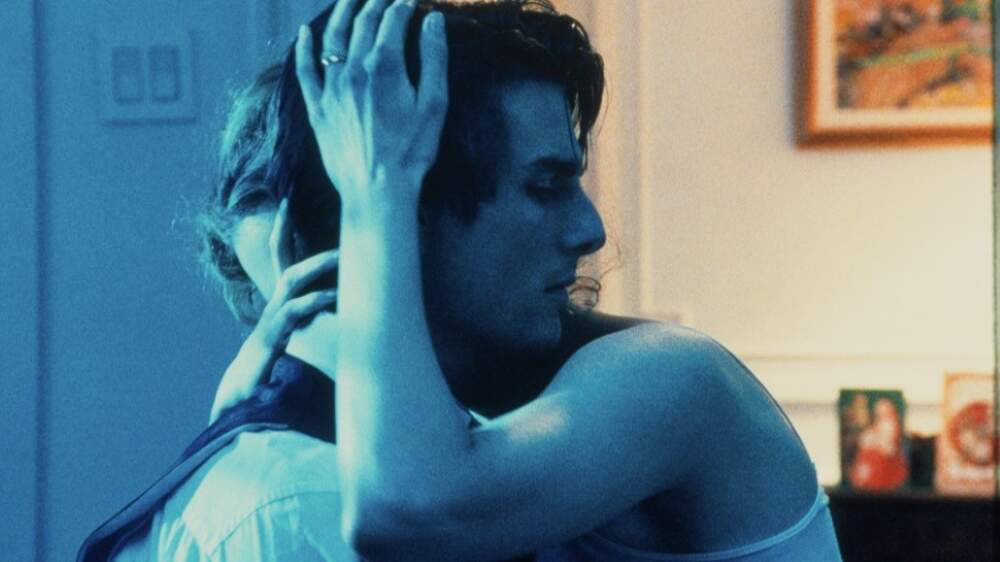
The current administration’s fumbling attempts to hide the Epstein files have put “Eyes Wide Shut” back in the news lately, with people who really should know better propagating an insane conspiracy theory that the director did not die of a heart attack shortly after completing the film, but rather was murdered by moneyed elites for using the picture to expose their secret sex parties. (Sure, they killed him for it, but still let Warner Bros. open the movie on more than 2,000 screens later that summer.) The sinister, opaque aura of Kubrick’s work seems to attract such kooky conjecture. There’s a famous theory that the filmmaker helped NASA fake the moon landing in 1969 using the tech from “2001,” and that “The Shining” (April 6) was actually his coded confession. Rodney Ascher’s terrific 2012 documentary “Room 237” is a feature length exploration of crazy conspiracies that have sprung up around Kubrick’s 1980 Stephen King adaptation, an intentionally elusive movie that haunts viewers like a puzzle designed never to be solved.
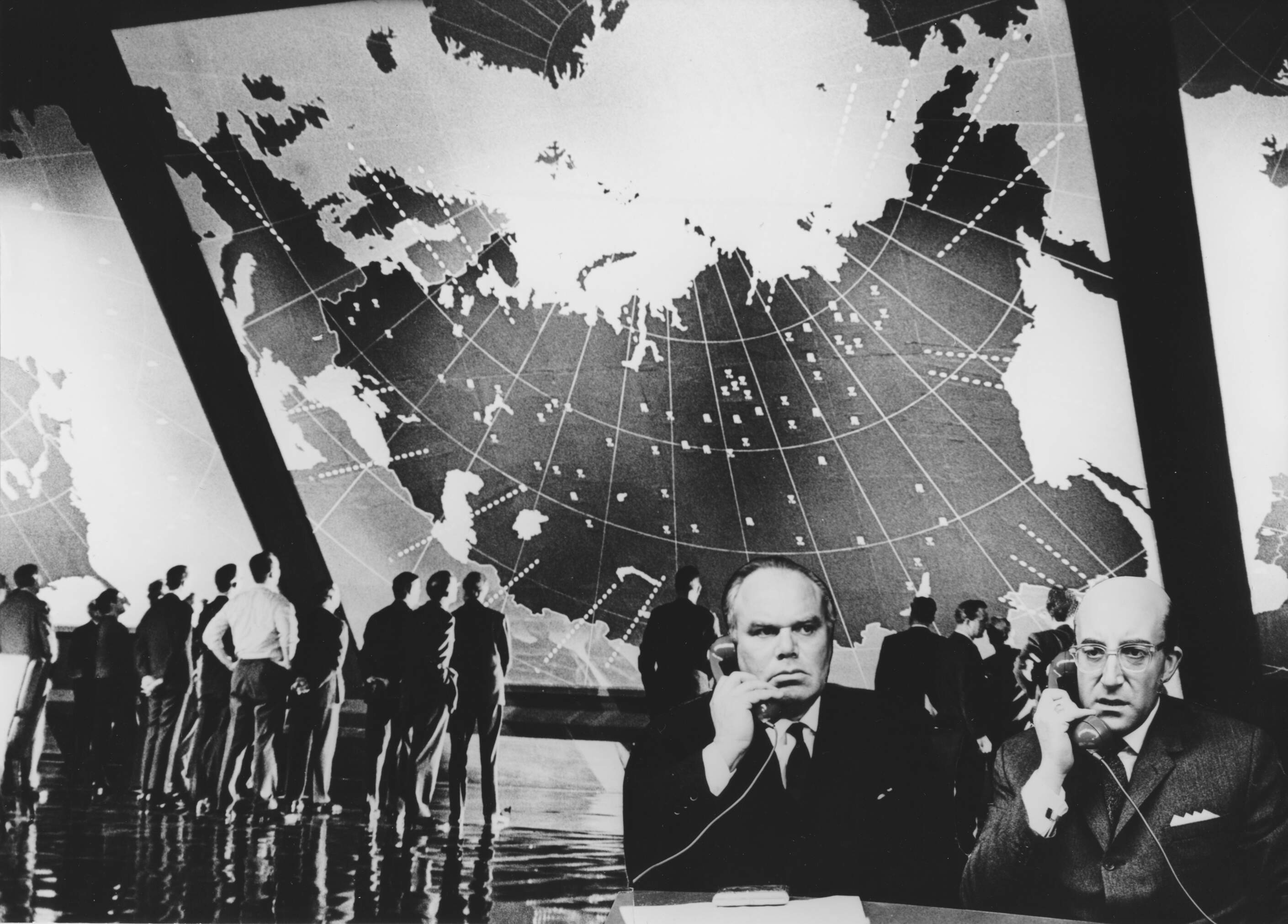
The eerie precision of Kubrick’s filmmaking and well-known penchant for shooting dozens of takes earned him a reputation among his detractors as a cold manipulator. His dark sense of humor and the pitiless temperament of his films caused some to label him a misanthropist, though I’d say he qualifies more as a realist. Kubrick was fascinated by the ways in which we foolish mortals attempt to impose order on an indifferent universe, constructing elaborate systems and machinery that inevitably come crashing down around us or blow up in our faces. His 1964 follow-up to “Lolita,” “Dr. Strangelove or: How I Learned to Stop Worrying and Love the Bomb” (March 20) might be the ultimate example of such folly, unleashing Sellers again in multiple roles. The film depicts a massive military industrial complex awash in phallic symbols as the personal perversions of its purveyors trigger a doomsday spiral. (All the failed fail-safes are cousins to HAL the killer computer in “2001.”) It’s a black comedy burlesque of American cowboy mythology and the absurdity of fighting in the war room.
Kubrick revisited the war machine in 1987’s “Full Metal Jacket” (April 13), detailing the dehumanization of boot camp as a crop of U.S. Marine recruits are psychologically and spiritually broken down into killer automatons. Any glimmers of humanity are ground up and snuffed out by the austere film’s icy rigor and an attention to military rituals that can’t help but recall the agonizingly orderly duels of the director’s 1975 “Barry Lyndon” (March 30 and April 5), in which messy matters of love and death are subject to rigid formality and byzantine behavioral codes. But the whole point of the director’s 1971 futurist nightmare “A Clockwork Orange” (March 23) is that such things should remain beyond control.
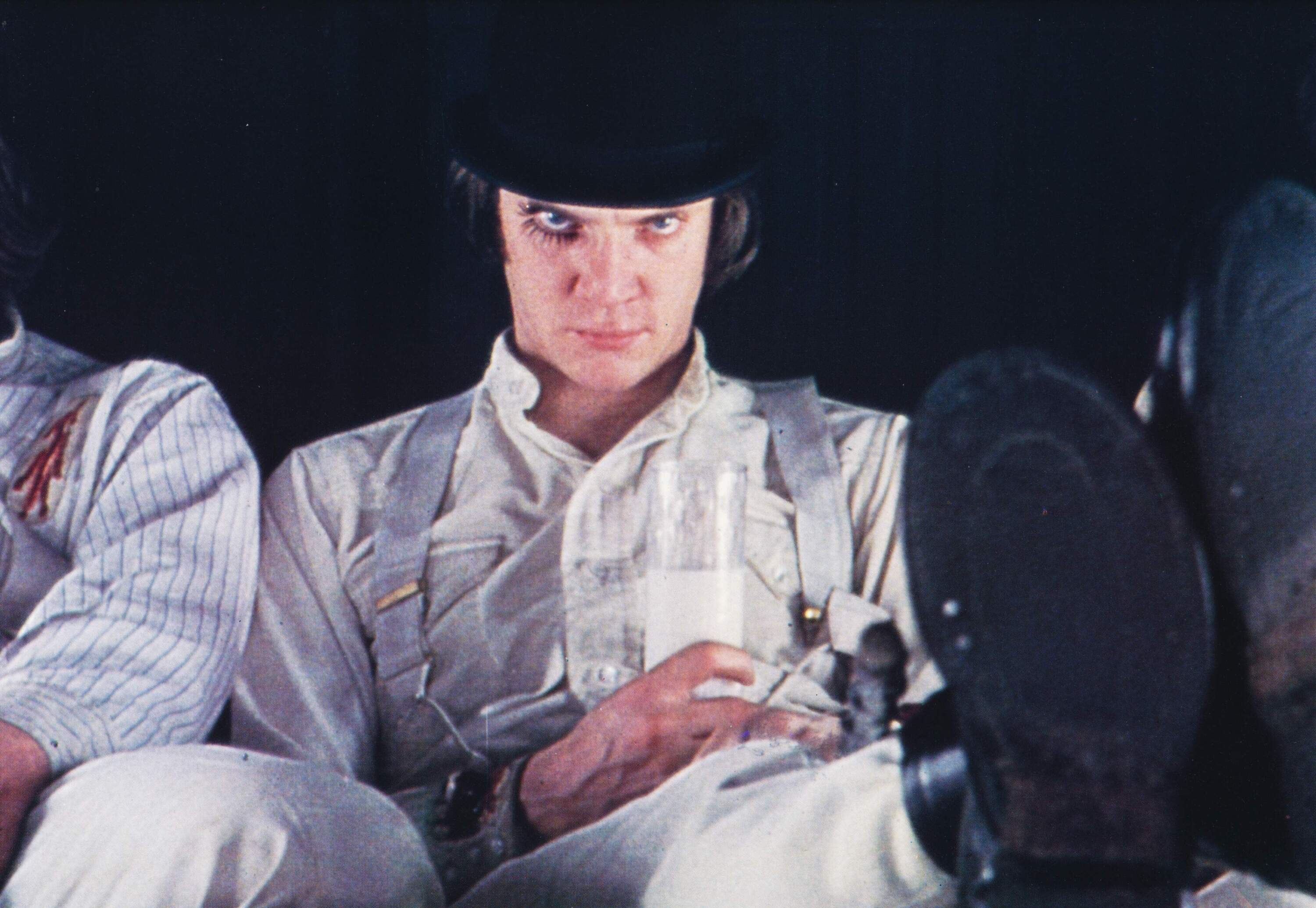
Do kids still go crazy for “Clockwork”? The VHS tape was a rite of passage when I was growing up. (As a teenager, I had the poster on my bedroom wall and a T-shirt I hoped lent me an air of menace.) Malcolm McDowell’s alarmingly charismatic hoodlum rapist is captured and conditioned to be more docile in a social experiment that fails catastrophically. The movie is a savage – and savagely hilarious – argument for the necessity of free will, however horrific the consequences. Adapting the novel by Anthony Burgess, Kubrick argues that attempts to oppose restraints on personal autonomy will result in the loss of things even more beautiful than Beethoven. Burgess’ book ends with the character maturing and outgrowing his hobby of “ultraviolence,” which works better as literature. Kubrick’s ending works better as a film.
The HFA series also includes screenings of two pictures the director started but did not complete. Kubrick was fired by Marlon Brando from the 1961 western “One-Eyed Jacks” (March 22), which would become the mercurial movie star’s lone directional effort. And the filmmaker famously spent decades preparing for “A.I. Artificial Intelligence” (April 27), before passing the project along to pal Steven Spielberg, who directed the film in 2001. The “Pinocchio” riff about a robot boy who longs to be human is a fascinating collision between Spielberg’s crowd-pleasing sensibilities and Kubrick’s more elusive approach. A lot of people assumed that the film’s epilogue, set thousands of years in the future, was Spielberg’s attempt to tack a happy ending on a cynical Stanley story. But in actuality, the time jump was always key to Kubrick’s conception of the project. “A.I.” is a call to responsibility, designed as a warning to parents, artists and tech pioneers that the things we create will continue to live and flourish long after we’re gone. Much like the films of Stanley Kubrick.
“The Complete Stanley Kubrick” runs through April 27 at the Harvard Film Archive.