Support WBUR
Review
Emerald Fennell's unsubtle 'Wuthering Heights' intertwines love and death
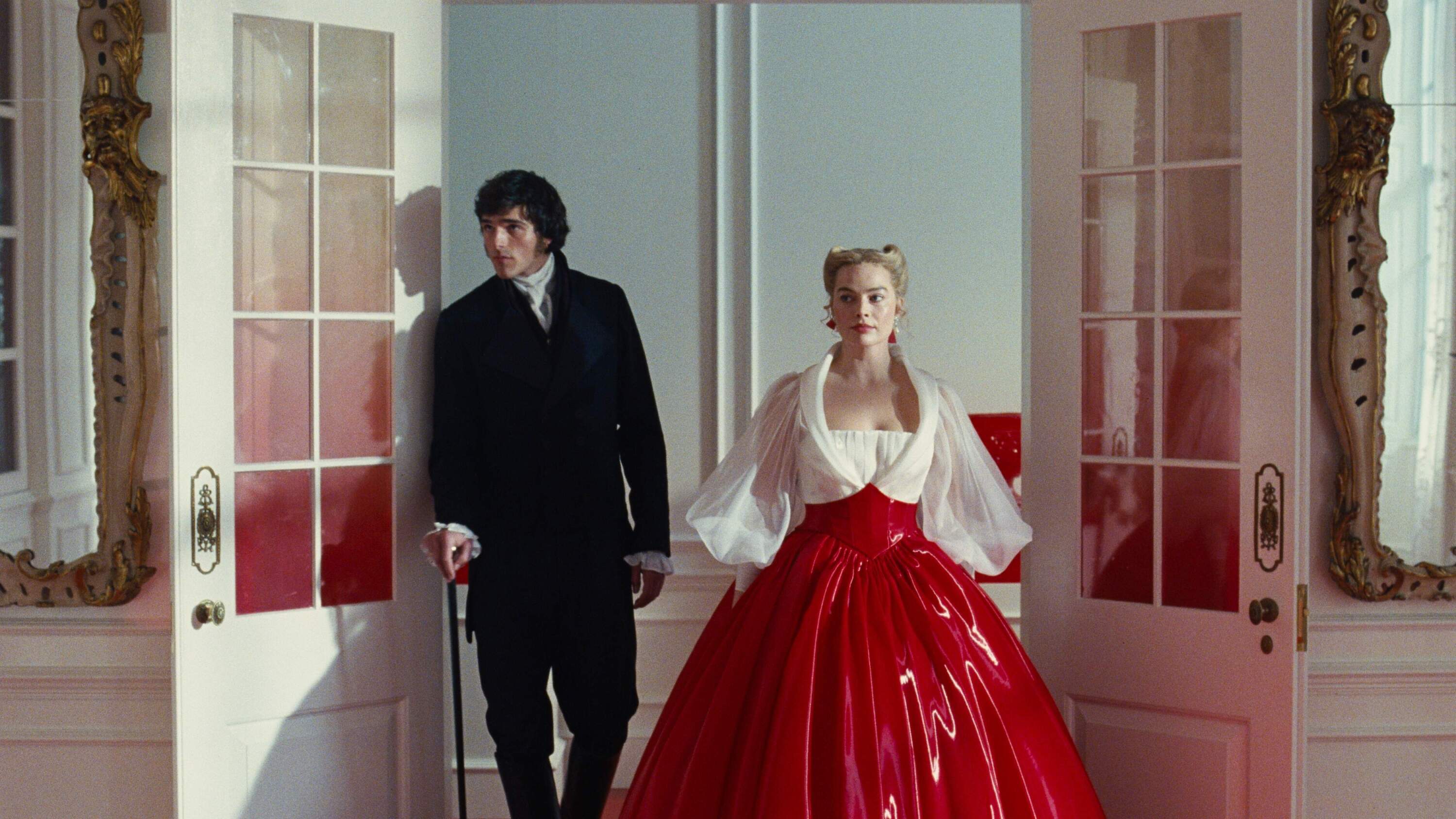
We received a note from the studio insisting that the official title of writer-director Emerald Fennell’s new Emily Brontë adaptation is to be printed as “Wuthering Heights” in quotation marks. Since we already print all of our movie titles in quotation marks, I think we’re covered here, and I’m not going to make you look at “‘Wuthering Heights’” for an entire review. This is part of a recent trend of annoying title stylizations that drive copy editors crazy and leave readers scratching their heads at unsightly style guide anomalies like “TÁR” and the weird Gen Z aversion to capital letters. But having seen the movie, I can also understand why they’d want to make a distinction. Fennell’s “Wuthering Heights” is not your high school English teacher’s “Wuthering Heights,” and it’s certainly nothing like William Wyler’s 1939 adaptation that starred Merle Oberon and Laurence Olivier.
Fennell has said in interviews that she wanted to make the “Wuthering Heights” she imagined upon first reading the book when she was 14 years old. Indeed, maybe the best way to describe Fennell’s “Wuthering Heights” is that it feels like a movie made by a 14-year-old. I mean this as a compliment. It’s a baroquely stylized, intensely pubescent phantasmagoria overflowing with intentional anachronisms and expressionistic flourishes. This is a dreamy and occasionally foolish movie made with the heedless ardor of first love, a film of frightening, sticky desires and irrational anger. It's also the kind of thing that makes literary purists want to pull their hair out.
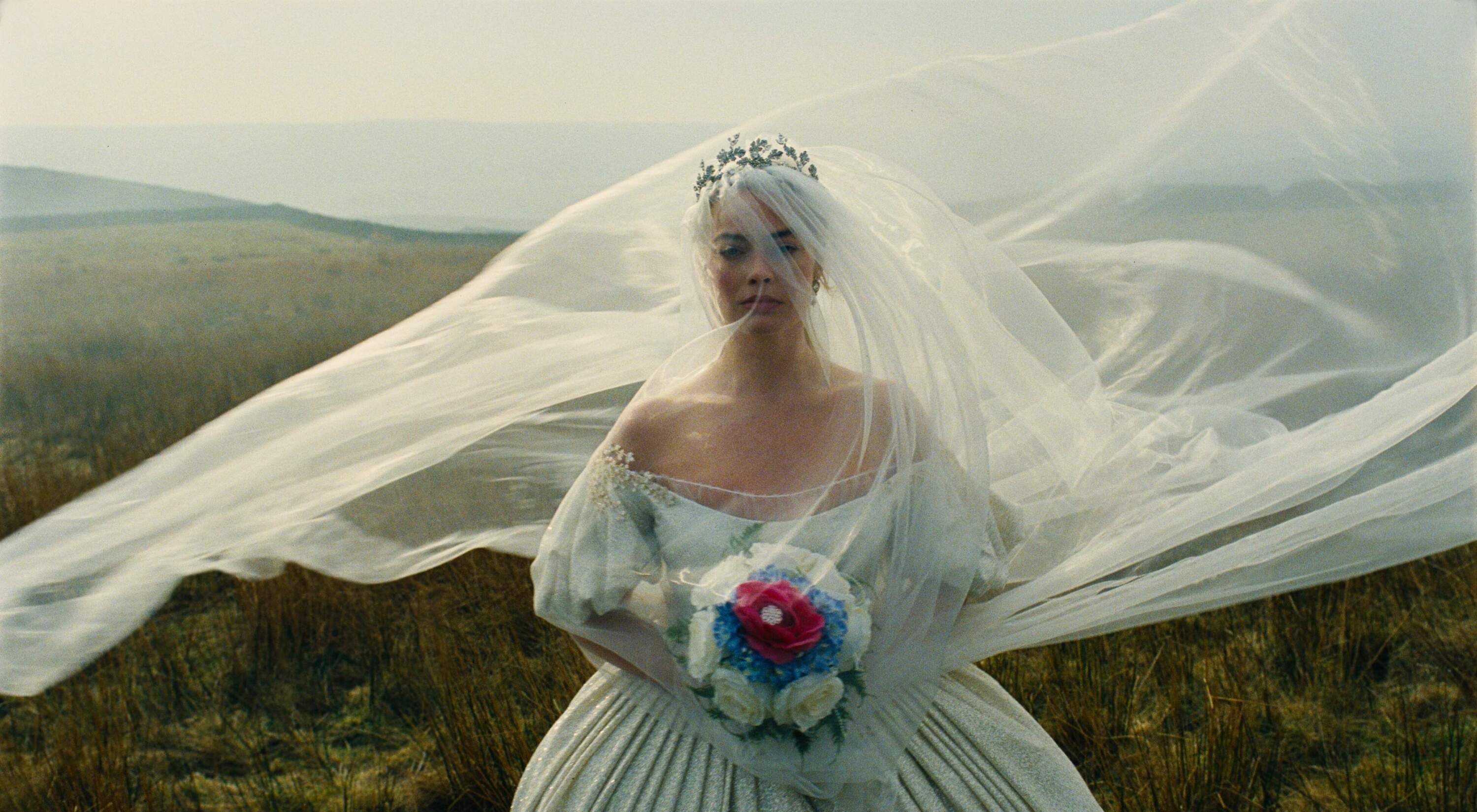
As is the case with most “Wuthering Heights” adaptations, Fennell ignores the second half of the novel. She also chucks a lot of the first half, combining characters into composites and stripping an unwieldy story down to the barest essentials. Margot Robbie’s cruel, imperious Catherine and Jacob Elordi’s seething street urchin Heathcliff grew up together, bonded by abuse on the Yorkshire moors, but are torn asunder when she marries their wealthy neighbor Linton (Shazad Latif) for his money. Heathcliff runs off and mysteriously makes a fortune, coming back years later to buy their crumbling old home of Wuthering Heights and wreak his revenge. Often called “the greatest love story of all time” by people who clearly haven’t read it, Brontë’s novel is a gnarled web of emotional terrorism and amour fou.
It's a really weird book. (Frances O’Connor’s underrated 2023 biopic “Emily” took some appreciably lurid liberties while speculating how it came to be written.) Fennell’s screenplay doesn’t stick strictly to the story, but even its deviations feel true to the doomy spirit of Brontë’s prose. The film begins on a black screen with noises of creaking boards and heavy breathing that sound suspiciously like a sex act, only to be revealed as a hanging man’s last gasps on the gallows. Love and death are intertwined throughout this strenuously unsubtle picture. Our first glimpse of Wuthering Heights itself is accompanied by Charli xcx and The Velvet Underground’s John Cale moaning on the soundtrack, “I think I’m gonna die in this house.”
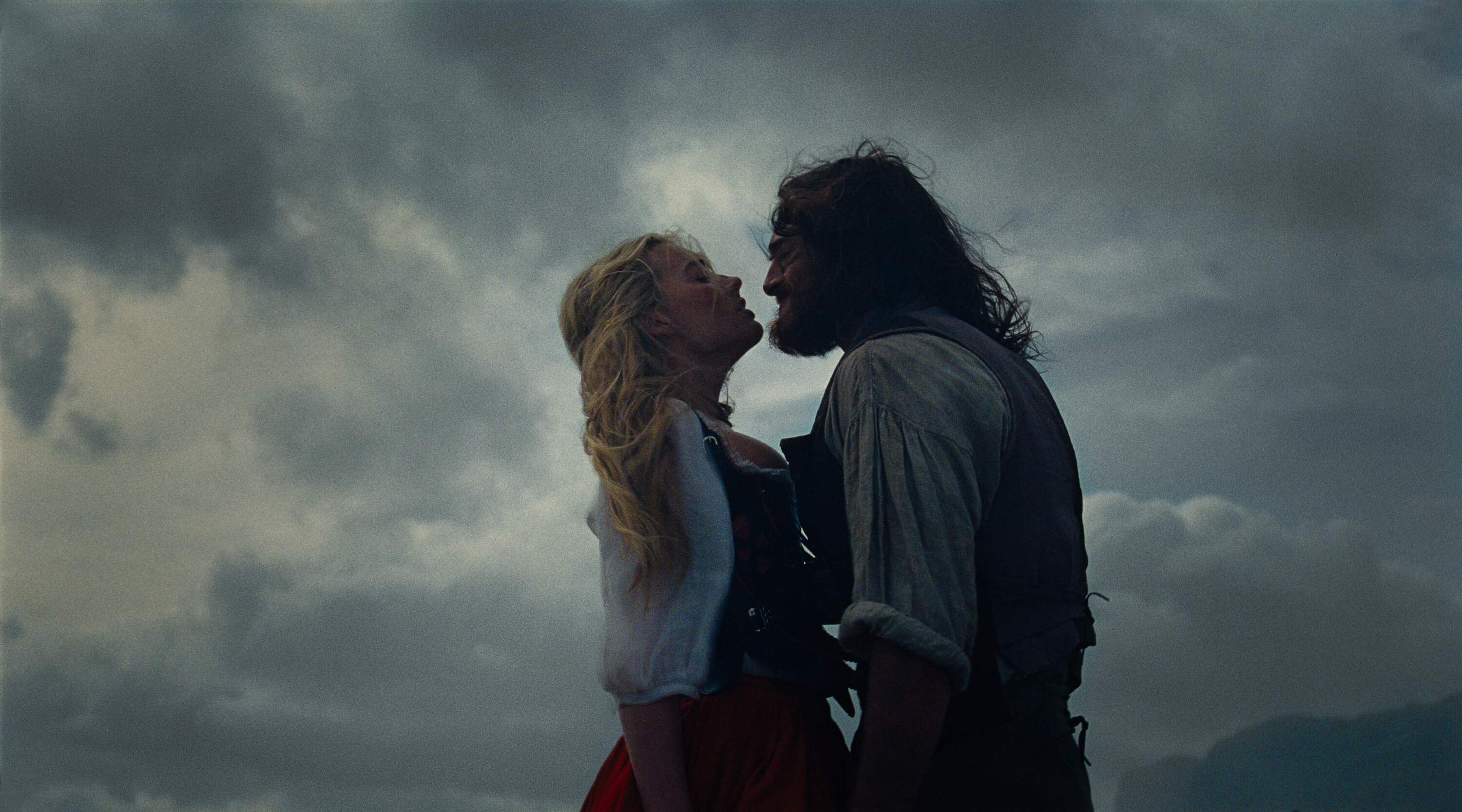
Viewers still scandalized by the bathwater antics of Fennell’s 2023 “Saltburn” know she’s a filmmaker with a thing for fluids. People in this movie are constantly sticking their fingers in damp holes and smearing viscous liquids all over any available surface. (This might be the first film to explore the erotic properties of egg yolks.) The sight of Catherine masturbating on the moors will surely be anathema to some, but every once in a while Fennell conjures an image so swoony and unafraid to be ridiculous it sends the movie soaring. I knew “Wuthering Heights” had me during an argument scene, when the toweringly tall Elordi grabs Robbie by her front corset laces and one-handedly lifts her up off the ground to his eye-level for a kiss. I don’t know if that’s even physically possible, but it’s perfect.
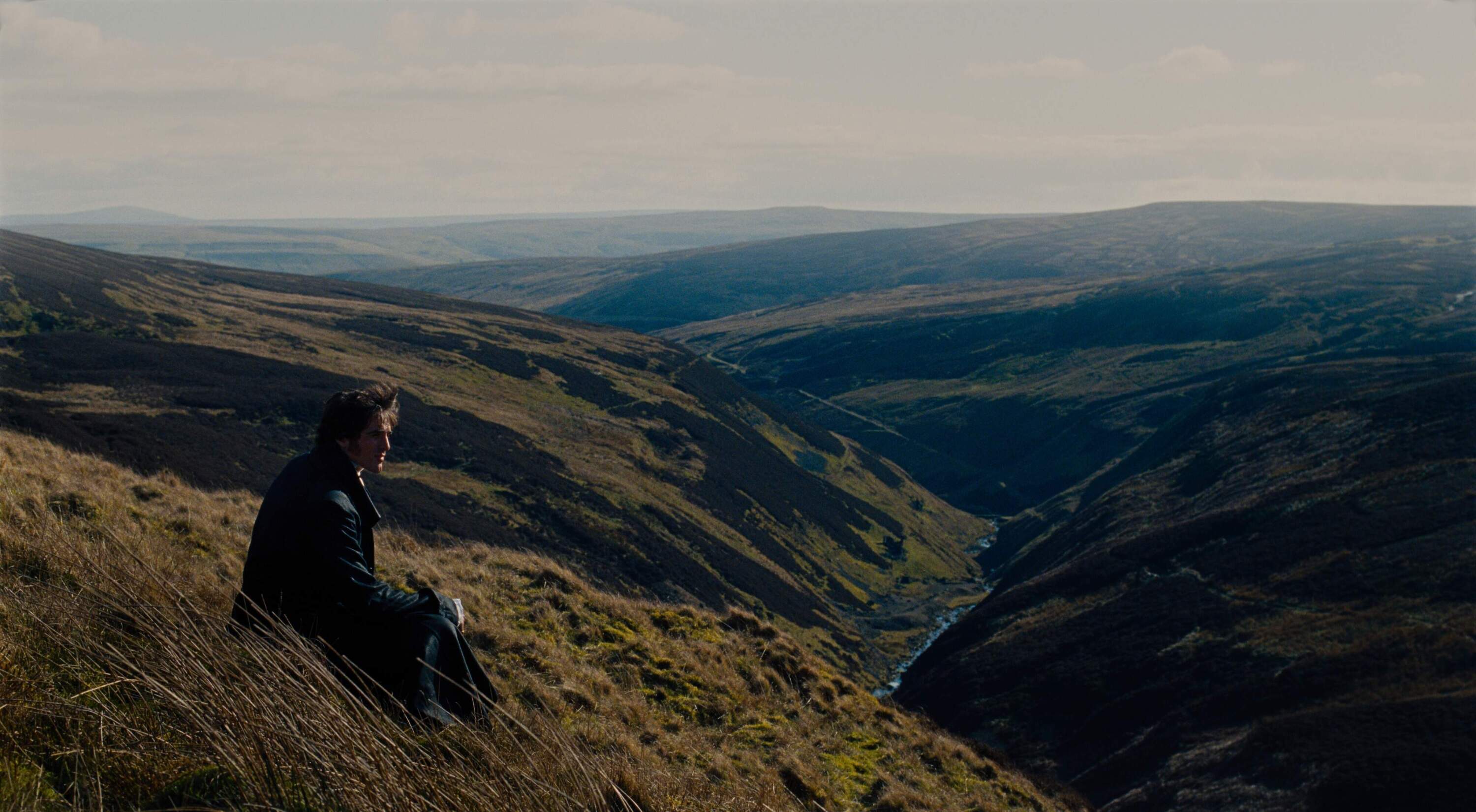
Cinematographer Linus Sandgren makes a visual feast out of these massive moors, in a film swept with more fog than John Carpenter’s “The Fog.” Even the squalor is awash in luxurious excess, as Catherine’s father drinks himself to death in a shack piled with floor-to-ceiling pyramids of empty gin bottles. Watch how Fennell and her design team use the color red, which first appears in a few stray accents and highlights, but gradually comes to feature more prominently in the sets and costumes like a rapidly spreading bloodstain. After the first time Heathcliff rides off into a sanguine sunset, you’ll notice entire carpets and walls have gone crimson.
The 35-year-old Robbie playing teenage Catherine requires a considerable buy-in from the audience, but who better than Barbie herself to model this spectacular array of gowns and dresses from dozens of historical eras? (I’m pretty sure one of them was made out of vinyl.) Besides, you need someone as charismatic as Robbie for the audience to put up with Catherine’s petulance. I like that Elordi seems to have decided that the best way to play the smoldering, sadistic Heathcliff is by trying to look and sound as much like Clive Owen as possible. Especially when he’s torturing Linton’s sister, played in a deliciously unhinged performance by Alison Oliver, who some of you might remember as the menstrual blood girl from “Saltburn.” (Again, Fennell with the fluids.) Hong Chau dishes out some superb side-eye as Catherine’s treacherous handmaiden, reminding us how exhausting it must be to work for people who are this extra all the time.
After only three films, Fennell is already an extremely controversial filmmaker in certain circles, not just for her sexually violent provocations, but also because of an ideological incoherence that sometimes obscures her very real visual gifts. I never did write about her 2020 debut, “Promising Young Woman,” in part because the film seemed designed to get its detractors dogpiled on social media. (Especially since the movie’s Oscar campaign strategy seemed to be going after male critics for saying things they didn’t say.) But now that six years have passed, I hope it’s finally safe to admit that I don’t feel like a rape-revenge scenario entrusting the police to handle everything properly in the end is particularly in line with the film’s stated “F--- the patriarchy” politics.
“Saltburn” felt like an uncredited adaptation of “The Talented Mr. Ripley” written by someone who didn’t really understand the book, with surprise twists and facile attempts to trick the audience, undercutting the movie’s sumptuous atmosphere of decadence and rot. Fennell’s first two films got tripped up trying to prove that they were smarter than the people watching them. This is blessedly not the case with “Wuthering Heights,” which is big, bold and at times thrillingly, adolescently stupid. I cackled with delight during a scene in which Catherine chews out a servant while clad head to toe in scarlet, her hair swept up into two peaks like devil’s horns as a gigantic fireplace rages behind them.
The movie “Wuthering Heights” reminds me of most is Alfonso Cuaron’s dreamy, unfairly derided 1998 “Great Expectations,” which starred Ethan Hawke and Gwyneth Paltrow and transposed the Dickens tale to contemporary New York City. Much like Baz Luhrmann’s transcendently tacky take on “Romeo and Juliet” from two years earlier, these are movies less concerned with the nuances of canonical works than in trying to evoke the feelings stirred by reading them for the first time. They’re excessively hyperbolic and can be a little embarrassing. Just like young people in love.
“Wuthering Heights” opens in theaters on Thursday, Feb. 12.