Support WBUR
Review
This modern take on 'Hamlet' isn't very witty, but it is brief
Writing the line “brevity is the soul of wit” in a four-hour play is an irony that undoubtedly did not escape its author, who put it in the mouth of a blowhard who wouldn’t stop yammering. Shakespeare was funny that way. Just don’t expect to hear the line in director Aneil Karia’s new “Hamlet,” a ruthlessly stripped-down modernization of the Bard’s tale set in contemporary London’s South Asian community. Keeping the Elizabethan verse but throwing out nearly everything else, screenwriter Michael Lesslie has pared the play to the barest of essentials, scrapping entire characters and storylines while compressing the timeline considerably.
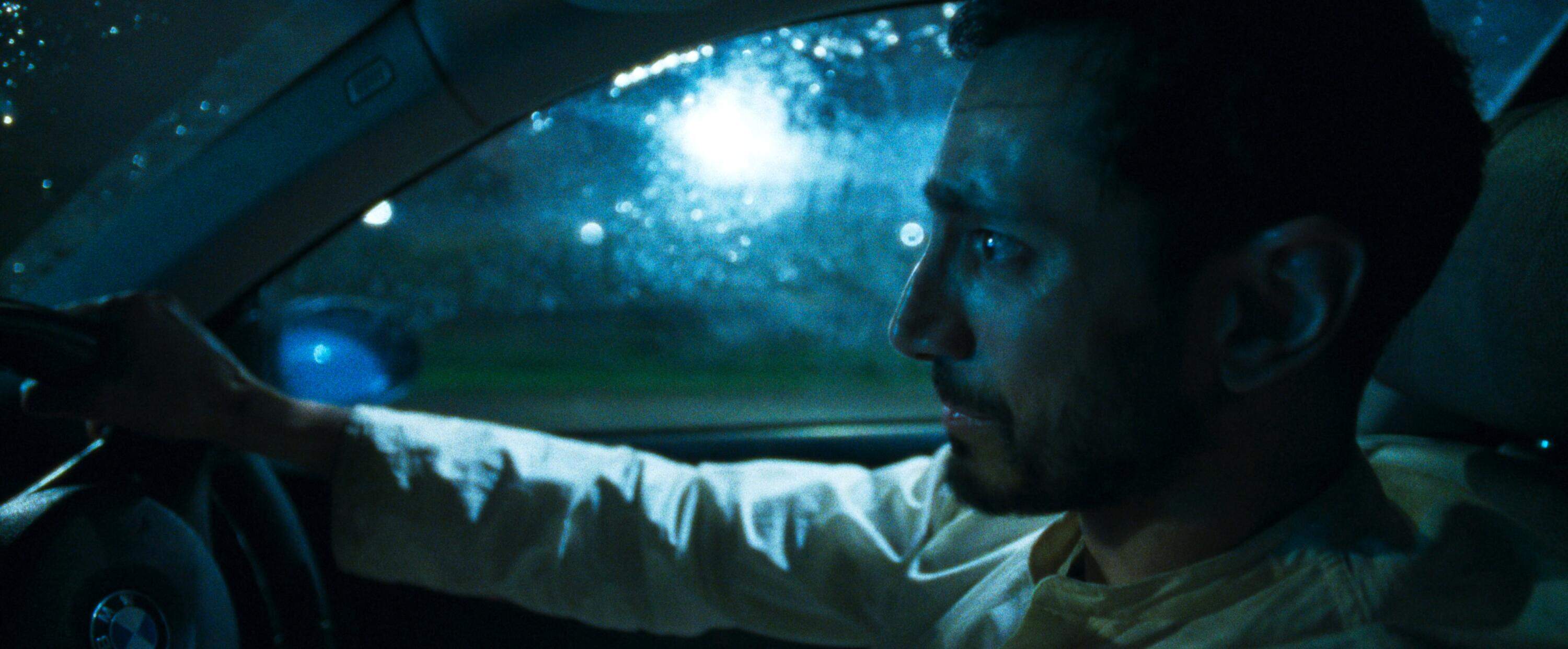
It’s a fast and furious “Hamlet,” even before our melancholy Dane delivers the “To be, or not to be” soliloquy as he’s speeding down the road in his BMW, playing chicken with oncoming trucks. You could actually watch this film twice in the time it takes to sit through Kenneth Branagh’s unabridged 1996 adaptation. Karia’s interpretation may not be very witty, but it is brief.
Riz Ahmed plays the famously indecisive prince as a fluster of flared nostrils and sputtering rage. Karia’s handheld camera remains locked on him throughout, almost always in three-quarter shots or medium close-ups. There are occasional whips around to incorporate the other actors, but for the most part, this is a one-man show. Lesslie’s lean script has even eliminated Horatio, so now poor Hamlet has nobody to confide in except us. To be honest, he’s not great company. Ahmed’s eyes are alight and mad with rage, but he spits and swallows his dialogue, sinking scenes with his muddled enunciation. It’s a good thing you go into the movie already knowing most of the lines.
(In this respect, the film reminded me of director Justin Kurzel’s 2015 mud and muck-heavy “Macbeth” – also scripted by Lesslie – in which Michael Fassbender was so inaudible under the clanking, medieval morass it wasn’t so much a tale told by an idiot as mumbled by one.)
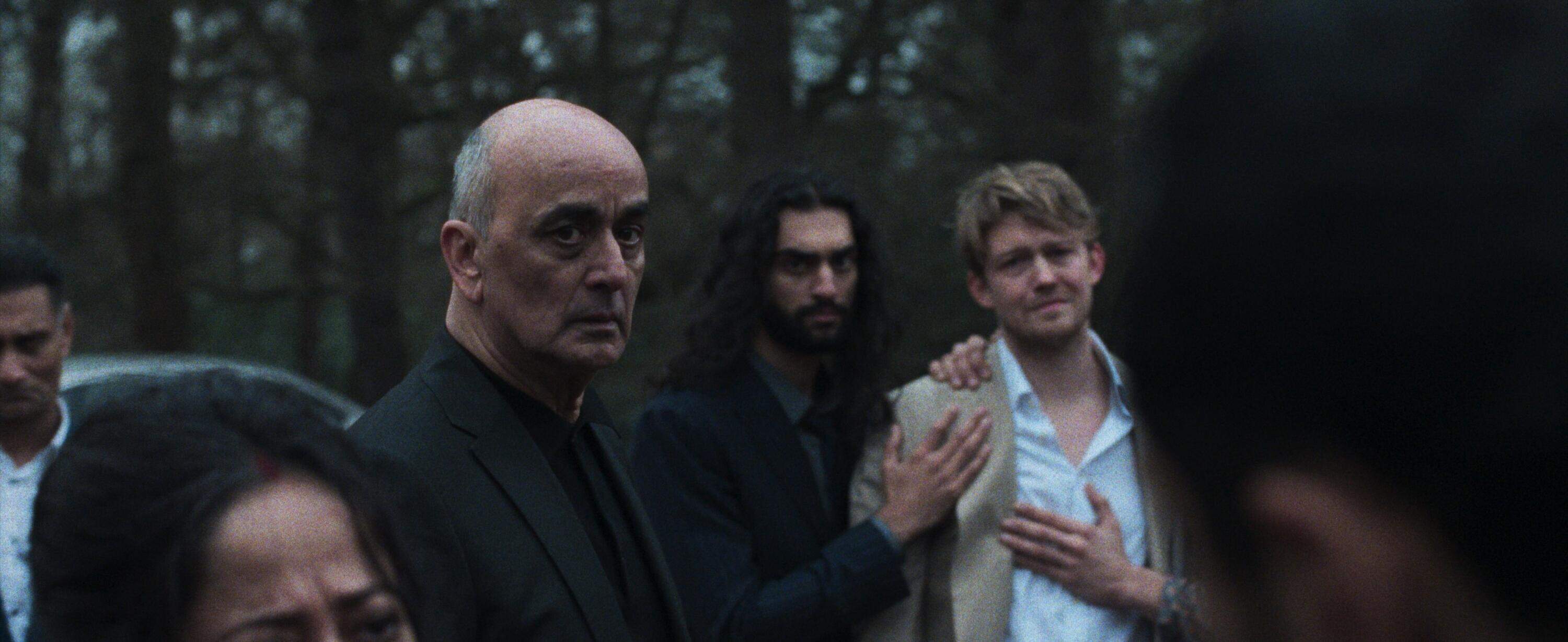
In this update, Elsinore has become a real estate company, with Fortinbras heading up a tent city homeless encampment out in the woods. From monarch to landlord strikes me as a tragic diminishment, but the concept goes frustratingly unexplored, since this sparse screenplay has little interest in palace intrigue. The modern flourishes are few and far between, none nearly as inspired as Michael Almereyda’s 2000 slacker “Hamlet,” in which Ethan Hawke’s pouty, film student prince so memorably left the “get thee to a nunnery” speech on Ophelia’s answering machine.

It's hard to believe Almereyda’s adaptation was the last time we saw the Dane on the big screen, if you don’t count dire “Hamlet”-adjacent projects like last year’s “Hamnet” or the abysmal 2018 YA adventure “Ophelia,” in which Daisy Ridley faked her death instead of getting to a nunnery and lived happily ever after. (This had the distinction of being the worst movie I saw at a Sundance where the lineup included films by Sam Levinson and Jason Reitman.) We’re more than overdue for a fresh angle, something that Karia’s film struggles to deliver.
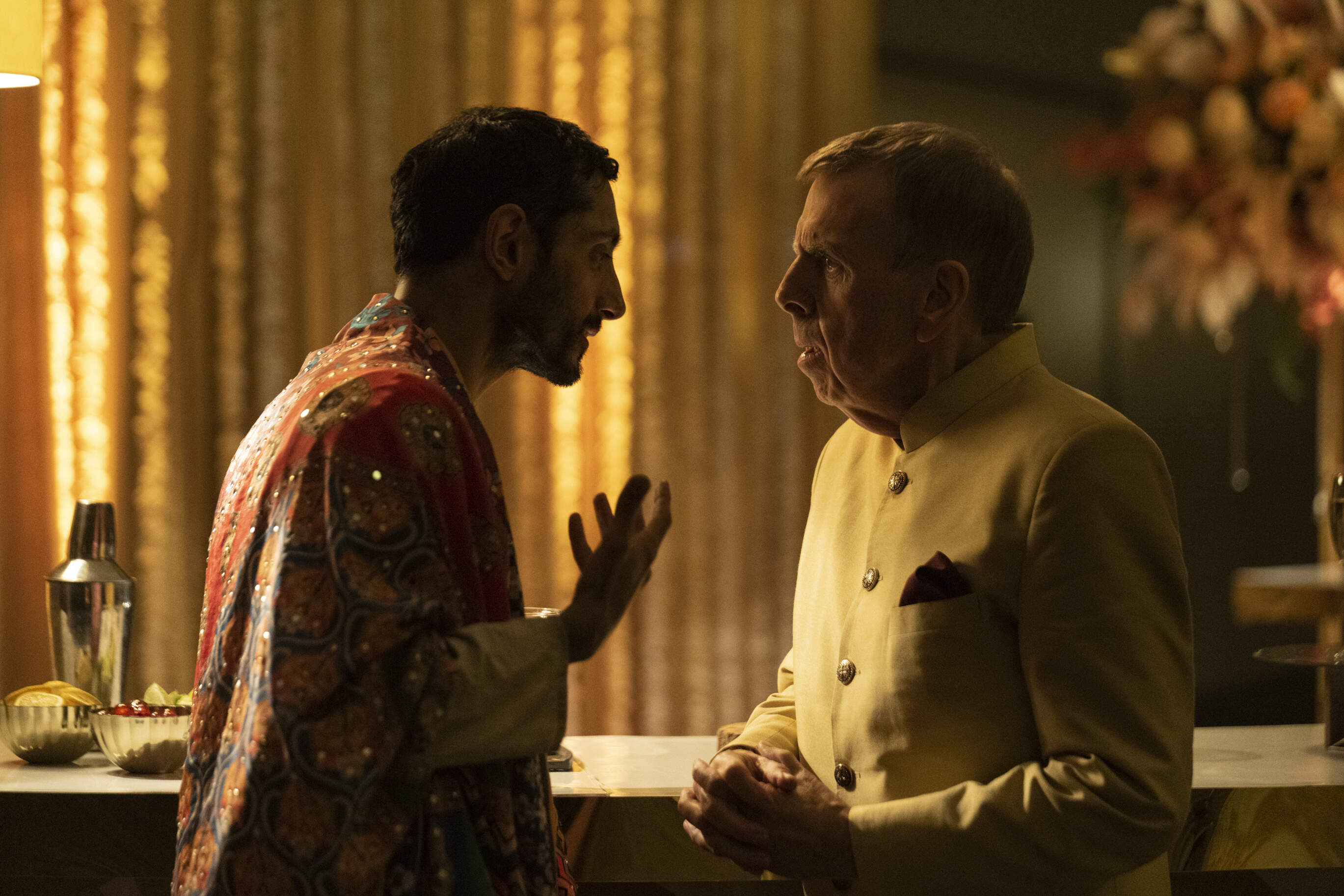
The one scene that really soars is the film’s boldest departure from the text. In a clever bit of structural reengineering, Lesslie has shifted the play’s last three acts to the wedding weekend of Claudius (Art Malik) and Gertrude (Sheeba Chaddha), enabling the prince to deliver the most uncomfortable reception toast this side of Alana Haim’s in “The Drama.” Instead of enlisting actors to catch the conscience of the king, Ahmed’s Hamlet employs a troupe of traditional Kathak dancers to reenact his father’s murder as part of the wedding celebration. Choreographer Akram Khan turns the veiled accusation into a mesmerizing display, showing us once again how Shakespeare’s stories can transcend eras and cultural boundaries.
Notably, it’s the one sequence that was shot using a tripod. I hate how the rest of this “Hamlet” looks, with a herky-jerky, handheld camera chasing Ahmed around from scene to scene. The caught-on-the-fly aesthetic is presumably supposed to convey rawness and immediacy, while also a convenient way to shoot a lot of pages without having to change any camera or lighting setups. I find it lazy and awfully claustrophobic, staging most of the play as people shouting at each other in drab, poorly lit rooms. There aren’t any wide establishing shots to give us space to breathe. This is where the severe compression of the text feels really limiting. We’re so locked into the main character’s mania, there’s no variation in tone, no comic relief nor any of the grace notes that make Shakespeare’s saga so rich. This might be the shortest “Hamlet” I’ve seen, but it feels like one of the longest because every scene is played at the same pitch.
Casting the great Timothy Spall as Polonius and not allowing him to give any advice feels like a terrible waste of resources. Joe Alwyn might have a future as an obscure pub trivia question since he’s in this film and “Hamnet,” though he makes such a negligible impression in both that perhaps only Shakespeare scholars and Swifties will get the answer. Speaking of Taylor, you’ll learn more about the fate of Ophelia from “The Life of a Showgirl” than you will from this picture, with “Saint Maud” star Morfydd Clark’s performance shunted to the sidelines mid-mad scene.
“Hamlet” played at the same Toronto Film Festival where “Hamnet” won the People’s Choice Award last fall. Near the end, my mind had wandered so far away from the fate of our sweet prince, I started thinking how hilarious it would have been if Jessie Buckley had wandered into the premiere and started pointing at the screen while blubbering and shouting like a lunatic. That could have been an incredible cross-promotion.
“Hamlet” is now in theaters.