Support WBUR
Romney returns to Mass. 20 years after 'Romneycare' passage
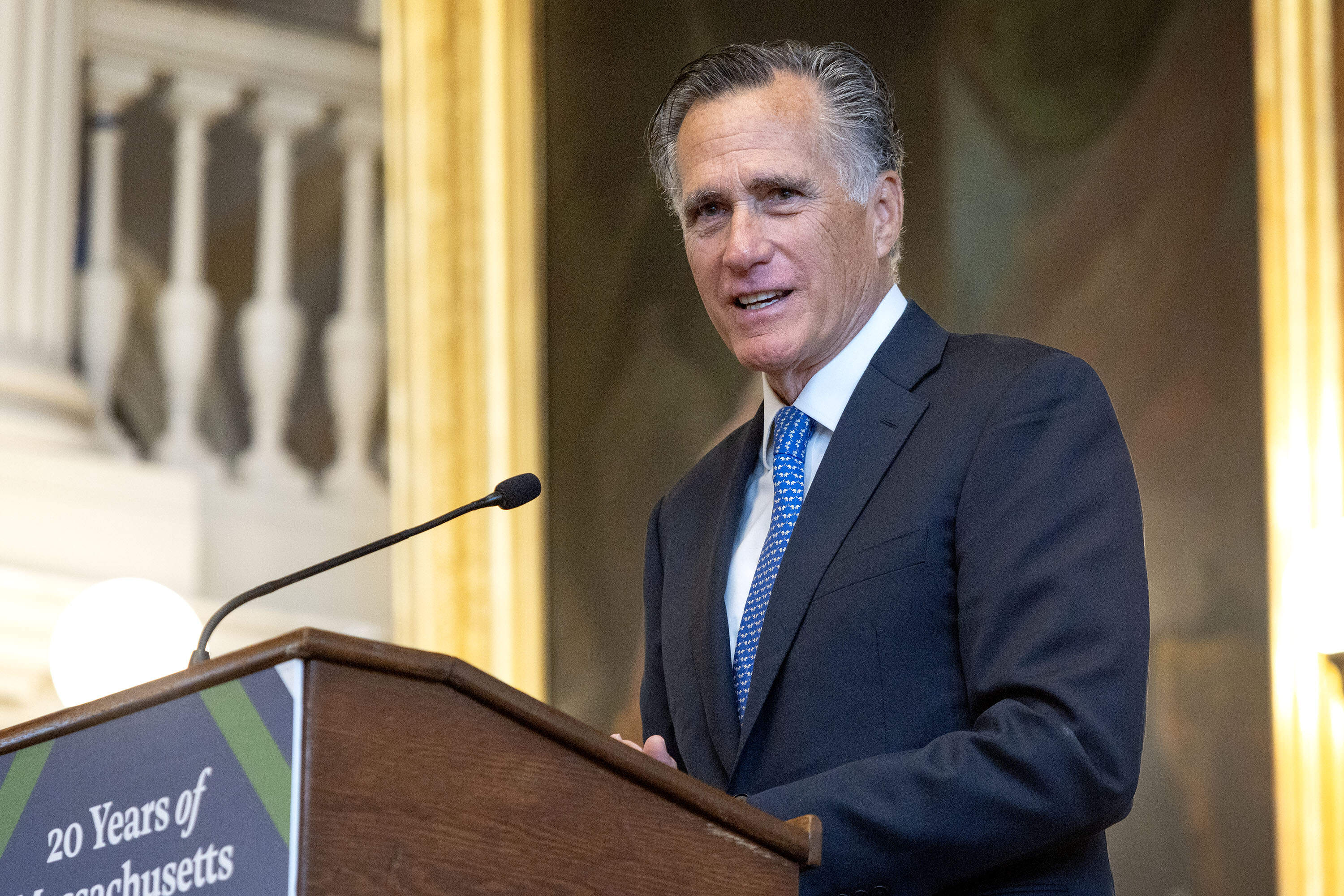
Former Massachusetts Gov. Mitt Romney made a rare public appearance in Boston on Monday to celebrate his signature health care law, which later became a liability during his unsuccessful run for president.
The 2006 law extended health insurance to nearly all Massachusetts residents by expanding eligibility for Medicaid, the jointly funded federal and state program that provides health coverage to low-income residents. The law also provided subsidized private plans for people who purchase their own insurance and mandated many employers offer insurance.
Today, more than 97% of Massachusetts residents have health insurance, though rising costs remain a pressing concern. The law served as the model for the controversial federal health care overhaul under President Barack Obama in 2010.
Romney, who went on to represent Utah in the U.S. Senate, called the Massachusetts law “a great achievement.”
“Now, having spent six years in Washington, I have greater appreciation for what we did here in Massachusetts,” he said.
Romney noted several differences between the political climate in Massachusetts two decades ago and Washington, D.C. today. In Massachusetts, he said, politicians from both major parties committed to working together.
“Political rivals respected each other, buried political weapons, and worked together to find solutions,” he said.
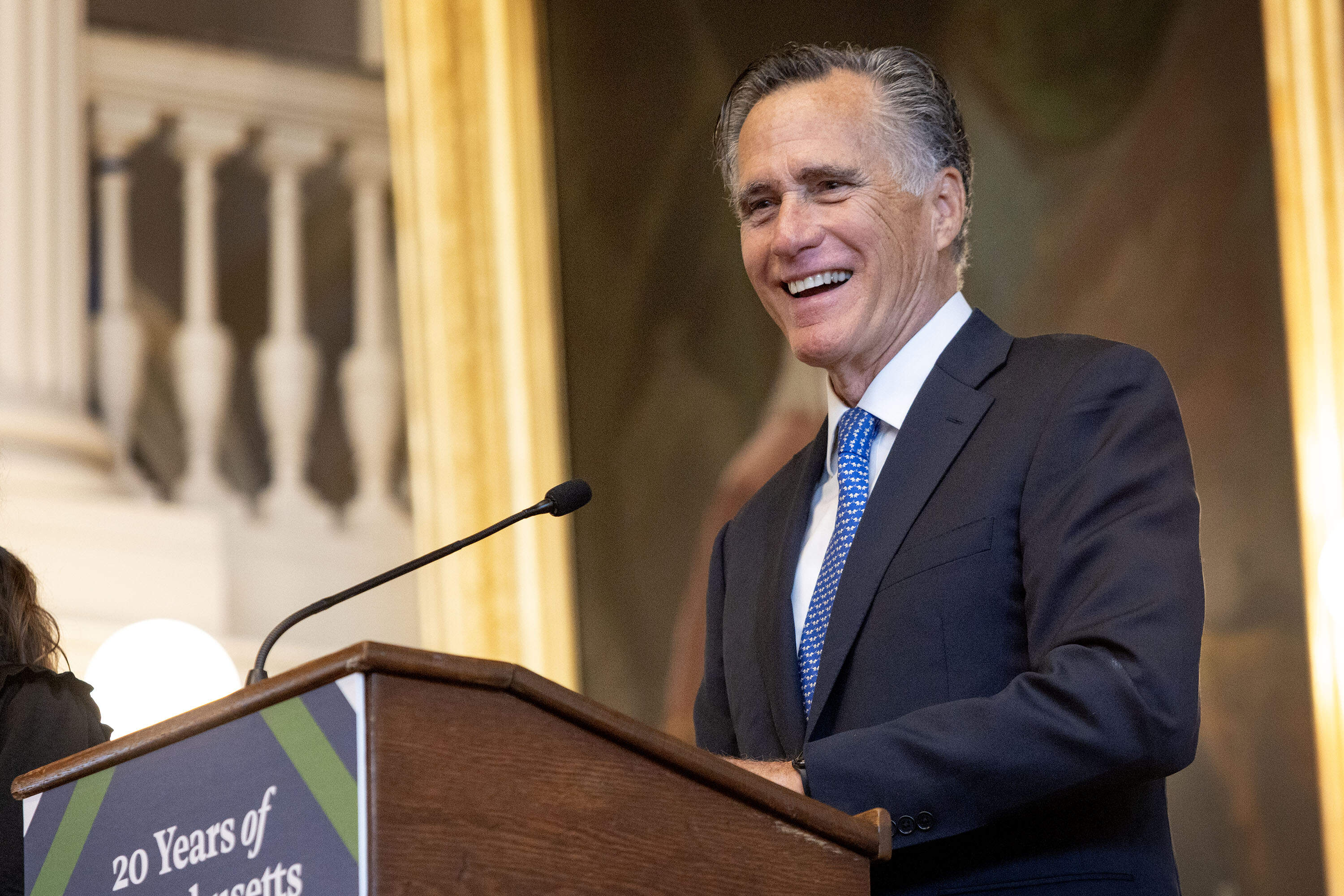
Romney retold the story of his friend Tom Stemberg, the late founder of the retailer Staples, who gave him the idea to pursue universal health care coverage.
“He said, ‘Well, if you really want to help people, you'll find a way to get everybody health insurance,’” Romney said. “I said, ‘Tom, that's just not possible.’ He said, ‘But if you really want to help people, you'll find a way.’ And together we did.”
Romney addressed a crowd at Faneuil Hall, the historic meeting house where he signed his health care bill 20 years ago this week.
He was among five governors, both Democrat and Republican, who gathered to mark the law’s anniversary; the others were Gov. Maura Healey and former governors Deval Patrick, Bill Weld and Michael Dukakis. (Former Gov. Charlie Baker was invited but could not attend, event organizers said.)
Romney, governor from 2003 to 2007, has a complicated history with his health law, often called “Romneycare.” The law became a blueprint for the Affordable Care Act, also known as “Obamacare.”
Both the Massachusetts law and the federal law have the same building blocks: They expanded coverage options for people with low and moderate incomes, mandated individuals obtain insurance and required larger employers to offer coverage. Both laws also set minimum standards for insurance plans.
When Romney ran for president against Obama in 2012, he called “Obamacare” a failure and vowed to repeal it, even as he defended the Massachusetts law. Romney blamed the federal law for driving up premium costs. He argued states should make their own plans and said the Massachusetts approach was not right for every state.
Monday’s commemoration of a bipartisan law that helped people access health care stands in contrast to today’s politics, where Democrats and Republicans are bitterly divided.
“The lesson of Massachusetts health care reform is that big changes require trust and courage and collaboration from everyone who has a stake,” Healey said. She called on Massachusetts residents to “meet the moment once again” to tackle the problem of health care costs.
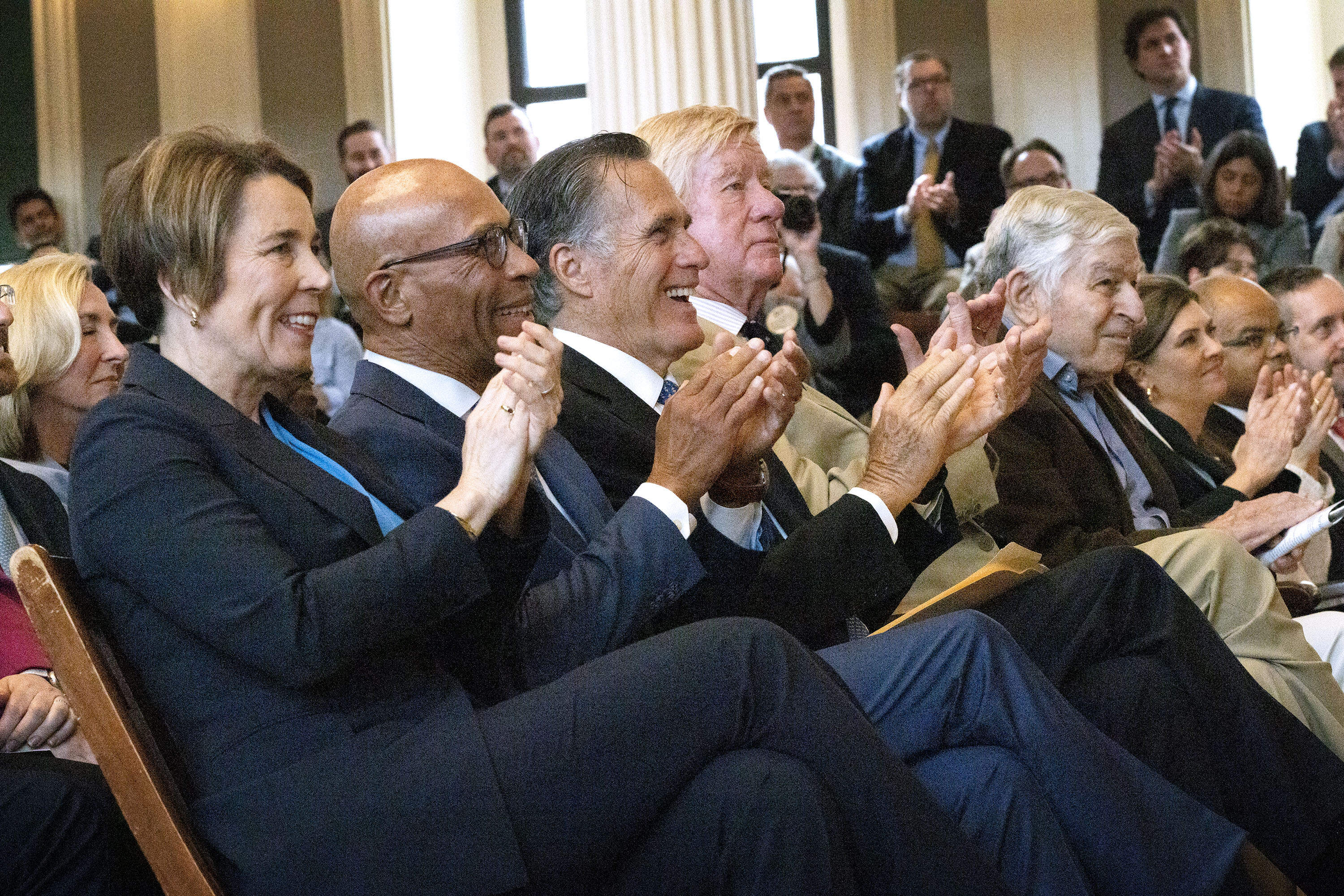
Patrick commended Romney for laying the groundwork for the 2006 law’s success in getting people covered.
“It was never about perfection, never about ideological or partisan purity, never about having to agree on everything before we worked together on anything,” Patrick said. “It was about mission.”
Patrick’s administration was responsible for implementing many provisions of the law.
“I used to joke,” Patrick said, turning toward Romney, “we'd done so much to make Romneycare a reality, we really should call it Patrickcare.”
Romney laughed and flashed a thumbs-up.
“That would’ve helped a lot,” Romney said.