Support WBUR
A musical project sheds light on Boston's Black labor history
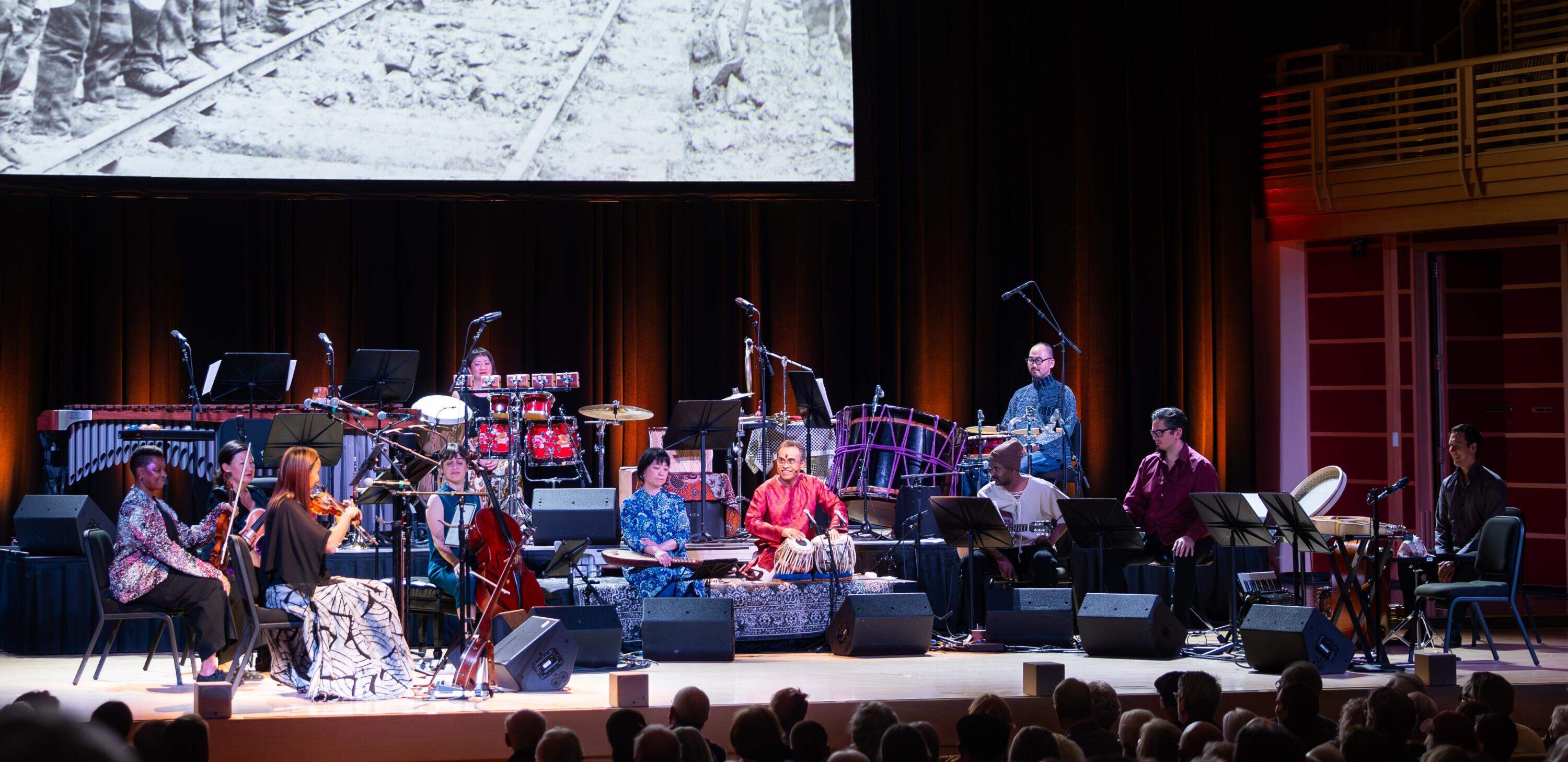
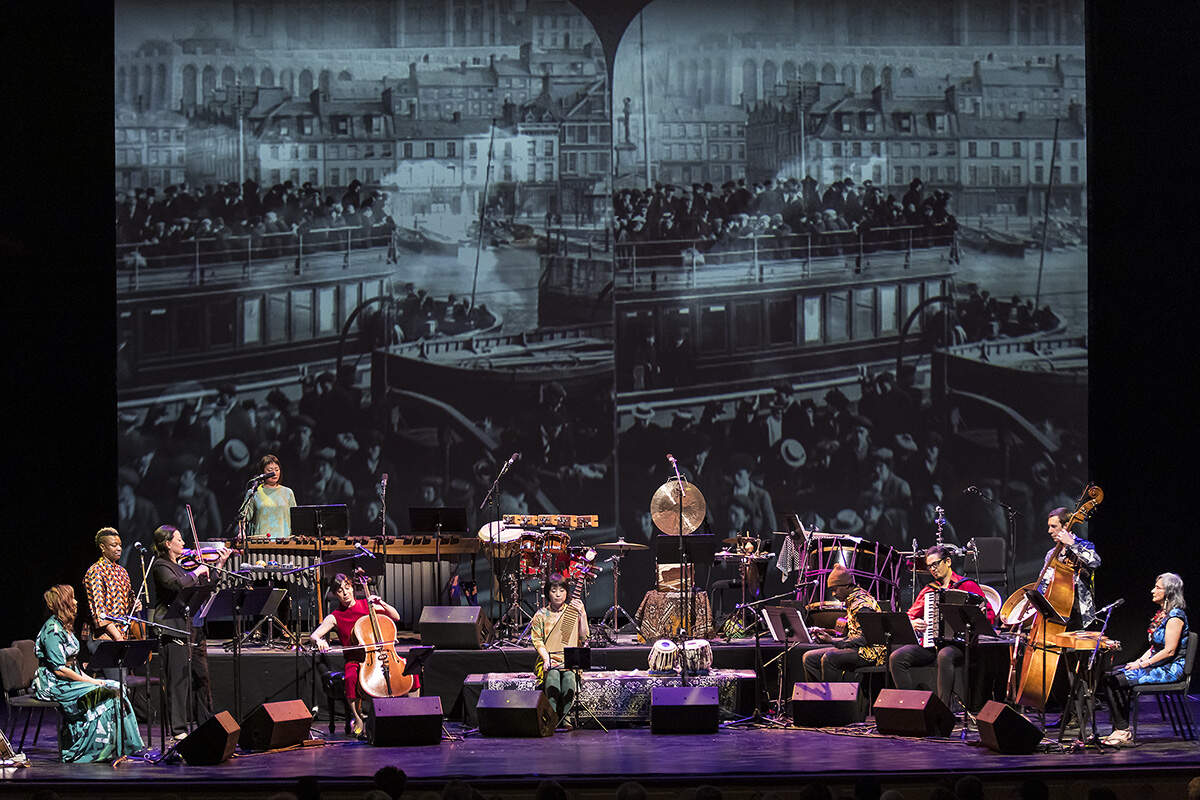
When Rhiannon Giddens became artistic director of the Silkroad Ensemble in 2020, she knew she wanted to do something big. Silkroad was founded in 1998 by the cellist Yo-Yo Ma, who brought together preeminent musicians from around the globe to make ambitious, genre-bending music. Giddens, whose career has focused on the Black roots of American folk music, wanted her first project with the group to explore American history.
“It literally just hit me like a ton of bricks,” Giddens said. “Thinking about the transcontinental railroad, you have so many of the immigrant groups that were already represented within the Silkroad Ensemble.”
And so the album and podcast “American Railroad” was born. The music was inspired by the people who worked on the railroad — convict laborers, Chinese and Irish immigrants, African American train porters — as well as by the Indigenous tribes displaced by it. Silkroad interviewed historians and produced a five-episode podcast delving into some of the stories that informed the music.
“The whole point was to focus on the people who haven't previously been in focus, because the underclass are treated as throwaway in this society,” Giddens said.
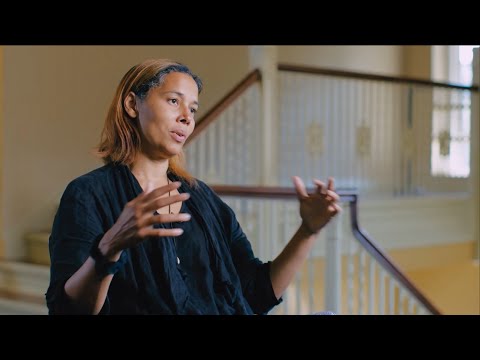
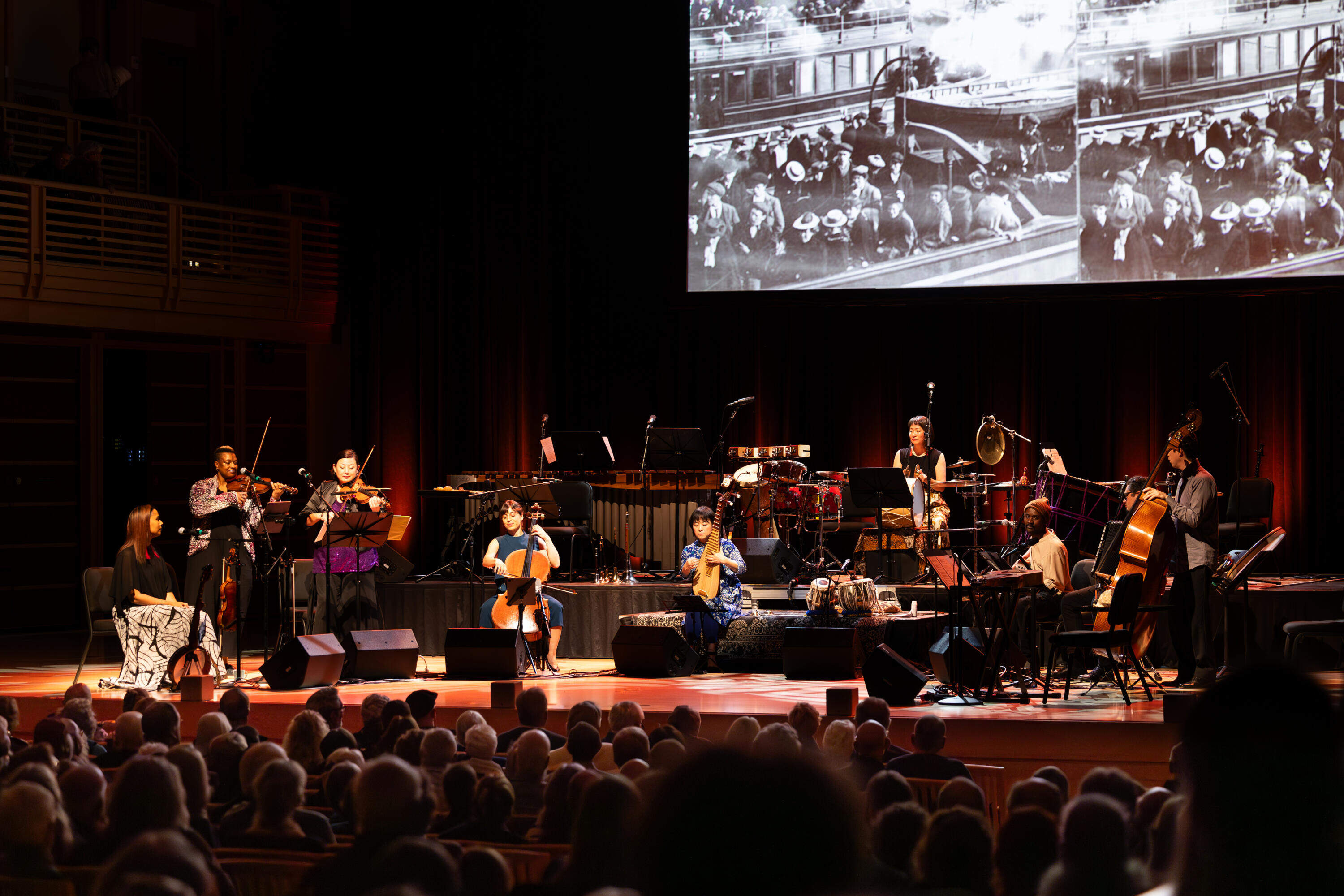
On Wednesday, April 15, Giddens will perform some of the songs from “American Railroad” at the Museum of African American History in Boston. And she’ll be joined by historians to discuss a little-known piece of local Black history: the Brotherhood of Sleeping Car Porters. It was the first African American-led union in the United States, representing the Black workers who staffed railroad sleeping cars manufactured by the Pullman Company. They were called Pullman porters.
On the “American Railroad” podcast, which was co-produced with PRX, the journalist Larry Tye explains how George Pullman, the owner of the Pullman Company, went about hiring porters to wait on wealthy passengers on his luxurious sleeping cars: “He figured the perfect people to hire were ex-slaves, people who had essentially earned their Ph.D.s in servitude.”
Pullman porters worked incredibly long hours for less pay than white train employees, and were subjected to degrading treatment. Pullman preferred to hire darker-skinned Black men to further play into stereotypes about African Americans and underscore their difference from the white passengers they served.
“The Pullman Porters were specifically hired for a particular narrative, for a particular aesthetic, for a particular position,” said Angela Tate, the chief curator and director of collections at the Museum of African American History. “But then it ended up being the way that so many Black men were allowed to feed their families, were allowed to move across the U.S., were not obligated to stay in the geographic region where they were from.”
In 1925, the civil rights activist A. Philip Randolph organized a union representing the Black porters and maids who worked on the Pullman rail cars. A Boston chapter soon sprang up. It took over a decade for the Brotherhood of Sleeping Car Porters to sign its first contract in 1937, winning pay raises, humane hours and overtime pay.
In 1987, Boston paid homage to this and other Black organizing efforts by erecting a statue of A. Philip Randolph in Back Bay Station. An accompanying exhibit explores the local history of Black railroad workers and their unionization efforts. Oral histories collected for the project uncovered a Black-led union, the Dining Car Waiters Local 370, which organized in the decade after the Brotherhood won its first contract. The dining car waiters union ultimately claimed more Boston members than the Brotherhood.
“ A lot of the history for Black Boston is about very literate, very educated middle-class Black people. Whereas the Pullman Porters, they were working class. They were also labor activists,” Tate said. “That's a hidden layer of Black history that is often not teased out as much.”
Another hidden layer is the contributions of women to the movement. Pullman car maids made up a small portion of the Brotherhood, and there were even a few female porters, called porterettes. The wives of Pullman porters fundraised and canvased, proving especially effective since they couldn’t be fired. In Boston, the civil rights leader Melnea Cass helped launch the local chapter of the Brotherhood of Sleeping Car Porters.
The “American Railroad” podcast concludes with a scene on Melnea Cass Boulevard in Boston. A producer asks people walking past if they know anything about the woman the street is named after.
“ I think she was a Black woman,” says one passerby. “But I don't know a lot of history about her.”
The scene speaks to how rarely Boston’s history of Black organizing is discussed, despite streets named for civil rights figures and a statue honoring a Black labor organizer in a major train station.
“The underclass has done most of the dirty work of this country. And the music and the culture that comes from them has been incredibly generative in terms of who we are as a people,” Giddens said. “But in the history books, they're often left out.”
It’s a very Boston problem, according to Tate.
“ I heard it when I told everybody I was moving to Boston,” she said. “ ‘There are no Black people in Boston. There is no Black history in Boston.’ ”
Of course, there is Black history in Boston, as the story of the Pullman porters and maids shows. For Tate, the question is when this history will become embedded in the local psyche, like the Pilgrims at Plymouth Rock or Paul Revere’s ride. As she put it: “When does this become a permanent story that Boston celebrates and tells about itself?”
This segment aired on April 14, 2026.