Support WBUR
Sole-mates: The sneakers helping runners tackle the Boston Marathon
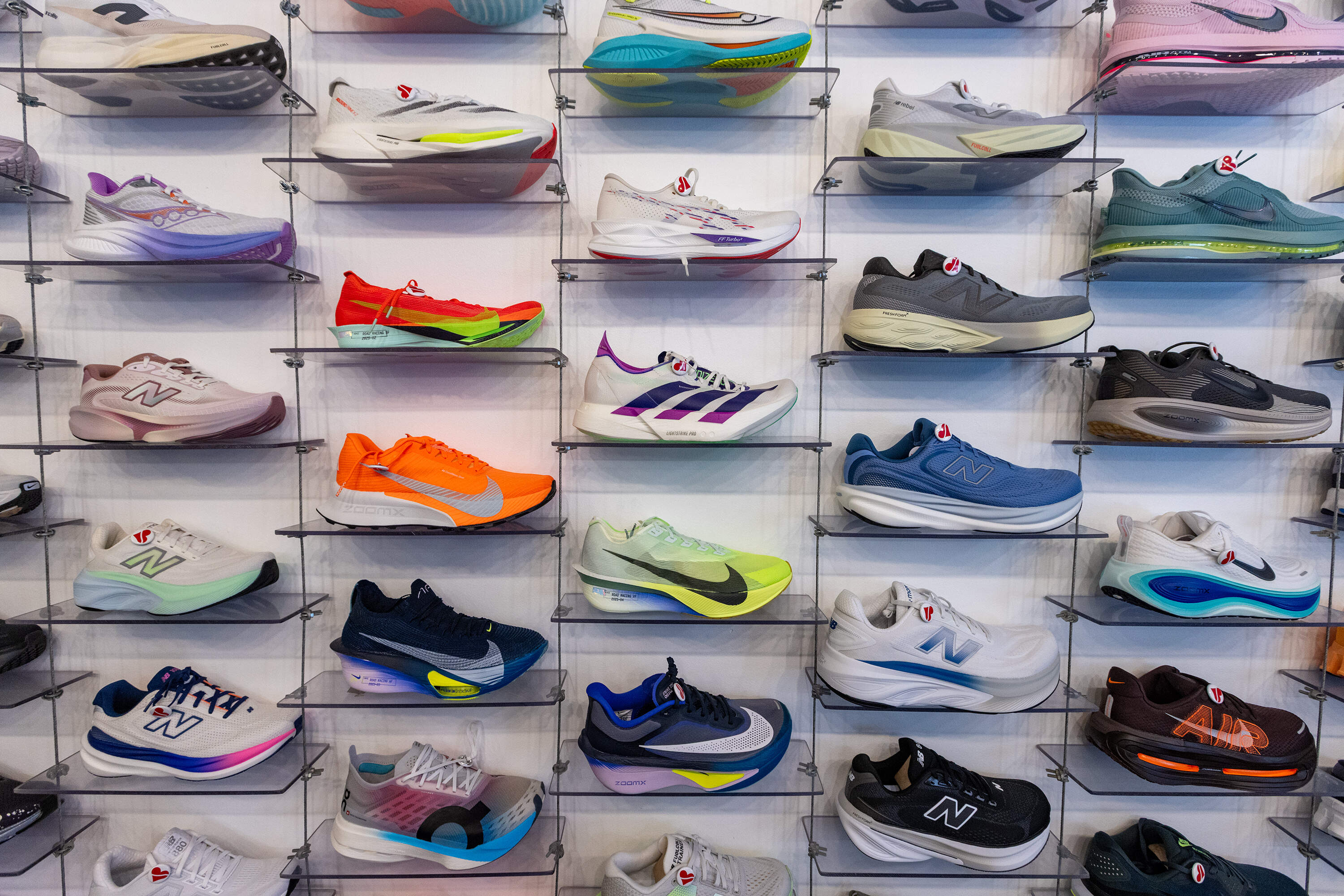
Margaret Henry laced up her white New Balance 1080s for the longest training run of her life.
"They feel like clouds — so squishy, but so supportive," Henry said.
She’s preparing to run the Boston Marathon — her first ever — to raise money for Massachusetts General Hospital in honor of her mom who passed away from pancreatic cancer.
“It's time for me to race and do this for her,” she said.
At the base of Heartbreak Hill in Newton, she joined hundreds of others for a 20-mile run on a recent Saturday morning. The runners training together at the Heartbreak Hill Running Company are all at very different levels. But what they have in common is that they take their footwear very seriously.
Over the last few years, shoe technology has advanced tremendously. And it’s changing the sport of running for everyone from the elite athletes breaking the tape in Copley Square to the first-time marathoners who might spend four or more hours on their feet Marathon Monday.
Today's sneakers help athletes run more efficiently.
“It doesn't make you go faster, but being more efficient makes you go faster,” said Dan Fitzgerald, co-founder at the Heartbreak Hill Running Company, a sneaker chain that hosts training runs leading up to the marathon.
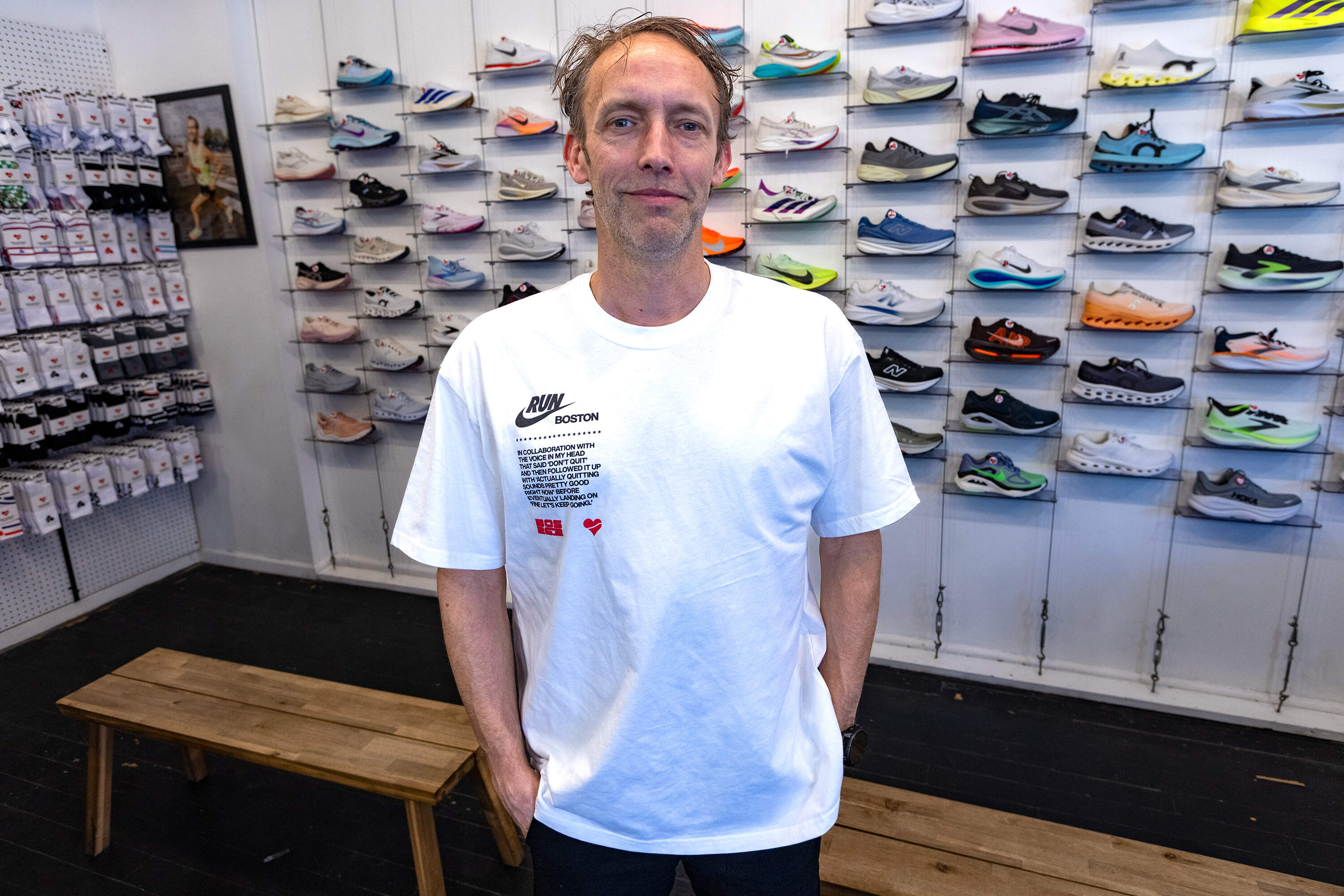
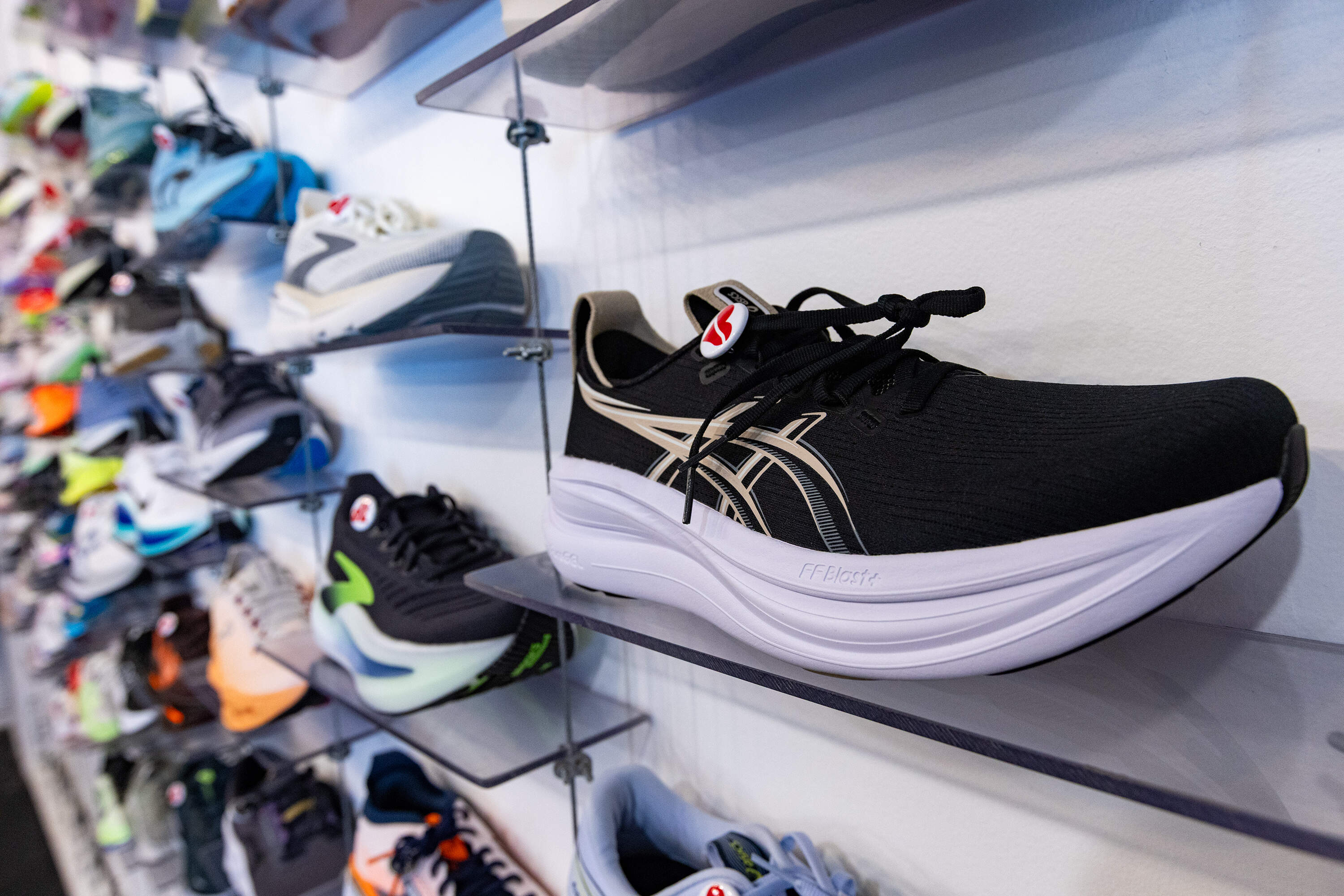
Runners used to wear shoes with little to no padding in the sole. But 10 years ago, that changed when Nike introduced a shoe called the Vaporfly 4. It was the first so-called “super shoe.” It used light-weight foam padding and a carbon fiber plate to better absorb some of the impacts of running.
“What it's really doing is essentially preserving your energy,” said Diego de la Torre, who works at Heartbreak. “So while they feel bouncy and fun, at first, what they're really doing is, like toward the end of the race, … you're gonna feel better. It’s saving your legs.”
Nike’s athletes tested the sneaks at the 2016 Summer Olympics in Rio de Janeiro. The top three finishers in the men’s marathon were all wearing them. The shoe’s effectiveness led to new restrictions on footwear for the Olympics, marathons and other competitive road races.
“That was really an inflection point,” said Fitzgerald, who is also a running coach associated with Nike.
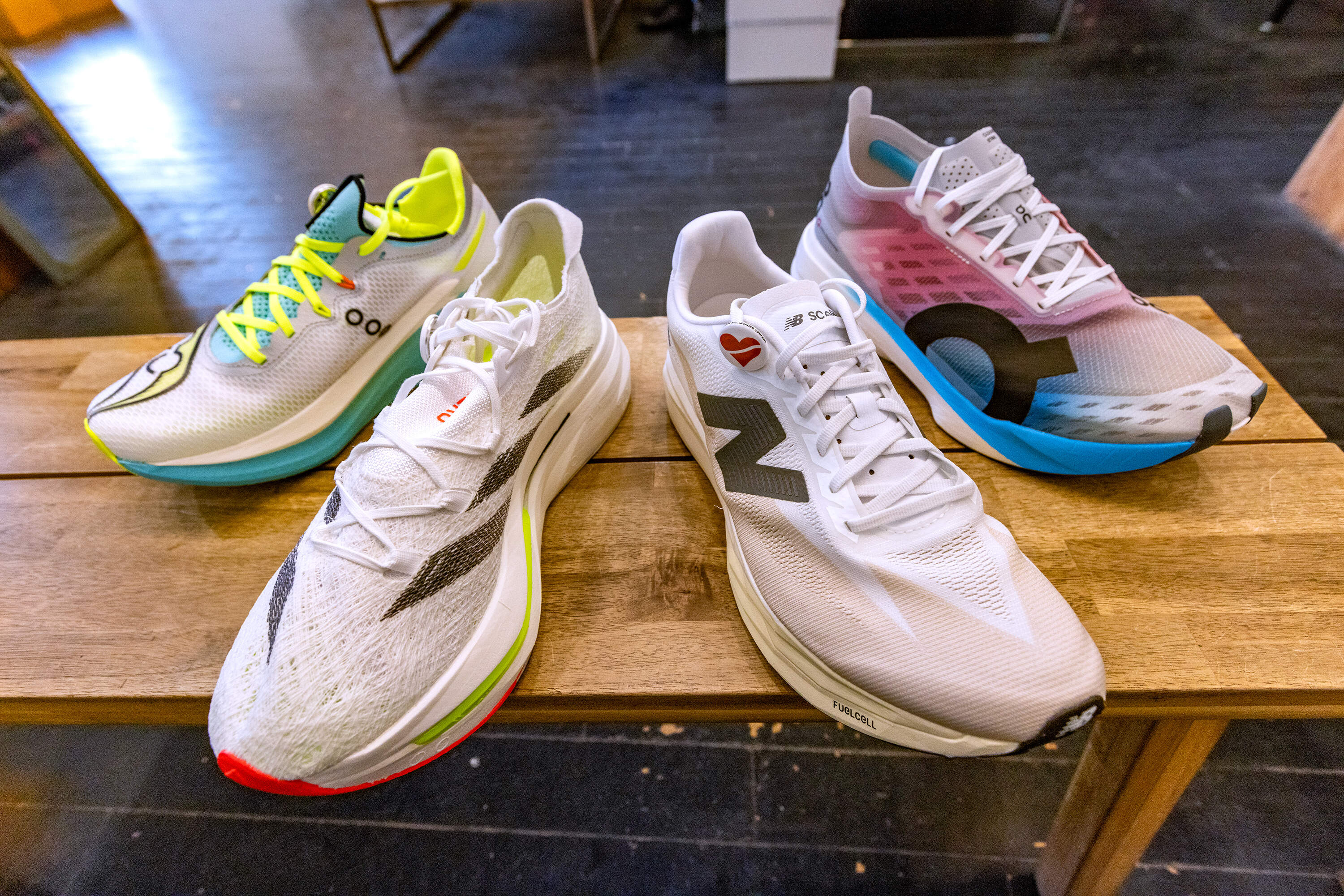
Most shoe companies now have their own super shoes. They’re designed primarily for racing but some of the same tech has influenced training shoes as well.
There are dozens if not hundreds of different types of running sneakers.
That’s where de la Torre comes in. Heartbreak staff and customers sometimes call him a “sommelier of sneakers” because he helps people break through the noise.
“ I know that lots of times there's fancy names for the foam and brands are putting out all these crazy words,” de la Torre said. “I want to be able to, like, qualify what that means to the customer.”
When runners visit the Heartbreak Hill Running Company looking for new sneakers, employees have them perform what’s called a “gait test.”
The customer will run outside the store and employees film their feet. Then they’ll watch back the video to see how the runner’s feet hit the ground. It sounds weird, but film captures what the human eye can’t. Feet can naturally roll in different directions or fall flat. Knowing this helps them pick out how much or how little support a runner needs.
De la Torre said this helps runners “prevent injury, and keep them stable throughout their stride.”
With so many options, de la Torre says it all comes down to what feels good and what you need the sneakers for.
“You are gonna be in the shoe for 26.2 miles for however many hours and the most most important thing is that you're comfortable in it,” he said.
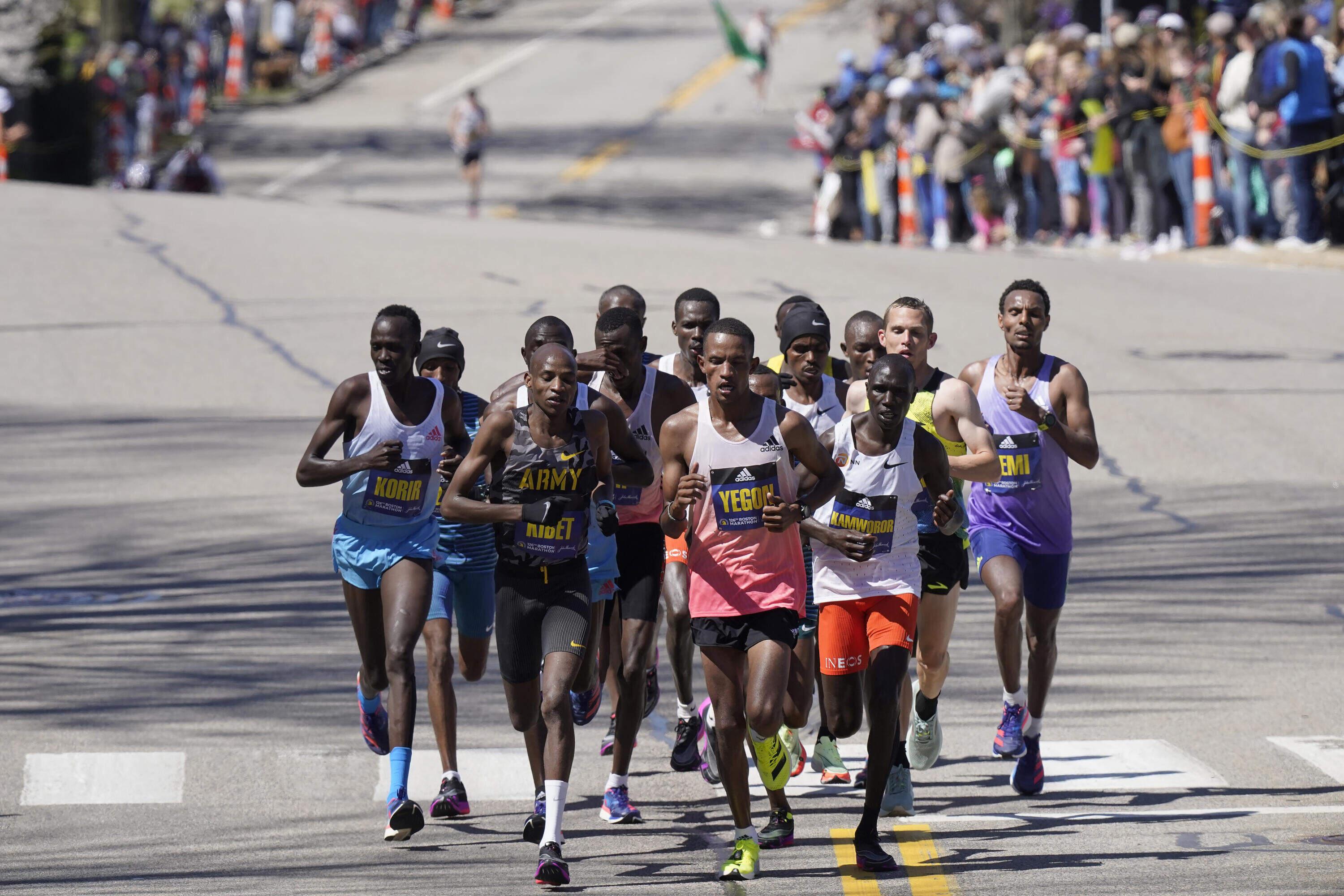
Humans don’t technically need shoes to run, according to Dan Lieberman, a professor of human evolutionary biology at Harvard University. He’s studied running for years. Lieberman said there are tradeoffs to running and racing shoes. For instance, super shoes could force your foot to land unnaturally.
“ There's no question that these shoes are helping people run faster,” Lieberman said, but “there's no such thing as a free lunch in biomechanics.” He pointed out how the height of a “super sneaker” makes the shoe more wobbly, and therefore can put more stress on a runner’s ankles.
While Lieberman said super shoes will help a runner on race day, he recommended avoiding them for daily training - something de la Torre agrees with. He also emphasized shoes in general are a tool, not an antidote to bad technique.
“There is no substitute for good running form,” Lieberman said. “Learn to run properly and don't expect the shoe to fix all your problems.”
Back at Heartbreak Hill in Newton, Margaret Henry finished Saturday’s run in a little more than four hours. So did her friend Anika Vincent, who’s is running to raise money for the Boston Chinatown Neighborhood Center. They both ran the full 20 miles.
“ This was my longest run in my entire life,” Vincent said. “I never thought I'd be able to do this, like ever in my life.” Henry echoed that sentiment.
Having good running shoes helped. But for many runners, like Vincent and Henry, it’s important to tap into a deeper sense of motivation to push through such a feat.
Henry often refers back to one of her mantras: “make yourself proud” — it’s from a magnet that belonged to her late mom, who would cheer her on during her high school track meets with a cowbell.
“It reminds me of her and it reminds me that even though she's not here, she's still proud of me and I can be proud of myself, too,” she said.
This segment aired on April 15, 2026.