Support WBUR
Local college grads are about to enter a difficult job market
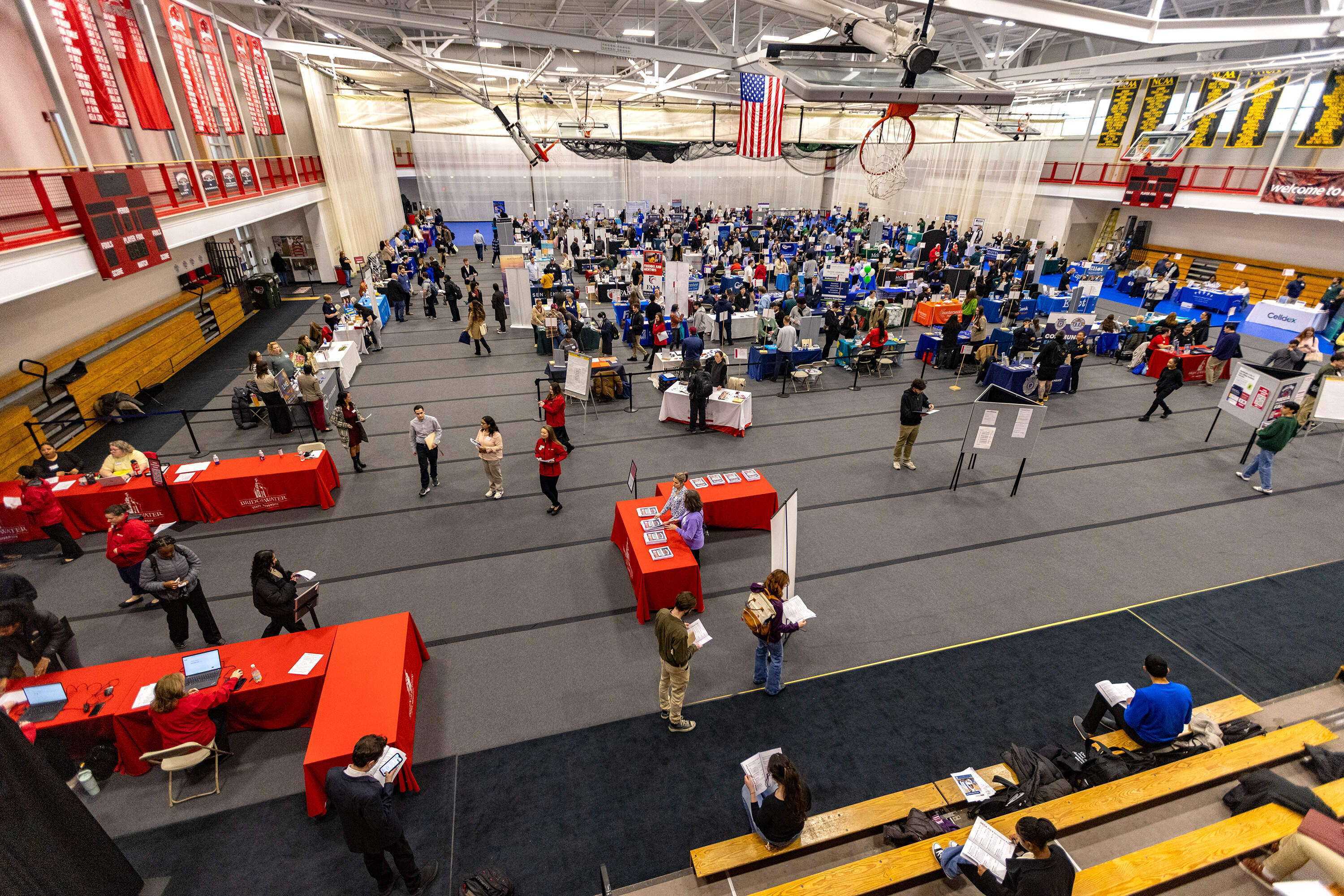
Soon-to-be college graduates are about to enter a tough — and confusing — job market.
While new grads always find the market daunting, added pressures on the employment landscape mean the current crop have their work cut out for them. Jobs reports have swung back and forth from gains to losses for several straight months. Even applying for a job has changed, thanks to the increasing use of AI by hiring managers.
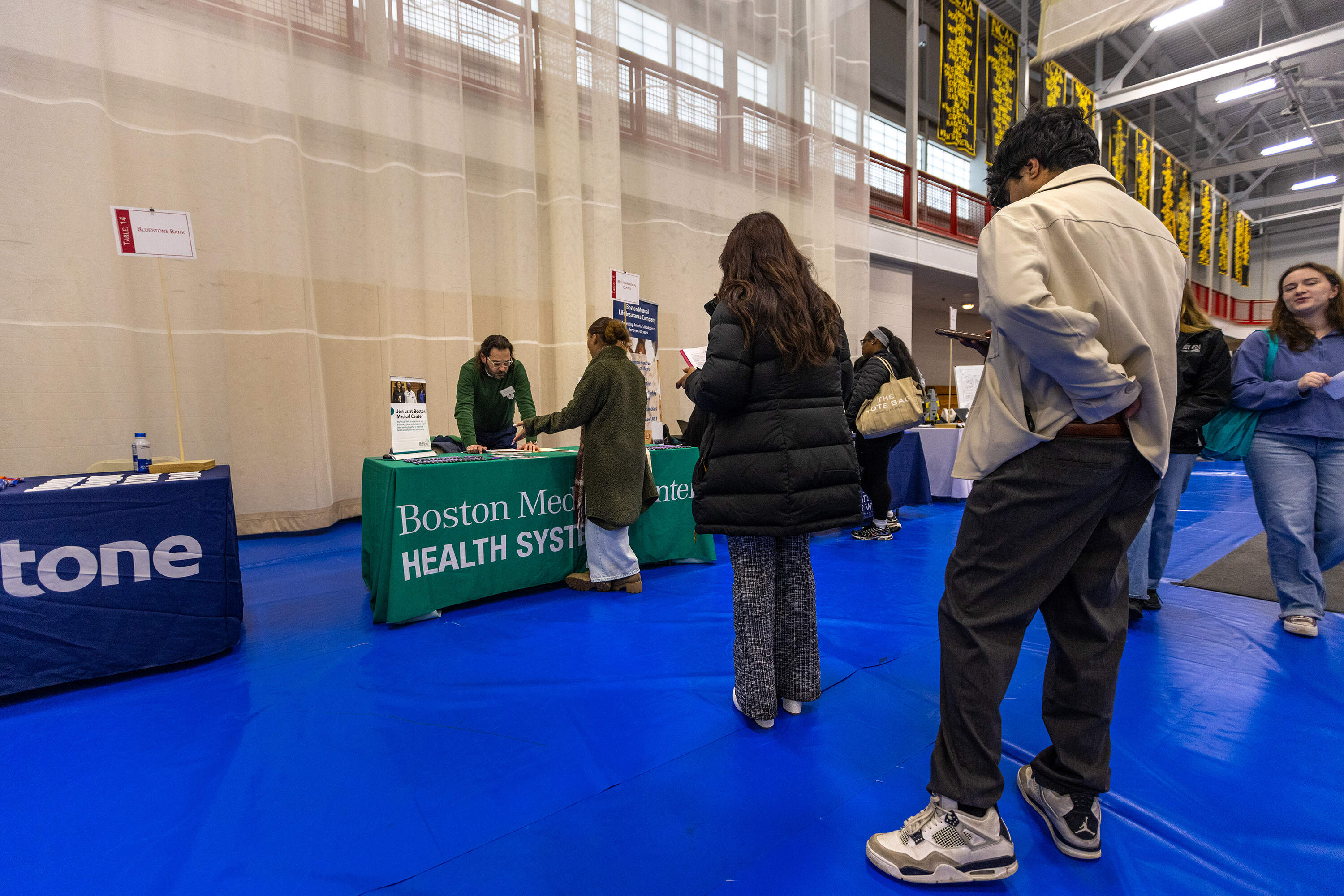
Local college seniors are feeling the pressure. At a recent career fair at Bridgewater State University, hundreds of students filtered into the athletic center with a mission: Find a job.
" I'm kind of nervous, a little stressed out," said senior Louie Jennings. " I'm trying to get a job. I still don't have one."
Jennings graduates in May with a degree in business management. He ideally wants to find a job in sales. He said his job search has been "not great" so far.
"I'm hoping it improves, but yeah, we'll see," Jennings added.
He said he has already applied to more than 50 jobs — and nothing has panned out. Jennings doesn't know for sure, but he suspects he's getting screened out by AI programs that filter resumes.
"I've really only gotten like literally one interview from all the jobs I applied to. And that was from like a connection I had, from my dad," Jennings said. "It's hard to even get an interview. They'll email you back. Then you email them back. And then they'll just like ghost you."
Jennings just wants to get his foot in the door.
" I'd pretty much like do anything, you know what I mean? Like, I just want something to get some like experience," he said.
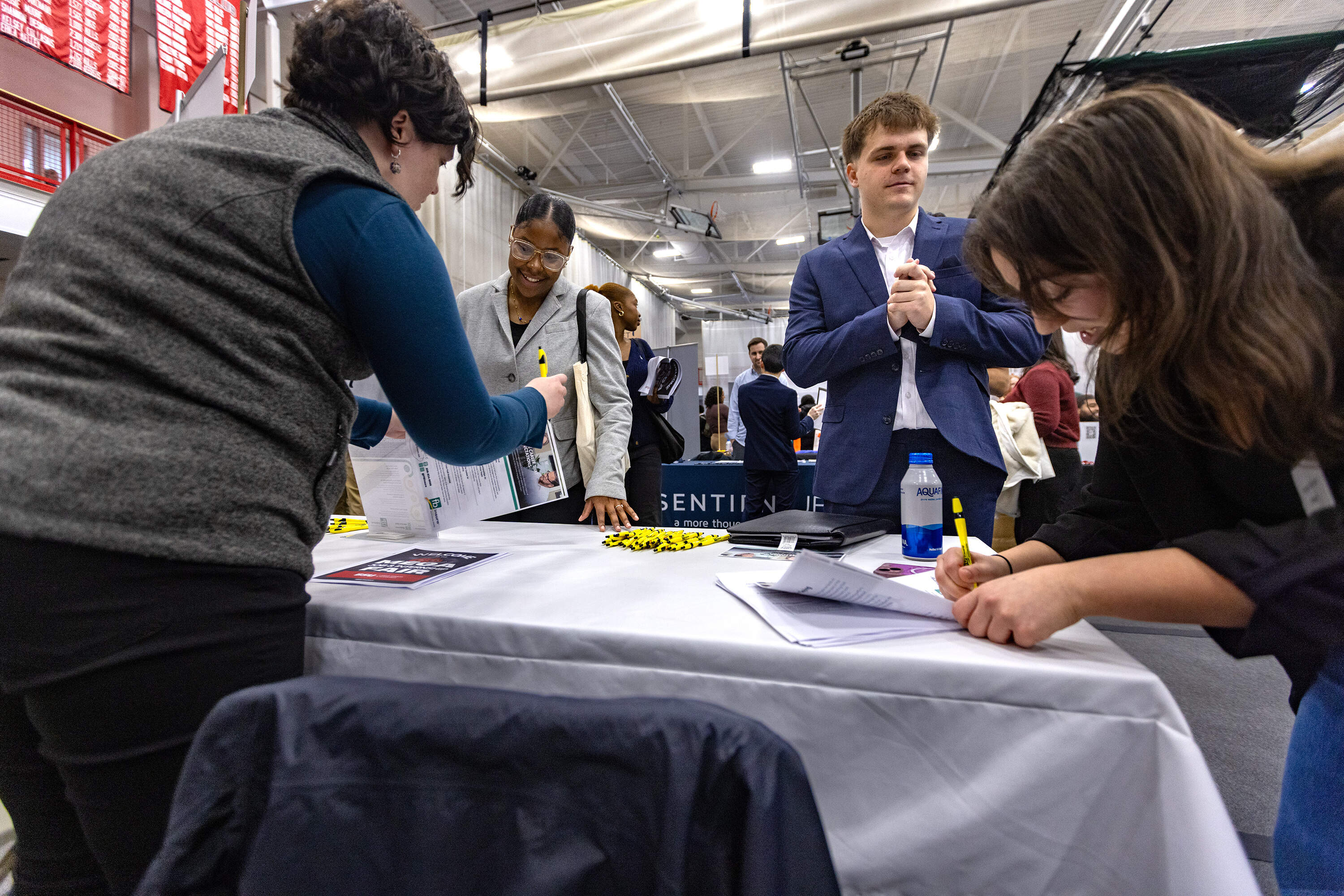
Some students felt a little more optimistic about their job search.
" It's going pretty good," Evaneida Fortes, a fourth-year math major, said.
She wants a job in data science or data analytics. She hasn't quite found that yet, but has seen other opportunities at a few banks related to her field.
"I might just have to adjust a little bit," Fortes said.
Fortes was on the go for much of the fair, making her way through rows of employers. There were 120 companies spread out at tables around the gym, ready to take resumes. Fortes said she feels good about her chances to secure something.
" I'm confident in my ability to show my skills and the experiences that I've gained so far," Fortes said.
One of the skills she's been developing is working with AI. Fortes said she's doing a research project on using AI to code. She thinks it can give her an advantage in the job market, despite concerns about AI eliminating some jobs.
"I actually like AI," Fortes said. "But it doesn't do everything that humans do, right? It doesn't have that character that I bring, that confidence that I bring. So, I don't really feel threatened by AI at all."
This year's graduating class could probably use some of Fortes’ energy in this challenging job market. Overall, openings have been on the decline for the last few years now. The National Association of Colleges and Employers projects hiring will be flat for the class of 2026, compared to last year's class.
Gerald Tang, the executive director of the career services office at Bridgewater State University, said he has immersed himself in all the data and trends on the job market.
" I wish I had a magic eight ball to say, 'Yep, we believe it will be great' but I think we are cautiously optimistic," said Gerald Tang, the executive director of the career services office at Bridgewater State University.
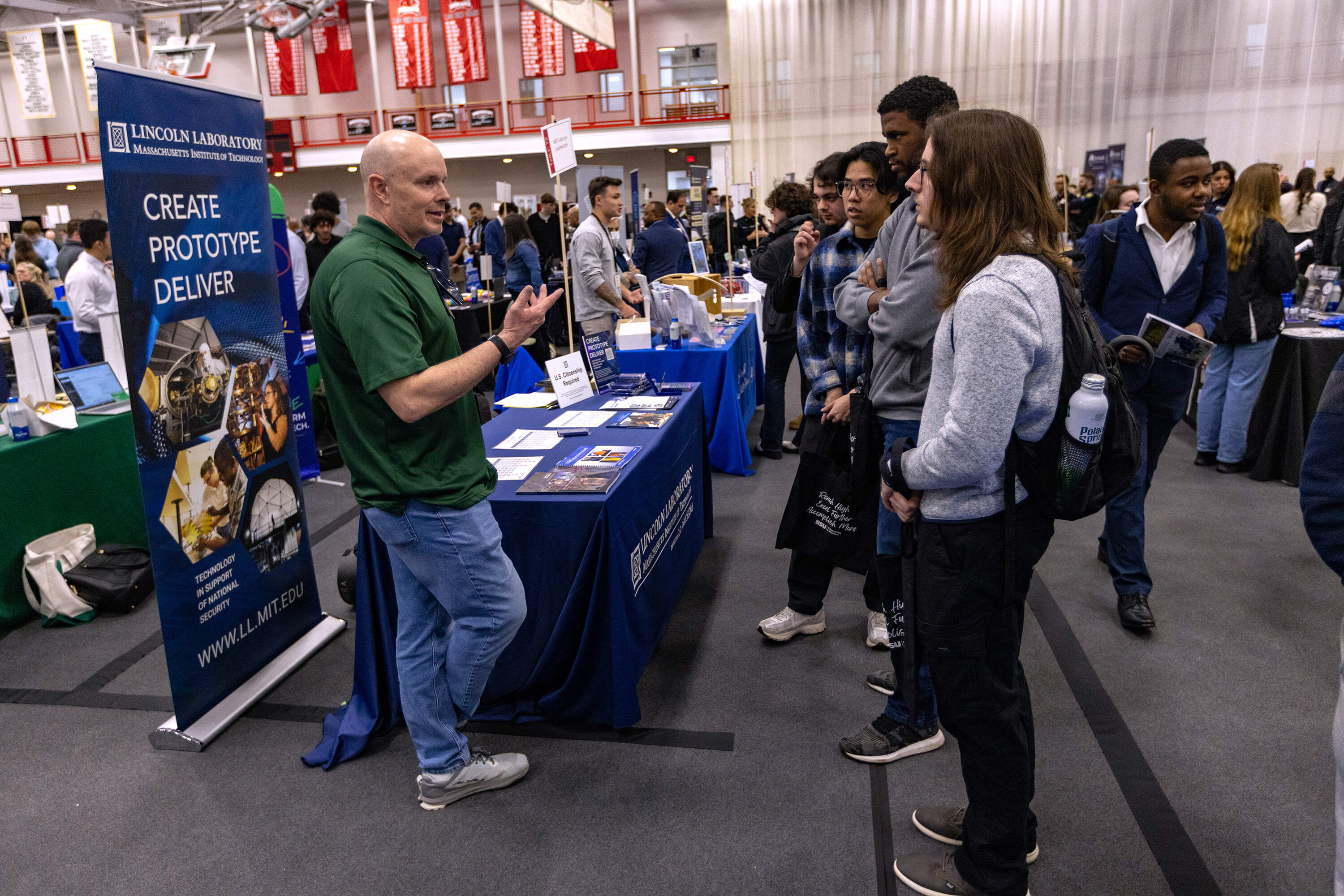
Tang said local companies are still hiring — and that's where students should focus.
"We have been advising all of our students start thinking about smaller regional employer, local employer," Tang said. "Not just looking at the larger Fortune 100 companies, because they likely going to have very steep competition from that perspective."
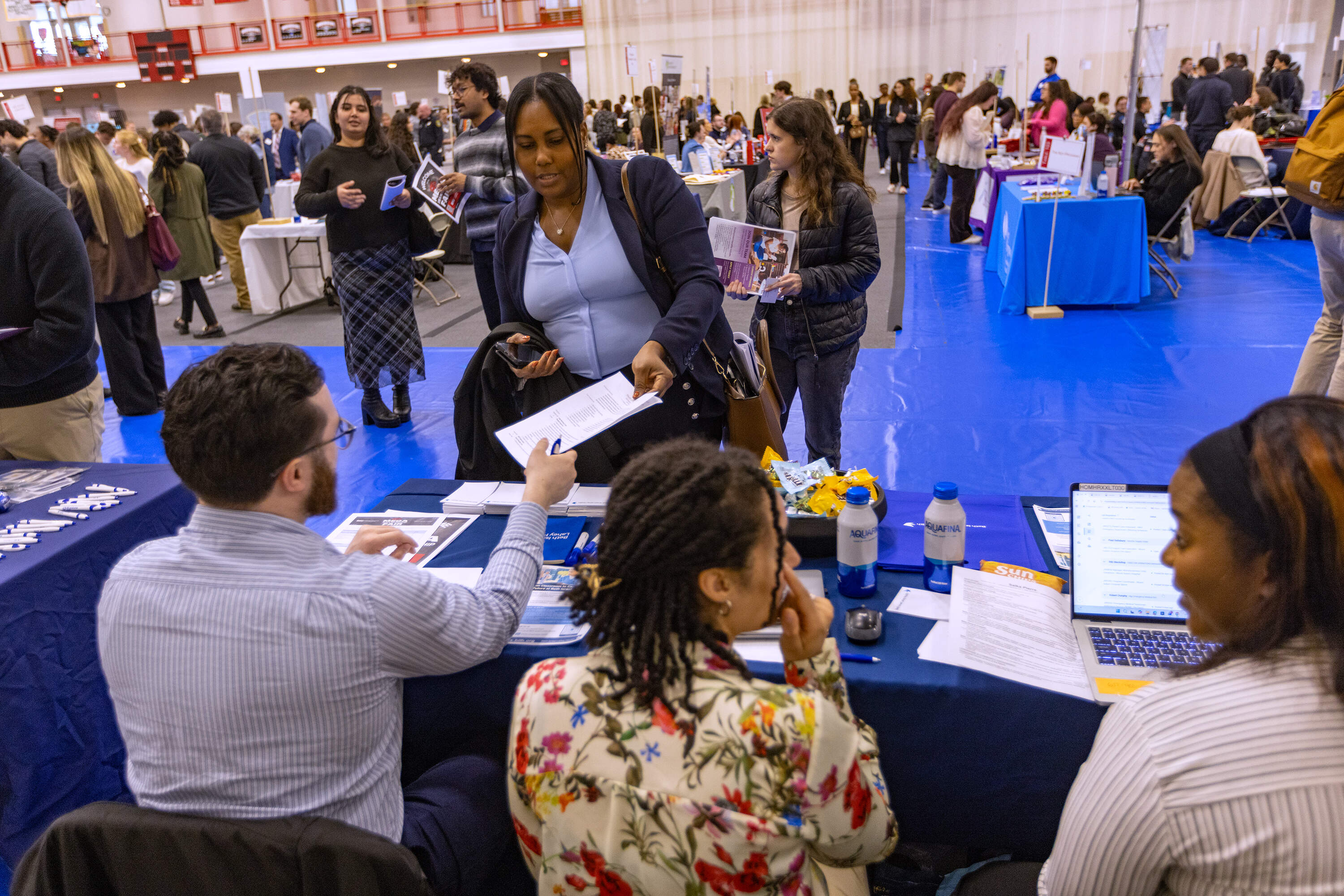
One bright spot for job growth has been health care. The Greater Boston market is also quite competitive for talent in this sector, which gives candidates more choice, said Alison Motta, a recruiter for Boston Medical Center Health System. She had a long line at her table for most of the career fair.
"Hospitals are always hiring," said Motta. "We always have opportunities in the health care field."
Across the gym, health IT company Meditech also had openings. The Canton-based business makes software for hospitals and doctors' offices.
"We hire folks that are entry level positions from all backgrounds, all majors," said Tim O’Hara, a manager at the company.
While the health care sector has been adding jobs overall, O'Hara said federal policies could change that for parts of the industry.
" Health care in itself is a tricky dynamic right now," he said. "Reimbursements for Medicare and Medicaid are being cut left and right. So that has health care organizations a little skeptical to make big capital investments in a health IT company."
At the table across from O’Hara, fiber laser manufacturer IPG Photonics boasts around 120 job openings. The Marlborough-based company makes lasers for various industrial applications such as cutting, welding and etching. Recruiter Jack Leighton said their hiring has shifted.
"We've had more entry level roles in the past," Leighton said. "And, this is just IPG specific, but I'd say more of the roles we have open right now are looking for someone with experience."
Leighton does have plenty of internships though. And in this job market, students may have to be flexible — whether that's going for an internship as a way to get into a company or switching to another industry.
Senior Albert Reyes landed on the latter, because his job search has been "rough and bumpy," he said. Reyes is about to graduate with a degree in computer science. But the job market is especially brutal in that sector.
For years students were encouraged to get a computer science degree with the promise of a six-figure salary. That was true for a time. But the rise of AI, among other factors, has made those entry level jobs harder to get.
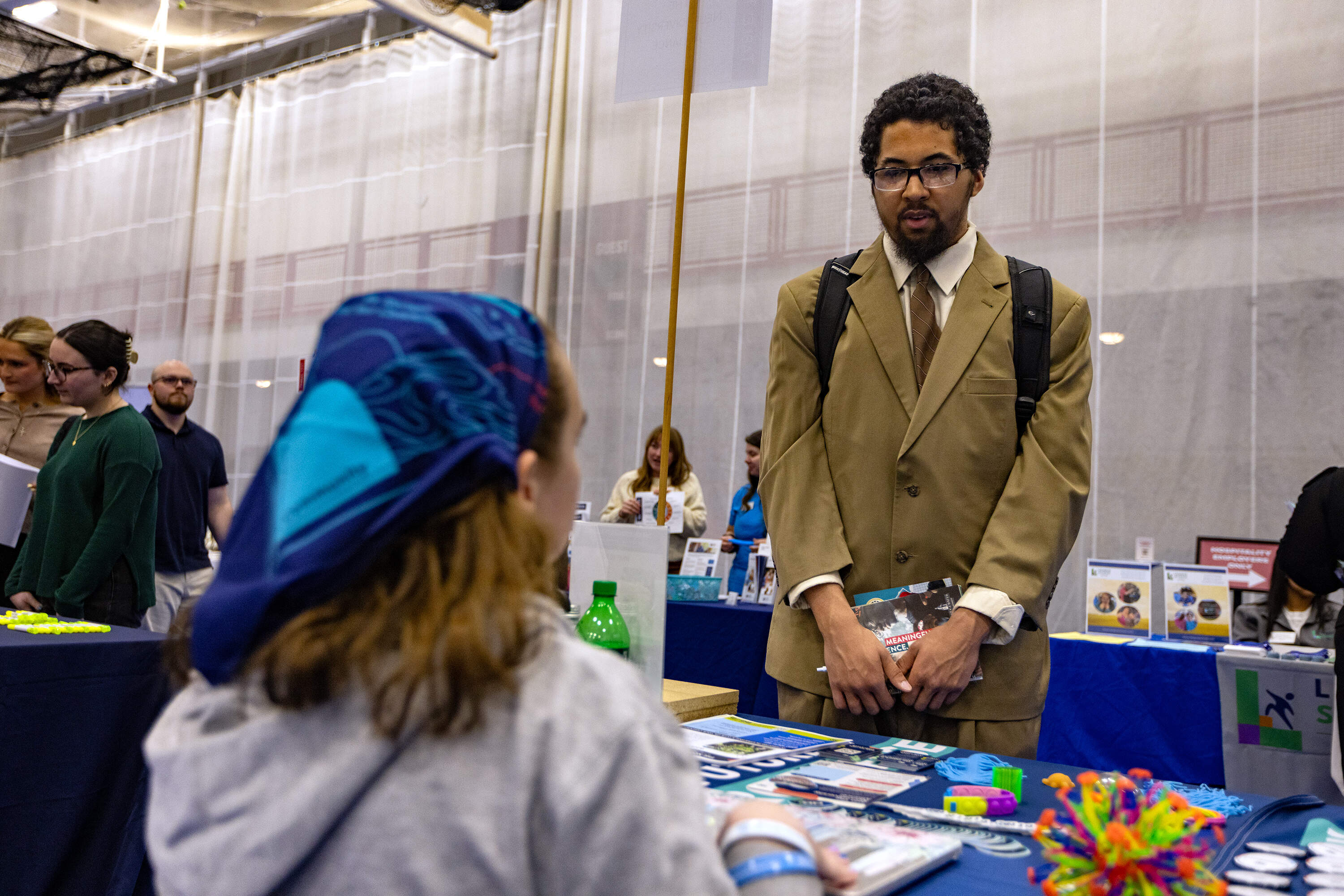
So, Reyes did some soul-searching and realized he needed to pivot.
"I figured out, 'oh, I love to help people with technology, help students specifically,'" he said.
Reyes decided to try teaching. He's already secured a summer gig to teach science to middle schoolers. And maybe he’ll stick with it, if tech doesn’t work out.
"I feel great. I feel amazing. Just to get to help students," Reyes said.
Today's job market is certainly a test of endurance — and adaptability.
Jennings, the senior looking for a sales job, is open to change, too. But after some time at the career fair, he felt a little discouraged. "I'm done," he said as he was about to head out.
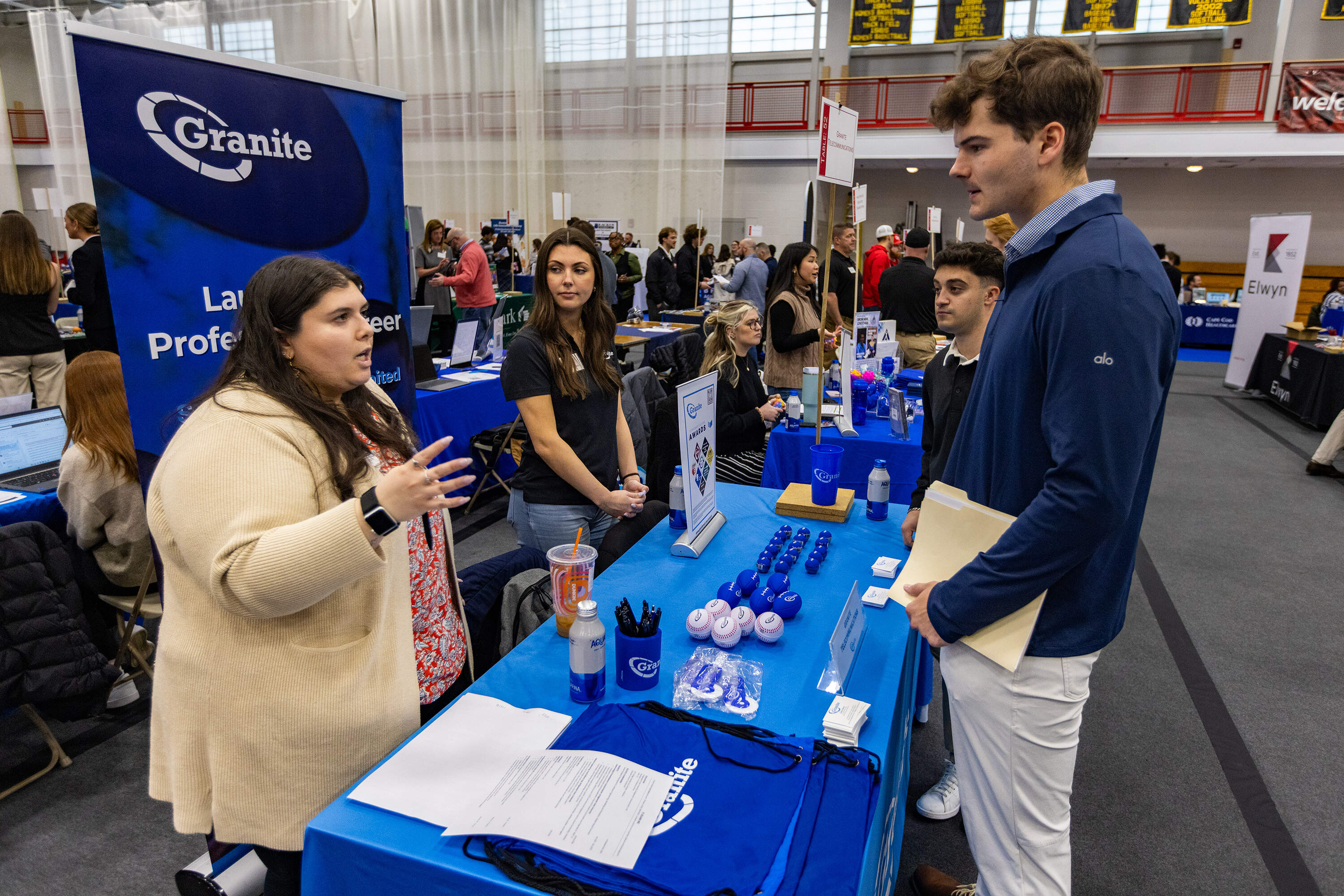
A few minutes later, Jennings decided to turn around and try one more table. He walked over to a Quincy-based telecommunications company, and learned it had multiple open sales roles.
It was a promising connection. And another opportunity to increase his odds of finally getting a call back.
This segment aired on April 15, 2026.
