Support WBUR
James Ware was granted medical parole. He still died in state custody
When James Ware died at 53 earlier this month, he could have been at home or in a hospital room, surrounded by friends and family. Instead, he died alone, under guard in state custody.
Ware, who had been incarcerated since he was 20, was granted medical parole more than two months before he died on April 2. Back in January the Department of Corrections agreed that he was so sick he no longer posed a public safety risk and could die outside the prison system. But the lack of an adequate medical plan and bureaucratic hurdles meant he died as an inmate.
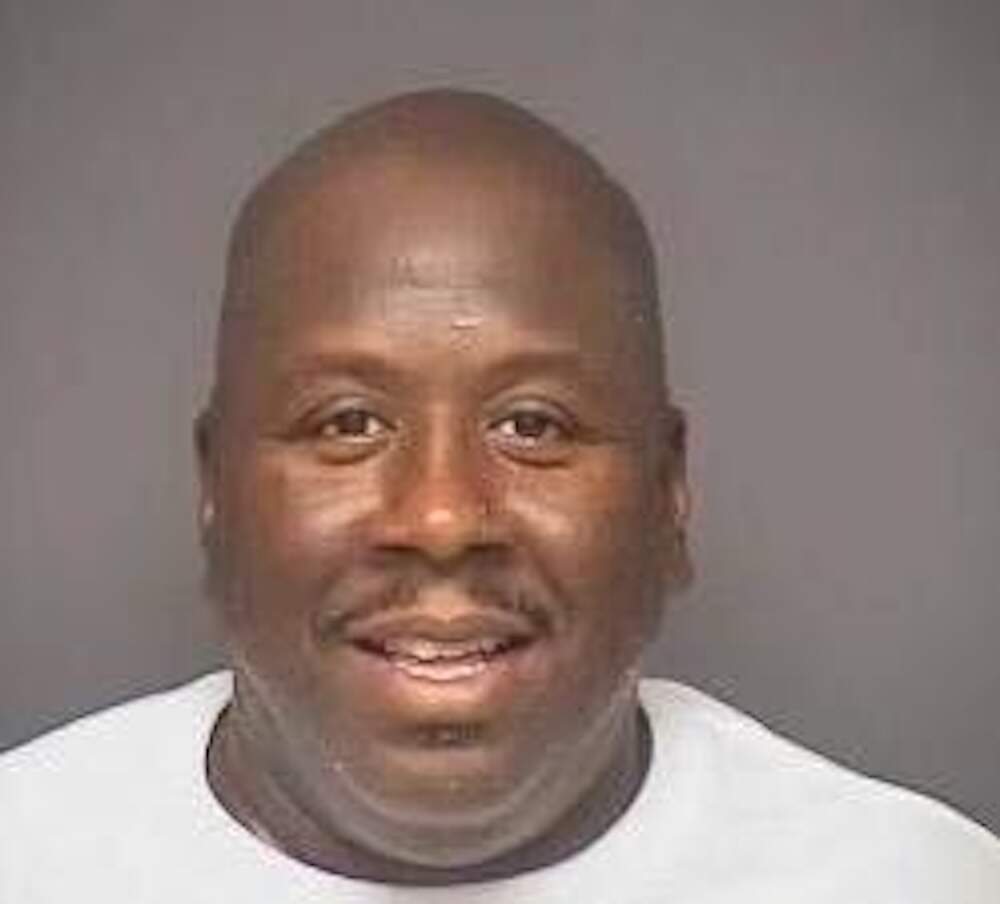
Ware’s lawyer Amy Belger said only a few friends and family were able to see him during his final hours in Lemuel Shattuck Hospital Correctional Unit. Even allowing those few visitors took months of advocacy, she said.
“There is absolutely no justification for denying a person who is terminally ill lying in a hospital bed … visits from their loved ones,” Belger said.
A dozen people, including Ware, have died in custody despite being approved for medical parole, according to Prisoners’ Legal Services. Nearly 20 others have died while awaiting a decision.
“He deserved so much better,” said Robert Francis, a friend of Ware’s who was prohibited from visiting him before he died. “To be so close to the gate, have it opened and not allowed to go through until he died, it just crushes me.”
Belger said Ware died in custody in part because the Department of Corrections couldn’t find a bed for him at a private hospital. Ware suffered from numerous medical issues including diabetes, coronary artery disease and metastatic lung cancer. As his cancer progressed, he was moved between Boston Medical Center and Shattuck Hospital Correctional Unit, the state-run medium security facility where many incarcerated people are treated.
Belger said she asked for BMC to take him on as an official patient, but was denied. So while at BMC, Ware was still considered in DOC custody, shackled to the bed and subjected to prison rules, including restrictions on visitors. Two guards were present at his hospital door at all times.
Before he died, over the objection of his lawyer, Ware was moved back to the correctional unit of Shattuck Hospital.
“BMC leadership didn’t want anything more to do with him,” Belger said.
BMC did not respond to WBUR’s questions about Ware or why they wouldn’t keep him as a patient.
“There is absolutely no justification for denying a person who is terminally ill lying in a hospital bed visits from their loved ones."
Attorney Amy Belger
At Shattuck, Ware’s brother and friends continued to be denied visits. The DOC told Belger that patients have to be in the hospital for 21 days before anyone, including family, is allowed to visit — unless death is “imminent.” According to Shattuck Hospital rules only one visit per week is allowed for long-time patients and all other requests will be reviewed on a “case by case” basis.
“So he died in a bed in the middle of the night with two guards there and nobody else, no loved ones, nobody he cared about. By himself,” Belger said.
Shattuck Hospital did not respond to questions about restrictions on inmate patients.
The DOC said once medical parole is granted they work with “community partners,” to find a placement for patients, but that there might be a wait before an appropriate bed is available. If he had been released, Ware would still remain subject to parole conditions.
In 1993, when Ware was 20, he and his brother were arrested for stabbing and killing 21-year-old Alan Hill outside of his Boston apartment. Ware was convicted of first degree murder and sentenced to life without the possibility of parole.
Two legal developments in the last decade made parole possible for Ware. In 2018, the Criminal Justice Reform Act established medical parole in Massachusetts. It allows for incarcerated people to seek release — under parole conditions — if they are terminally ill or permanently incapacitated and do not pose a public safety risk. And in 2024, the Massachusetts Supreme Judicial Court, in a case called Commonwealth vs. Mattis, ruled that adults younger than 21 can’t be sentenced to life without the possibility of parole. Ware was one of 210 people given an opportunity to be released early.
Last September, Ware went before the parole board for a Mattis hearing. After six months of waiting for a decision, he was granted parole, just days before he died.
But he’d also been granted medical parole months earlier. Ware first applied for medical parole in May 2025. The DOC denied his petition, saying Ware “remains a public safety risk despite serious medical issues.”
Months later, after Belger said Ware collapsed in prison, the DOC filed a petition on Ware's behalf. This time, in January, he was approved.
“Mr. Ware has suffered a material change in his condition since my last denial,” DOC Commissioner Shawn P. Jenkins wrote in the decision dated January 23. Jenkins added Ware “no longer poses a threat to public safety.”
Yet Ware remained in DOC custody, in part because the department couldn’t find a facility or home that it approved of to take him. He was still considered an inmate at his death.
The DOC said that in the month before Ware's death, he was allowed 15 visitors — though it's not clear if those were repeat visitors. But Belger disputes this. She says two days before Ware passed, she was still one of the only people allowed to visit.

At his hospital bed, she reminded Ware that despite the optics, they had succeeded.
“We won everything. We accomplished everything. We won the resentencing. You got medical parole, you got Mattis parole, you and I won. Everything that we set out to do, we won,” Belger recalled.
Ware didn’t respond. He was unable to communicate at that point.
Ware’s isolation in the final moments of his life made a deep impression on Belger. The next day, she said she emailed Gov. Maura Healey’s legal staff to ask them to take action to allow Ware visitors.
She’s not sure what happened in response to her email, but later that same day visitors were allowed in. Belger, her paralegal, Ware’s brother Gary, two of his cousins from Alabama and one friend were able to see him.
But for others, like Francis, the approval came too late. They weren't able to make it in time.
The next day, in the early hours of April 2, Ware died without friends and family.
Healey’s office declined to comment, referring questions to DOC. The department said they were able to accommodate “all requested visitors prior to his passing.”
There is legislation on Beacon Hill to make it easier and quicker for people to be granted medical parole and released from custody. One bill would mandate the release of someone granted medical parole within seven days “absent extraordinary circumstances” and require timely medical parole plans, like an approved bed in a private hospital. It also prioritizes putting the person in a private home.
Belger said changes are badly needed. It can be a "bureaucratic nightmare” getting medical parolees health insurance, a hospital bed and other requirements needed to be free.
“That just seems to take weeks and weeks and weeks,” she said. “And if you don't have weeks and weeks and weeks like James Ware, it never happens for you.”
Correction: A previous version of this story incorrectly described Ware's applications for medical parole. His attorney did not apply for him. He filed his first application himself. The second application, which was approved, was filed by DOC.
This segment aired on April 16, 2026.