Support WBUR
For 50 years, the heart of reggae in Boston
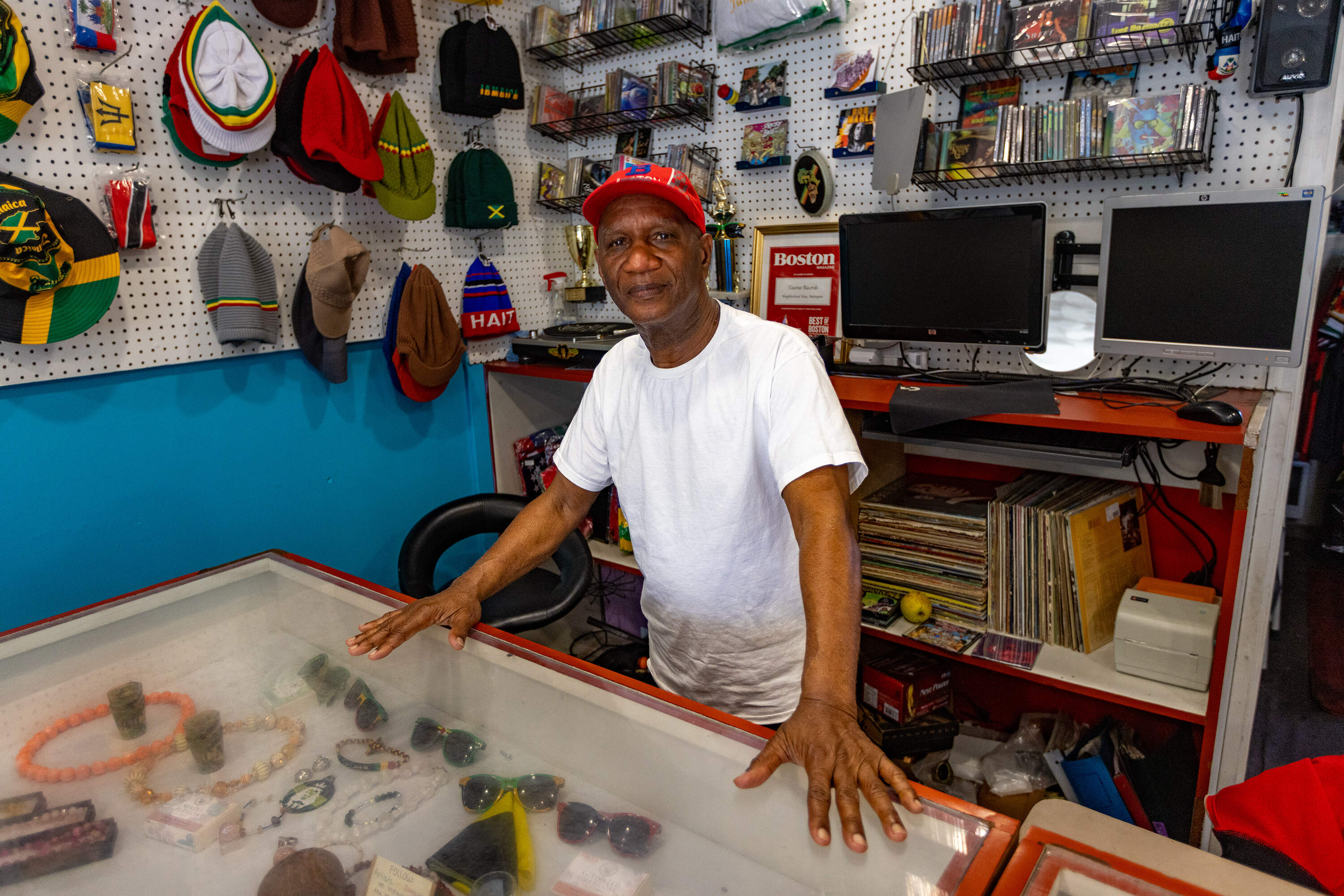
Taurus Records is hard to miss.
Amid the changing landscape of Blue Hill Avenue in Mattapan, the record store’s bright rastafarian colored exterior is iconic. It’s a clear indicator of its specialty- reggae, dancehall and other Caribbean music like calypso and soca.
When the weather is warm, owner Leroy Webb leaves the front door open and lets the sound of reggae spill out onto the sidewalk. The music is the perfect soundtrack for an area with a large Caribbean immigrant population. It’s part of the reason why Taurus Records has become a hotspot during Carnival season.
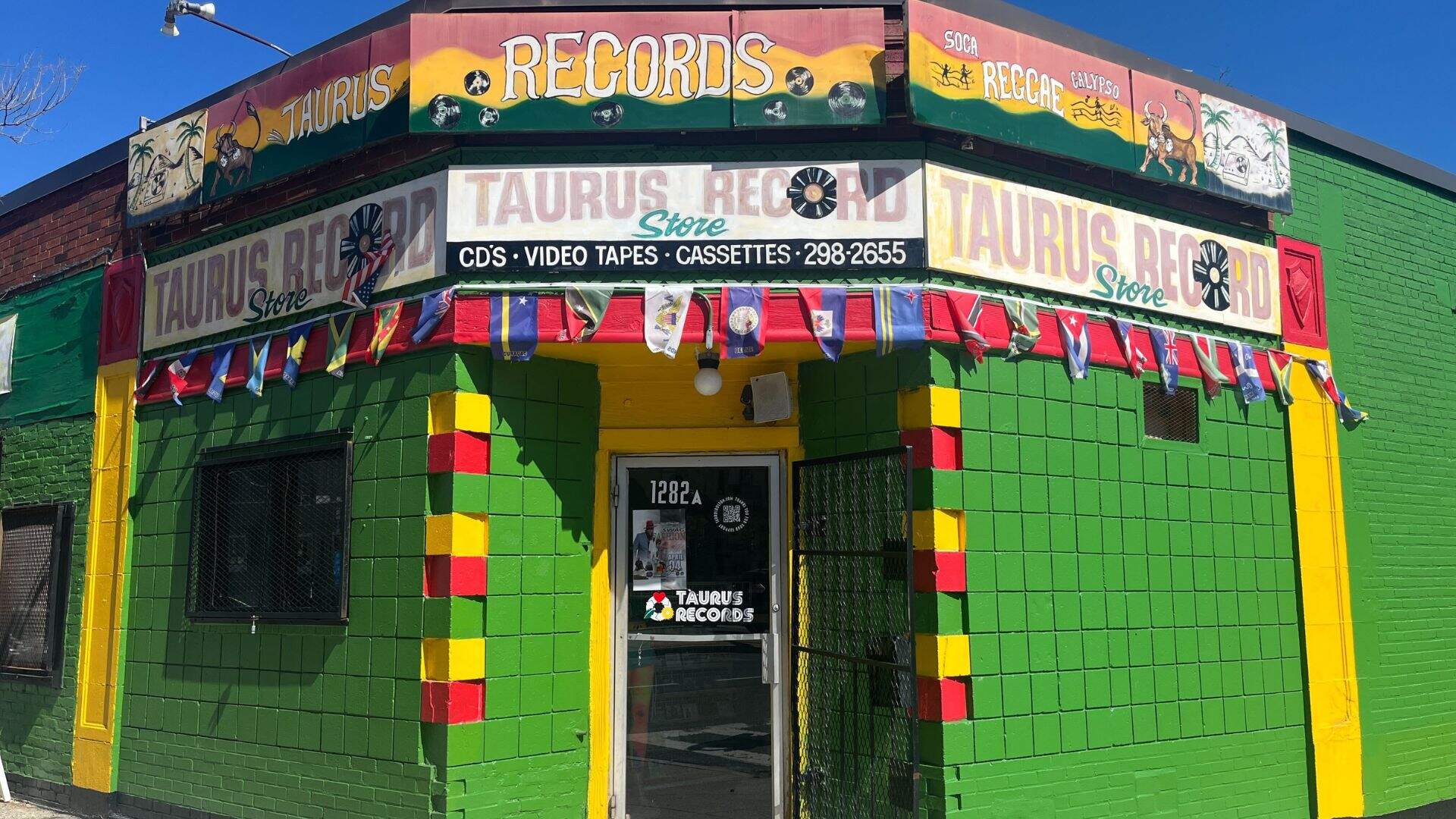
“I love Dorchester, Roxbury, Mattapan, Hyde Park,” said Webb. One of the things he enjoys the most about running the store is getting to talk to the people who come in. “After 50 years, you start to know people in the community. And people know you.”
After changes were made to the Immigration and Nationality Act in 1965, many immigrants from the Caribbean came to Massachusetts. Webb was one of them.
Living in Jamaica, Webb used to stand outside the record store and listen to music for hours. When he arrived in Boston in 1973, he brought his love for reggae with him.
“When I left Jamaica, I leave with two albums,” Webb said. They were by Dennis Brown, an early progenitor of reggae and one of Webb’s favorite artists growing up. “I kept on playing those two albums till I could find a record store.”
When Webb did find a record store, he was disappointed. “Nobody really know of dancehall or reggae music. It wasn’t even really playing on any radio station,” he said.
Though there was a growing and flourishing Caribbean population in Boston, that wasn’t necessarily reflected in the available music. Before reggae and dancehall became global sensations with the rise of figures like Bob Marley and Jimmy Cliff, it was rare to hear reggae on-air or find a varied selection at record stores.
“I went searching for my type of music,” said Webb. The search is what pushed him into party promotion in 1976. Sometimes operating under the name Lion Productions, Webb secured venues and DJs, printed and distributed flyers and brought vinyl records to local stations like WERS to get reggae played on the radio. One of the most important parts was booking an artist.
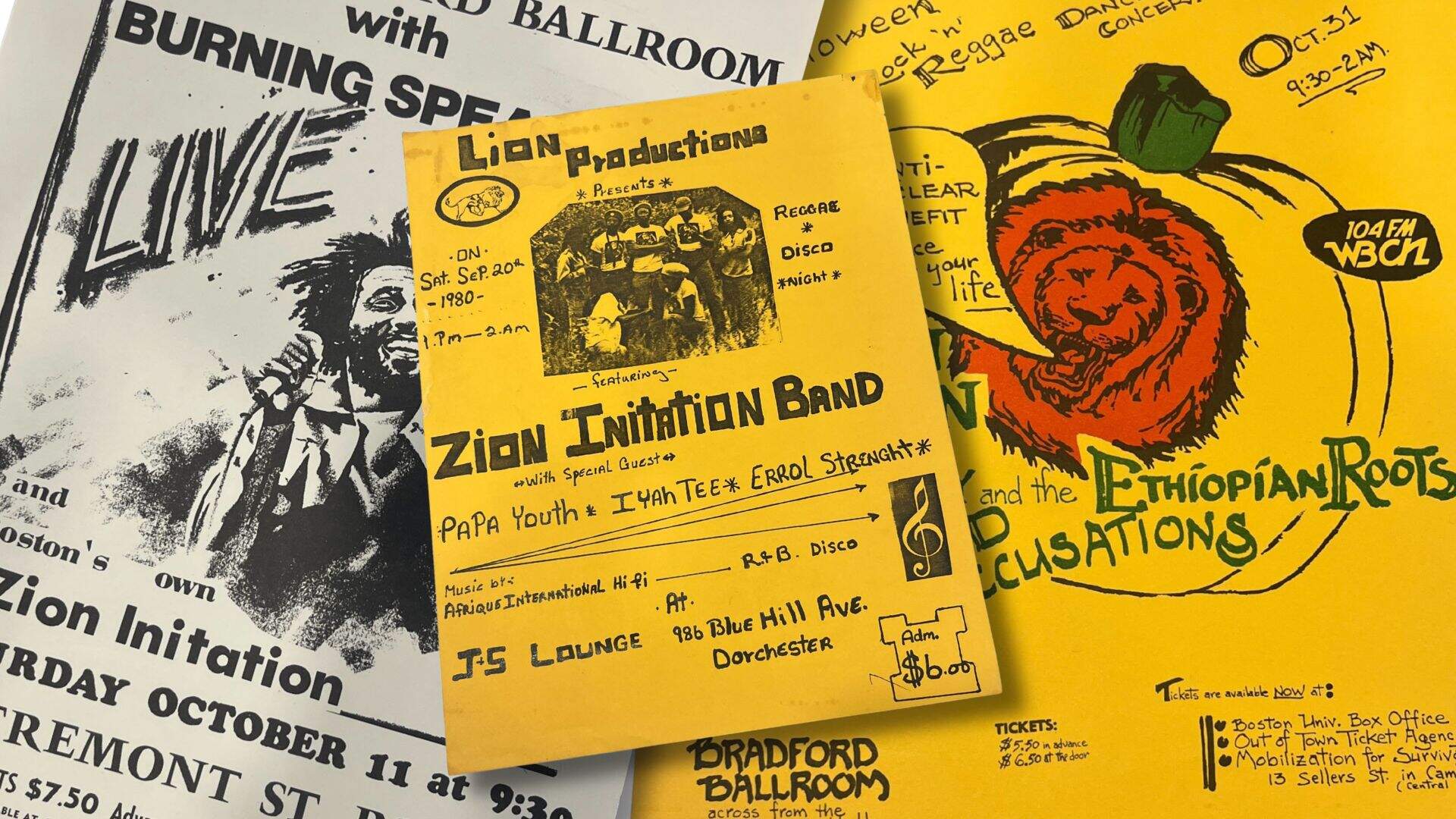
“ There wasn't too many local reggae bands or artists. So if you know somebody's coming around, coming to the state, you try to see if you can grab them and promote the show with them.”
Webb helped pioneer an entertainment ecosystem in Boston that fostered Caribbean music. His roster includes promoting or co-promoting shows with artists like Lenky Roy and the Ethiopian Roots, Shabba Ranks and Coco Tea. These parties and events were more than just social functions. They were vital parts of a Caribbean subculture that was blooming in Boston.
“ We were creating space for people to find [reggae],” said Webb. “It wasn't just the music alone, it was a culture of us that was from back home.”
In 1981, Webb opened a brick and mortar record store in the South End. Reggae’s popularity was growing but there weren’t many local places directly distributing reggae vinyl. Places that specialized in Caribbean music like VP Records began opening up in New York City. Webb made the hours-long drive every weekend to get records for the store.
“It was very challenging back then,” Webb said. “I'd stop and pick up a variety of different producers, distributors, music from different labels.” The effort was well worth it. Taurus Records drew in all sorts of people looking for reggae and other Caribbean music.
“Younger youth, DJs, they're playing the music that they hear coming out of Jamaica… you have a more rebellious type of dance hall crowd,” explained Webb. “They used to give a lot of support because they want to play the latest of music.”
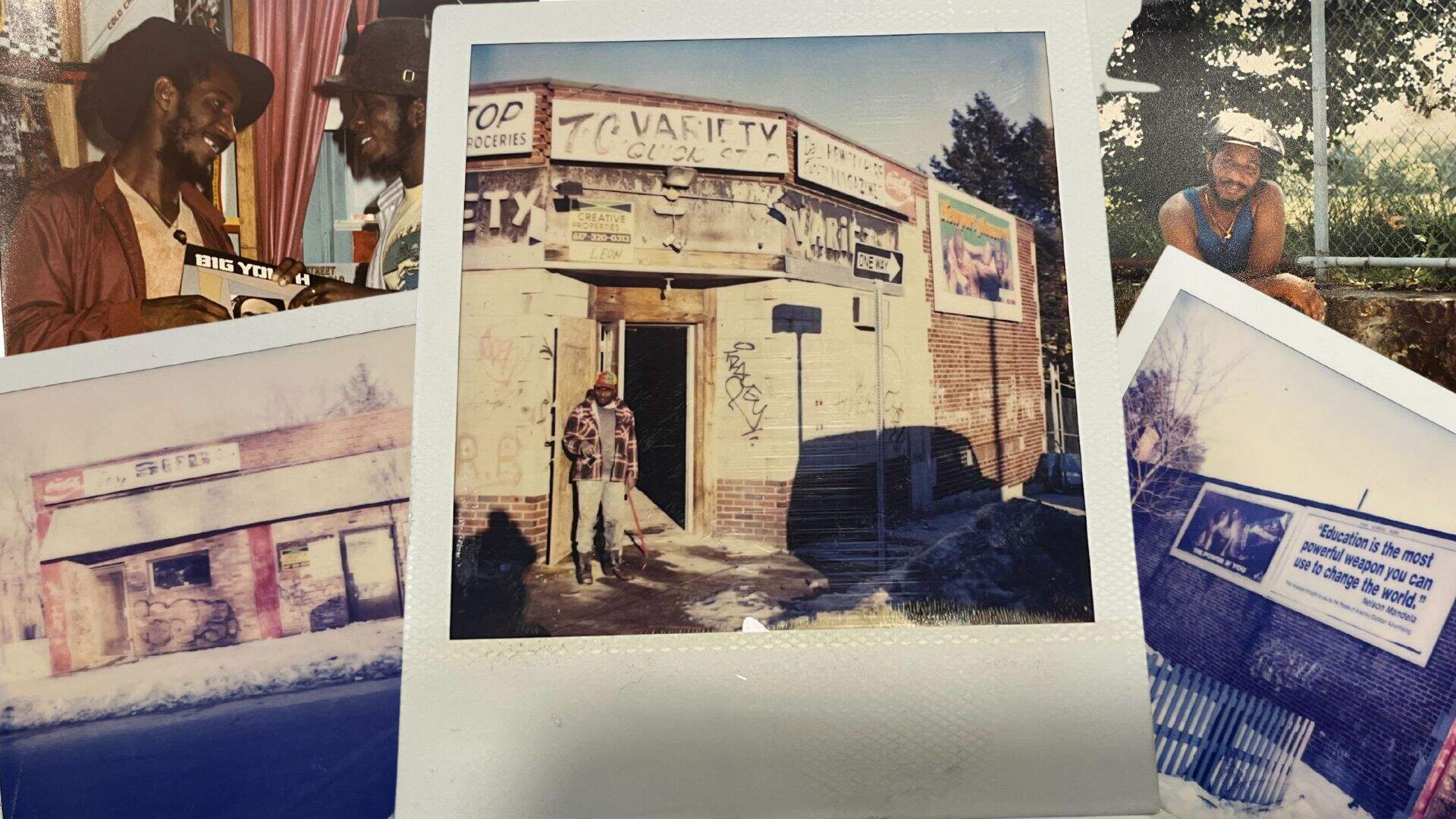
Eventually Taurus Records left the South End. Webb purchased an old corner store on Blue Hill Avenue and transformed it into a new home for his business. It’s been in the same place since the mid '90s, making it one of the area’s well-loved landmarks. Webb still sells reggae records, along with CDs and other Caribbean paraphernalia.
But things have changed since the days he first opened. The area itself is shifting as developers purchase property and put up new buildings. Black and immigrant populations are leaving Boston for more affordable areas outside of the city. And people now open streaming apps to listen to music. Webb said the store used to be able to feed his family.
“But right now it's just maintaining, you know? I wouldn't throw away maintaining for nothing really. I might be there not making any money, but as long as the light is on, I'm good.”
There’s been a recent resurgence in interest in vinyl. Webb said he’s seen that interest happen inside of the store. Curious youth have asked him about the records and how to play them. Webb is more than happy to show them. He also gets many inquiries from international record collectors and vinyl enthusiasts.
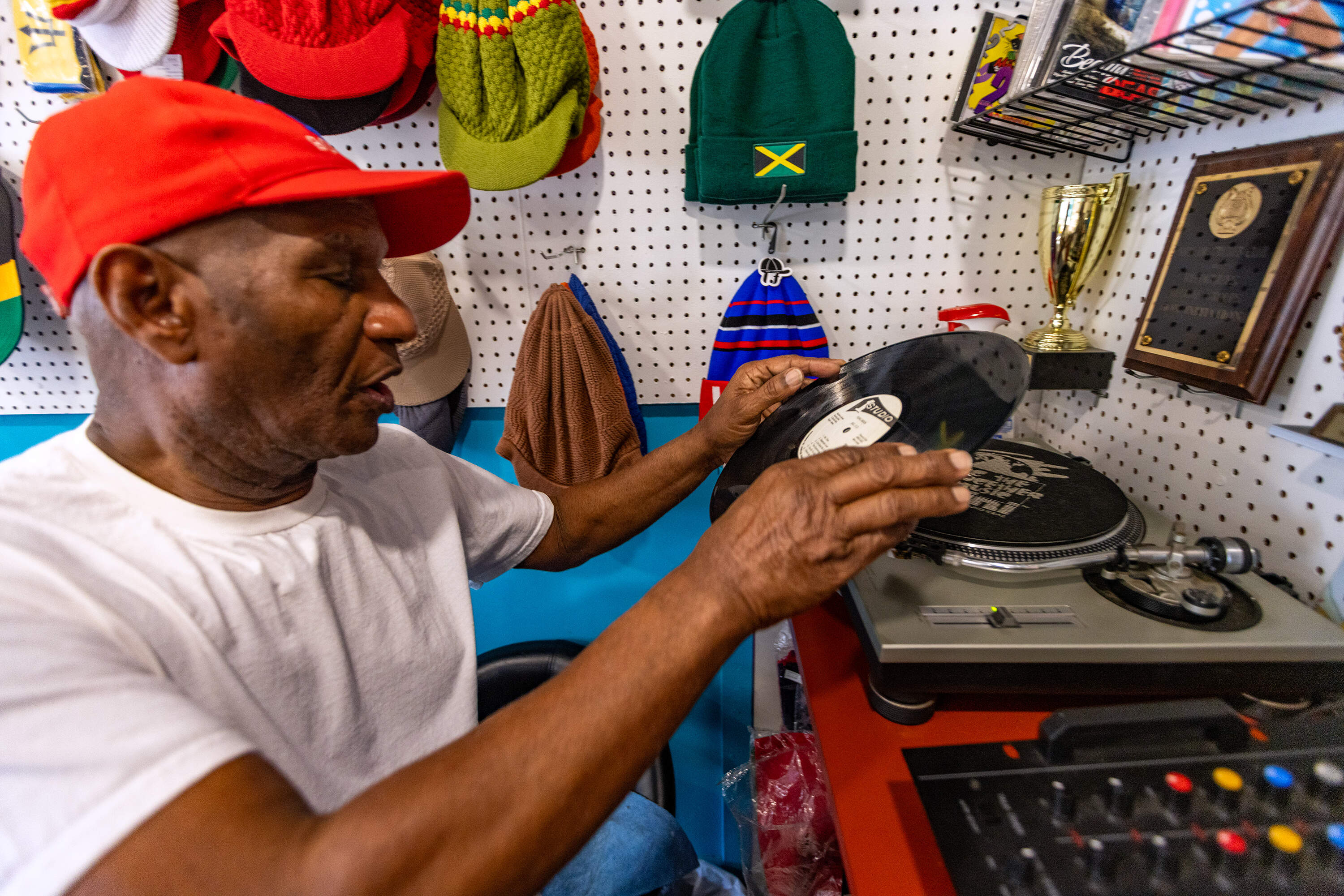
“ I am blessed to see my little dream true,” Webb said. “In the car, reggae is playing everywhere. And more people is into reggae than before. I am very pleased to see where [reggae] come and knowing that I was also a part of it, you know?”
For Webb, Taurus Records is so much more than a record store. It’s a way to spread his deep love for reggae music and the culture that birthed it.
“You find the soil, now you have to go plant that seed,” Webb said. “Watch it grow into a bigger tree.”