Support WBUR
Harvard graduate students picket as union goes on strike
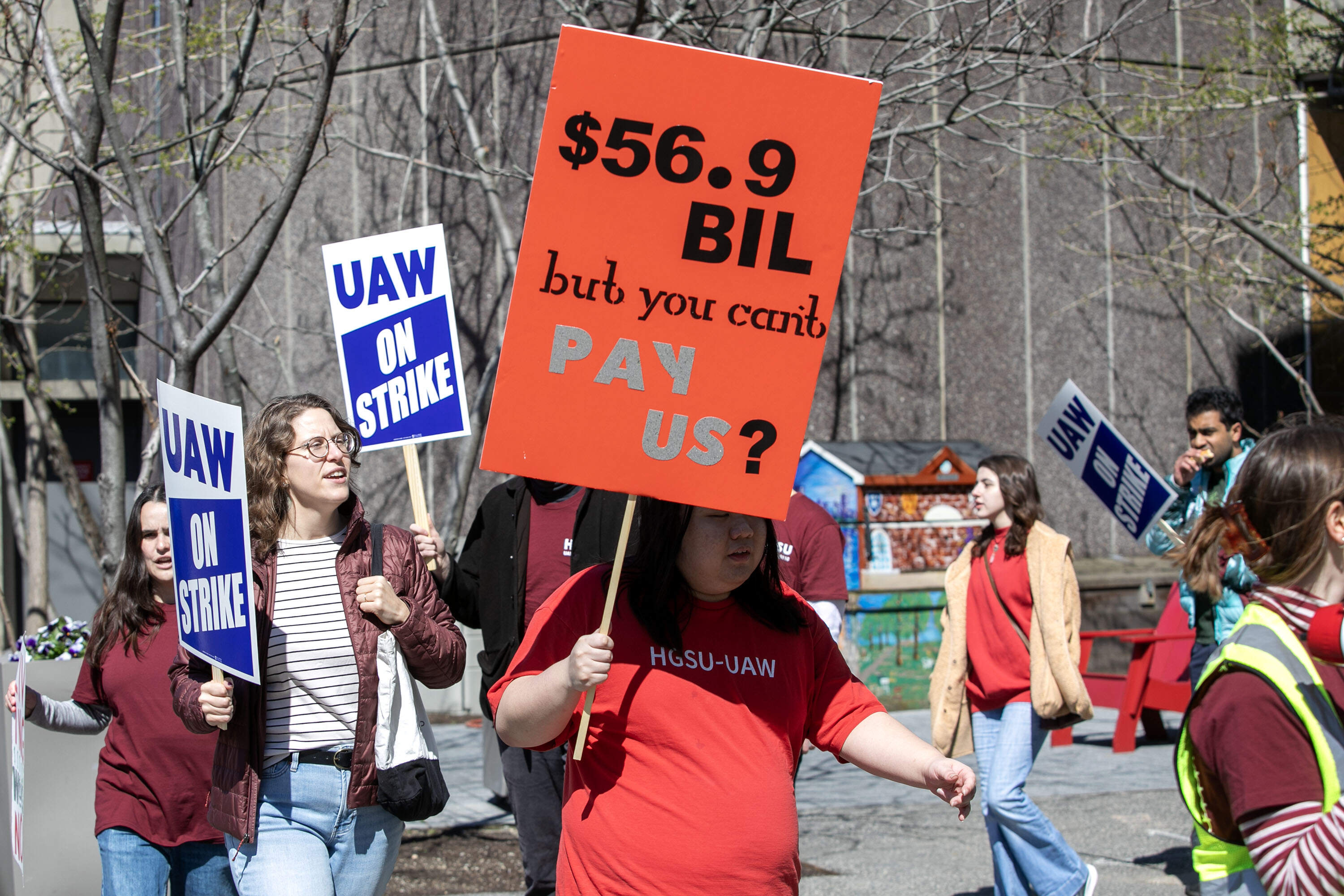
Harvard’s graduate student workers went on strike Tuesday morning, demanding higher pay, greater protections for non-citizen employees and an improved grievance process for workplace harassment.
The union represents about 4,000 graduate student workers. Dozens of them picketed outside the Science Center in Cambridge on Tuesday morning, holding signs and chanting slogans such as, “Harvard, pay your working scholars, you’ve got 50 billion dollars,” a reference to the institution’s endowment.
Negotiations between the union and administration have been taking place since February 2025. The most recent contract expired in June.
Still unresolved are nearly two dozen proposals in this latest contract.
"Our working conditions are students’ learning conditions and we cannot provide good educational experiences for them unless we have a safe working environment in which we can be paid fairly,” said Denish Jaswal, a philosophy doctoral student who sits on the bargaining committee.
The union wants a minimum salary of $55,000 for workers. Currently, research assistants make just over $40,000, while teaching fellows earn $26,300. The union also wants the minimum wage for hourly workers to go up from $21 an hour to $25 an hour.
Jaswal, who’s in the seventh year of her program, said she makes about $26,000 a year.
“It’s very hard to make it on that income,” she said.
In a statement on Friday, before the strike, Harvard Provost John Manning and Executive Vice President Meredith Weenick said Harvard is “committed to negotiating in good faith.”
Their statement addressed several issues, including compensation. They said Harvard proposed a 10% salary increase over four years. Additionally, expense supports such as a stipend, grants and other benefits offered to Ph.D. graduate student workers top more than $50,000 a year, they said.
Manning and Weenick said the university would be prepared to handle any grad student worker walkout.
“We will take steps to ensure that teaching, learning and research continue and that students, faculty, and other researchers can make progress toward their academic goals,” they stated.
A Harvard spokesman declined to provide comment Tuesday.
The union also wants members to have access to third-party representation in the event of an issue of workplace harassment and to be offered a choice of whether to go through a university process or a grievance process.
Jaswal said some members who experience bullying or harassment don’t want to rely on the university.
“Many of them don't go forward with any university processes because trust in the university process is completely shot,” she said.
The union is also pushing for enhanced protections for its international student worker members amid a heightened climate of fear and uncertainty with the current political administration.
Employees want an emergency fund for members dealing with legal issues and a set amount of paid leave days to handle immigration or visa appointments.
Emma Lezberg is a third-year doctoral student in education who said members are fearful.
“I have spoken to a lot of students who have had family members who are detained and need help finding legal resources, and right now Harvard does not have enough resources to support students,” she said.
The university’s statement did not address any of the union’s demands for non-citizens.
This is Harvard’s final week of classes in the spring term before the undergraduate reading period for May exams begins. The next bargaining session is scheduled for April 29.
It’s unclear how the strike is impacting students. The Harvard Crimson reported Tuesday that some classes had to be canceled or moved online.
Some union members said undergraduates in the sections they teach have been supportive.
“While they’re definitely concerned that, you know, it's coming up on finals … they understand why we're out here,” Lezberg said.