Support WBUR
Review
'Michael' is a troublingly untroubled biopic of the late King of Pop
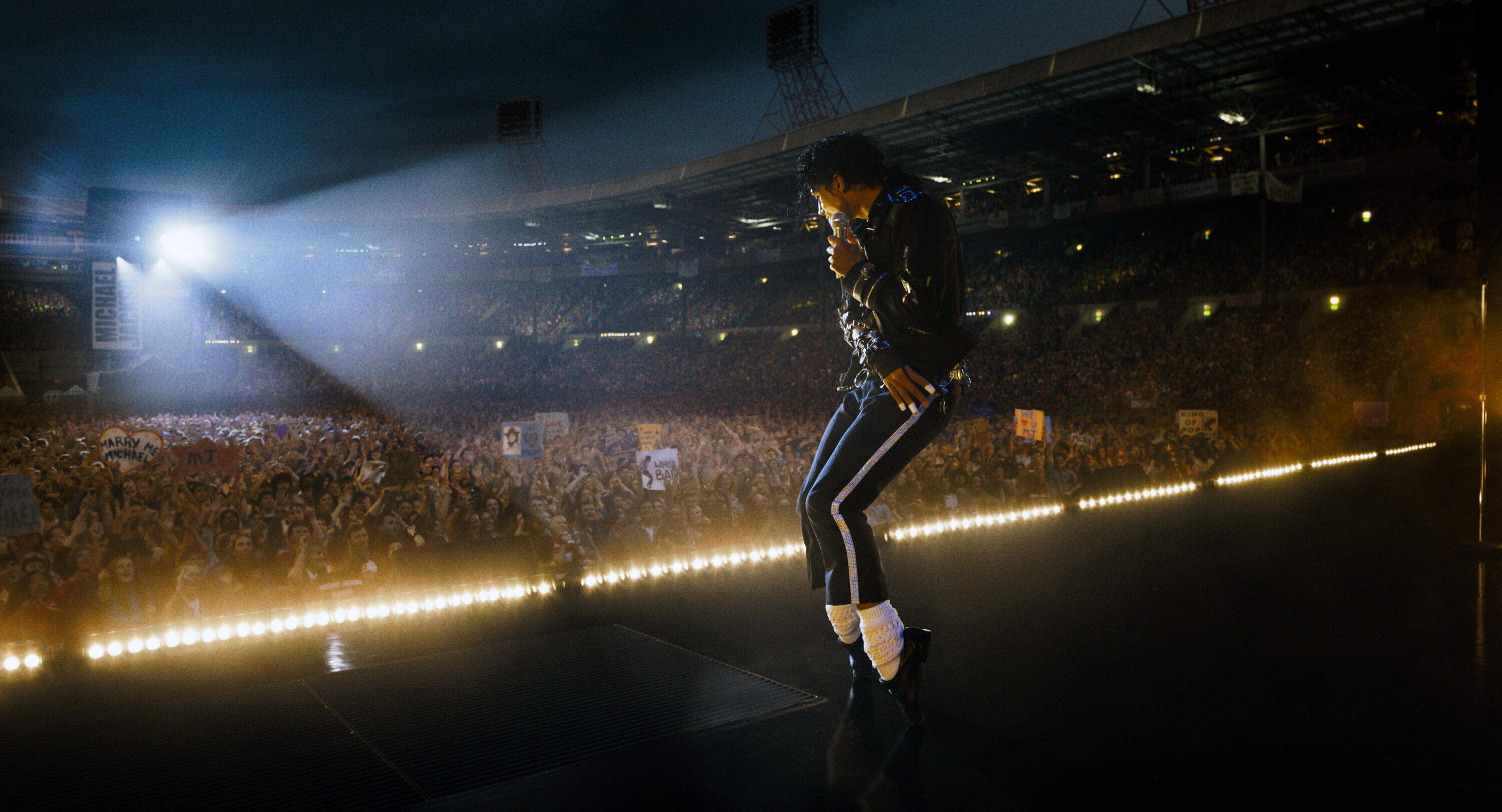
There were people dancing in the lobby after my screening of “Michael.” I’m not sure if they were genuinely ecstatic or just influencers creating content, but I guess the point is that it’s the kind of picture that makes people want to move. A slick exercise in brand management that might be more than a little evil, this troublingly untroubled biopic of the late King of Pop is more like a devotional object — a rigorously sanitized, family-friendly, $170 million IMAX extravaganza that moonwalks through the first half of Michael Jackson’s career with a simpleton’s verve and not inconsiderable showmanship. There isn’t a complex or ambivalent moment in the picture. I’ve seen religious movies that felt less like going to church.
Partially funded by the singer’s estate and starring his nephew Jaafar Jackson, the film presents its subject as a childlike saint sharing his light with the world, hurtling from one meticulously recreated career highlight to another. Most movies about musicians follow an artist’s rise, fall and eventual redemption. “Michael” is all rise — the ascension of a holy being to the top of the universe. The movie ends in 1988 with Jackson’s triumphant solo “Bad” tour, which is kind of like ending an O.J. Simpson biopic with him winning the Heisman Trophy.
I was at a pizza place on Tremont Street near the movie theater by Boston Common when my friend Trevor called to tell me that Michael Jackson had died. Actually, Trevor called to tell me he was running late. We were going to the press screening of Michael Mann’s “Public Enemies” that night, and this was 17 years ago when people used to relay such information by talking to each other instead of texting. “Oh, and did you hear?” he added, “Michael Jackson’s dead.” I suddenly realized this was why they’d just played three of his songs in a row on the radio in the pizza parlor.
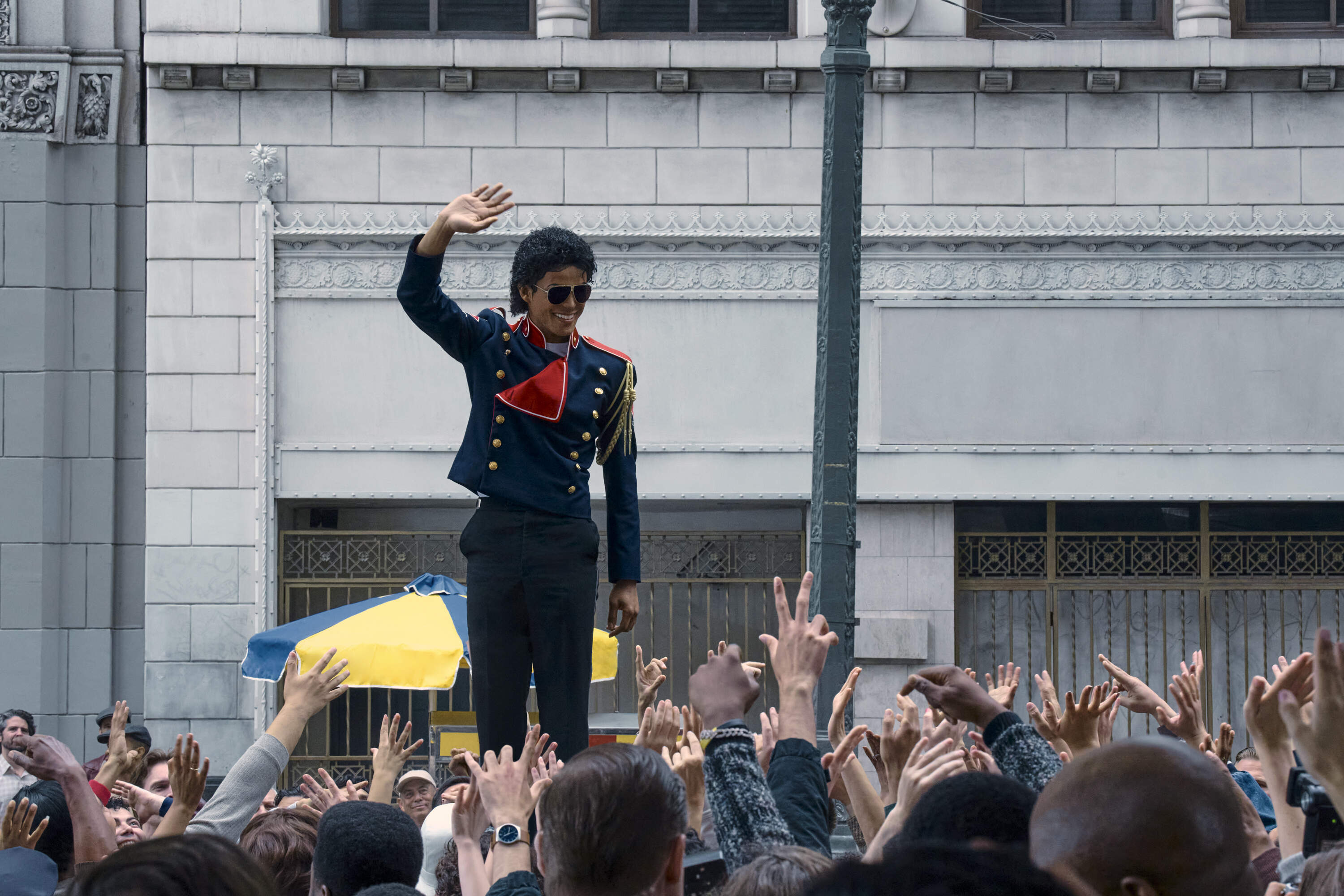
You didn’t hear Michael Jackson songs on the radio in 2009. The washed-up star was an icky afterthought at best; a disturbingly pale shadow of the world-conquering icon he’d been in the ‘80s. So many settlements and sickening allegations from so many kids. And such bizarre behavior – what with all the noses and the oxygen chamber and dangling his baby off a balcony. Jackson hadn’t released an album of new material in eight years, and hadn’t had a No. 1 hit since “You Are Not Alone” in 1995. The last time it felt like the King of Pop truly reigned over the culture was his Super Bowl halftime show in 1993, but by the end of that year, Jackson would be buying television time to shriek about how the police had photographed his penis. It all turned so sordid so quickly, and what we’d once accepted as colorful eccentricities now seemed sinister. Or just sad.
Yet all this bad feeling seemed to evaporate the moment his death was announced. There were reports of radio stations sending employees out to record stores that afternoon to buy Michael Jackson albums since they didn’t even have them on hand anymore. Suddenly, his music was everywhere again. I have a theory that when you mourn an artist you’re not really mourning the person who died, but rather the person you were when their work first profoundly affected you. Most of our childhoods were set to Michael Jackson songs. His death somehow liberated us from facing the more upsetting aspects of his existence, and we could all instead remember the first time we danced to “Rock With You.”
Jackson died with more than $500 million in debt. According to Forbes, his estate has earned over $3.5 billion since his passing. “Michael” is expressly designed to keep that gravy train rolling, making it the summer of 2009 forever by approaching the subject with a frictionless, incurious awe. More like a theme park tribute act than a proper motion picture, the movie is made up of short, bluntly written scenes that shove us from one beloved song to the next. The dialogue, credited to “Gladiator” screenwriter John Logan, sounds so much like bullet points it sometimes feels as if director Antoine Fuqua shot an outline instead of a script. Everyone gets a single character trait, if they’re lucky.
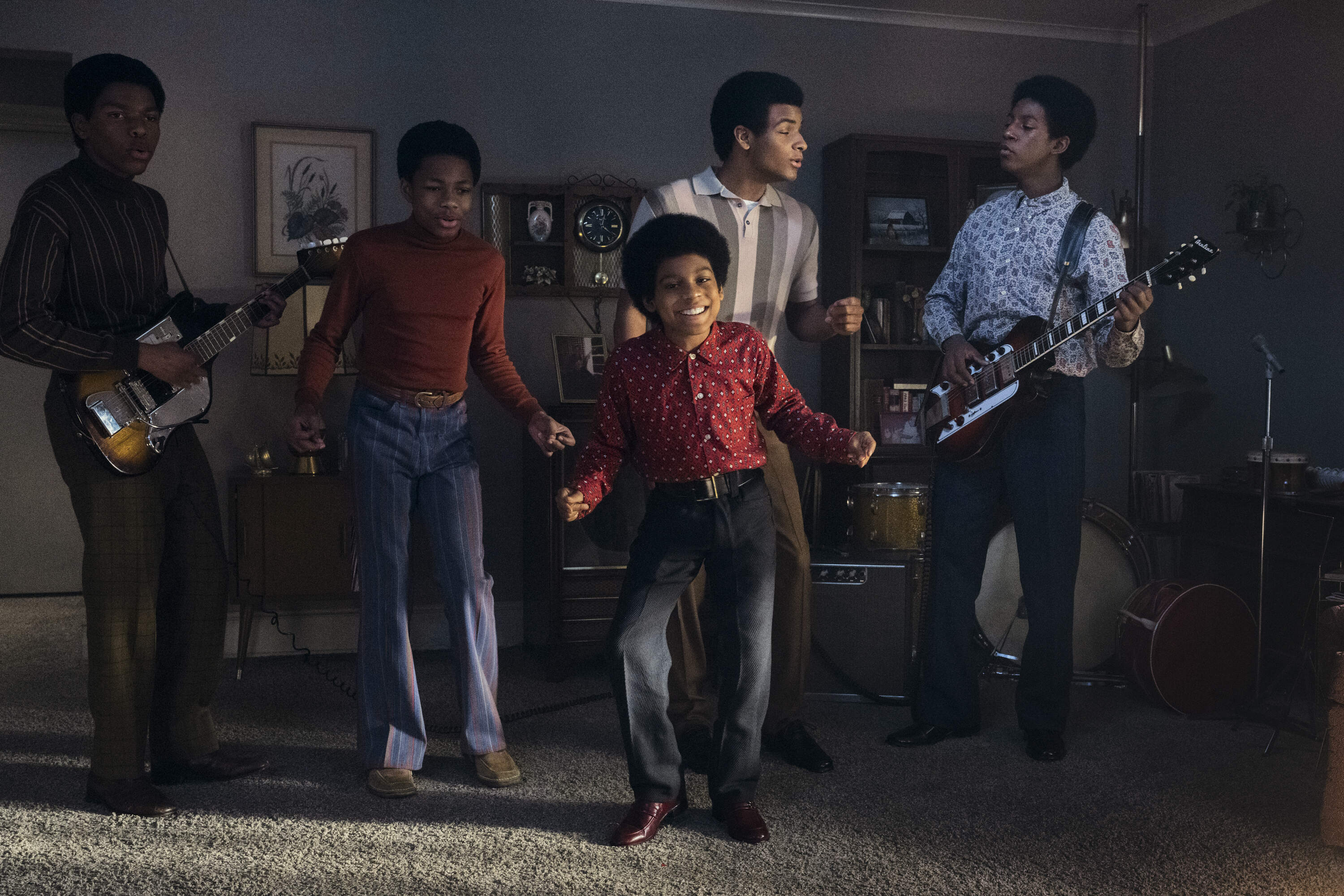
We follow innocent, beatific Michael — played as a child by Juliano Valdi, and then from “Off the Wall” on by brother Jermaine’s son Jaafar — from the early days of the Jackson 5, when the whole family schlepped around the Indiana State Fair circuit in a VW minibus driven by abusive stage dad Joe. The tyrannical patriarch is played by Colman Domingo, who has reached such an advanced stage of hamminess he’s now able to overact while standing completely still. Nia Long co-stars as Michael’s devoted mother Katherine, who stays up late watching old Charlie Chaplin movies with him while his brothers are out chasing girls. Sister La Toya is briefly played by Jessica Sula, but don’t bother looking for Janet, as the movie apparently takes place in an alternate timeline where she never existed.
The friendless Michael spends his free time visiting sick children in hospitals and confiding in a menagerie of increasingly more exotic pets. (The movie acts as if a grown adult male conversing with a llama isn’t cause for alarm, with the uncanny CGI Bubbles the chimp being the most terrifying screen animal since “Cats.”) It’ll take 127 minutes and 15 or so of your favorite songs for the singer to finally break free from his father’s cruel, controlling grip. He does so with the help of John Branca, famous entertainment lawyer and current executor of the Jackson estate, played here by Miles Teller in the worst of the movie’s awful wigs. Teller is given a hero’s entrance and shot like the center of attention even in scenes where he does nothing at all, which didn’t make any sense to me until the end credits, where we learn that Branca produced the picture.
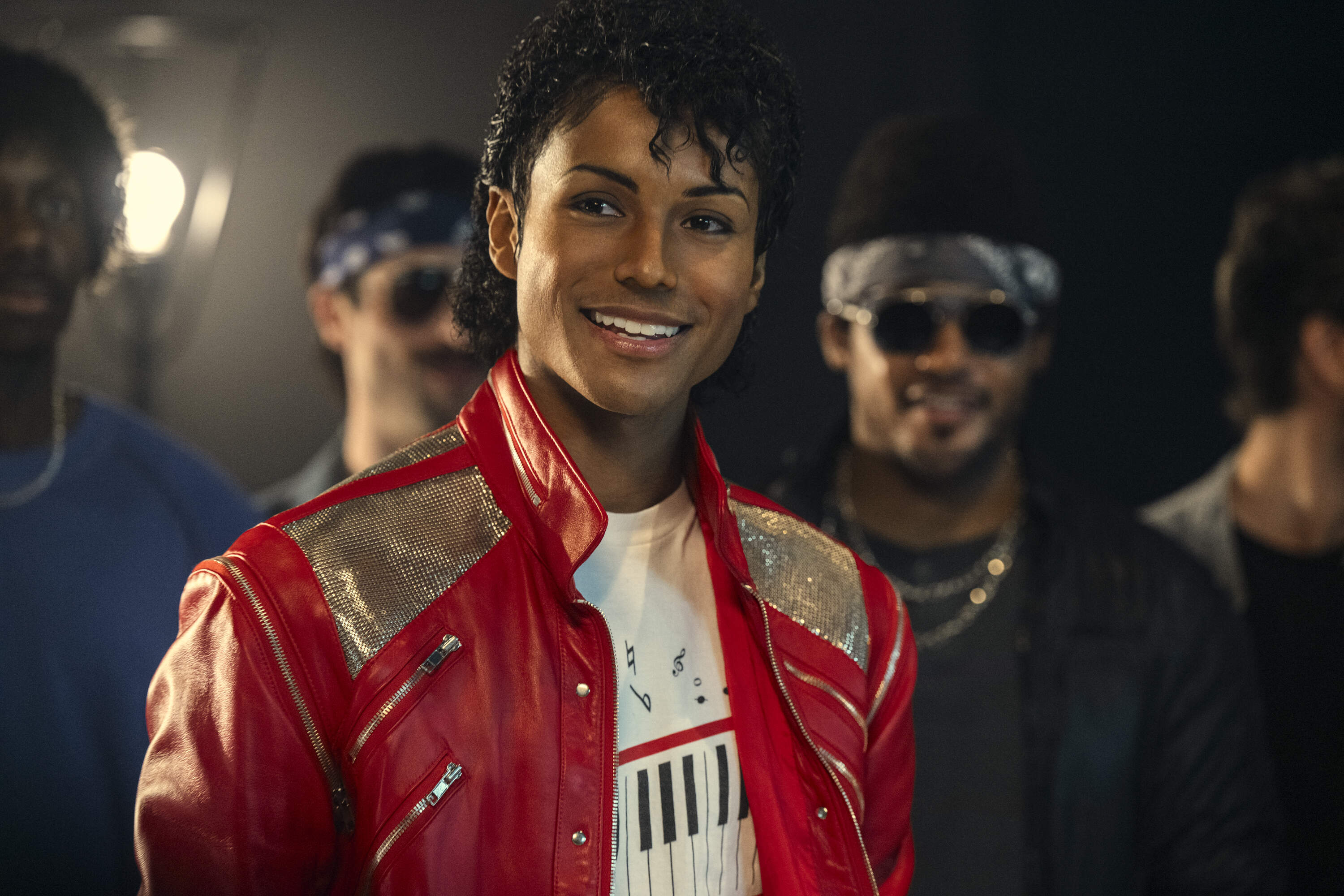
“Relax your mind,” Michael sang on “Rock With You,” and the movie aims to razzle-dazzle viewers into an unthinking stupor. As was the case with “Bohemian Rhapsody,” no expense has been spared in the painstaking reenactment of iconic moments burned into every music fan’s memory. There’s the “Motown 25” performance, “Beat It,” the “Thriller” video and the “Victory” tour. (Credit where due, the nephew sure can dance.) We even see his hair catch on fire during that Pepsi commercial, noting the irony that Jackson was nearly killed by sloppy safety measures on a shoot that wasn’t the one he’d hired John Landis to direct.
Like the rousingly restaged Live Aid concert at the end of that otherwise awful Freddie Mercury biopic, the bulk of “Michael” is an even bigger and louder simulation of stuff you already know and love. And for a lot of audiences, that will probably be enough. But to the rest of us, there’s something willfully oblivious and unseemly about turning Jackson’s life into a feel-good family movie, when we all know it was more like an American horror story.
“Michael” opens in theaters Thursday, April 23.