Support WBUR
Boston's Saturday Morning Newsletter
A bonsai bonanza: The Arnold Arboretum’s tiniest trees return to display
Editor's Note: This is an excerpt from WBUR's Saturday morning newsletter, The Weekender. If you like what you read and want it in your inbox, sign up here.
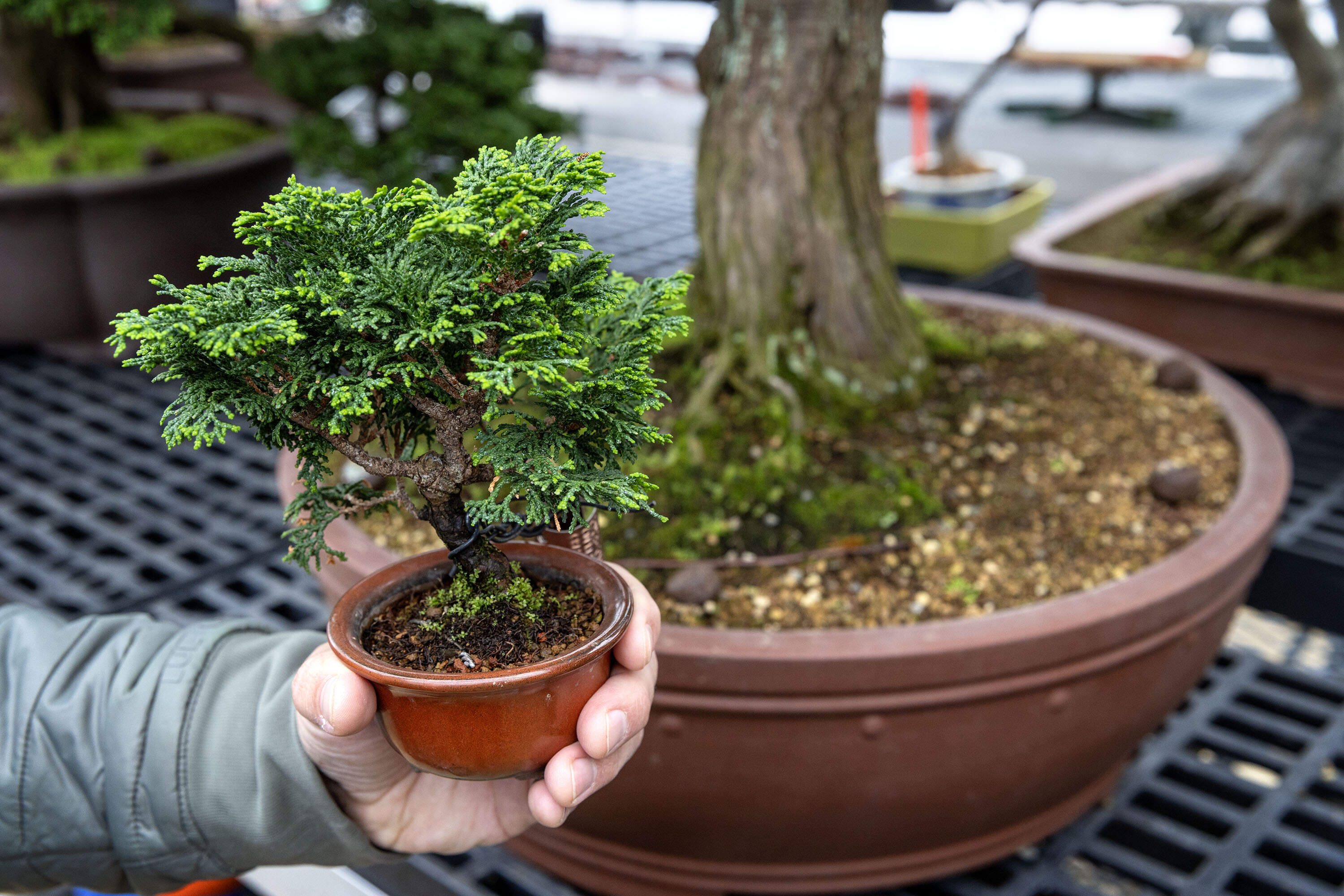
After a long winter in storage, the Arnold Arboretum’s tiniest trees are back on display as of Friday. The 67-plant bonsai collection is striking, pruned to perfection and notable. (The oldest dates back to 1737, but more on that later.)
Though they may be miniature, caring for these trees over the last five months was no small feat, according to Chris Copeland, bonsai curator and manager of plant production at the Arboretum.
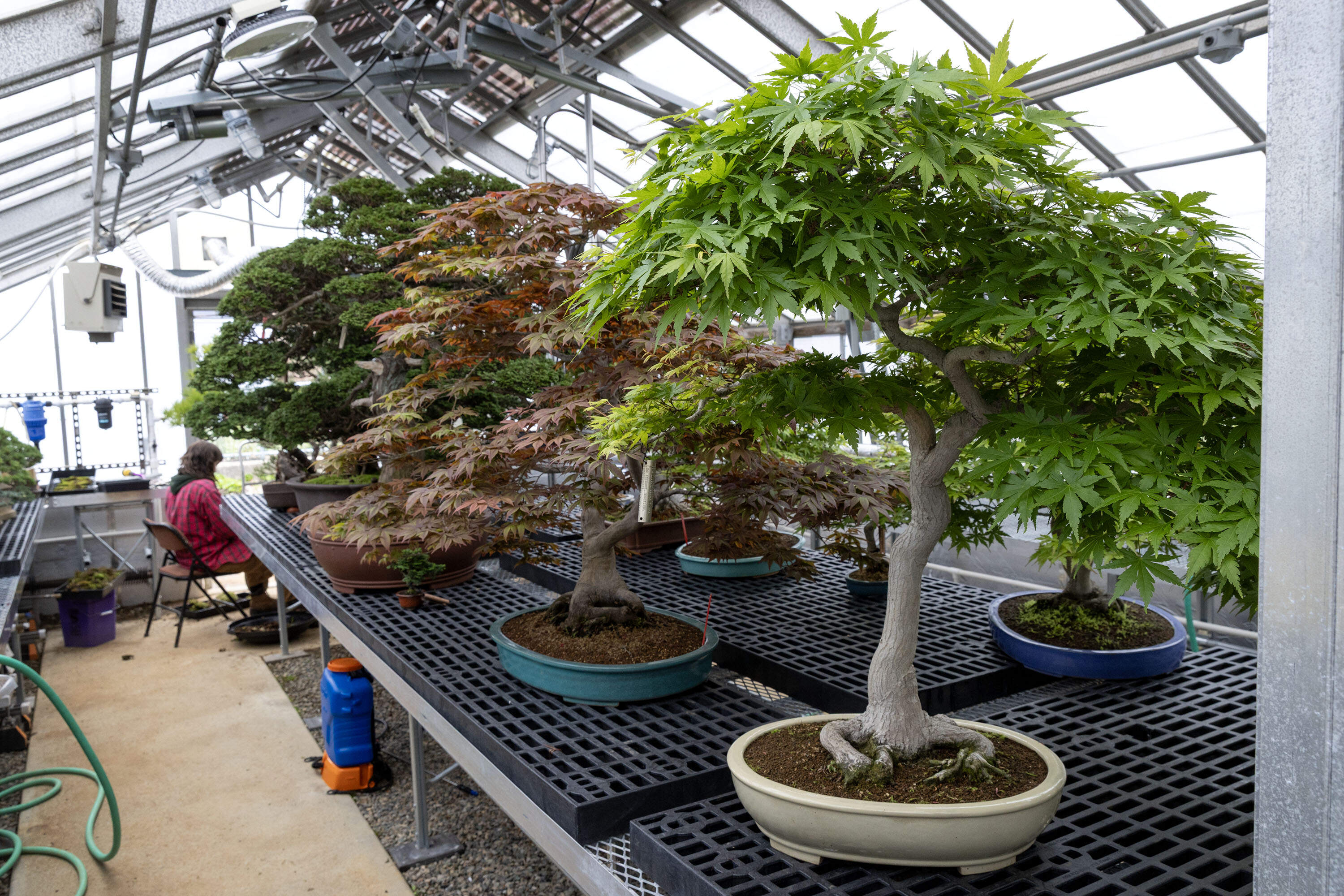
“The trees are temperate trees, meaning they acclimated to a Massachusetts climate, so they expect four seasons,” Copeland said. But if left outside in the extreme cold, fragile bonsai can sustain serious injuries to their roots, he added.
“Our main goal is to keep these plants as sculptures, making sure they're not changing too much, but keeping them healthy and happy as if they were in the landscape,” he said. “So, we try not to gloss over winter.”
To do this, the Arboretum sends its bonsai trees into a cooler for a “controlled winter” every November, where the plants are protected from harsh elements like snow and “suspended in animation,” Copeland said.
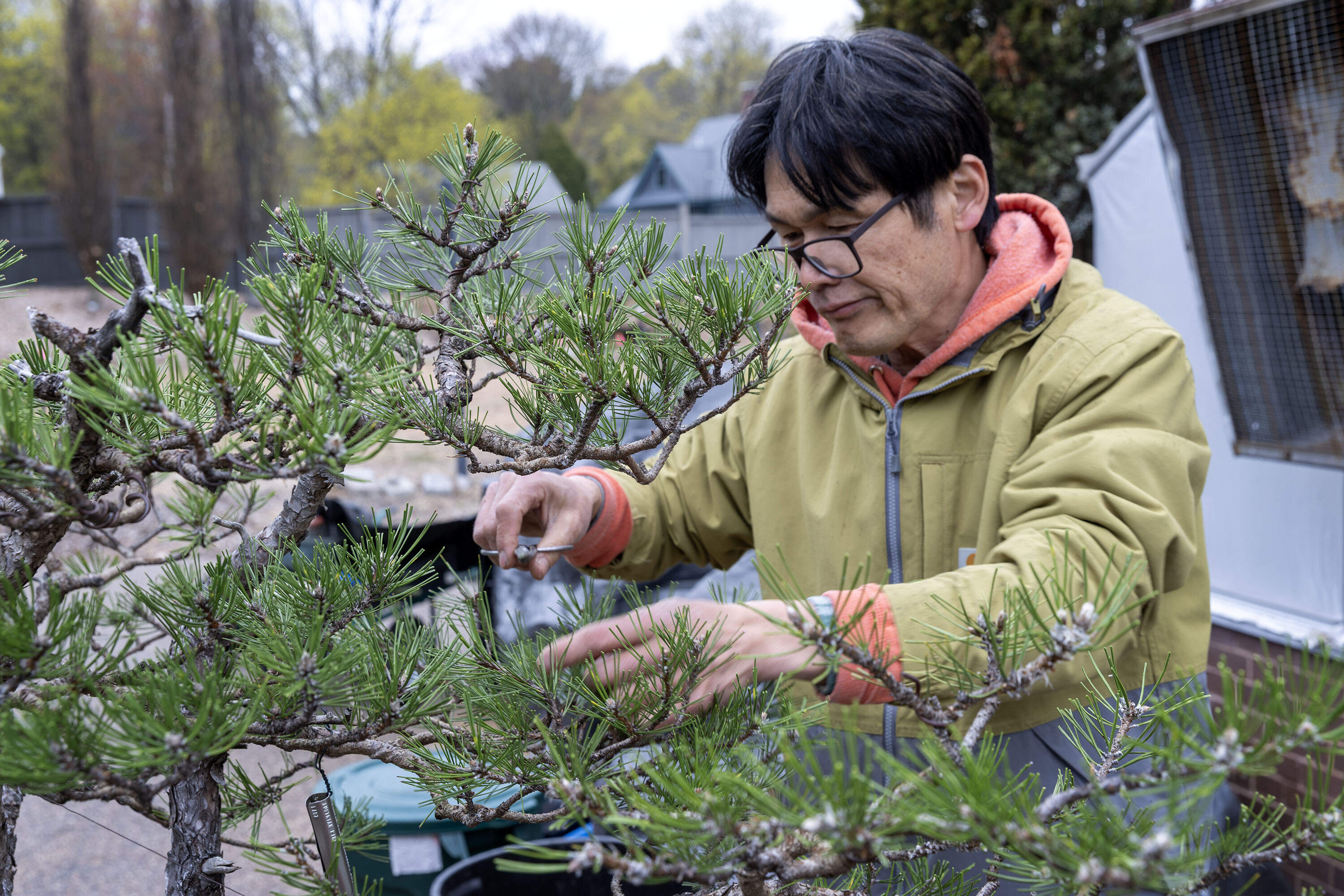
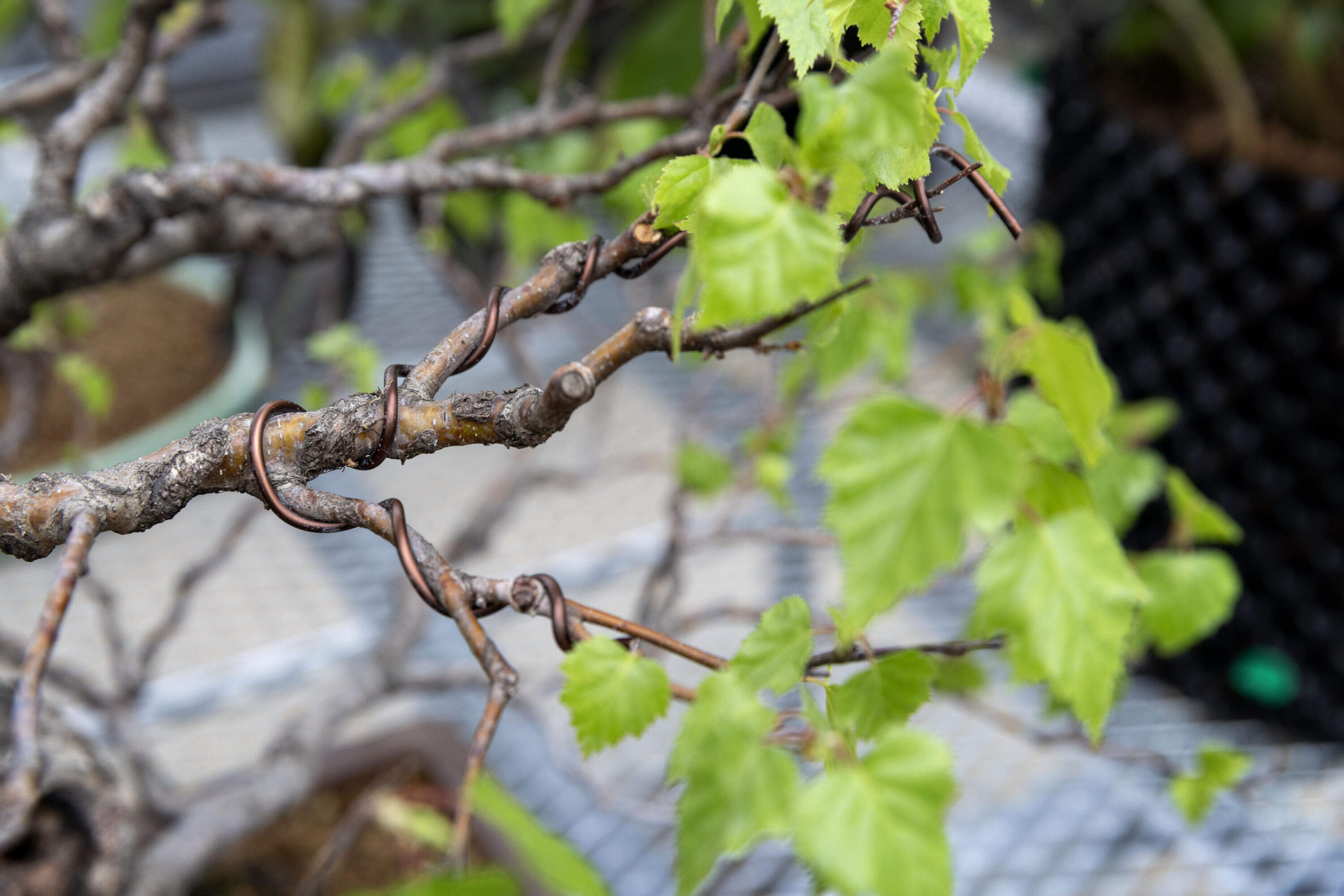
It’s also during this time that the trees’ branches are pruned and bound with sculpting wires by bonsai specialist Jun Imabayashi, creating their unique shape. Bonsai are lightly trimmed in the summer, too, but “winter is a great time for structure pruning,” Copeland said. “Larger cuts are a little easier to make in dormancy when the trees are essentially sleeping.”
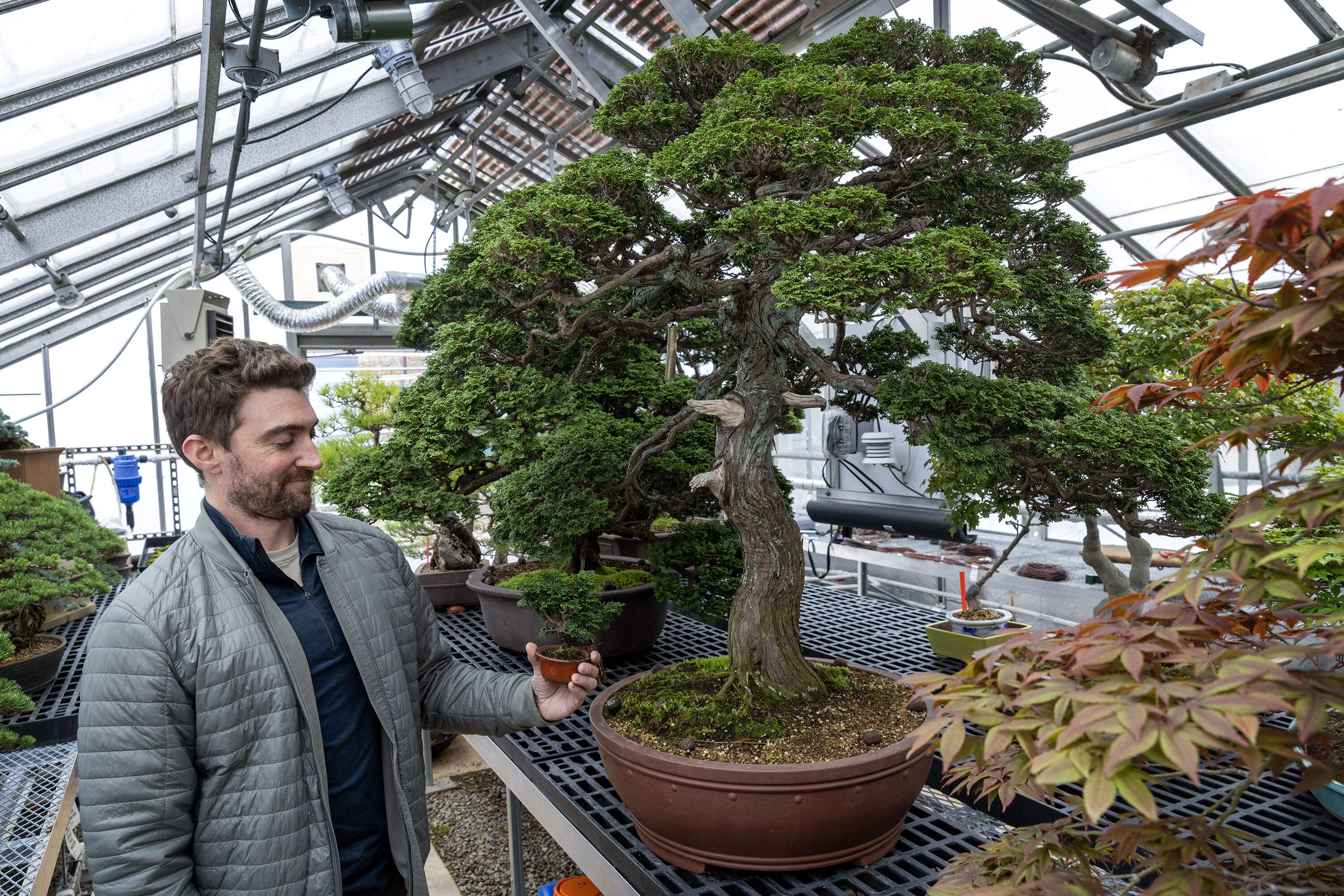
The trees’ long naps end in early April, when staff bring them to the Dana Greenhouses in Jamaica Plain. Usually, the bonsai collection’s return to the Arboretum’s Bonsai and Penjing Pavilion is slated for Patriots’ Day.
“That’s always the goal,” Copeland said.
But sometimes, it’s just too cold to put the trees back out on the pavilion — which is exactly what happened this year.
Many other factors — from daylight saving time to the cold storage itself — can also affect the trees during their reacclimation period. For example, a bonsai fresh from the cooler might have blemishes or injuries in need of tending to that weren’t visible in storage. And increased daylight, particularly on a sunny day, can make a bonsai thirsty. Watering alone is an “all hands on deck effort,” Copeland said. Each bonsai is checked three times a day to make sure it’s not dried out.
“The watering schedule is always the most tentative, the most careful process of spring,” Copeland said. “It's really dangerous for any of these trees to be too dry.”
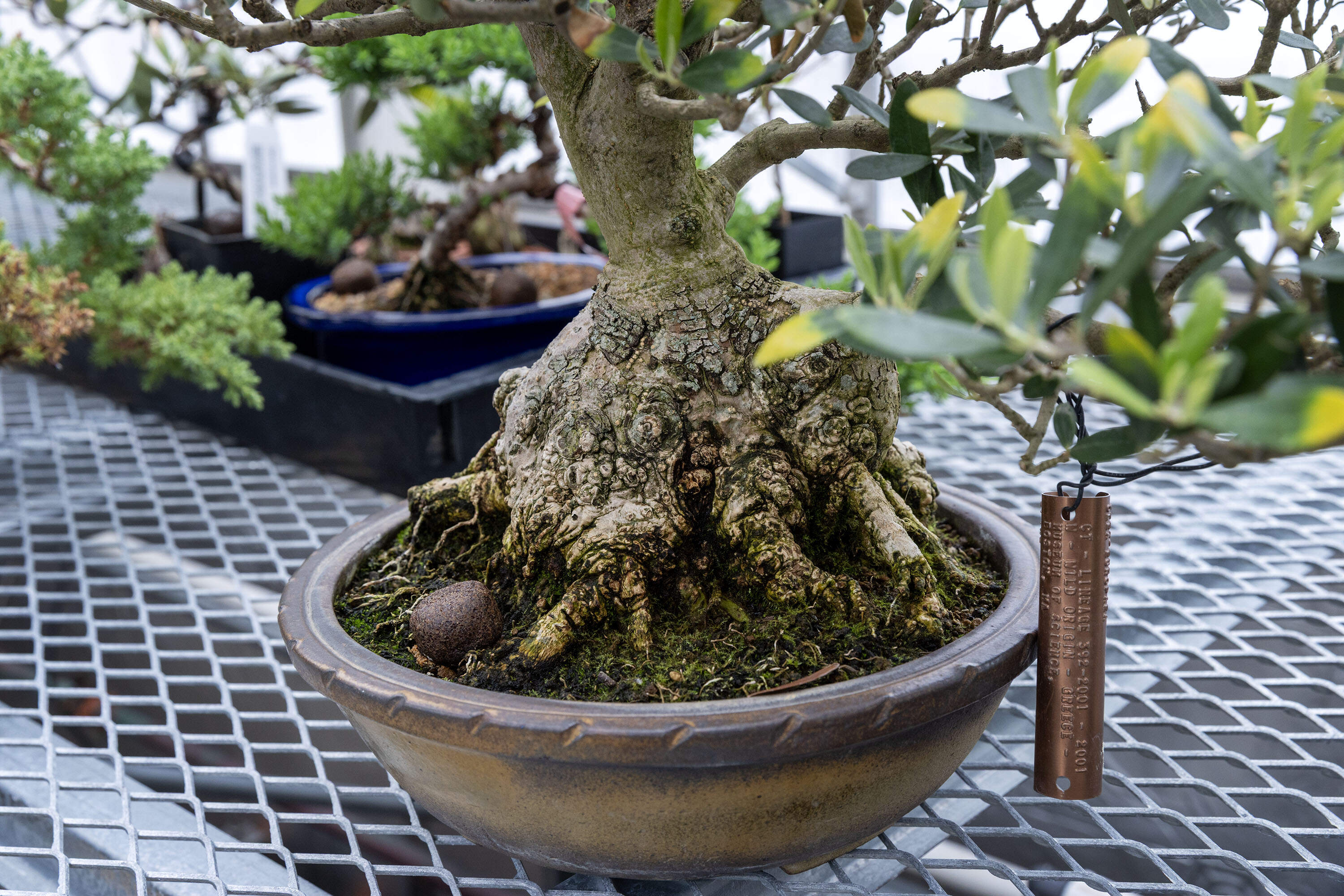
Balancing it all can be a little nerve-wracking, especially when working with such treasured trees. The youngest bonsai, only 25 years old, is a European olive tree propagated from a clipping intended for a crown for the winner of the 1996 Boston Marathon.
The oldest, a 289-year-old hinoki cypress, was inherited from Larz Anderson, who imported the tree from Japan in 1913. It’s also one of the oldest cultivated bonsai in North America, second only to three bonsai at the Brooklyn Botanic Garden in New York.
Copeland says his colleague, plant propagator Sarah Shank, has come up with the perfect term to summarize the pressure around keeping these delicate plants — and their legacies — alive.
“Bonsai-ety,” said Copeland. “Sort of extreme anxiety from just the daily calculations.”
But from “bonsai-ety” comes solutions. In the past, staff would transport the bonsai trees using a motorized forklift, which vibrated a bit too much for the trees’ liking.
“It would really shake these trees as we moved them from one location to another, which can be damaging and a little too aggressive for what we consider to be museum sculptures,” Copeland said.
So, a few years ago, they ditched the forklift in favor of a hydraulic lift.
“It's a manual cart that we can raise and lower with a pedal. If there's a speed bump in the parking lot, we can communicate, ‘let's slow down while we go over this bump,’” Copeland said. “[It] just took a lot of the anxiety out of moving one tree.”
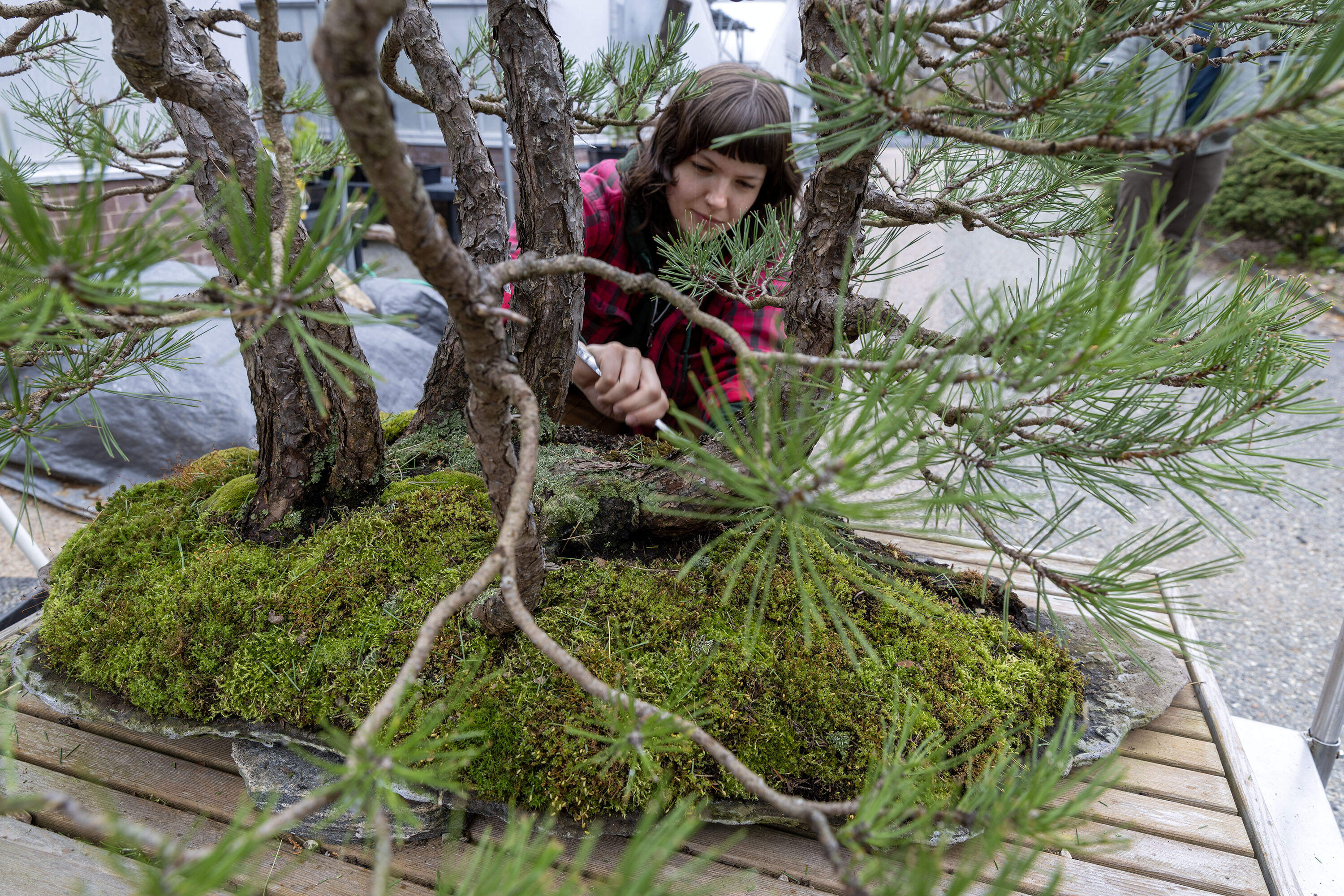
If you visit from now through November, you'll see 15 bonsai on the pavilion. About 30 different bonsai go on display over the course of a season, according to Copeland. But it’s never the same crew of trees; the staff likes to rotate the display every two to three weeks in line with seasonal interests. Springtime brings flowering miniatures, like cherry blossoms, lilacs and a wisteria vine tree (which is actually a bonsai clone of a larger tree in the Arboretum). In the summer, you’ll see more hinoki cypress and pine trees, which can better withstand the heat. Autumn brings gingko trees and Japanese maples to the forefront for their rich yellow and red colors.
After that, they’re gone again for another winter — but thanks to meticulous care, it may be centuries before they truly bid Boston farewell.
P.S. — The Massachusetts Horticultural Society’s “Tulip Mania” also began this week. There are more than 7,5000 tulips blooming now at their Garden at Elm Bank in Wellesley, and you can check them out (and pick-your-own) now through May 2. Click here for ticket details.