Support WBUR
How a fight over a parking spot landed an East Boston man in ICE custody
The saga started with the most Boston of disputes — a spat over a parking space.
Then came the police. Next the immigration agents. Then a long winter in ICE custody.
WBUR first reported last year on the arrest of Alejandro Orrego Agudelo outside the East Boston courthouse in November. He was facing criminal charges that he allegedly assaulted a Boston cop, and just when he thought he was free to go, immigration agents grabbed him. A dramatic struggle ensued in the alley behind the courthouse, and activists were there to film Orrego's screams for help.
U.S. Immigration and Customs Enforcement agents detained the 27-year-old Colombian for four months at the Plymouth County jail. Video of Orrego’s arrest put him at the center of a debate over ICE staking out Massachusetts courthouses, as lawmakers and immigrant advocates rallied behind him and criticized court officers for assisting in his capture.
East Boston state Rep. Adrian Madaro would call on ICE to consider releasing Orrego. State Sen. Lydia Edwards would pitch legislation to limit courthouse ICE arrests. And the governor ultimately would call for an end of civil immigration arrests at Massachusetts courts.
But back then, the details of Orrego’s story were still unclear. Why did this barista seeking asylum in the U.S. get into three fights in one day: First, a shouting match with a neighbor, then a scuffle with a police officer, then a showdown with federal agents?
Legal filings about that day by Boston police and ICE paint the Colombian as a man with a propensity for fighting cops. Orrego sees himself as the victim of two unjust arrests.
In late March, Orrego was scheduled to appear before an immigration judge to argue for his release. But with an all-out push by the Trump administration to deport thousands of immigrants — many without the kind of rap sheet Orrego racked up in a single day — his prospects appeared dim.
It would take a colossal effort to get him out of ICE custody.
The Boston arrest
ICE offered no details on why they targeted Orrego; the agency rarely does. But in law enforcement records and cellphone video reviewed by WBUR, plus interviews with lawyers and Orrego’s East Boston neighbors, a fuller picture emerges of what happened that day.
Just after 8 a.m. on Nov. 21, police responded to a call on Falcon Street in East Boston. According to a detailed police report, a neighbor claimed he’d moved Orrego’s moped to free up a parking space. In return, the neighbor reported, Orrego kicked his car and damaged the bumper.
The police report said Orrego began to "verbally attack and threaten" the neighbor in the street. The officer on scene said he tried to de-escalate tensions with the neighbor, who was also yelling at and threatening Orrego.
According to the report, when police asked Orrego to show his ID, he instead pulled out his cellphone and shoved it in the officer’s face. Then, he allegedly pushed the officer in the chest.
But Orrego said in a recent interview that the officer put hands on him first.
Boston police bodycam footage reviewed by WBUR appears to back up much of Orrego's version of events. He also managed to grab four seconds of video on his cellphone before things got physical:
“Sir, stay back,” Orrego asserts in the video.
“Get your ID!” the officer orders.
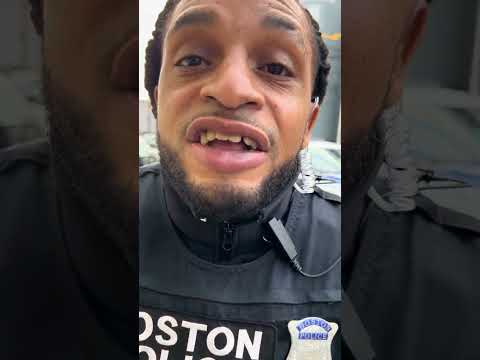
Orrego said that’s when the officer grabbed his phone.
“He threw it on the ground and pushed me against the wall,” Orrego later recounted in Spanish. “He started punching me and trying to grab my hands. I put my hands against the wall, and he threw me to the ground. He kept punching me and put his knee in my back.”
The officer wrote in the report that he struck Orrego twice in the ribs to subdue him.
“The suspect was instructed to give his hand, and he continued to resist and kick and flop in an attempt to gain his footing and run,” the report read.
Boston police charged Orrego with assault and battery on an officer — and more: resisting arrest, malicious destruction of property and disturbing the peace.
Months after the arrest on Falcon Street, one neighbor recalled she had seen Orrego handcuffed — he wasn’t resisting at that point, she said, adding he was shouting that he’d done nothing wrong. Another neighbor, longtime Eastie resident Ken DiMarco, saw the end of the arrest. He said he saw Orrego struggling to get away from the officer.
“He didn't appear to be cooperating,” DiMarco said. “He didn't appear to be very happy, let's put it that way.”
The man Orrego fought with over the parking spot answered his door for a reporter but declined to go on the record.
Boston police have ignored multiple requests for comment on the arrest.
The immigration arrest
Orrego’s day was off to a rough start — and his afternoon was about to get worse.
Around 4:30 p.m., he appeared at East Boston District Court to face the police charges. The judge released him on personal recognizance, but to Orrego's surprise, two Customs and Border Patrol agents were waiting for him in the court lockup. They cuffed his hands and feet, then walked him out the back of the courthouse.
Neighborhood activists — including some who monitor courthouses for ICE activity — gathered outside as agents struggled to get Orrego into a black SUV. Video from the observers shows him pinned to the ground, screaming out for help as a friend pleads with the agents to release him.
According to an ICE affidavit, Orrego resisted attempts to put him in the vehicle and repeatedly shouted, "I can't go back to Colombia.”
The chaos played out over half an hour, as two court officers and more immigration agents came to assist. ICE claimed Orrego bit one of the agents and attempted “some type of wrist lock” before they were able to control him.
All this from a man in shackles, who Boston police listed at 5' 5" and 130 pounds.
According to the ICE filing: Orrego would “remain in ICE custody pending hearing
before an immigration judge and appearance for assaulting two federal officers during an arrest.”
No federal charges for the alleged assault ever surfaced.
ICE did not respond to questions about Orrego. Neither the ICE filing nor the Boston police report mention any prior criminal history. Orrego's lawyer said his only previous charge was for driving without a license in Chelsea, a case that had been dismissed.
But his Boston police arrest, and a fingerprint query in a federal crime database, would have triggered a notification to agents in the area. He had entered the country illegally in 2022, and now he’d been charged with assaulting a police officer. Under the Laken Riley Act, signed early in Trump’s presidency, those two factors mandate an ICE detention, even without a criminal conviction.
A legal labyrinth
Like many ICE arrestees these days, Orrego was on a fast track for removal. ICE said it deported 10,000 people from New England last year, and once Orrego was in custody, he said, he came close to signing papers agreeing to his own removal. But Daniela Hargus, an immigration lawyer who happened to be monitoring the court proceedings when Orrego’s case came up, volunteered to represent him and push for his release.
“A lot of people turned down this case,” said Hargus, a staff attorney with the Political Asylum/Immigration Representation Project, a nonprofit in Boston.
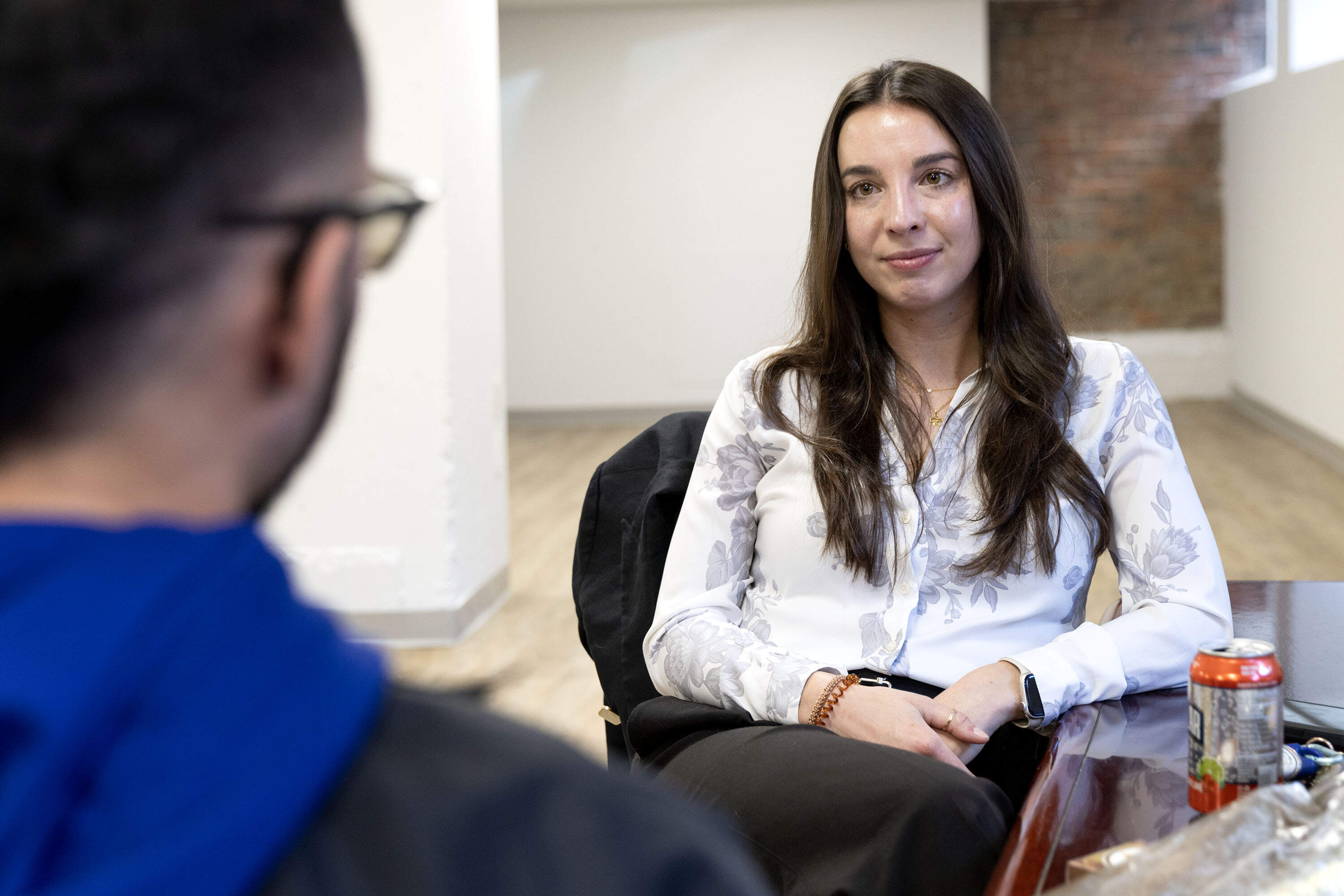
Hargus was one of four lawyers who joined the effort to defend Orrego. She said she likes challenging cases.
“This was a case that, at first glance, would look like a really easy case to lose,” she said. “And then actually digging into the facts, [I] felt like it could go one way or the other.”
Over the next four months, attorneys would press for Orrego’s release in a series of cases in three venues: state court in East Boston, federal district court in Boston and immigration court in Chelmsford.
“This was a case that, at first glance, would look like a really easy case to lose. And then actually digging into the facts, [I] felt like it could go one way or the other.”
Attorney Daniela Argus
ICE argued the allegations against Orrego meant he shouldn’t be released. And the administration has stopped allowing bond hearings in immigration court for detainees who entered the U.S. without inspection.
The only way for Orrego to be released was to get a federal judge to order an immigration judge to hold a bond hearing — a mechanism known as a habeas corpus petition. But the federal judge declined, citing the Boston police charges against Orrego.
To get the charges dropped, Hargus recruited Bob Cunha, a local criminal defense attorney. Cunha said he dug into Orrego's history for a defense, and would argue in the East Boston court that Orrego had been the victim of police abuses in Colombia.
“I explained that to the judge,” Cunha said. “There was an explanation, maybe not an excuse, but certainly an explanation, for why he would freak out when confronted by police.”
The argument landed. The East Boston judge, Connor Barusch, ordered Orrego to write an apology to the neighbor — and told him to avoid the parking space that had led to the whole dispute — and dismissed the case.
Lawyers for Orrego then returned to federal court and won the habeas ruling they needed. Days later, his bond hearing was scheduled at immigration court in Chelmsford.
For Hargus, the task was to convince the immigration judge that Orrego wasn’t a flight risk or a danger to the community.
“The charges that were listed sound scary,” she said, “and my hope was that when I portrayed the true facts of what happened, that it would humanize the situation.”
Hargus’ remarks seemed to resonate with the judge, and a local group posted Orrego’s $7,500 bond. He was now back to where he'd started: still without legal status in the country and pursuing an asylum petition in immigration court.
Free for now
After four months at the Plymouth County jail, Orrego was released. His first stop was Wendy’s for a Baconator cheeseburger. His next was his lawyer’s office near North Station. He arrived with flowers and chocolate — for Hargus and for the paralegal, Luke Morrell, who worked to get him out.
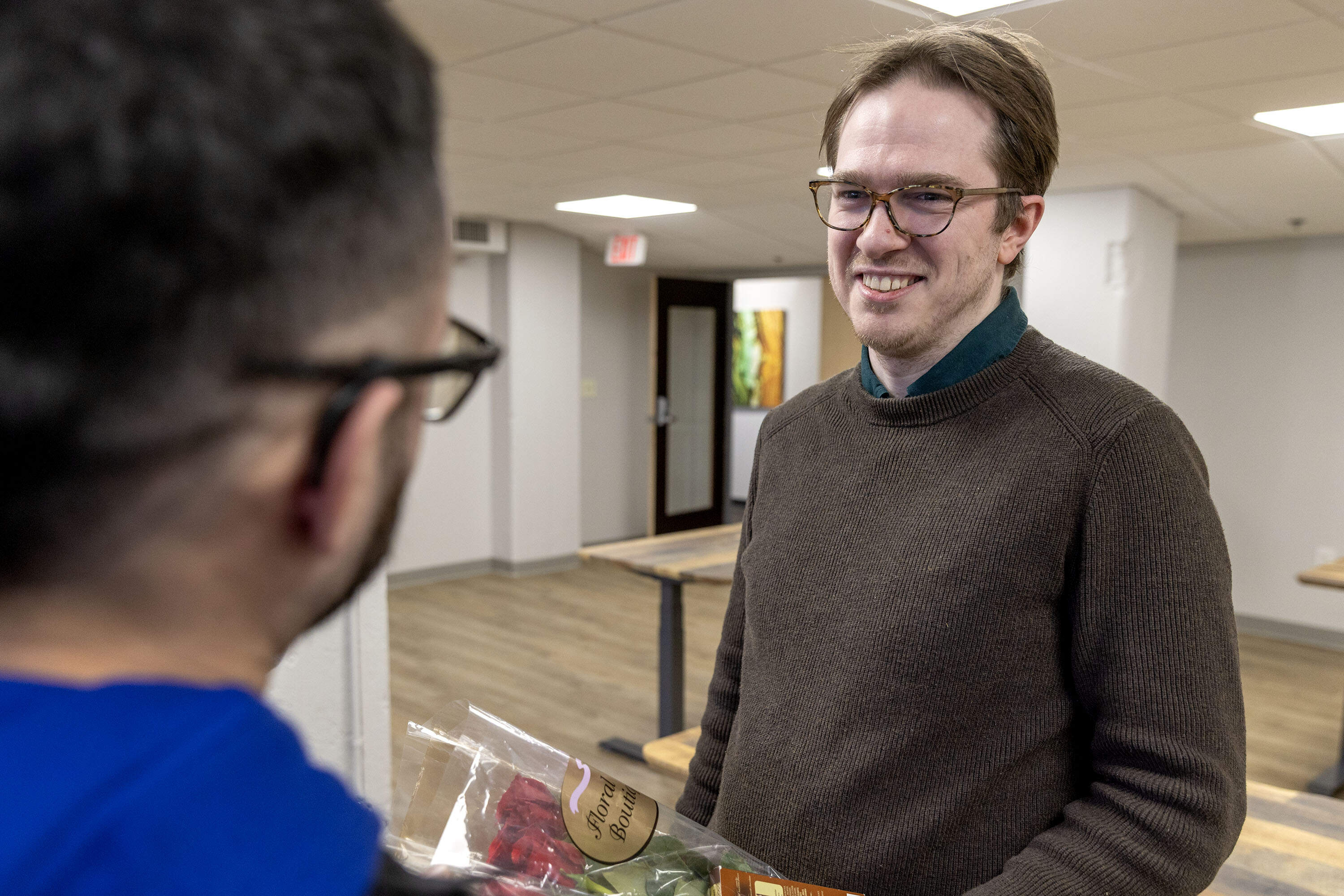
Orrego said being behind bars gave him time to reflect on everything that went down. He admitted he could have handled the ICE arrest differently. He said he panicked at the threat of being deported, stemming in part from his early life experiences.
“My mom was killed by a police officer when I was 6 years old” in Colombia, Orrego said. “Throughout my life, I've always had bad experiences with the police.”
That explanation might persuade some judges, but it doesn’t cut it for ICE supporters like former Bristol County Sheriff Tom Hodgson.
“He can't go through life [saying] 'Anytime I come across somebody in law enforcement, I'm not going to comply,' ” Hodgson said.
The former sheriff, who used to run an ICE detention facility in Dartmouth, said he’s shocked Orrego was released after the alleged assaults on officers.
"If you're going to commit some criminal acts, you should go to the top of the list to be deported,” he said.
Albert Orlowski, a former ICE deportation officer, downplayed the significance of resisting an immigration arrest — as long as the person wasn’t trying to injure the agents. He said resisting is not uncommon. But Orlowski said Orrego is lucky he was arrested in Massachusetts and not somewhere like Texas.
“They very rarely dismiss charges of assault and battery on police officers,” Orlowski said.
In his view, Orrego’s story shows that due process still exists for immigrants in the U.S., despite claims to the contrary.
“ He was arrested and detained, and then when the charges were dismissed, due process came in and he was eligible for bond,” Orlowski said. “That’s the system.”
But due process for Orrego depended on something many immigrants don’t get: free legal representation. Unlike in criminal matters, people in immigration court don’t have a right to a court-appointed attorney. And Orrego’s lawyer said the allegations regarding the ICE arrest made his case more complicated than others.
This November, Orrego has a date to return to immigration court to argue why he should be granted asylum to stay in the country. He’s claiming he was persecuted in Colombia for being gay. That could be an uphill battle; while discrimination persists in Colombia, the country is considered among the most gay-friendly countries in Latin America.
As for his scuffles with federal agents and Boston police, those could come back to haunt Orrego. The judge may consider his experience in Colombia, but will also have to examine Orrego's record in the United States.
The decision could hinge on whose narrative the judge finds more convincing.
Editor's note: This story has been updated to include details based on Boston police bodycam footage WBUR reviewed after publication.
This article was originally published on April 29, 2026.
This segment aired on April 29, 2026.