Support WBUR
An 'anchor' for Latino arts opens in Boston
When Vanessa Calderón-Rosado first arrived in Boston from Puerto Rico, she didn’t know a soul. At first, she was planning on moving back after completing her Ph.D. program. But then someone told her about Villa Victoria, the South End affordable housing community run by local nonprofit and community development corporation Inquilinos Boricuas en Acción.
“The first time I came to Villa Victoria, I walked down the streets, and the smell coming out of the apartments reminded me of home,” she said. “The smell of chuletas, the smell of fritos. It not only transported me home but grounded me here in Boston as a place in which I belonged.”
Now, almost 25 years later, Calderón-Rosado helms IBA as chief executive officer. It’s a big year for the organization as it opens La CASA, the Center for Arts, Self-determination, and Activism.
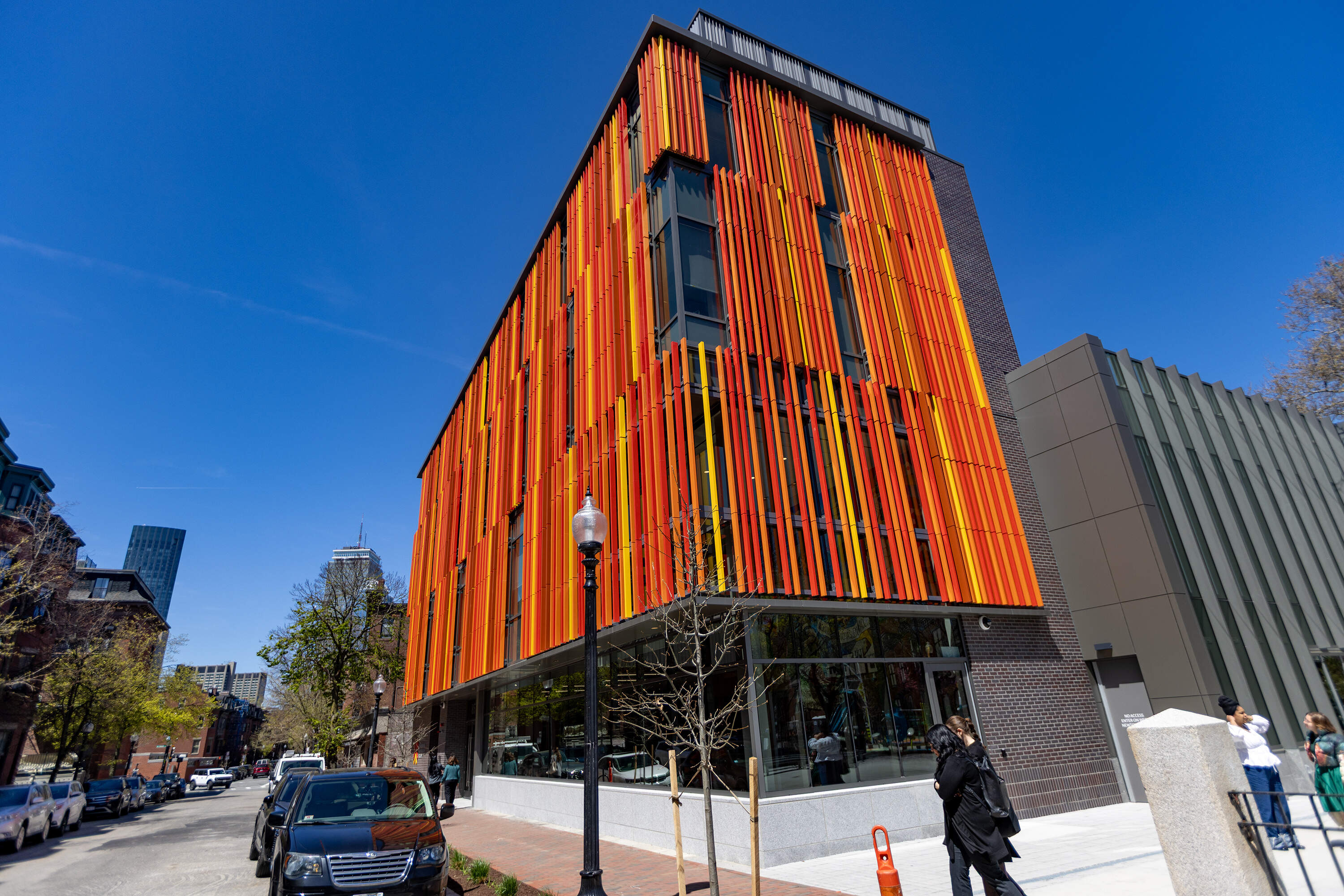
The nearly 26,500-square-foot space is the largest Latino arts center in New England. “La CASA represents a historic milestone of almost six decades of community work,” said Calderón-Rosado. “La CASA will be an anchor for Latino arts in the region, and it’ll allow us to grow and expand our programs.”
To understand La CASA and its place in the surrounding community, it’s pertinent to understand the history of IBA and Villa Victoria. Urban renewal efforts in Boston began in earnest in the 1950s when parcels of land were seized by the local government through eminent domain.
The racially and economically diverse South End became a target, and many low-income residents were displaced. The Puerto Rican community began organizing, and in 1968, successfully managed to halt the displacement of people in their area. These activists were the future founders of IBA.
“They created IBA to be the organization that would lead the revitalization of the neighborhood,” Calderón-Rosado said. “That would create affordable housing and programs to support the thriving Puerto Rican and diverse community of the South End.”
IBA went on to establish Villa Victoria, an affordable housing community now serving over 1,000 residents. The movement became a national and international example that showed the possibilities of inclusive community development. Calderón-Rosado points out that IBA provides more than just housing.
“IBA offers many wrap-around services that span from an early education program to resident services to financial empowerment.”
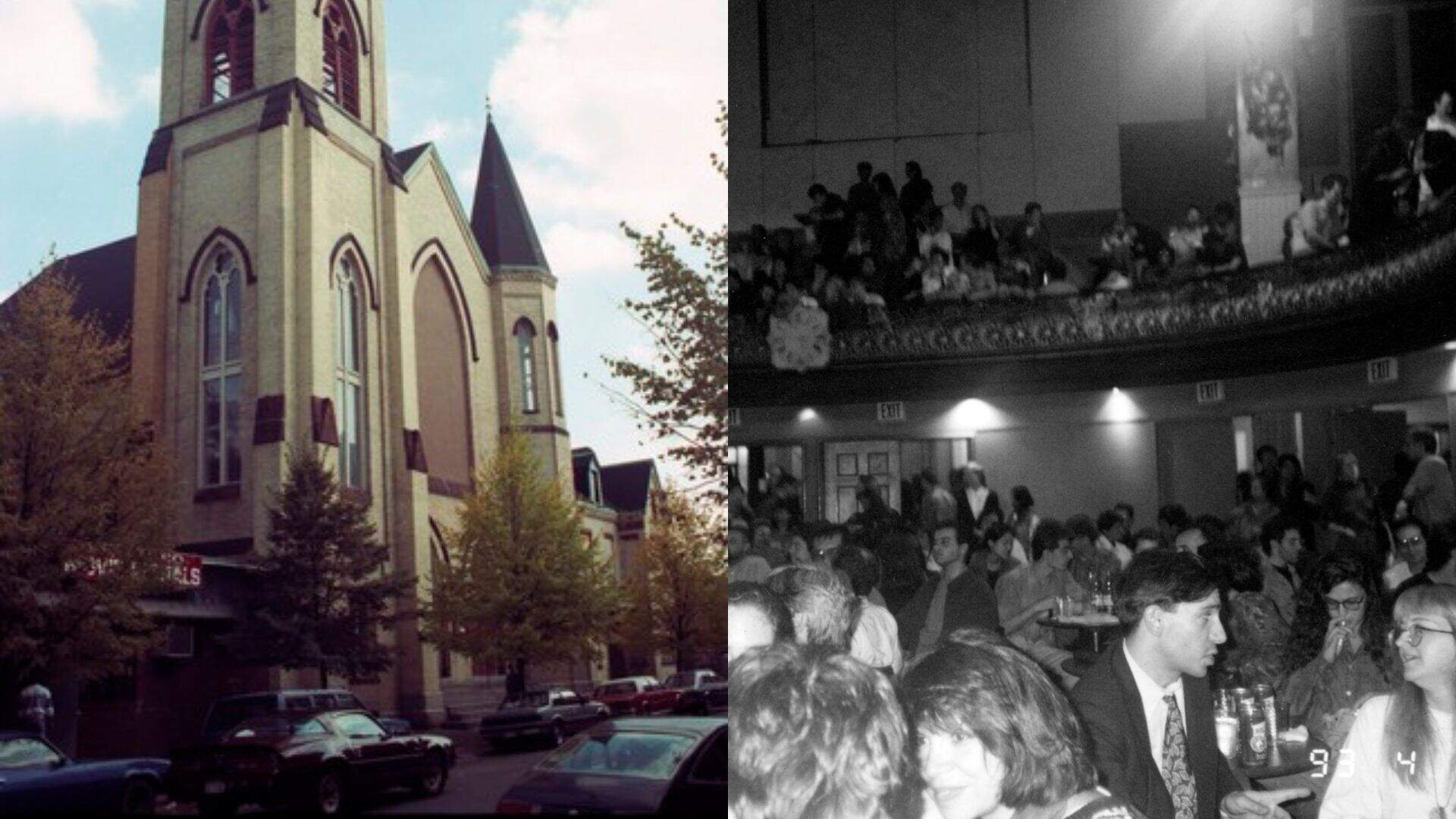
That also includes arts programming, which has long been a part of IBA's mission. The Villa Victoria Center for the Arts, formerly the Jorge Hernández Cultural Center, was established in 1986 at a 19th-century church on West Newton Street. This was where Calderón-Rosado attended some programs offered by IBA when she first moved to Boston.
“ IBA recognized the importance of place-based arts initiatives for healing, for community building, for vibrant and healthy communities," she said. "It’s one of the things that makes the IBA model for community development unique.”
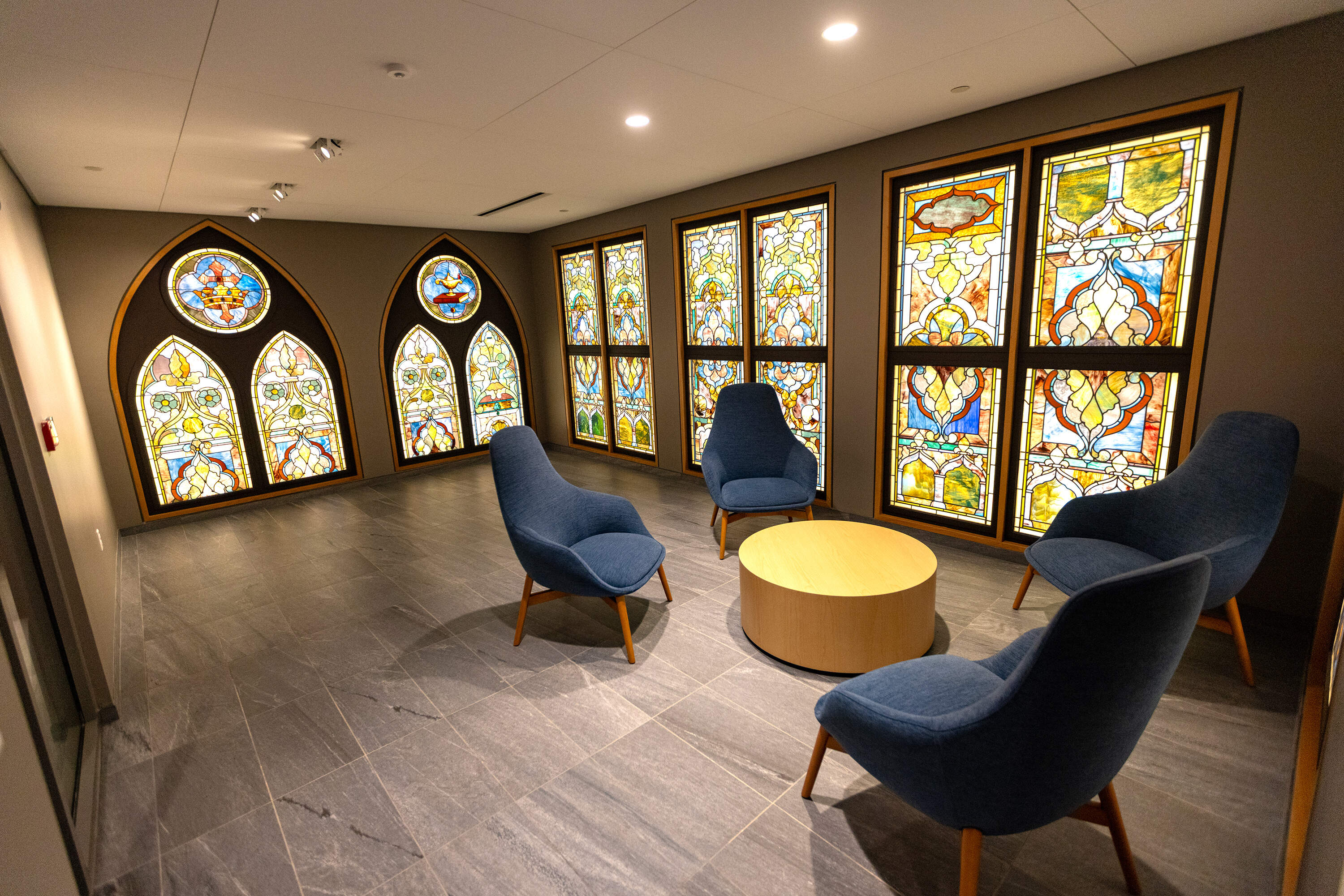
Eventually, the church fell into disrepair and it was demolished in 2020. This is the site where La CASA now stands. The new building incorporates elements of the old church, like stained-glass windows and granite. The welcoming, terracotta façade is a nod to the bright, vivid exteriors of homes in the Caribbean.
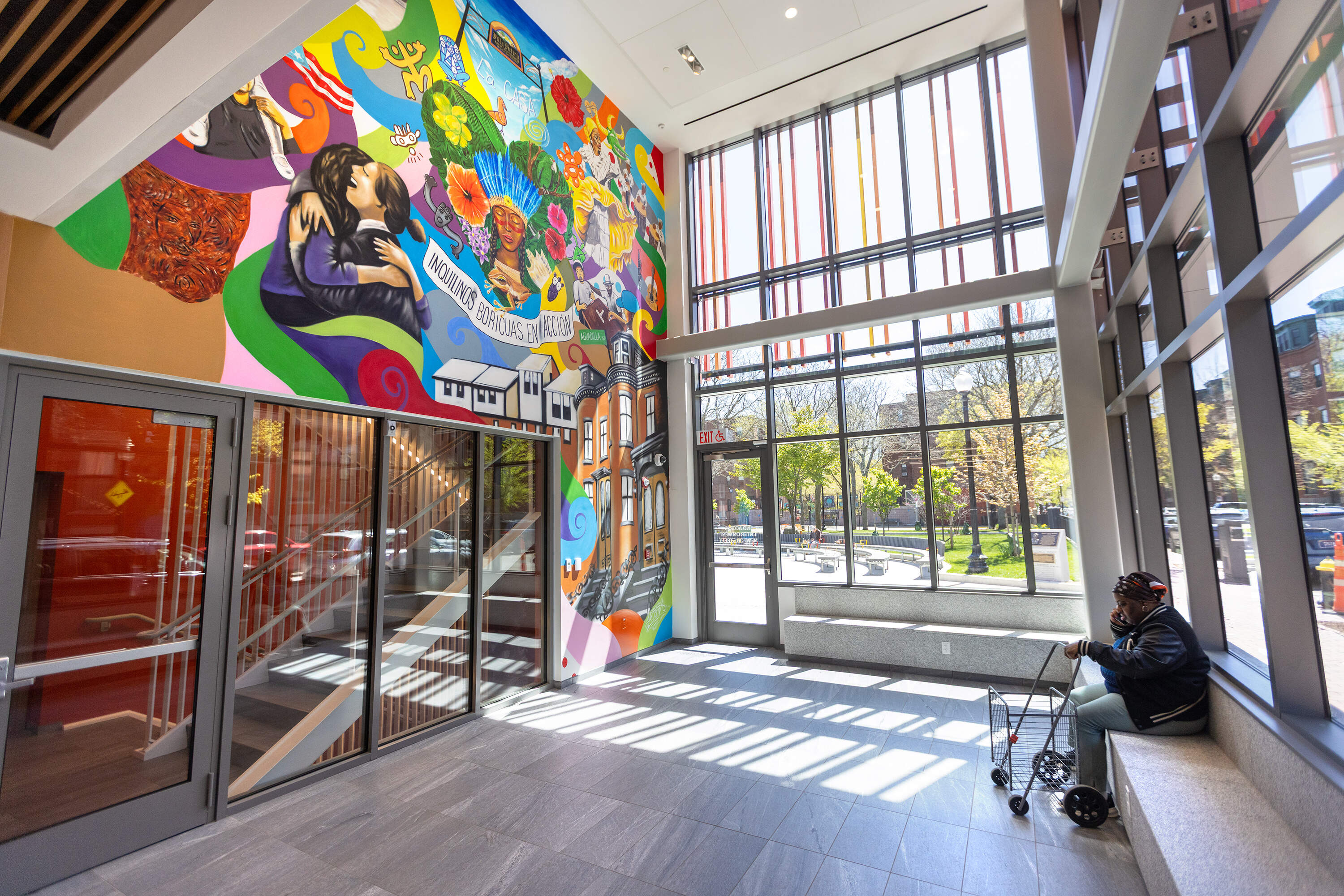
La CASA will house many of IBA’s services, including things like property management and youth programming. “All of the people pretty much surrounding La CASA are our residents, so this is really meant to be a hub for our community,” said Calderón-Rosado.
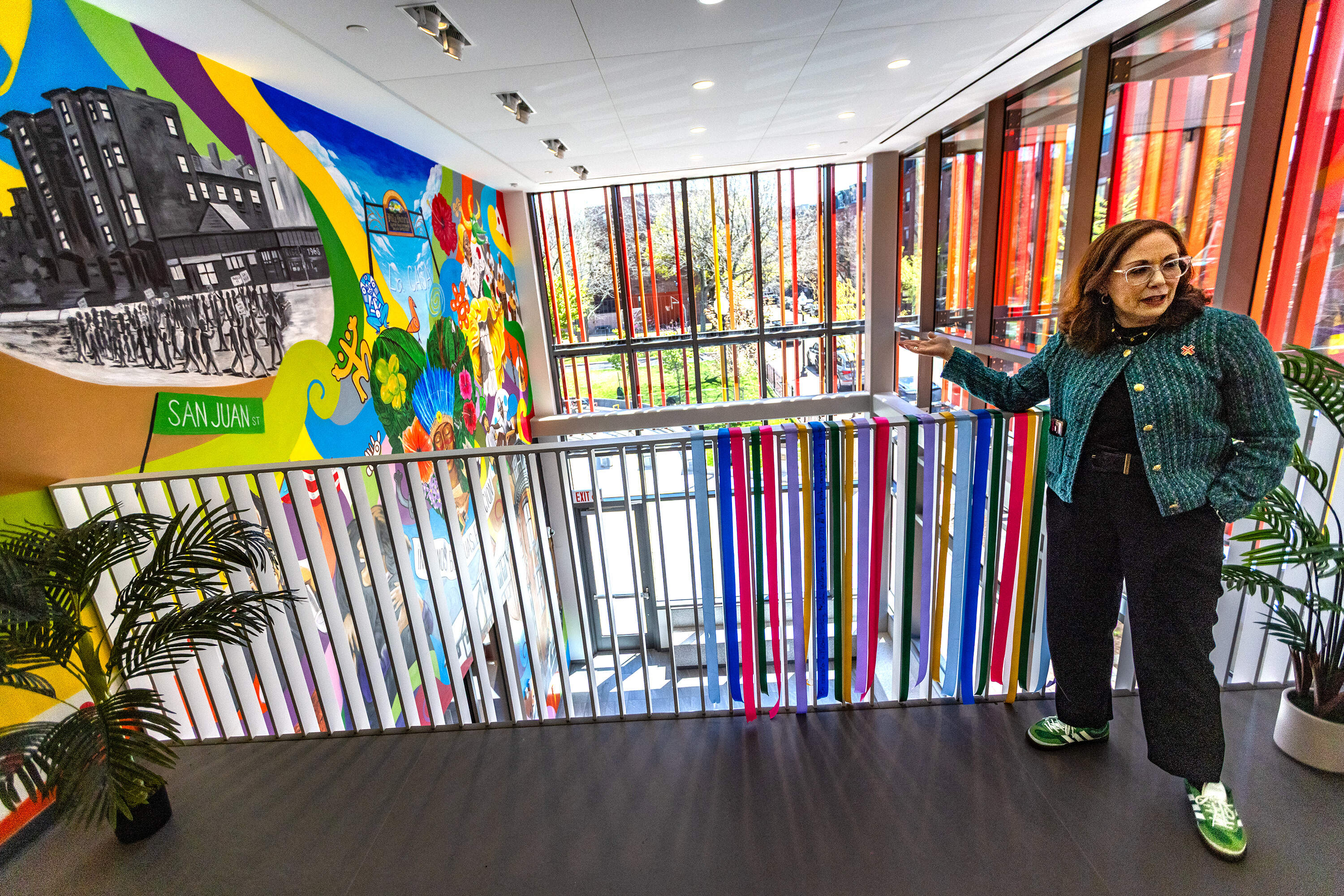
A second-floor art gallery acts as a flexible space for workshops and gatherings. Currently, an exhibit is up showcasing large-scale painted works by Puerto Rican artist Antonio Martorell. From the gallery, you can see the bright mural in the building’s entryway, painted by Boston-based Puerto Rican artist Alvin Colon.
Calderón-Rosado is especially excited for La CASA's Jean and Tom Yawkey Hall. It’s a large theater with state-of-the-art lighting, equipment and a retractable seating system. It can accommodate nearly 400 people. One wall is made of glass and can open up to an outdoor amphitheater.
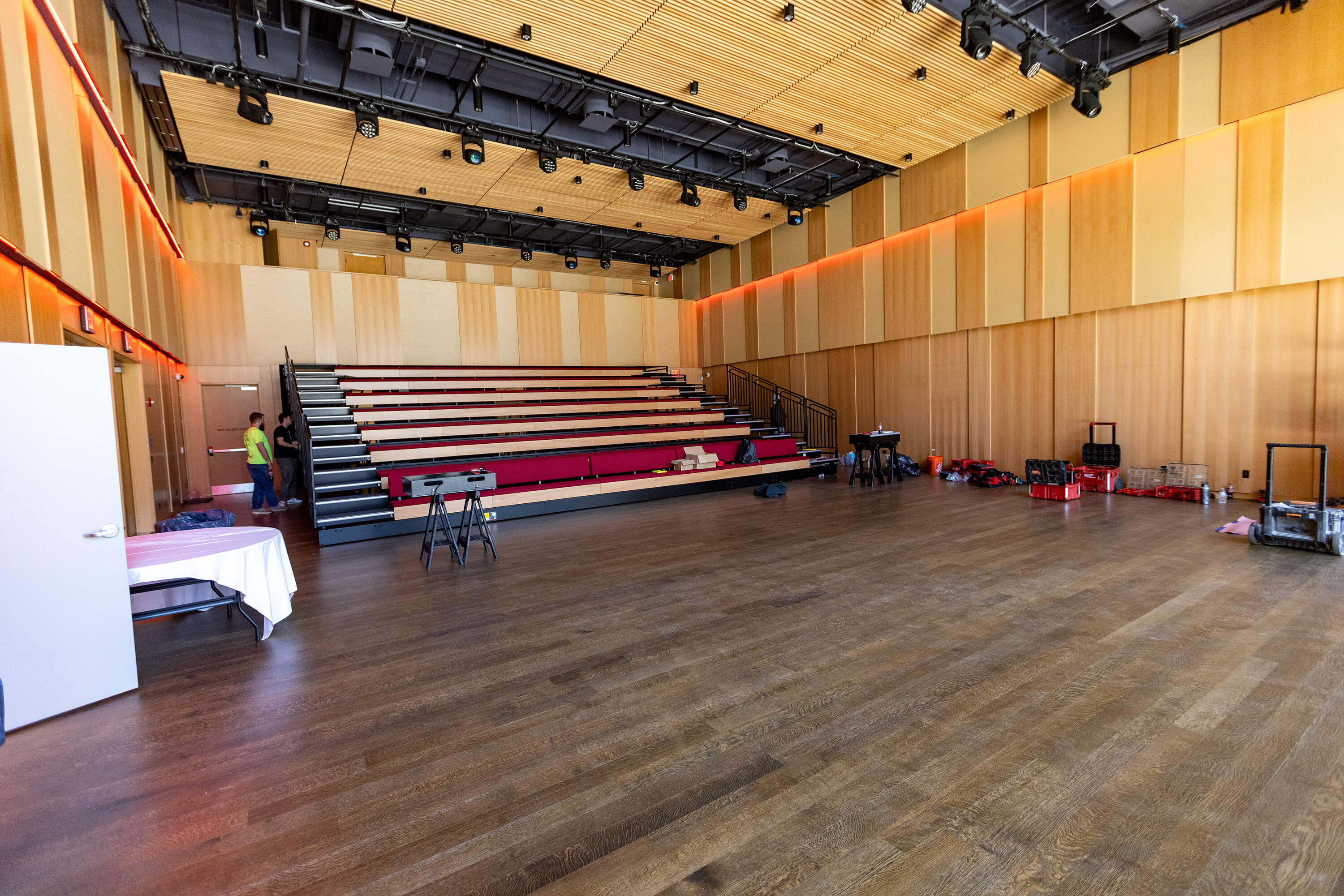
“ It was truly designed to be flexible, so we could host as many events in different art mediums as possible,” Calderón-Rosado said. “This will not only be an art space but a community space and a space for artists.”
This point is emphasized by a playground and basketball court right by the outdoor amphitheater. IBA talked with the city to get the playground redone and updated. The hope is that community members feel that La CASA is a space that invites them in.
“The community had this vision of a designated art space in the '80s,” said Calderón-Rosado. “ La CASA is about showing how community can be built through the arts. We hope people will come and feel joy in community as we celebrate history and culture.”