Support WBUR
Advocates press lawmakers to adjust social media bill over data privacy concerns, impacts on LGBTQ youth
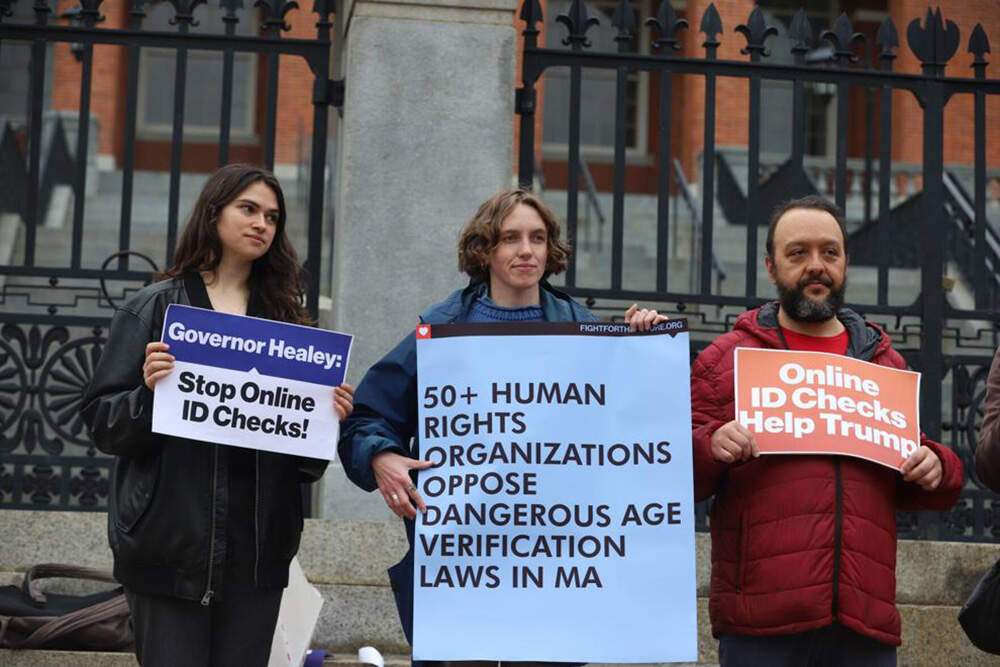
Debate over social media restrictions continues to swamp Beacon Hill as top Democrats and digital and LGBTQ+ advocacy groups stake out their positions on regulating children's use of the platforms.
Citing concerns about data privacy and impacts on LGBTQ+ youth, advocates gathered Wednesday to oppose House social media legislation and elevate ideas of their own, calling on lawmakers to work with them to adjust their approach.
The House, in the meantime, plans to separately take up a larger data privacy bill, House Speaker Ron Mariano's office told the State House News Service, as the debate plays out over the social media regulation bill.
Digital advocacy group Fight for the Future Executive Director Evan Greer said the coalition of more than 50 organizations agrees with the instincts of lawmakers that social media companies need to be regulated and are harming children, but that it opposes the way Beacon Hill is going about it.
"Experts have been very clear, there is no safe way for social media companies to verify the age of every user online," Greer said at a press conference on the State House steps. "That is why these types of proposals have been struck down in courts and revised in other states across the country."
The House in April passed a bill (H 5366) by a 129-25 vote that bans student cellphone use in schools and bans social media use for kids under the age of 14, adding social media regulations onto a Senate cellphone ban bill (S 2581) passed in July. Democratic Reps. Erika Uyterhoeven and Mike Connolly voted against the bill, along with the majority of the Republican caucus.
Greer and others said that by banning youth from platforms, the House bill would take resources away from LGBTQ+ youth, who he said often find safe spaces and community online.
"We understand here in Massachusetts, there are certain things we can't control," Connolly said Wednesday alongside activists from MassEquality, Protect Trans Futures, Act on Mass and others. "There are certain things on the federal level we can't control. So in this moment, when our trans activists and advocates are speaking up and letting us know that there's concern, it is on us as legislators to stop and listen."
MassEquality Executive Director Tanya Neslusan said, "We cannot afford to have young people lose their lifeline and their sense of community and connection."
"Boston is very fortunate in that we have support groups and clubs for LGBTQ youth to be a part of so that they feel less isolated and less alone. But there are many parts of the state where your only lifeline, your only chance of finding community, of finding resources, is over the internet," Neslusan continued.
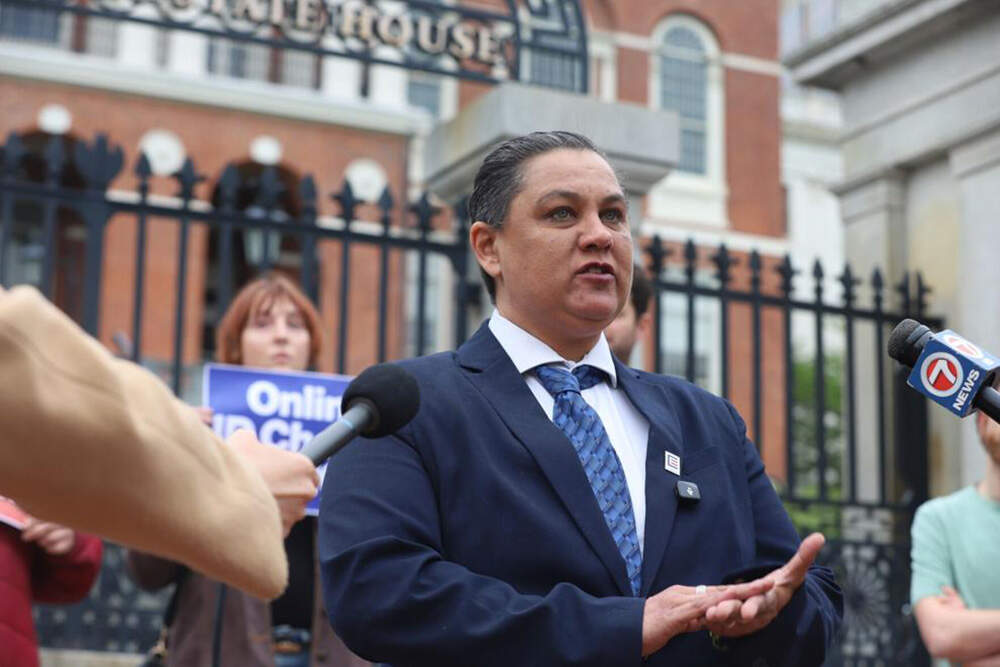
Advocates also said data privacy issues are at play within the bill's age verification requirements, which they said would require all users to upload some form of identification — like a government ID or birth certificates — to platforms or use facial recognition technology to prove their age. Social media platforms would be required to "implement an age assurance or verification system to determine whether a current or prospective user on the social media platform meets the age requirement," according to the House bill.
They also argued that the broad definition of "social media" in the bill would — likely unintentionally — take away resources like Wikipedia.
House Ways and Means Chair Aaron Michlewitz in an April statement emphasized that the House bill passed with bipartisan support "including unanimous support from Members of the LGBTQ+ Legislative Caucus." He noted an adopted amendment prohibits social media platforms from sharing information about a minor's LGBTQ+ status or other protected status.
"The bill doesn’t mandate IDs be sent to social media platforms, but rather charges the Attorney General in determining how age is verified without violating anyone’s constitutional rights," Michlewitz said.
Attorney General Andrea Campbell said Tuesday that she sees the issues around minors and technology as among the most pressing matters in the state, and that she's "confident that even as we engage the ACLU and other groups that have feedback, we will take all of that feedback and ultimately get done legislation that will hold tech companies accountable and also ban cellphones in schools across the commonwealth."
Across the country, the industry has challenged social media age verification laws often on First Amendment grounds. Gov. Maura Healey has proposed her own policy that would require social media platforms to have a "default" setting that disables addictive practices and imposes a two-hour time limit on users under the age of 18.
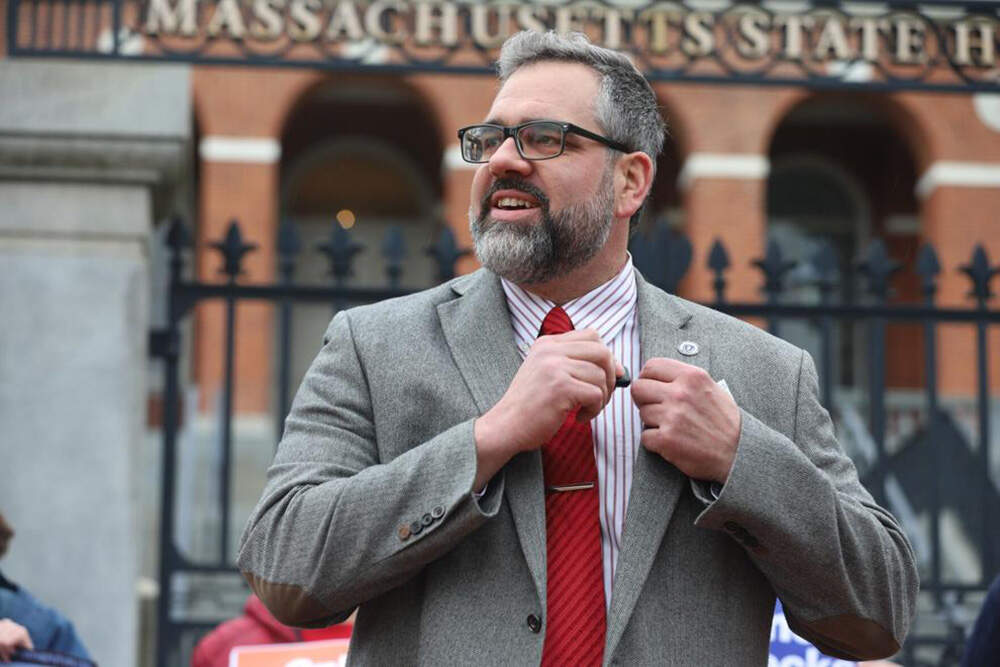
Connolly on Wednesday honed in on the data privacy issues he sees within the bill, tying it to the anticipation of a larger data privacy bill expected to pop in the House. The Senate last September unanimously passed a data privacy bill (S 2619).
"The good news is we do have a real commitment from House leaders to address data privacy legislation," the Cambridge Democrat said.
Mariano is committed to passing data privacy legislation this session, according to his office. In his April statement, Michlewitz said the House "looks forward to taking up a broader data privacy bill in the coming months after the House passes its budget."
The House passed its fiscal 2027 budget on April 29. A bill (H 4746) related to data privacy has been in Ways and Means since November.
"I think we're here today not in the spirit of condemning legislation that may have happened, but to encourage our legislative leaders to work in partnership with these advocates and to work in partnership with everyone," Connolly said. When he was out collecting signatures after the social media bill was approved, he "was really struck by how many people in Cambridge had already heard about this bill and were deeply concerned."
Fight for the Future has proposed alternative legislation that would require tech companies to put default privacy and safety protections in place for all users, regardless of age.
"There's no reason any adult in Massachusetts needs autoplay and infinite scroll turned on when they first create a social media account," Greer said, adding the proposal eliminates "the need for them to differentiate who's a minor and who's not."
Senate President Karen Spilka said Tuesday that the Senate "still has some work to do" when it comes to kids' use of social media, posing a question: "What happens to something when you restrict it, especially for kids? It often becomes even more desirable."
Greer said Spilka's commentary suggests the Senate is "saying that they're hearing a lot of concern about this from the public, and that the Senate is unlikely to just rubber stamp what the House did."
The Boston City Council on Wednesday adopted a Councilor Henry Santana resolution "opposing legislation that would censor or restrict lifesaving online resources" for LGBTQ+ and other marginalized communities, according to his office. The resolution opposes "any legislation requiring invasive age verification for Internet access" and states that "online spaces and resources are essential lifelines for queer and trans youth, survivors of abuse, people seeking reproductive health care, and other vulnerable individuals."
The Senate appointed Sens. Brendan Crighton, Michael Rodrigues and Peter Durant to a cellphone bill conference committee on May 7.
Should Massachusetts pass a social media law, Rep. Ken Gordon said on the House floor in April that it would be the 18th state to place a ban or restriction on children's access to the platforms.