Support WBUR
Boston budget poses a test of powers between Mayor Wu and city councilors
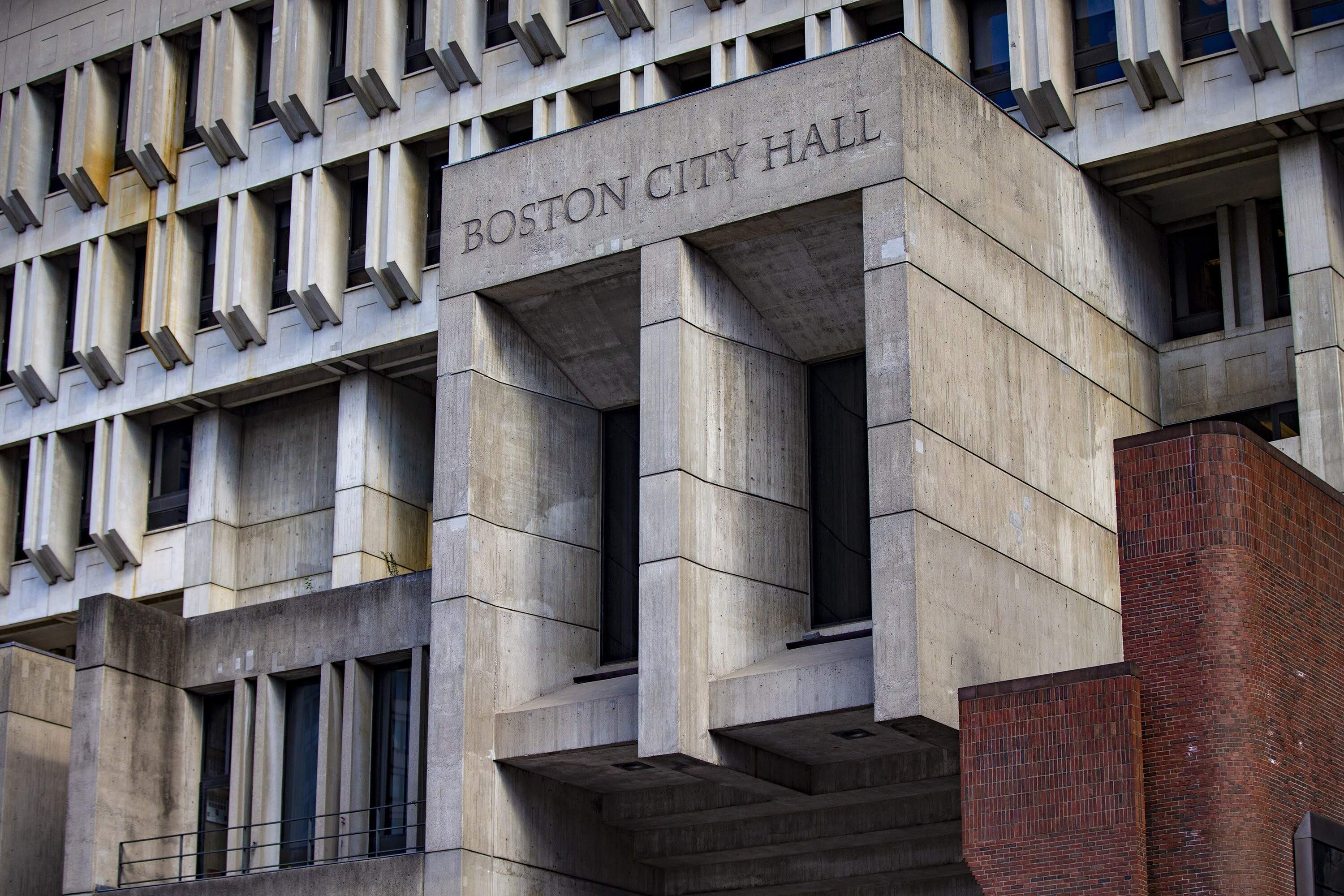
With less than a month before the deadline for voting on Mayor Michelle Wu’s FY27 budget plan, Boston city councilors are feeling pressured from multiple sides.
On one side, there’s a May 14 letter from the mayor’s legal advisors reminding them about their limited powers to make spending changes. On the other, there was a town meeting the same evening in Roxbury, where some councilors heard pleas to reverse cuts that were proposed last month in Wu’s tightest budget plan since she became mayor in 2021.
The meeting only added to concerns about the upcoming budget plan that were being aired at council hearings and rallies outside City Hall. The cuts ranged from youth jobs, food relief, and programs in the Boston Public Schools to some of the line items for the police and fire departments.
“This year, you see so many communities and advocacy groups coming together around the budget because a lot of them feel that everyone’s losing something,” said District 4 Councilor Brian Worrell, who represents Dorchester and Mattapan. “So you see a lot more people being vocal and a lot more advocacy groups coming together around shared values and shared common goals. And that is something that I haven’t seen in the past year.”
Even when the mayor filed the budget plan, she acknowledged the city was up against a fiscal “perfect storm,” caused by rising expenses and a fall-off in outside funding, and coinciding with a drop in property tax revenue growth from new development. Even before the plan was filed, city officials signaled a budget deficit for FY26 that they would later try to adjust with a $47.1 million drawdown from reserve funds.
Council tries to flex its power
Adding to the fiscal turbulence is the shift in the balance of budget control by different branches of city government, thanks to a charter amendment approved by Boston voters in 2021. As a result of the amendment, the council still cannot increase the mayor’s proposed spending total, though it can increase spending on some line items by cutting back on others. Previously, councilors could press for changes by rejecting the mayor’s original budget, prompting the mayor to file a revised plan that would be approved by June 30, possibly with a higher updated figure for total spending.
When the city council started using its new budget powers four years ago, it tried to change the mayor’s plan by voting to cut $13 million from the Boston Police Department budget. A year later, the council voted to cut the BPD outlay by $31 million, as part of $53 million in amendments. In both years, Wu vetoed most of the changes.
Two years ago, with the FY25 budget, the council approved $15.3 million in amendments, most of which were blocked by the mayor. Laborious attempts at overrides—requiring two-thirds of the council—were mostly unsuccessful. Last year, for the FY26 budget, most of the council’s amendments were approved by Wu, but they added up to only $9 million—less than one-fifth of one percent of the $4.64 billion total.
According to the Boston Policy Institute, the earlier option for the council usually resulted in a larger percentage of the budget being changed. In comments May 16, the BPI observed that “Mayor Wu has seen more than 99% of every budget she has proposed in April become law in June, which is very different from previous mayors. Under the old system, mayors routinely rewrote several percentage points worth of taxing and spending from the 'April budget' for the resubmitted June budget.”
When asked about the different ways for the council to flex budget power, Worrell said there was “room for reform” in the newer option of amendments. “So we need to look back and review the process,” he said, “to see what more reform can be created in order to make sure that when residents are coming to the council that we have the ability to address their concerns.”
Over the last two years, Worrell has chaired the council’s main budget panel, the Committee on Ways and Means. He stopped short of saying whether this year’s council should make changes through piecemeal amendments or revert to a blanket rejection.
“I would say that we should always put ourselves in the best position to fact-checking and double-checking and cross-checking all the information that is being provided to us,” he said.
According to a memo to councilors from the city’s corporation counsel, Michael Firestone, what was typical before 2022 is no guarantee. If the council were to reject the mayor’s original budget plan between June 3 and 10, he warned, the mayor could file a revised budget when it would be too late for the council to take “definitive action,” which would allow her budget plan to take effect. Instead of applying more leverage, the council, according to Firestone, would effectively forfeit its ability to make changes through piecemeal amendments.
“The way I read the charter,” Worrell countered, “is that any time the mayor submits a budget, we then gain the power to approve, reject, or amend. I haven’t seen anything in the charter that states otherwise, that we lose power after we reject.”
Dipping into reserves
On May 18, the mayor sent the council a supplemental FY26 funding request for $47.1 million to cover abnormally high costs for the past winter’s snow removal. “This year’s storm activity,” the mayor told councilors, “is precisely the kind of unforeseen, non-recurring cost that reserves exist to address.” The mayor also filed a request for $22.9 million to cover BPS expenses for health insurance and utilities. Her letter said both kinds of spending “have seen unusual and unexpected growth this year.”
Citing cost-containment measures, Wu characterized the spending as “one-time in nature,” for “non-recurring costs.” She noted that her administration “has taken proactive steps to manage these areas of spending in our proposed FY27 budget and beyond to ensure that BPS can continue to invest in core academic priorities—even amid a challenging budgetary environment.”
But the combined $70 million request would be the largest drawdown from reserve funds since the pandemic, except for money two years ago to support a “housing accelerator fund,” which could also expand the city’s tax base.
The mayor’s spending distinction was contested by the BPI’s executive director, Gregory Maynard, who noted that past deficits had been covered without a supplemental appropriation, with enough money left over in FY25 for a surplus of $17 million. “What happened in FY25,” he maintained, “was not a one-time occurrence: it is how Boston pays the overspending on police overtime and snow removal under Mayor Wu, and before her under Mayor Walsh. That this is not happening in FY26 signals that there are serious problems with Boston’s budget.”
Not covered by the supplemental appropriation is the more perennial deficit for public safety, including police overtime, which was tallied in February at $48.7 million. The mayor’s administration has indicated that the shortfall could be made up by “additional expenditure controls and other management of the budget.”
In a May 18 memo to his colleagues, the current Ways and Means chair, District 6 Councilor Ben Weber, representing Jamaica Plain and West Roxbury, outlined a combination of budget readjustments that, he ventured, “would create a fund of roughly $17 million for amendments” without impacting services. “The mayor has stated that a new budget would be the same size or smaller,” he reasoned. “If the budget is going to remain the same size, a vote to reject the budget is putting off the hard work of finding the funding for the programs we want to support.”
The very next day, at a Public Safety Committee hearing on police overtime, and one day after the supplemental spending request, Weber straddled the distinction between recurring and non-recurring outlays.
“I think, as we saw yesterday, we have a $70 million deficit in our budget,” he observed. “A lot of that is because of increased costs and maybe all that $70 million could be attributed to spending over budget on police overtime.”
Councilors brought up multiple factors in the spending, from BPD staffing levels to shift structures, even the possibility that mandatory overtime increased the number of voluntary retirements. Weber joined councilors in noting the toll on officers’ families. “But, at the same time” he added, “we have overtime spending here in the city that’s having real impacts on almost every other aspect of the services we provide.”
'Things are starting to get a little bit tighter'
The ability to make changes in the budget plan also hinges on the city’s expected revenue. Earlier projections can be changed by revenue collections or the final figures on discretionary aid to cities and towns in the state budget. As of Monday, the Wu administration said it was above revenue projections for FY26, but that “things are starting to get a little bit tighter,” with “more “softening” of revenue sources. The administration also acknowledged its own projection of “very modest” deficits—of less than 1%—in fiscal years 2028 and 2029.
In her May 14 letter to councilors, Wu was even less encouraging about prospects for a higher spending total in FY27.
“The state aid revenue projections included in the proposed FY27 operating budget were based on figures from the governor’s budget proposal,” she told them. “Since then, the House and Senate have each advanced state budget proposals with lower unrestricted general government aid figures, which would result in even less revenue for the city than previously anticipated, and any resubmission may even include a decrease in spending levels compared to the current FY27 proposed budget. Increasing the bottom line of the budget by either inflating revenue projections or drawing from the city’s reserves would be fiscally irresponsible.”
In reaction to the supplemental spending requests, District 2 Councilor Ed Flynn, representing South Boston, the South End and Chinatown, reiterated his call for tighter spending and the pursuit of other revenue sources.
“With the City of Boston over 70% dependent on property taxes, over 50% of our land belonging to large nonprofits or nontaxable, and Boston now having to dip into reserves to cover a $70 million deficit after two straight years of property tax increases on residents over 10%,” Flynn said in a May 19 statement posted on X, “it is long past time that the Boston exercise fiscal discipline, fiscal responsibility, accountability, and transparency.”
In recent years, declining values for commercial property, especially in downtown Boston, have shifted a larger share of the property tax burden onto residential owners. The shift could also be affected by a legal challenge that alleges Boston’s assessing practices have been unfairly skewed against commercial property owners.
As the councilors consider ways to offset funding cuts, they have also floated their own ideas for cuts. In his social media feed over the past week, Flynn has called for multiple cuts, along with a hold on pay raises for the city’s elected officials.
Four days after the town hall in Roxbury, Worrell drew attention to the effect of budget cuts already planned by the mayor.
“I think sometimes that the numbers on the page might take away from the impact that’s really happening on the ground,” he said, “and what will continue to unravel on the ground in a real way that will pit systems and communities against one another in ways that we do not have to.”