Support WBUR
Students sue Mass. education department, alleging school segregation across district lines
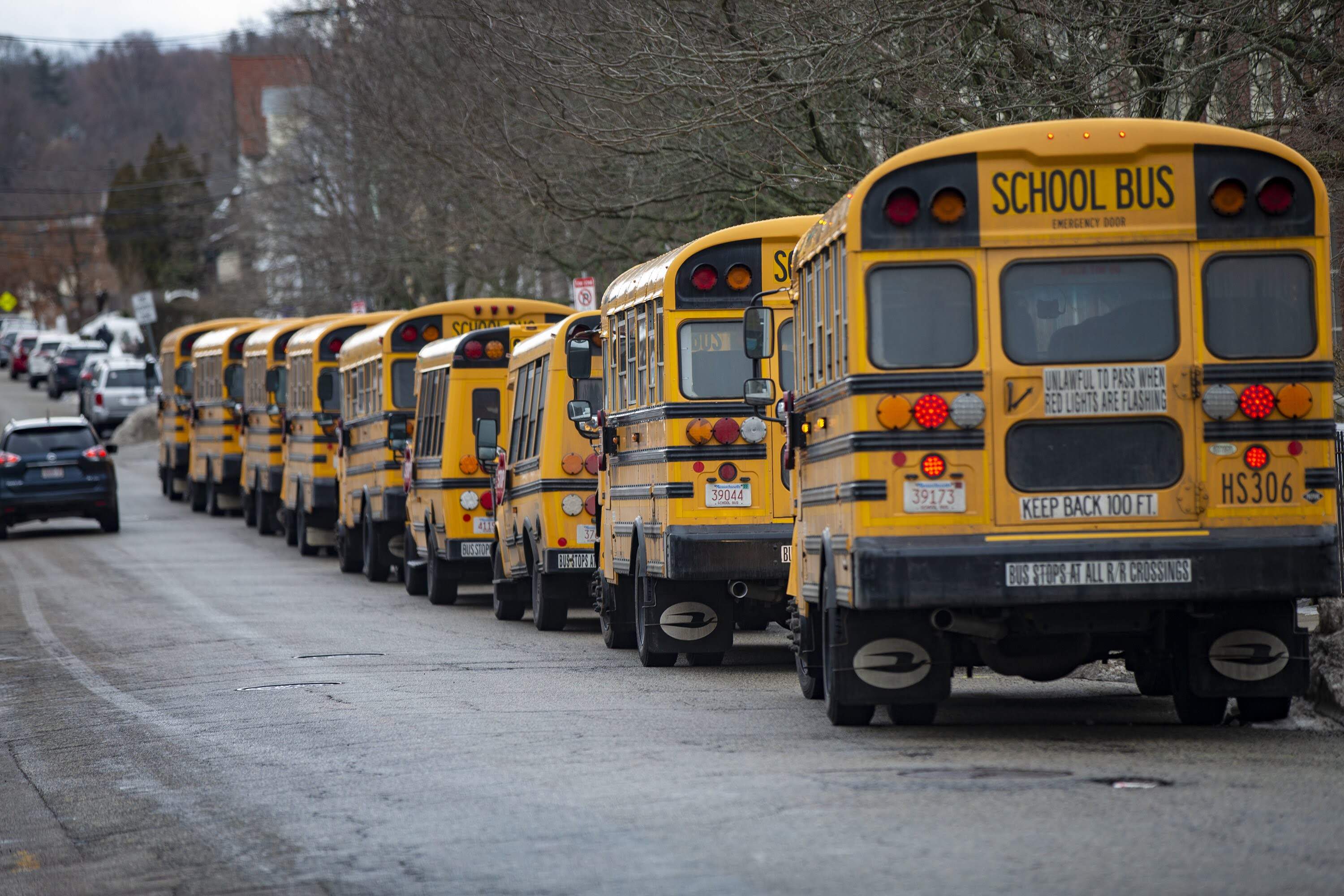
A coalition of public school students and community organizations filed a lawsuit Wednesday alleging Massachusetts' education system violates the rights of students by maintaining racially segregated school districts.
Among the plaintiffs are nine Black and Latino students who argue they attend school in segregated districts across the state, according to the lawsuit filed in Suffolk Superior Court. These include Boston and the "Gateway Cities" of Lawrence, Brockton, Springfield, Holyoke, Lynn and Worcester.
The students claim the state is violating their right to an adequate education under constitutional law by denying them equal education across school districts.
“Massachusetts has some of the most segregated schools by race and income in the entire country and the problem is not getting better,” said Ary Amerikaner, executive director of Brown’s Promise, co-counsel in the case.
The Department of Elementary and Secondary Education did not directly respond to the claims in the lawsuit.
“Massachusetts leads the nation in student achievement,” said Jacqueline Reis, a spokeswoman for the department, in a statement. “And we are committed to building on this progress to strengthen our education system for every student in our state.”
Nearly all of the racial segregation in the state’s schools today occurs between districts rather than within them, according to the complaint. Lawyers argue this makes segregation a problem that districts cannot solve alone, and asks the state to adopt a comprehensive voluntary plan to integrate schools.
With few exceptions, students only have the right to attend school in the district where they live, and segregated housing patterns across the state concentrate Black and Latino students in high-poverty districts.
It's not uncommon for two segregated schools with vastly different resources to sit in close proximity to each other, according to a 2024 report from the state’s Racial Imbalance Advisory Council. These schools often produce vastly different academic outcomes, but district lines determine which one a student can attend.
“The system isn’t preparing any of our kids for the real world if it’s not preparing them to learn, play, live, and work together,” said Juanita Batchelor, grandmother of a lead plaintiff in the case, who attends school in Springfield, in a press release. “Especially not if Black and Latino communities like ours get the short end of the stick year after year, generation after generation, while wealthy white school districts right next to us get access to a great education and plenty of resources.”
Four community organizations have also joined as plaintiffs in the case: Essex County Community Organization, Worcester Interfaith, YWCA of Central Massachusetts and Out Now.
Voluntary desegregation programs that cross district lines already exist in Massachusetts. These include the Metropolitan Council for Educational Opportunity, commonly known as METCO, which buses students from Boston and Springfield to schools in outlying suburbs. But plaintiffs allege these programs are not available to enough students.
“It’s important for the state to think through how to make district lines more porous,” said Iván Espinoza-Madrigal, executive director of Lawyers for Civil Rights and co-counsel on the case.
Lawyers for Civil Rights worked on the landmark 1974 case Morgan v. Hennigan, which led to court-ordered busing to desegregate schools in Boston. Espinoza-Madrigal said the plaintiffs are asking for a sweeping overhaul with voluntary options for integration.
“There are opportunities to integrate that look very different from the way the 1970s looked,” he said.
These include expanding METCO, investing in inter-district magnet schools and regional vocational technical schools and investing in buildings and infrastructure in districts with higher poverty rates to attract families.
What’s important, Espinoza-Madrigal said, is that families no longer feel trapped by district boundaries that limit the educational opportunities for their children.