Support WBUR
Review
The Coolidge screens a 'Bleak Week' of magnificently miserable films
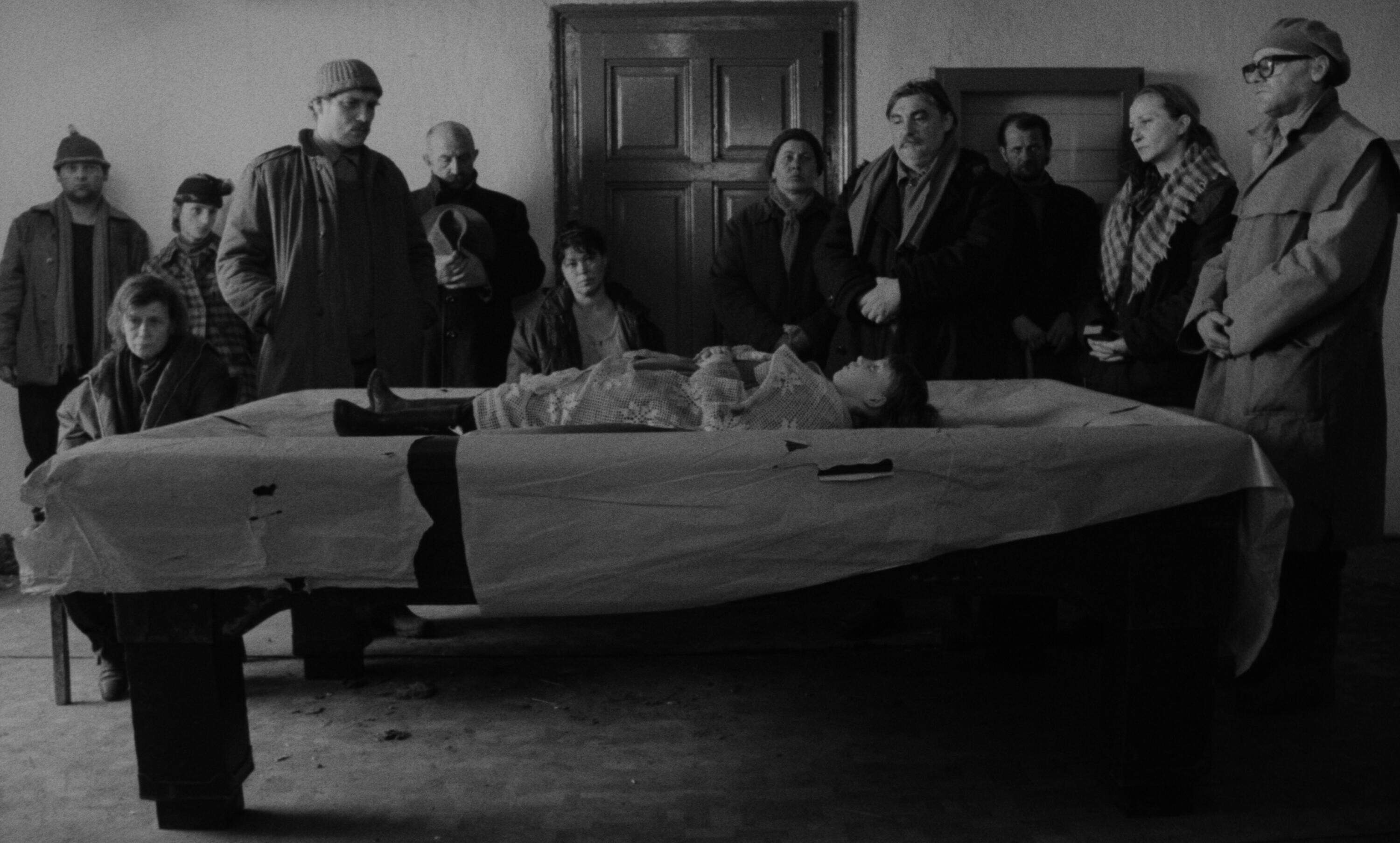
A few weeks ago, I was having the kind of no good, very bad day where you can’t even stand to be around yourself. Nothing seemed to be going right, either personally or professionally, and the regular eruptions of violent horrors and absurd national embarrassments buzzing through my phone’s news alerts weren’t helping matters any. It was one of those days when everything had become too much.
So I decided to practice a radical form of self-care and headed to the Harvard Film Archive to watch a beautiful 35mm print of “The Turin Horse.” Director Béla Tarr’s final film was his sixth collaboration with writer László Krasznahorkai, who recently won the 2025 Nobel Prize for Literature. Pitilessly depicting the dwindling fortunes of an embittered couple on a crumbling farm in the middle of a storm-ravaged nowhere, the 2011 masterpiece is one of the most apocalyptically depressing movies ever made.
Walking over to The Plough and Stars to meet some friends after the film, there was a spring in my step. It was as if all the day’s awful energy had been exorcised through the grueling events onscreen. I felt great! “The Turin Horse” had wrung me out for 155 minutes and taken my bad feelings with it. “How was the movie?” my buddies asked outside the bar.
“Absolutely miserable,” I smiled. “It was exactly what I needed.”

Aristotle said that the purpose of tragedy is to arouse “terror and pity” in the spectator. The ancient Greeks went to the theater for catharsis, to purge their darkest fears in an act of communal cleansing. Such is the goal of “Bleak Week: Cinema of Despair,” an early summer festival of bad vibes that started five years ago at the American Cinematheque in Los Angeles. Since then, the series has expanded to include nearly 100 theaters in 73 cities, including New York, Chicago, Toronto, London, Edinburgh, Buenos Aires and right here in Brookline at the Coolidge Corner Theatre.
Participating cinemas are invited to assemble seven days of the darkest, most downbeat titles they can come up with, bringing audiences together to get gloomy in big groups. “In Los Angeles, they have nice weather all the time, so they don't mind throwing bleak films onscreen in early June,” joked Coolidge artistic director Mark Anastasio. “It's a much tougher sell here in Boston, when we're experiencing our first hits of dopamine in six f---ing months.”
But numbers don’t lie. Anastasio discovered that since the pandemic, disturbing and difficult repertory films like “Antichrist,” “Funny Games” and “We Need to Talk About Kevin” have been packing them in at the Coolidge.
“The excellent programmers at the American Cinematheque really tapped into something,” he explained. “They found that audiences wanted to come out for a communal bummer of an experience, where together the sadness would be heightened.” Anastasio was considering cribbing the idea for a “Bummer Summer” series of his own when the Coolidge was invited to participate in “Bleak Week” last June.

This year’s magnificently miserable lineup touts 13 titles touching on grief, war, physical and mental illness, school shootings and the cruel mysteries of male-female relationships. It begins on Monday, June 1, with one of the greatest of all films, Ingmar Bergman’s “Persona.” Starring Bibi Andersson and beloved Coolidge patron Liv Ullmann, the Swedish filmmaker’s 1966 mind-melter takes us to a remote island cottage where a mute actress and her talkative nurse find their identities bleeding into one another, creating the template for decades of art films from Robert Altman’s “3 Women” to David Lynch’s “Mulholland Drive.” (You can sign up for a pre-screening seminar with film critic Monica Castillo if you want help wrapping your head around this one.)
One of the worst holiday movies ever made, director Lynne Ramsay’s “Morvern Callar” (June 1) boasts a mesmerizing performance by Samantha Morton as a woman reeling from her boyfriend’s Christmas Eve suicide, her inscrutable reactions set to a mix tape he left for her under the tree. (You’ll never hear The Velvet Underground’s “I’m Sticking With You” the same way again.) The numbness of grief also comes to the fore in “River’s Edge” (June 4), a chilling true-life tale of teenagers who refused to report the murder of one of their friends. The film features some sensitive early work from Keanu Reeves, but is probably better remembered for its gonzo turns by Crispin Glover and Dennis Hopper, the latter carting around a sex doll he claims is his girlfriend.
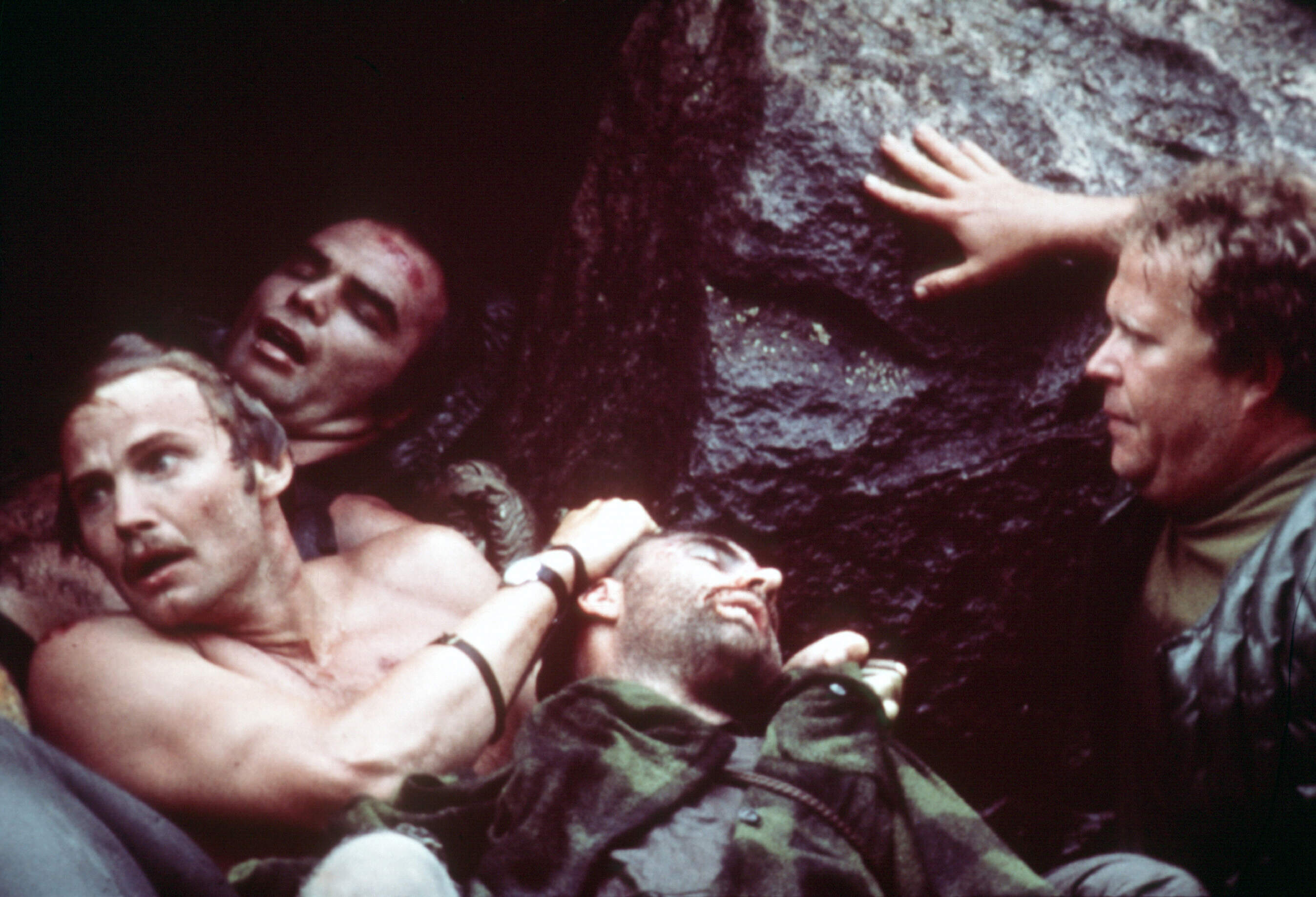
If you couldn’t get into the HFA’s sold-out screening of “Full Metal Jacket” (June 2) during their Kubrick retrospective earlier this year, here’s another chance to watch the war machine grind cadets into automatons. Anastasio has quite cannily paired it with a rare 35mm screening of “Deliverance” (June 2). One of the reasons you’ll never see me getting into a canoe, director John Boorman’s harrowing adaptation of James Dickey’s classic novel follows four Atlanta businessmen on a doomed vacation, their foolhardy machismo brought to heel by the brutality of nature. And some scary mountain men.
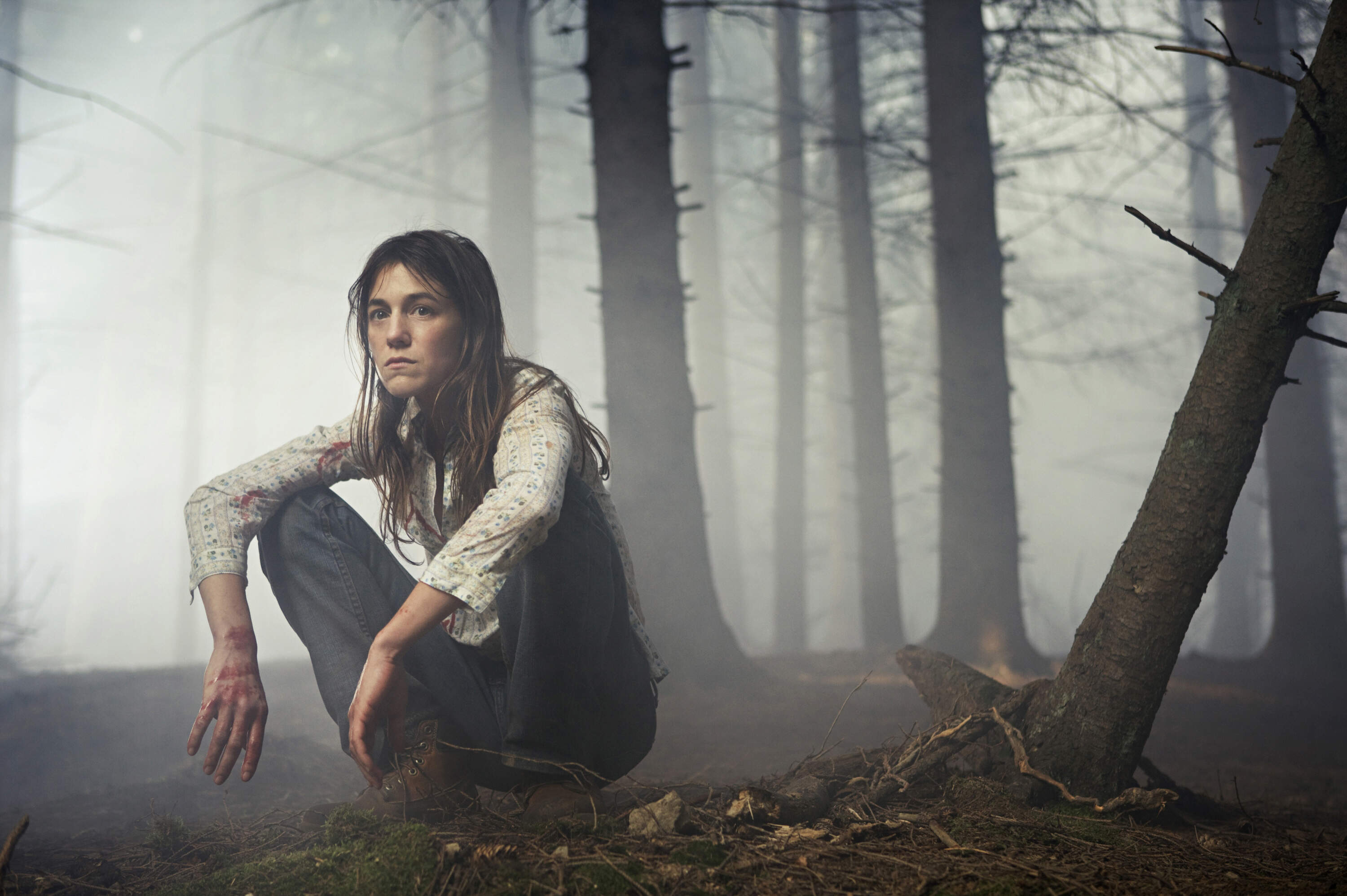
Not a great week for notions of masculine superiority in primeval forests, as Lars Von Trier’s “Antichrist” (June 3) stars Willem Dafoe as a chauvinist shrink who brings his grieving wife (Charlotte Gainsbourg) to a remote cabin in the woods for some tough-love treatment that goes terribly wrong. While seeing the movie during its original 2009 release, a film teacher friend turned to me and said, “This guy Von Trier hates genitals, huh?” Harsh times in the woods continue with Michael Haneke’s “Time of the Wolf” (June 5), following Isabelle Huppert and her bourgeois family fleeing to their vacation cottage during an unspecified global catastrophe that sure seems like it’s shaping up to be the end of civilization.
The Coolidge edition of “Bleak Week” comes to a thunderous conclusion with the rarely screened “Sátántangó” (June 7). The 439-minute cinephile’s Mount Everest from Béla Tarr and László Krasznahorkai – those guys again – chronicles the collapse of a Hungarian bog town upon the return of a prodigal son. Photographed in stunning, high-contrast black-and-white, the movie contains only about 150 or so shots over nearly seven-and-a-half hours. From the opening eight-minute sequence of cows milling around an empty village, the movie slows down your metabolism and bends your perception of time, turning grim monotony into an epiphany. You’ll never have another experience like this.
Superfan Susan Sontag said she would be glad to see “Sátántangó” every year for the rest of her life. Indeed, there’s something ceremonial about these “Bleak Week” screenings that feels necessary and even fortifying now that the world around us is such a precipitous shambles. I’m reminded of the legendary rock critic Lester Bangs’ review of Lou Reed’s “Metal Machine Music,” a double-album made up entirely of screeching, squealing electronic feedback. Bangs advised listening to it every morning, “not only to clear all the crap out of your head, but to prepare you for what's in store the rest of the day.”
“Bleak Week” runs from Monday, June 1, through Sunday, June 7, at the Coolidge Corner Theatre.