DraftKings, sportsbooks target statehouse races as Mass. and others propose stricter betting rules
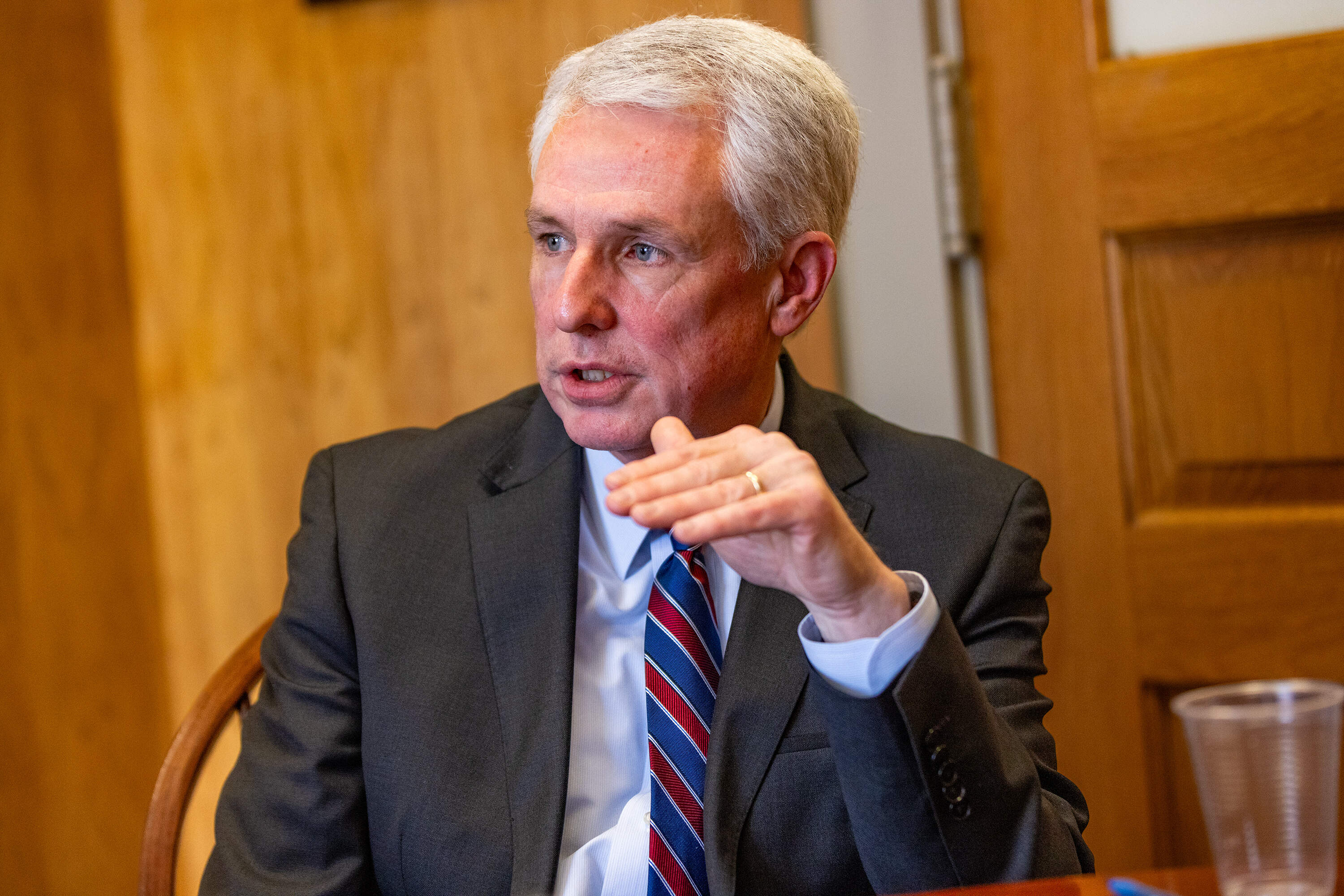
State Sen. John Keenan voted to legalize sports betting in Massachusetts in 2022. He says it didn't take long to regret it.
The betting ads came first: on phones, billboards, television and radio. Then came the phone calls from constituents whose family members were struggling with gambling addiction. Keenan had seen problems like this before: he’d led State House fights against opioid manufacturers and tobacco companies.
"I can't stand the idea of moneyed interests pushing products they know are addictive upon people," the Quincy Democrat said.
Last year, Keenan publicly apologized for supporting sports betting and filed one of the strictest reform bills in the country. The pending legislation would restrict advertising, more than double the tax rate on sportsbook revenues and ban so-called prop bets — wagers on individual performances or micro-events within a game, like the speed of the next pitch.
Keenan isn’t alone. In nearly a dozen states, lawmakers who voted to legalize sports wagering are now trying to rein it in.
"We're seeing indications of buyer's remorse," said Jonathan Cohen, who leads gambling policy at the D.C.-based American Institute for Boys and Men. “They thought they were legalizing one thing, but the thing that actually arrived was different.”
But the online sports betting companies are fighting back. DraftKings, which is based in Boston, and two other firms recently pooled $43 million into a new super PAC. The group is targeting statehouse races across the country — in states either looking to expand sports betting or those pushing stricter regulations. According to Federal Election Commission filings, DraftKings funded the PAC with $19.5 million, nearly half its total.
And while the super PAC has yet to spend in Massachusetts, DraftKings’ money has made its way to Beacon Hill in other ways.
In a fundraising blitz this winter, DraftKings executives and their family members contributed $17,750 to re-elect House Speaker Ronald Mariano — more than a third of the money he raised this year, according to campaign finance records.
Around the same time, Draftkings — through employees and their families — also donated $19,800 to state Rep. Aaron Michlewitz, chair of the powerful House Ways and Means Committee.
"I would absolutely expect the regulated sportsbook industry to push back aggressively against [Keenan's] bill," said Chris Grove, an analyst with the industry research firm Eilers & Krejcik Gaming.
The proposal, Grove added, poses a threat beyond Massachusetts, because it would set a “nasty precedent” for similar legislation elsewhere.
In other states, the sports betting industry has already spent millions influencing state legislative races, a move that is hampering efforts for stricter regulations, according to some lawmakers and advocates.
A $43 million war chest
The super PAC is called Win For America, and it’s bankrolled by the nation’s leading online sports betting companies: DraftKings, FanDuel and Fanatics.
Although it's a federal super PAC, which can raise and spend unlimited sums to influence elections, Win for America’s focus is local.
The group operates by funneling money into smaller PACs with names tailored for Democratic and Republican voters, such as the American Conservatives Fund. Then those groups buy advertising in primary races, making it harder for the public to identify who and what companies are backing them.
So far, the PACs have spent money in at least 11 states over the past few months, according to digital ad libraries and state campaign finance records.
A spokesperson for Win For America declined to comment, but forwarded a previous media statement that the group supports candidates who “thoughtfully approach regulation.” However, WBUR found its money also funded negative ad campaigns in local races.
In some cases, candidates are blindsided by ads and mailers, which don’t mention sports betting — or the companies funding them. Several politicians have scrambled to expose who is behind them to voters.
In Ohio, Republican statehouse candidate Stephanie Stock posted a video in early April on Facebook warning supporters about a flyer sent to their homes: "If you get one that says the American Conservatives Fund — that is a gambling PAC." (Stock lost in the primary.)
One week later in Alabama, Republican state Sen. Garlan Gudger recorded a video with his wife to disavow mailers from the same group that appeared to support him but depicted him as a mafia boss during his re-election bid. "The last one that went out, it looks like I'm the Godfather," he said, "which is totally not who we are." (Gudger won his primary last week.)
In New York, a state assembly race erupted in controversy in May, after the super PAC group called New York Future that was funded by DraftKings and FanDuel launched negative ads against one of the candidates, Democrat Stephanie Ruskay.
DraftKings, FanDuel and Fanatics declined to comment about the super PACs and its targeting of state lawmakers.
On an earnings call earlier this month, DraftKings CEO Jason Robins told investors the company is "experimenting" with the super PAC Win for America.
“We have a super PAC that we formed and are spending in various states,” he said. “We're going to try that strategy out for this election cycle, see how it goes, and then assess whether it's something that we want to continue doing in future years.”
In Illinois, attack ads over lunch
One of the industry's biggest fights this election cycle has been in Illinois, where Chicago recently imposed a new per-bet tax on sportsbooks. The sports betting super PAC responded with a wave of outside spending to boost some state legislative candidates — and tear down others deemed unfriendly to the industry.
James O'Brien was one of them. The progressive Democrat was running in a five-person primary.
Two weeks before the March primary, O'Brien was sitting in a restaurant when a digital ad from a group called American Future came on over the music. It accused him of being funded by corporate real estate developers. The claim, he said, was “misleading.”
"They spent approximately $196,000 attacking me in like a two-, two-and-a-half-week period leading up to the election," O'Brien said. "For scale, that's more than I spent during the entirety of a nine-month campaign."
The barrage of mailers and ads took a toll: “I had a 6-year-old ask me whether or not I was a good or a bad guy,” he said.
O'Brien lost. But he said the spending had another purpose.
"It's a message to any legislator that we have this massive war chest that we can go ahead and spend at any given point in time,” he said.
"They spent approximately $196,000 attacking me ... . For scale, that's more than I spent during the entirety of a nine-month campaign."
James O'Brien
That message is being heard in statehouses across the country, said Brianne Doura-Schawohl with the Campaign for Fairer Gambling. She’s testified at legislative hearings all year promoting tighter regulations.
State lawmakers, she said, have told her they’re afraid of coming under the “crosshairs” of the sports betting industry and its deep pockets.
"In three different statehouses in the last month, there have been statements made to me about fears surrounding the super PAC,” she said in an interview.
A Colorado showdown over prop bets
So far, the industry's pushback on stricter regulations appears to be working. While a handful of states prohibit prop bets on college sports, no state has passed legislation to ban them for all sports. Colorado came the closest.
In March, state legislators in Denver introduced a sweeping reform package to limit how often people could make deposits to their betting accounts, restrict certain marketing and — like Keenan’s bill in Massachusetts — ban all prop bets.
Prop bets drive a big share of sportsbook profits. They're also among the most addictive, according to some researchers, because bettors can wager rapidly throughout a game. Prop bets have also fueled a string of scandals involving athletes accused of manipulating outcomes.

At a March 17 hearing in Denver on the bill, DraftKings Chief Legal Officer Stanton Dodge warned legislators that banning prop bets would backfire.
"It risks pushing bettors toward the unregulated offshore operators that offer no consumer protections," said Dodge. "And they pay no taxes in Colorado.”
Dodge reminded lawmakers that DraftKings pays the state a portion of its revenues as a tax and that would decrease if the bill was passed, especially if prop bets were banned.
Doura-Schawohl with the Coalition for Fairer Gambling testified at the hearing too. She said there was no evidence that tighter regulations would push consumers toward illegal markets. Rather, she argued, the gambling companies are worried about lower profits.
A few weeks later, the pending bill advanced out of the Senate, and the ban on prop bets was stripped out. A similar bill in Louisiana died in late March after concerns by the legislature that tax revenues from prop bets would drop.
Back on Beacon Hill
For Keenan’s “Bettor Health Act” bill in Massachusetts, the clock is ticking. The legislative session ends in July. If his proposal to ban prop bets and raise taxes on sports betting companies does not reach a floor vote by then, it dies.
"They will put money wherever they have to, because they are making millions and millions of dollars off our not well-regulated-enough market."
State Sen. John Keenan
To get there, the Senate bill must pass both chambers. To even secure a House vote, it would also need to win the favor of two key politicians: state Rep. Aaron Michlewitz, chair of the Ways and Means committee, and Speaker Ron Mariano.
Records show over four days in January, DraftKings executives and their families donated nearly $20,000 to Michlewitz, who did not respond to emails requesting comment.
During the same time period — and with roughly the same list of contributors — DraftKings contributed $17,750 to Mariano. Nearly all were $1,000 donations, the maximum amount allowed in the state.
A Mariano spokesperson told WBUR the campaign contributions have no impact on the legislative process in the House. So far, Mariano, who championed sports betting legalization in 2022, has not taken a public position on Keenan's bill.
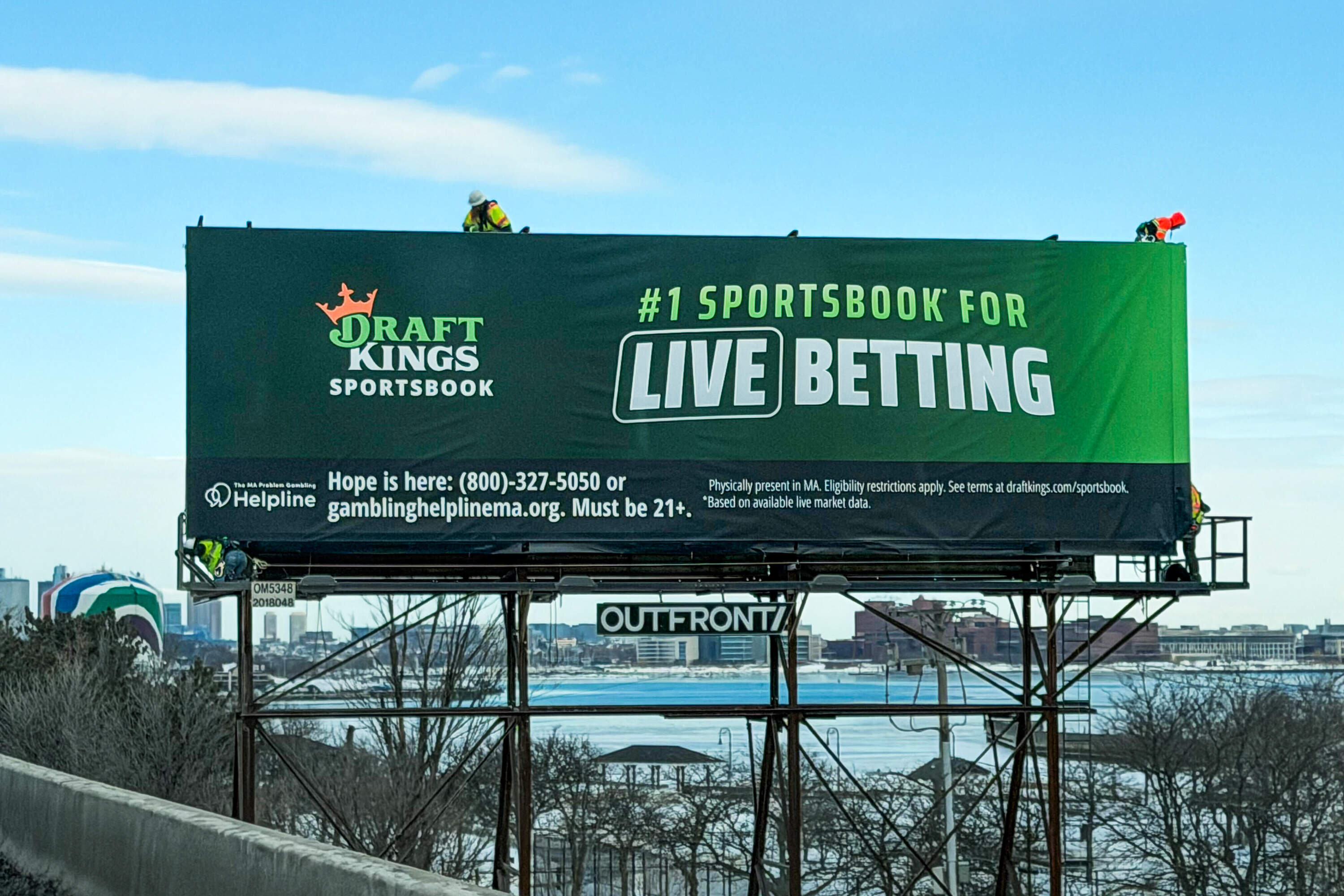
Last September, DraftKings also contributed $50,000 to a nonprofit aligned with Gov. Maura Healey.
Keenan said he's not surprised by the industry's efforts to sway officials in Massachusetts.
"They will put money wherever they have to, because they are making millions and millions of dollars off our not well-regulated-enough market,” he said.
But he's not deterred. As sports betting continues to expand in the U.S., so do concerns about gambling addiction, financial losses and other problems.
"I think that as more people see the public health issues related to sports betting," Keenan said, "the pressure will build on legislators to do something about it."
This segment aired on May 28, 2026.