Support WBUR
For some chronically ill Mass. residents, food is medicine

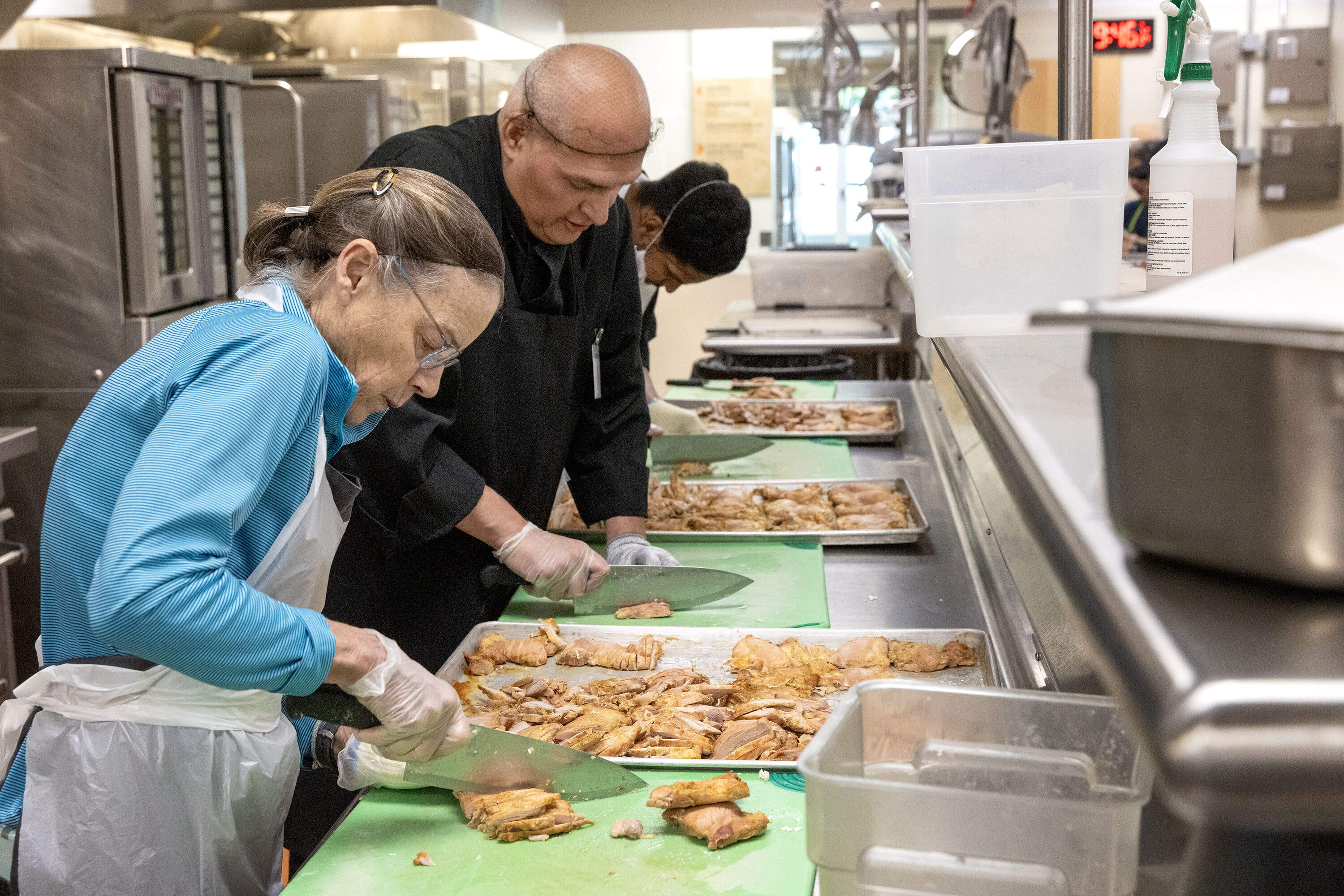
It’s a weekday morning, and in a quiet corner of Jamaica Plain, a kitchen is bustling with activity.
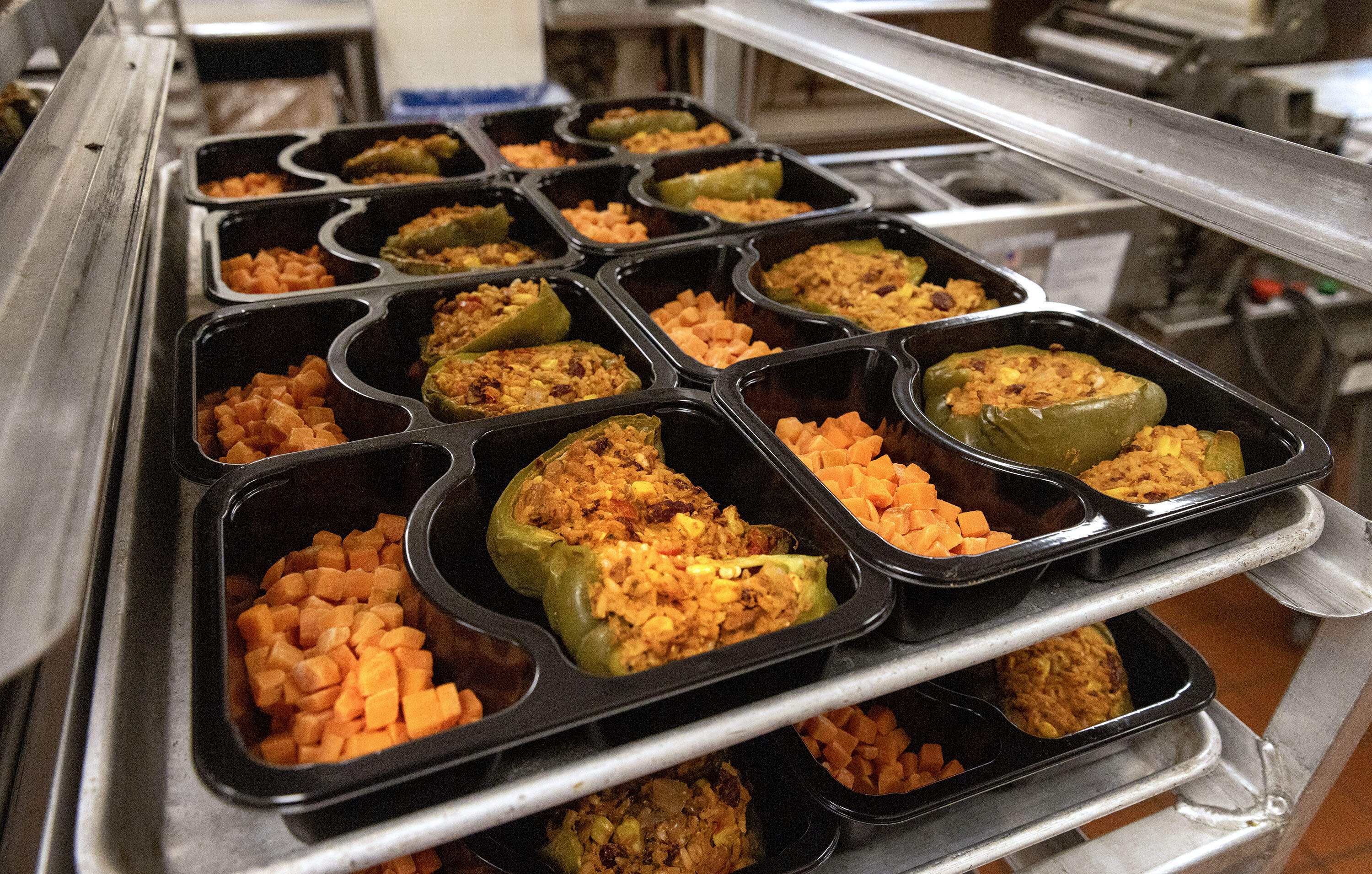
Pop music pumps through overhead speakers as volunteers wearing hairnets and gloves swiftly prepare the day’s meals: slicing chicken breasts, stuffing bell peppers, filling trays and carefully labeling each item.
This is the daily routine at the nonprofit Community Servings. The food is for people with severe health conditions who are unable to grocery shop and make their own meals. And it’s funded by an unusual source: health insurance.
The meals appear to be a good investment, according to a study published Tuesday in the journal Nature Medicine. Massachusetts patients who received medically-tailored meals needed less medical care; they had 20% fewer emergency department visits and 31% fewer hospitalizations, compared with similar patients who did not receive meals, the research found.
This translated to lower healthcare costs. The meals, which cost $125 per person per week, essentially paid for themselves, said Dr. Dariush Mozaffarian, a cardiologist who led the study.
And some patients saw substantial savings. Patients with heart disease used $10,000 less in healthcare services over about six months, the study reported, and patients with depression, anxiety and some other conditions also saw benefits.
“Most things in healthcare don't actually save money,” said Mozaffarian, director of the Food is Medicine Institute at Tufts University. “Here we have an intervention that is not only making people healthier, but is actually either cost-neutral, but for some populations even saving money. That's really remarkable. This is a no-brainer to implement.”
The analysis included nearly 1,900 Massachusetts residents who receive medically-tailored meals through Medicaid, the federal and state-funded health insurance program for low-income adults and families, and people with disabilities. It’s the largest study of its kind to date, and builds on previous research that showed meal prescriptions can help people feel better and save the health system money.
A 2022 study predicted medically-tailored meals could help patients avoid 1.6 million hospitalizations and save the U.S. $13.6 billion in healthcare costs each year.
“Poor nutrition is the top cause of poor health in this country. It's the top cause of preventable healthcare spending,” Mozaffarian said.
The research comes as federal health officials blame ultraprocessed food for Americans’ poor health. New federal dietary guidelines urge people to eat “real” food, including meat, eggs, dairy, fruit and vegetables.
But President Trump also signed legislation with deep cuts to Medicaid, including tougher eligibility requirements, which could threaten meal programs.
“Unfortunately, innovative programs like food and nutrition programs may be the first to go,” Mozaffarian said.
In addition, the bill slashed the Supplemental Nutrition Assistance Program, or SNAP, which helps millions of Americans afford groceries, and added new restrictions on who can receive those benefits. Many Republicans believe federal spending on food and health benefits is too high, prone to fraud and needs to be reined in.
Federal health officials did not respond to a request for comment.
In the past, some companies have been accused of billing Medicaid for meals that were neither healthy, nor nutritious, raising concerns about lax regulation of these programs.
But when done right, proponents say medically-tailored meals go beyond replacing processed carbohydrates with lean proteins and leafy vegetables. They deliver food as a tool for treating diseases, much like medicine.
At Community Servings, the food is prepared with specific attention to sugar, salt, fat, vitamins and minerals, based on a person’s health needs, said David Waters, chief executive of the organization. Many recipients require food that is soft, or mild, or low in fiber.
“What we're able to do is to work with your healthcare provider to understand your health realities — what your diagnoses are, what your medications are, side effects, food allergies, cultural norms — and then prescribe a diet for you that is scratch-made,” Waters said.
Community Servings provides meals for 8,000 people across Massachusetts, but Waters said more than 200,000 residents could benefit. Nationally, researchers estimate 10 million Americans would qualify for medically-tailored meals, though today just a small fraction of them are enrolled.
Steve Honyotski looks forward to the meal deliveries at his Dorchester home every Friday. Like other Massachusetts patients, he receives 10 meals a week, cooked fresh and delivered cold or flash-frozen. They’re ready to eat after just a couple minutes in the microwave.
“The carrot ginger soup is my favorite,” Honyotski said. “Then there's the tomato ratatouille soup, and the tomato eggplant soup.”
He even gets to enjoy some dessert: “Little pieces of cake are very satisfying,” he said.
Two decades ago, Honyotski was in a car crash that nearly ended his life. He endured several surgeries and had to learn how to walk and talk again. Now, he has several chronic conditions including diabetes, obesity and high blood pressure.
Honyotski, 71, enjoys cooking, but said it's just not possible most days.
“To go out and buy the carrots, to peel the carrots, chop the carrots, cook the carrots, season the carrots, eat the carrots, and put the rest in the refrigerator” — that’s overwhelming, he said.
Honyotski said he’s noticed improvements in his health since he started eating medically-tailored meals. He needs less insulin to control his diabetes, and he’s lost enough weight to delay a knee replacement surgery.

The concept of medically-tailored meals grew out of the AIDS epidemic, when the food helped nourish AIDS patients who were rapidly losing body mass. Nonprofits like Community Servings eventually expanded to serve people with other medical conditions, funded by private donations, and more recently, by public healthcare funding.
Massachusetts is among 13 states that have received federal waivers to use Medicaid dollars to pay for healthy meals. Efforts are underway to add programs in other states.
Advocates of these programs are lobbying for a bill sponsored by Congressman Jim McGovern, a Massachusetts Democrat, that would pilot medically-tailored meals for some chronically ill seniors on Medicare. The legislation has support from Democrats and Republicans but has not yet come up for a vote.