Support WBUR
College encampments raise questions about role of protests in society
This week marks seven months since Hamas attacked Israel on October 7th, killing approximately 1,200 Israelis and taking more than 250 hostages.
Since then, Gaza health officials estimate the Israeli military has killed nearly 35,000 Palestinians in Gaza. Thousands more people are still buried underneath the rubble or missing, and the area is suffering from famine.
On Monday, Hamas said it approved a cease-fire proposal that included language which would make it permanent. Israel rejected that proposal. On the same day, Israel launched additional air strikes on the southern Gaza city of Rafah where more than a million Palestinians have sought refuge. As of early last week, Hamas still held more than 130 hostages.
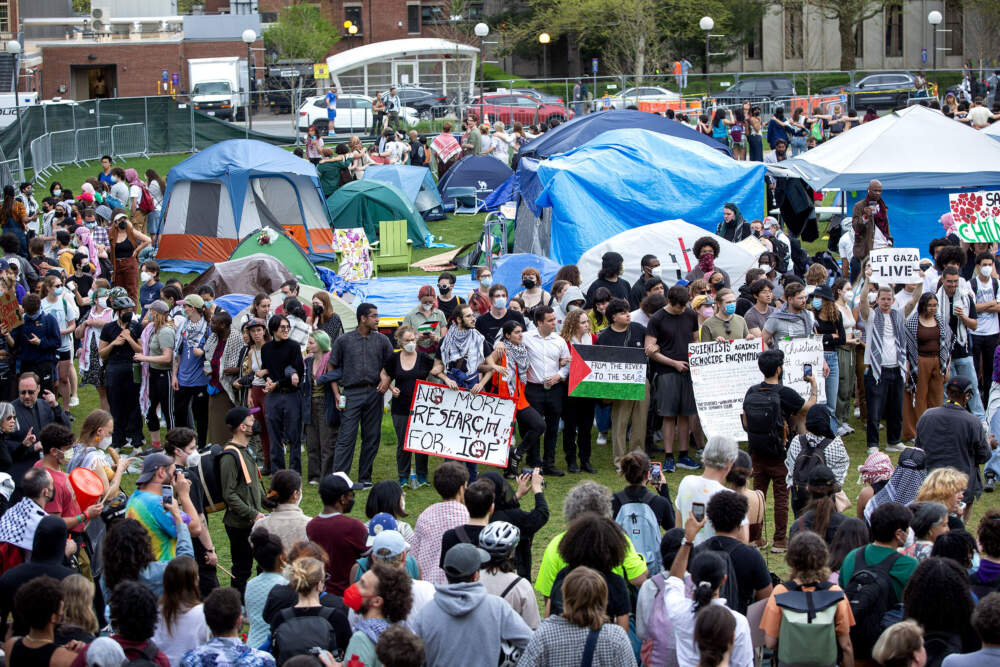
These conflicts serve as the backdrop for protests at New York's Columbia University on April 17, which then spread to other institutions like Emerson, Northeastern University, MIT and Harvard. School administrators have taken different approaches to managing the encampments, with some engaging in negotiations with protesters and others calling in the police.
What do these universities' handling of the camps say about the role of protests in today's world and the purpose of higher learning? Radio Boston digs in.
This segment aired on May 8, 2024.