Support WBUR
Field Guide to Boston
After a quarter-century, Henry David Thoreau interpreter passes the torch
Richard Smith spent 26 years in Henry David Thoreau’s clothes, but this was the first time there was another "Henry" in the room.
Until his recent retirement, Smith, an author and historian, served as the official Henry David Thoreau interpreter at Walden Pond. Now, a new Thoreau — fellow historian Brent Ranalli — has taken over.
The men joined WBUR's All Things Considered last month to share their knowledge and enthusiasm for the 19th century writer and philosopher who famously lived alone by Walden Pond.
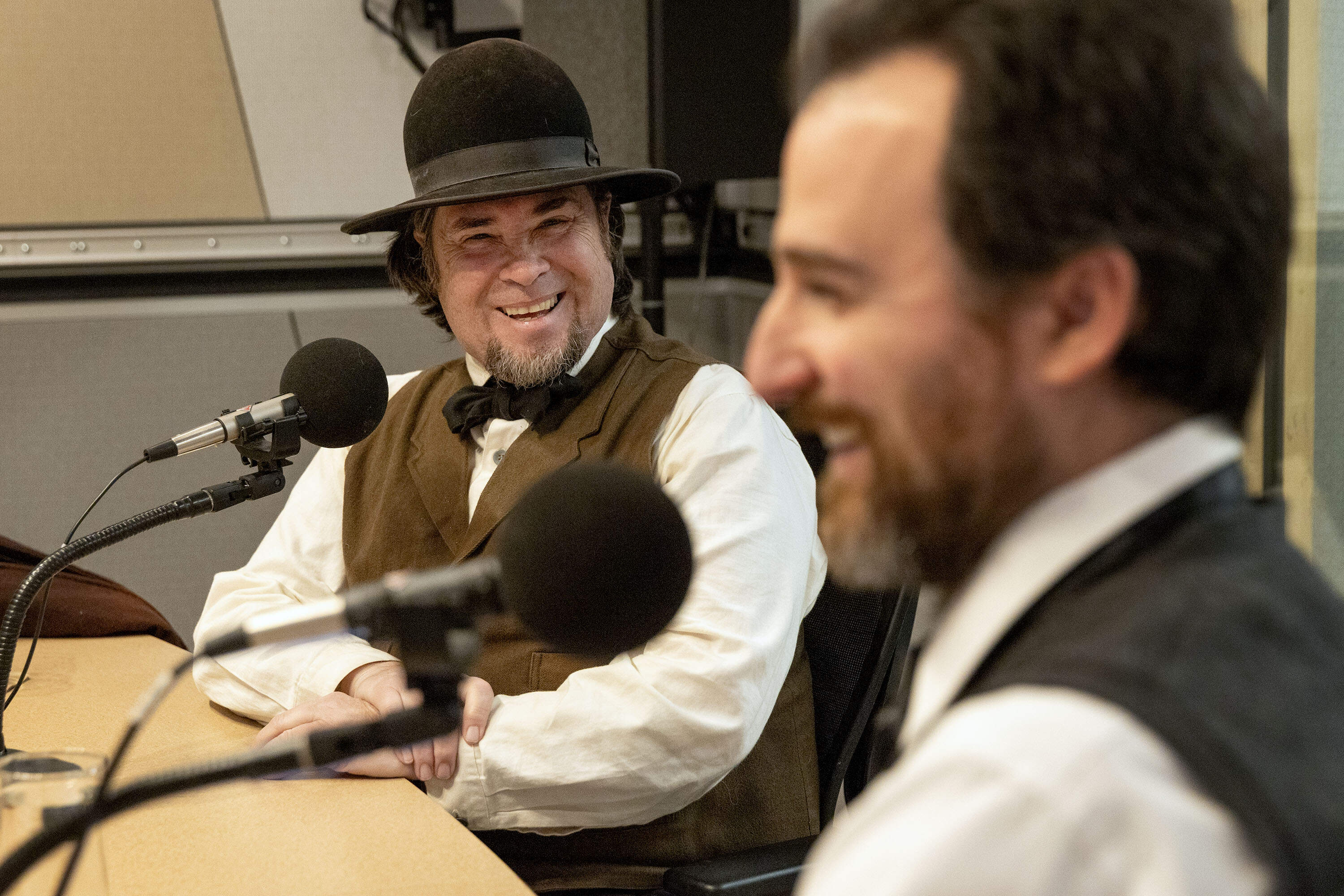
“I wanted to stop doing it before I didn't love it anymore,” Smith said about his decision to step down from the role. “I'm doing more of my own writing now. So I feel like it's time to maybe start using my own voice instead of Henry's.”
New Year's Day marked Ranalli's first day speaking out as the new Thoreau. During the park's annual Jan. 1 hike around the pond, Ranalli was set to give visitors a tour of a replica of Thoreau's cabin. The original no longer exists.
"He is an icon of American literature, a founder of civil disobedience and a foundational figure for the environmental movement."
Brent Ranalli
Ranalli and Smith sat in the WBUR studio dressed in clothes based on period accounts of Thoreau: a white cotton or linen shirt, a black cravat around their necks, a waistcoat and a pair of wool trousers. The only difference between the two men was their choice of hat.
“The straw hat is the summer hat,” Smith said, smiling in jest at Ranalli.
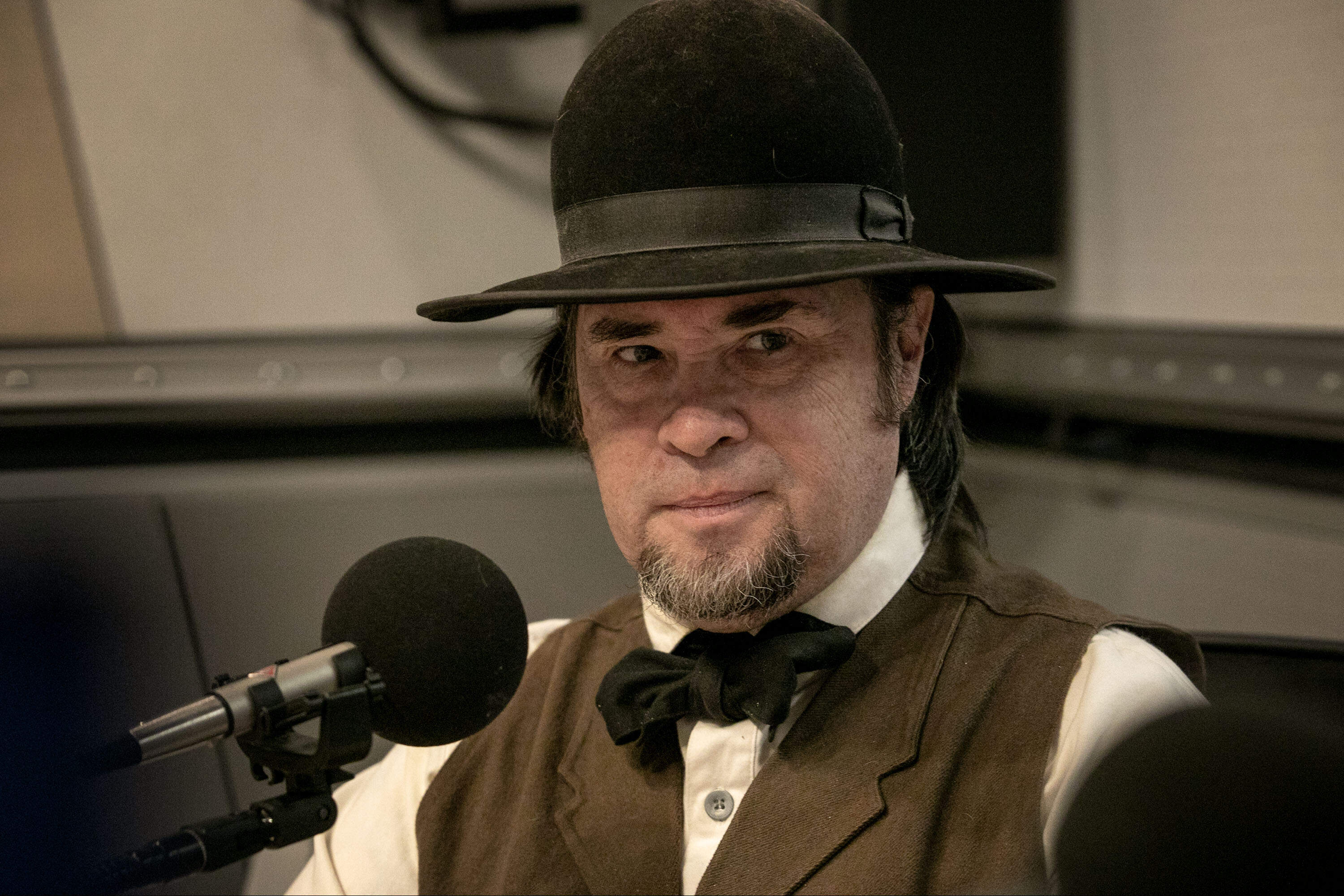
Smith was drawn to Thoreau when he started reading his work in the '90s back in Cleveland, Ohio. He said he got into many transcendental writers of the 1840s, but Thoreau's work spoke to him best.
“He was a rebel. He was a troublemaker,” Smith said. “And he had a reverence for nature that I’ve also had most of my life.”
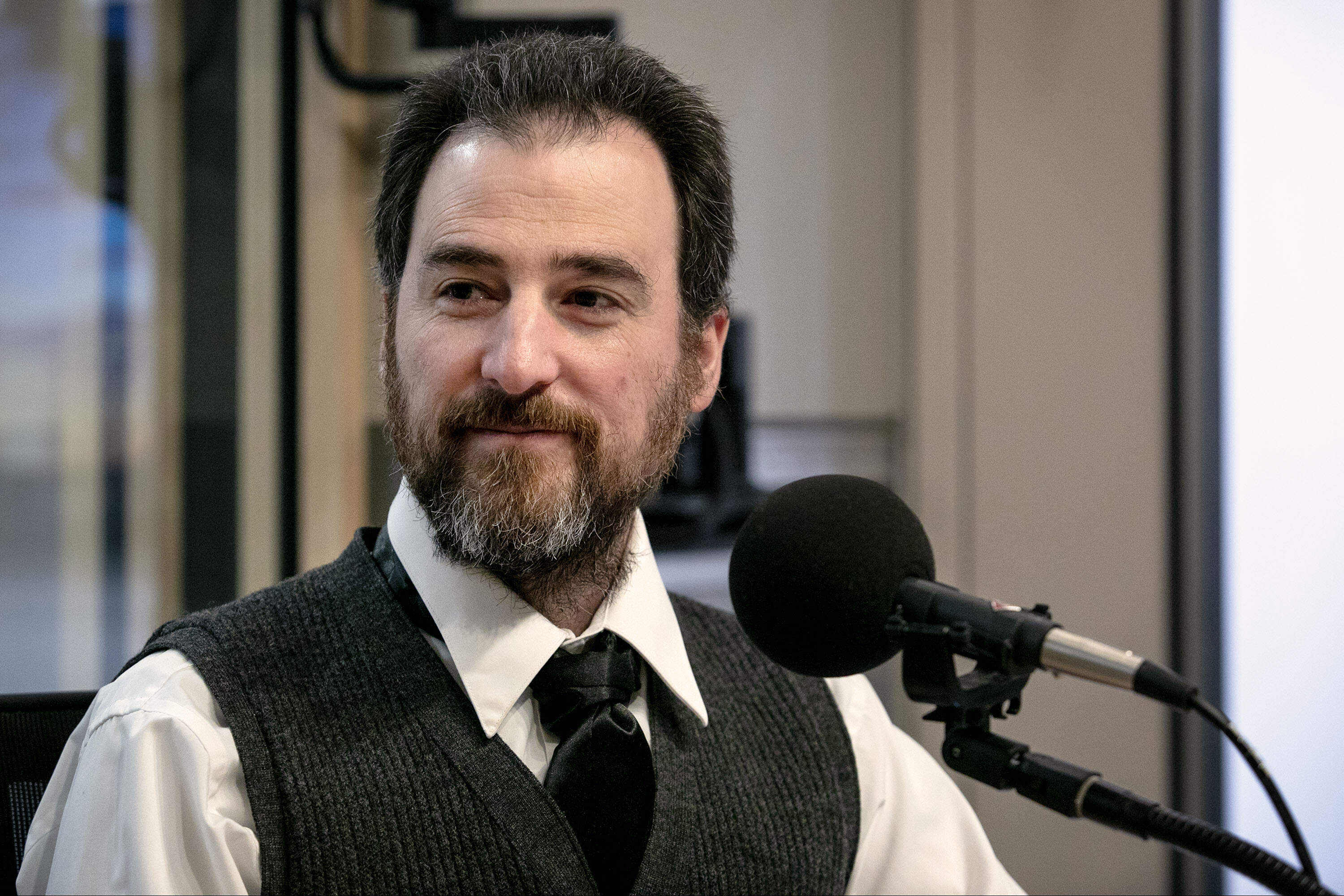
Ranalli said he held more of an academic interest in Thoreau at first. He started attending events with the Thoreau Society, an organization based in Concord, Mass. One day, Ranalli figured he knew enough trivia about Thoreau to start portraying him. He occasionally filled in for Smith, who is also a member of the society.
Thoreau "is a rich and compelling figure,” Ranalli said. “He is an icon of American literature, a founder of civil disobedience and a foundational figure for the environmental movement.”
Smith said one of the most important parts of the job as an interpreter is to dispel Thoreau myths — especially those about roughly two years he lived near Walden Pond. While Thoreau lived in a cabin and wrote about nature, purpose, independence and spirituality, he was not a hermit. He went to town for meals with his family, to repair his shoes, and yes, to have his mother do his laundry.
“[Laundry] was not unskilled labor. You needed specialized skills and knowledge,” Ranalli explained. “We don't criticize him for not repairing his own shoes, but we are inclined to criticize him for not washing his own clothes. That reflects a lack of understanding on our part of what clothes washing was like 180 years ago.”
Smith learned to expect the laundry question over the years. He never really understood why people were so fixated on it. He doesn’t think it diminishes the fact Thoreau was self-sufficient and dedicated to writing.
“In my mind, if that’s what they’re focusing on, then they’re kind of losing the whole message of Walden,” Smith said.
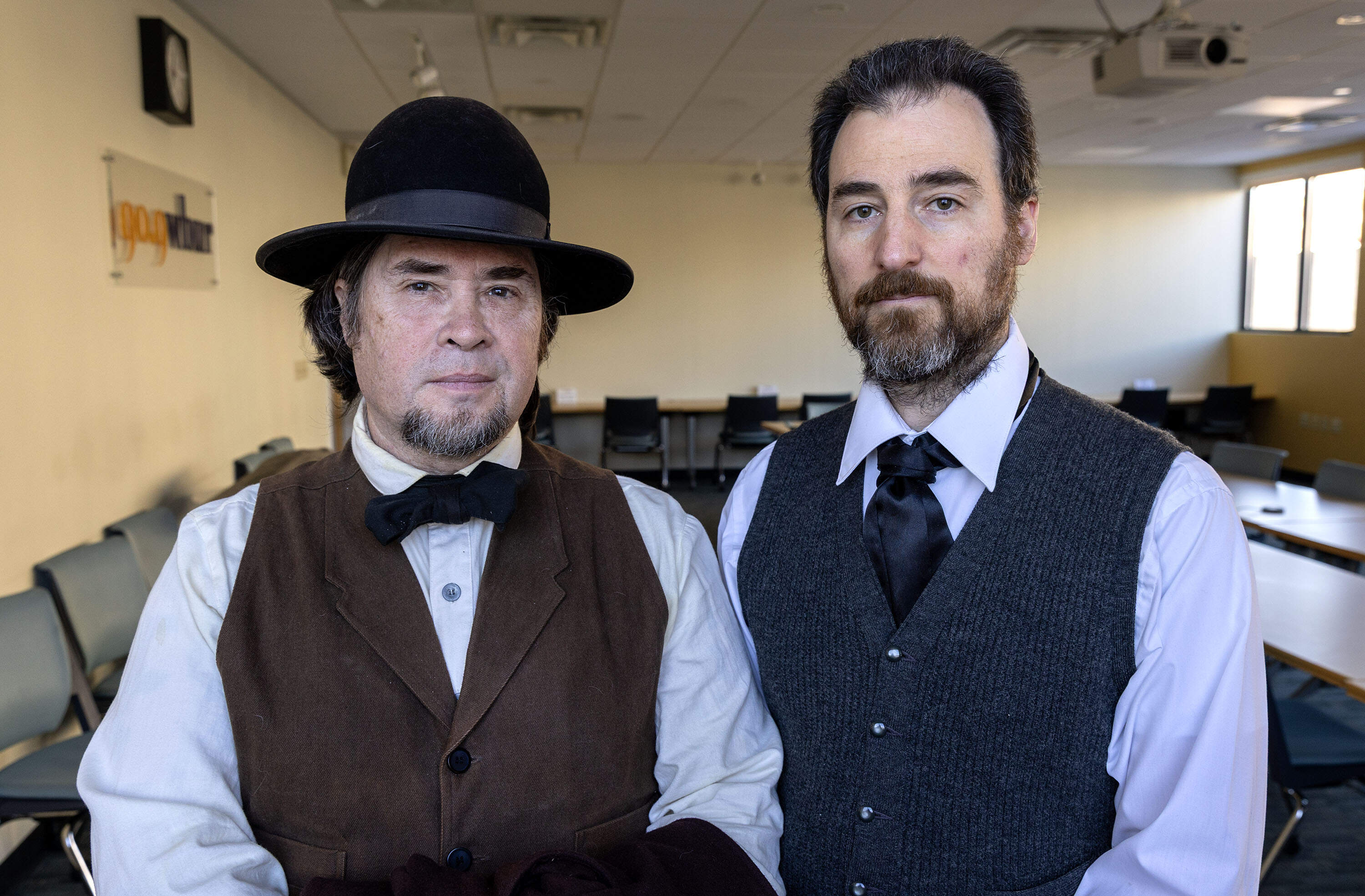
Smith’s advice for Ranalli is to make Thoreau his own and to try to smile. Apparently, Thoreau could be grumpy.
Ranalli hopes he can channel some of Thoreau’s passion in his performance. Thoreau suffered from tuberculosis, Ranalli said, which was an early death sentence. Coming to terms with his own mortality is part of what inspired Thoreau’s relentless work ethic and spirituality.
As he wrote in “Walden,” “I went to the woods because I wished to live deliberately and not, when I came to die, discover that I had not lived.”
“So I imagine that every morning he woke up and said to himself, ‘Wow, I have one more day,’ ” Ranalli said. “[And so for me] I feel like any day that is spent sharing Henry with the public and starting those kinds of conversations is a good day.”
This segment aired on January 5, 2026.