Support WBUR
Field Guide to Boston
How Henry Knox's 300-mile trek helped turn the tide of the Revolutionary War
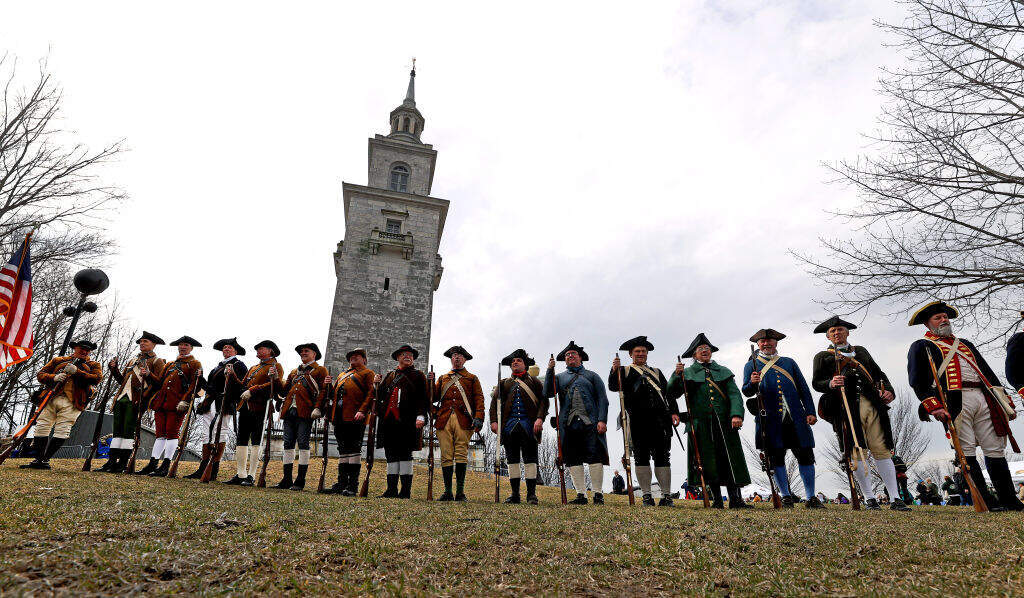
Have you ever cared so much about something that you would do anything to protect it? That's how a young bookseller named Henry Knox felt about his hometown of Boston during the Revolutionary War.
In 1775, the British were occupying Boston and the Patriots were low on weapons. Commander George Washington turned to Knox to do what seemed impossible: get more arms from Fort Ticonderoga in New York. From there, Knox made the roughly 300 mile winter trek through the snow and wilderness of Massachusetts with approximately 120,000 pounds of weaponry. The journey became known as Henry Knox's Noble Train of Artillery.
"You're thinking about someone who's trying to rescue his hometown," Kanisorn Wongsrichanalai, chief historian at the Massachusetts Historical Society, said. "[He's] someone who's young and in love and scared. [He] is about to start a family in a time of war, in a time of uncertainty. And all he can to make a better life for his family in this new nation that he can perhaps glimpse."
Knox completed the journey and with those weapons, Washington's troops were able to expel the British from Boston in what's become known as Evacuation Day. Wongsrichanalai says without the train and the weapons it brought, the war may have gone in a different direction.
" There's a lot riding on this," Wongsrichanalai said. "It's more than just the liberation of Boston. It's the success of the American Revolution."
Massachusetts is marking the 250th anniversary of the noble train right now with events happening most weekends now until Evacuation Day on March 17. This includes an event this weekend in Lincoln.
Wongsrichanalai says the weather this year is actually pretty reminiscent of the conditions Knox faced on the journey.
"It has been cold and snowy, and it has been perfect to simulate the conditions that Knox would've wanted to carry these canons, to transport these items all across this pretty rural and formidable landscape [of Massachusetts]," Wongsrichanalai said.
The Massachusetts Historical Society houses Knox's journal that he took and wrote in during the train.
This segment aired on February 20, 2026.