Support WBUR
How Mass. native Sean O'Neill became a Paralympic curler
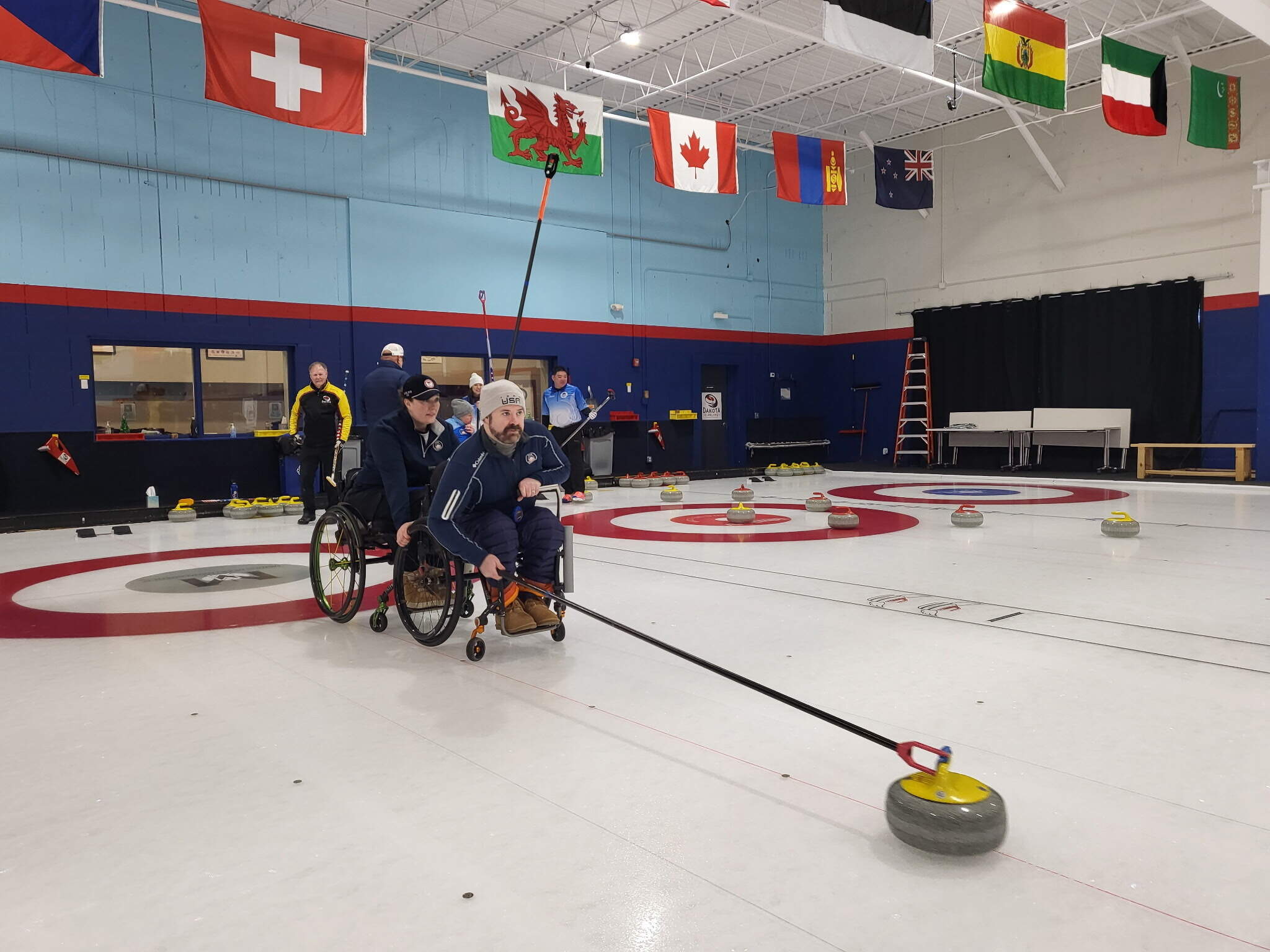
Massachusetts curler Sean O’Neill is one of about a dozen athletes from New England competing in this year’s Paralympics for Team USA.
O’Neill grew up on the Cape and works as a lawyer in Boston. After a 2007 car accident left him paralyzed from the waist down, he tried out a series of para sports, ultimately falling in love with wheelchair curling. He’ll be making his Paralympic debut in mixed team doubles competition this weekend.
O’Neill spoke with WBUR Morning Edition host Tiziana Dearing about preparing for the games and what he likes most about the sport.
Below are highlights from their conversation, which have been lightly edited.
This is a big deal, your first Paralympics. I wonder in your head, what do you find you're most looking forward to?
“It is a big deal. I think that's still dawning on me, day by day. The thing I'm most looking forward to is really being on that international stage representing Cape Cod, Massachusetts, the U.S., and just doing it in front of my friends and family and everybody watching.”
What is the mix of fear to ‘hell yeah’ for an elite athlete who's going to have to compete in the Paralympics?
“That is the best way I've heard that question phrased without a doubt. It changes day by day, moment to moment. I think it stays probably at a healthy 70% ‘hell yeah’ to a 30% fear, with some shifts here and there. It is such an incredible opportunity. It's something we've all worked so hard for. The excitement is always going to be off the charts, even with the fear always present as well.”
How did you come to be an elite curler?
“I started curling about four years ago. I actually went to an open house at my local club, the Cape Cod Curling Club, in connection with the last Olympics and Paralympics. And my club, I was very lucky, sort of has a tradition of wheelchair curling. I'll be the fourth Paralympian from my club, which is a relatively small curling club, and certainly not in a curling hotbed in the United States.
"But, they knew the path and I've had such incredible support from my club in terms of training, in terms of advice, coaching. They really sort of laid the path for me to follow to get where I am today.”
It is quite remarkable for someone to pick up a sport and four years later be competing in the Paralympics in said sport. What's your superpower? What are you really good at, in curling?
“Well, I'm going to softly reject having a superpower of any type. But you know, in curling, for me, what I was drawn to immediately and what I loved about the sport before I competed was the strategic aspect. I think that's sort of where I've differentiated myself over these four years, in sort of grasping the strategic aspects of the game quickly.”
What is a strategic aspect of curling? Give me an example.
“Curling gets described as chess on ice, [that’s] the cliche about curling. It’s chess where you're planning moves multiple shots ahead, but then you have to execute the move. You can't just, you know, queen to D6. You have to actually make the shot… by sliding a 42 pound rock on ice over a hundred feet. But that strategic aspect of thinking ahead, of really planning your moves several steps ahead, is always what's drawn me to curling.”
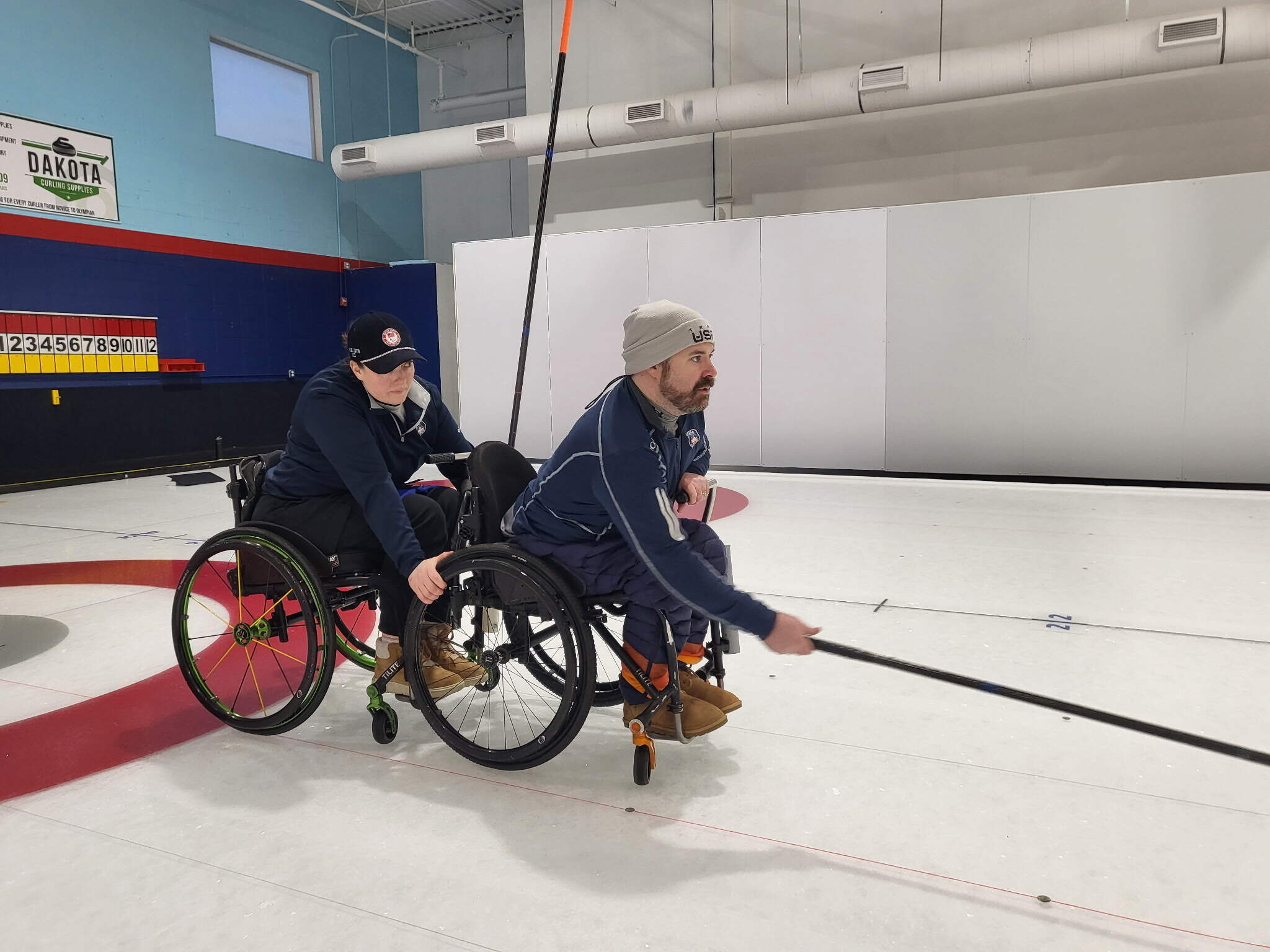
So you are competing on the wheelchair team … you had an accident in 2007. How did you get from there to the Paralympics?
“It was not a straight path, nor was it a path where I woke up in the hospital in January, 2007 and then thought, ‘you know, I'm never going to walk again. But the Paralympics sounds like a great plan.’
“I was athletic before my accident, and I love sports. I love competing. So once I came to grips with being in a wheelchair and sort of plotting out how I wanted that aspect of my life to look, I looked to sports.
“I tried wheelchair, basketball, tennis, rowing. I did a lot of rock climbing at one point … to have fun, to exercise, but sort of trying to scratch that competitive itch as well. But it wasn't really until I found curling that I was like ‘this is the one,’ like this is a sport I could see doing forever, loving forever, and … it was also one where I could see a path to competing at the highest levels as well.”
Your accident was nearly 20 years ago now, and I found myself wondering if now that you're in the news, you're going to the Paralympics, if it's forcing you to talk about a period of your life that you don't want to talk about anymore, or maybe you're very comfortable talking about now, but I wondered, what that aspect has been like for you as you approach these Paralympic Games?
“That's such an insightful question, 'cause it's something I've talked about with friends and family over the past couple months, how it is something that I'm relatively private about, but not uncomfortable talking about, but then to have it suddenly be something I'm asked about all the time and publicized is a change.
“But it's one I'm comfortable with and I've taken all of this, you know, hopefully as an opportunity for anyone with any thing that leaves them suddenly of any different type of ability to be able to see that there are ways forward, ways to excel. Whatever they want to do, whatever that looks like. If anyone can take that away from this, I'm happy to talk about anything having to do with my accident or the time following.”
What's your biggest advice for them right now?
Find what you love and pursue it to the utmost.