Support WBUR
Clark University celebrates 100 years since the first liquid fuel rocket launch by longtime professor
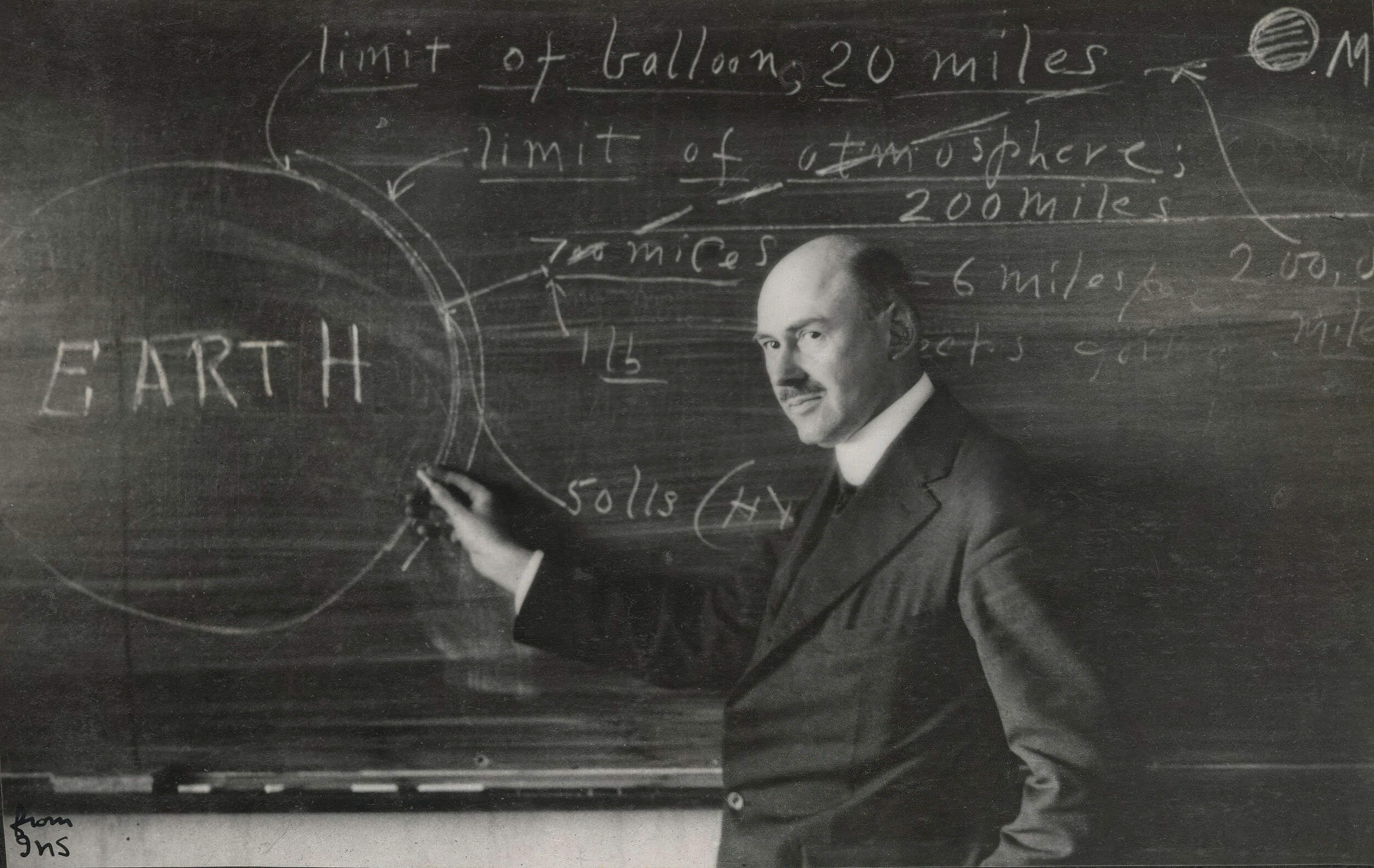
Neil Armstrong walked on the moon in 1969. But those steps wouldn’t have been possible without Robert Goddard, a Massachusetts scientist who first successfully launched a liquid fuel rocket more than four decades earlier.
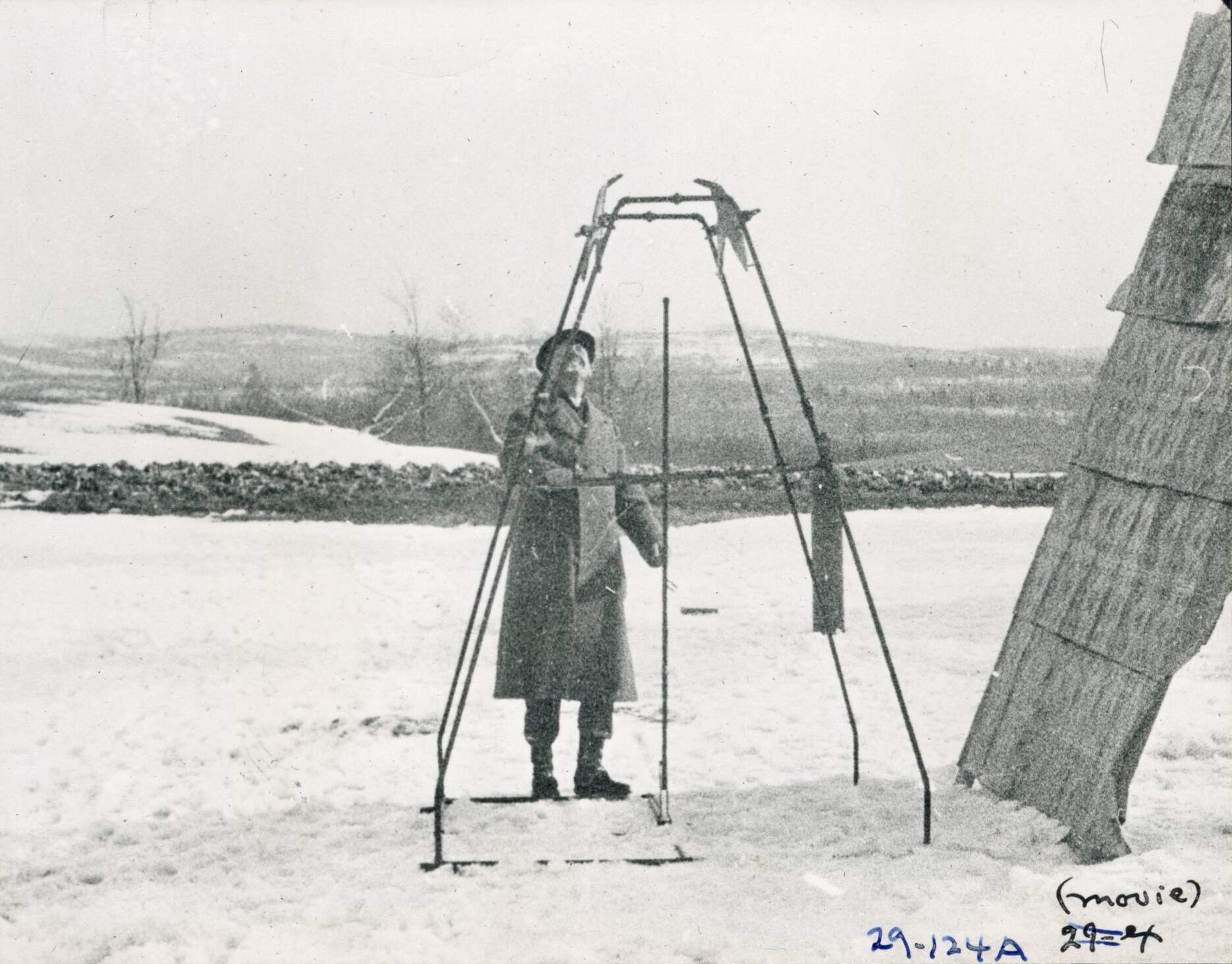
This month marks 100 years since Goddard’s launch on a farm outside of Worcester, which laid the groundwork for space flight. Clark University, where he studied and later taught for decades, has the largest and most comprehensive collection of Goddard’s photos and artifacts. The school is celebrating the anniversary with a week of events and a limited run exhibit featuring some of those items.
But while Goddard is known today as the “father of modern rocketry,” he was made fun of in his lifetime for dreaming big.
"He was mocked mercilessly nationwide,” said Catherine Stebbins, digital project librarian at Clark University.
Goddard was patronizingly known as “the moon man” because of his work, which some likened to science fiction, Stebbins said. Six years before Goddard's first successful liquid fuel rocket launch, the New York Times even published a column poking fun at him.
Stebbins, who has dug deep in Goddard’s archives, said his portrayal in the media may have impacted how much of his work he was willing to share. This helps explain why his legacy isn’t more widely known.
“He was just a naturally secretive person and those kinds of inclinations really became more and more firm and more sort of concrete over the years,” Stebbins said.
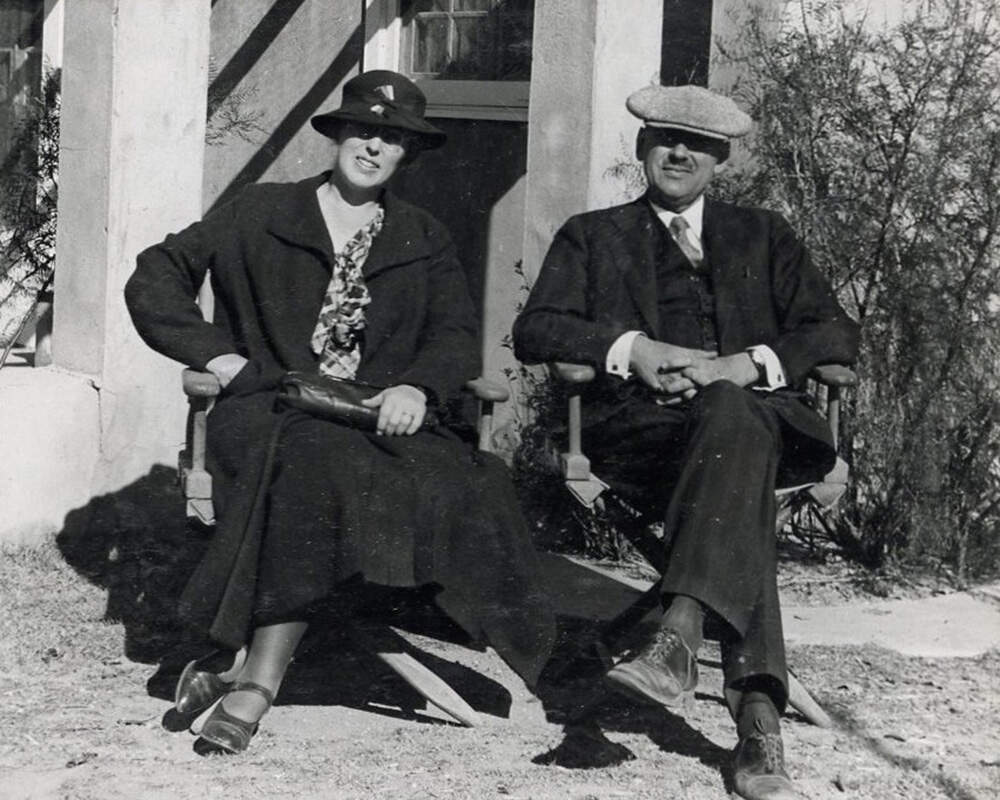
Goddard died in 1945, so he never got to see how his work made space travel possible. His wife, Esther, was instrumental in telling the world about his research and reclaiming his legacy.
“She made it her life's mission to really elevate him,” Stebbins said.
Part of Esther's work involved patents that belonged to her husband. In his lifetime, Goddard secured a little more than 200 patents, which were lost after he died. Working with an attorney, Esther was able to secure roughly half of them, to preserve his legacy. She also spearheaded efforts to get money for patents held by his estate.
Stebbins said the Goddards were a team. Esther assisted and documented all of his experiments. She was his “typist, his business manager, his bookkeeper,” Stebbins said.
Esther's work, decades after her husband’s death, paid off. After the moon landing in 1969, Stebbins said the New York Times issued correction for ridiculing Goddard, noting his science was sound.
Astronaut Buzz Aldrin, whose father was a student of Goddard’s, brought a mini version of a biography of Goddard written by a Massachusetts author to the moon. Aldrin gifted Clark University that book, and it will be displayed along with other items this week to honor Goddard’s legacy.
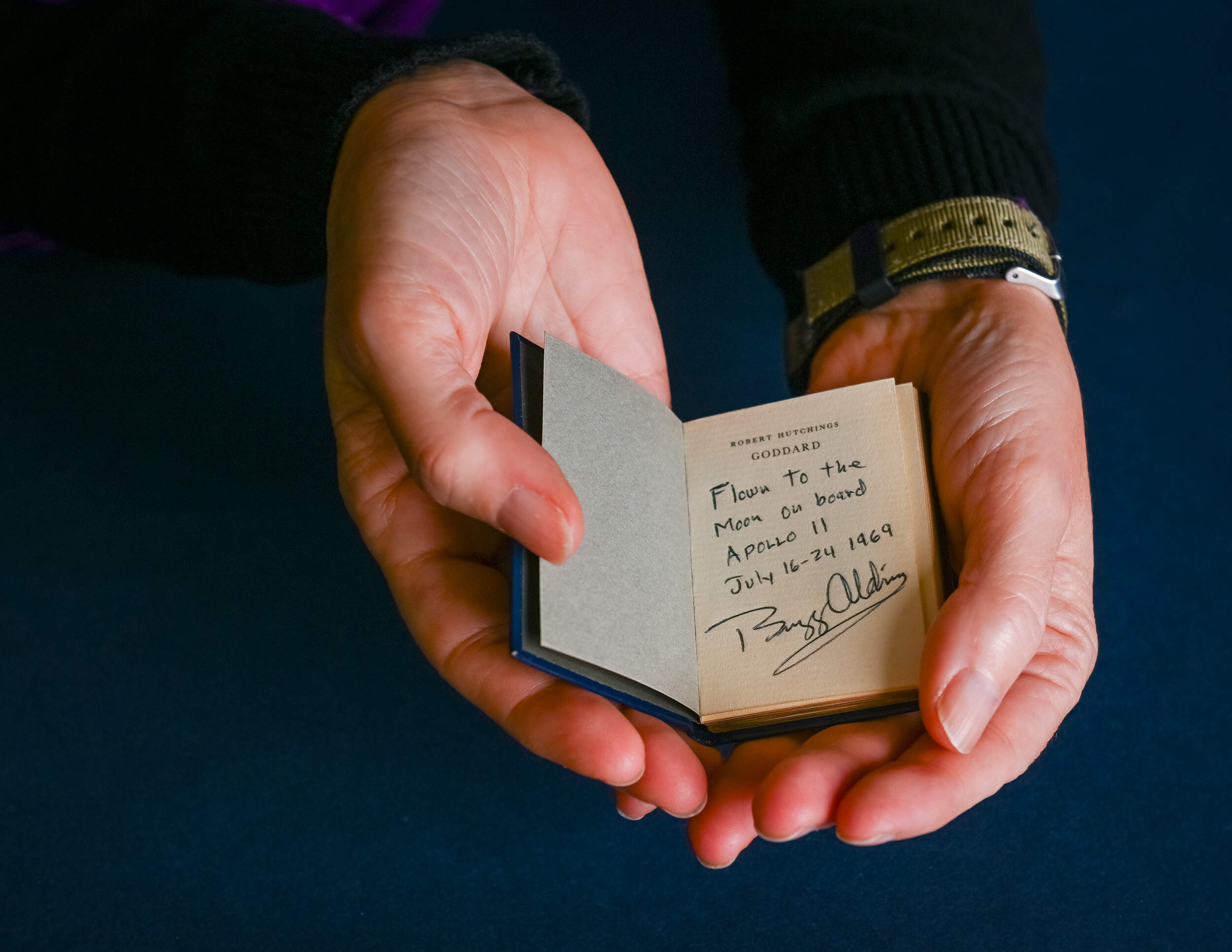
“That’s a really special piece that we have that sort of brings everything full circle, I think,” Stebbins said.
This segment aired on March 17, 2026.