Support WBUR
Commentary
Voter registration in hospitals is the new frontier in health care
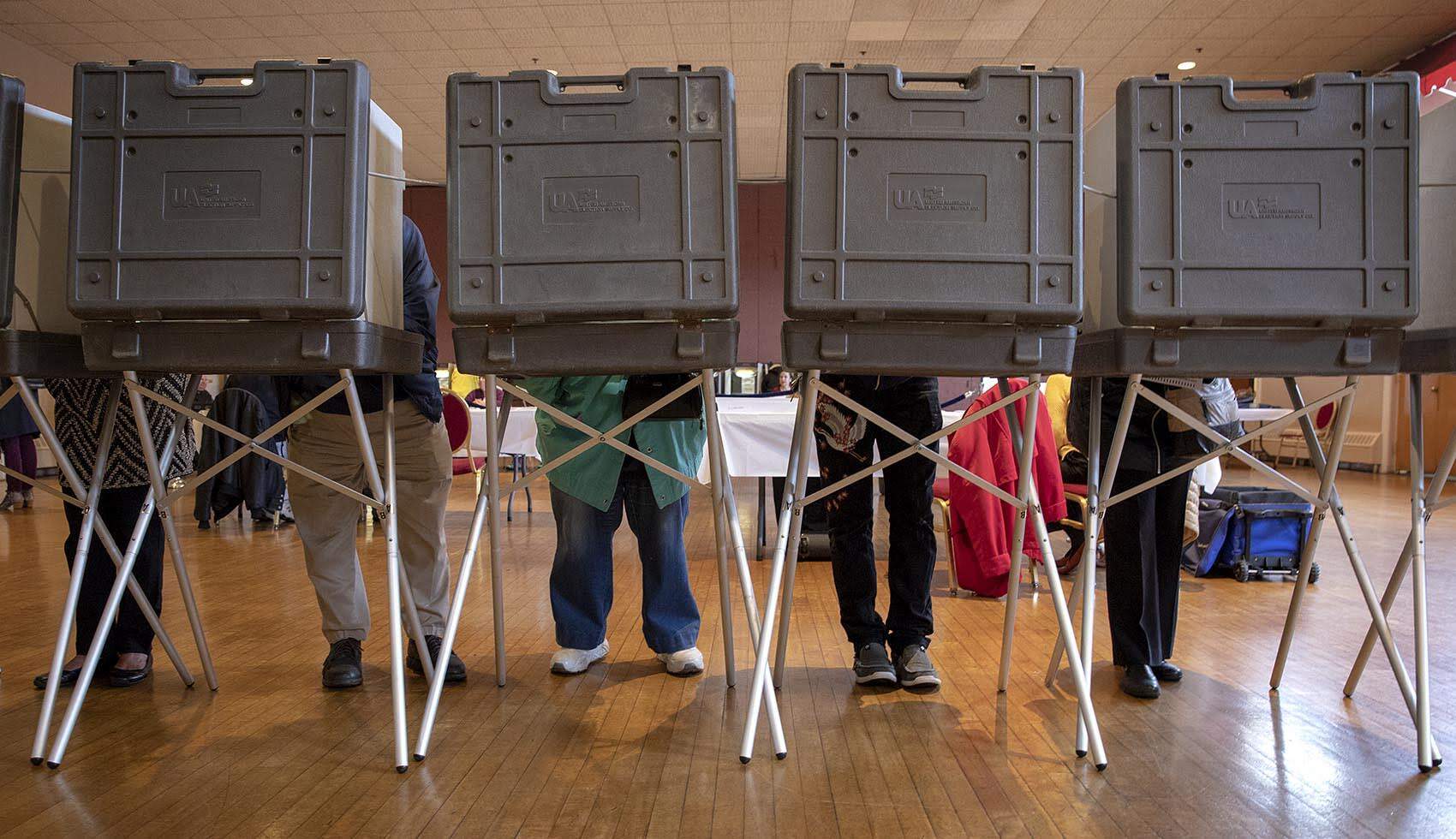
In 2022, the American Medical Association (AMA) made a groundbreaking declaration: Voting is not just a civic duty, but also a social determinant of health. Social determinants of health are the conditions of the environments where people live, work and play — and remarkably, these conditions drive up to 80% of health outcomes.
The AMA’s resolution marked a seismic shift: It acknowledged that the health of a community extends beyond the walls of hospitals and clinics — and that health is profoundly influenced by the ballot box.
The most obvious examples of how voting impacts health are often ballot measures, including the narrow 6,000-vote margin that led to the expansion of Medicaid in Oklahoma. But the indirect examples are even more important, hidden in plain sight on almost every ballot. When more people from different backgrounds all vote in local elections, public investment in health, housing, and education goes up by as much as a third — regardless of whether the candidates or their platforms were explicitly focused on health.
There is also a positive correlation between individual voting and self-reported health outcomes. A research analysis across 44 countries shows that people who participated in voting and volunteer activities tend to describe themselves as healthier than those who did not.

In short, the research shows that our communities are healthier when more voters participate in the democratic process.
The AMA began to reckon with this issue in the midst of the COVID-19 pandemic. During the 2020 election, health care professionals had a unique stake in ensuring people could vote without exposure to the virus, and the AMA called for safe ways to vote in their original resolution. In 2022, as the organization’s physician membership continued to see instance after instance of how policy drove health outcomes, the AMA solidified the resolution with a broader recognition of voting as a social determinant of health.
Given that communities that vote have better health, the next step is to figure out how to help more people vote. Communities of color, young people, Americans with disabilities and rural communities often face the most persistent voting barriers in the United States. These same populations also disproportionately struggle with health issues stemming from the social determinants of health. Meanwhile, 83% of American adults — including these communities — will have a touchpoint with the health care system each year.
The broad reach of that system, combined with the trusted role doctors, nurses and social workers play in our society, make health care an ideal arena to engage would-be voters — and a ripe space for new interventions to encourage voter registration.
Our nonpartisan organization, Vot-ER, has played a leading role in bringing voter engagement into health care, an effort that we call the civic health movement. Inspired by the voter registration systems in departments of motor vehicles nationwide, Vot-ER has introduced civic engagement into the fabric of our health care systems.
The National Voter Registration Act of 1993 empowered organizations like hospitals to conduct nonpartisan voter registration, but it took several decades for this effort to begin to scale nationally. By October 2019 at Massachusetts General Hospital, you would have encountered something unprecedented in any other hospital across the country — a Vot-ER kiosk inviting you to register to vote right there in the ER waiting room, and the foundations of a way to sustainably grow health care-based voter engagement across the country.
Five years later, with the 2024 elections fast approaching, more than 700 hospitals, clinics and medical schools across the country have integrated voter registration tools into their daily operations. Additionally, more than 50,000 clinicians are equipped with resources that enable them to seamlessly incorporate voter registration questions into their conversations with patients.
Now, health professionals have a sustainable way to amplify the voices of their patients beyond the hospital walls.
From Lawrence Memorial Hospital in Kansas to prestigious tertiary institutions like UCSF Hospital, CEOs and hospital leaders are rallying their organizations to integrate questions about voter registration into the patient intake process along with more traditional questions about current symptoms, diet and health history. Since the AMA’s resolution, other associations, including the American College of Physicians and the Association of American Medical Colleges, have also issued policy and guidance in support of the health community taking action to strengthen our democracy.
As a result of these concerted efforts among health care providers and institutions, state governments are taking note. Several, including Massachusetts, New Jersey, Pennsylvnia and Minnesota have designated August as Civic Health Month. Notably, the first governor to proclaim August as Civic Health Month was a Republican, underscoring bipartisan recognition that we can create healthier communities through a healthier democracy.
Health professionals can continue to prescribe inhalers’ for their patients’ asthma, but they know this is just a Band-Aid, a surface repair that cannot remove the pollutants in their patients’ neighborhoods. Now, health professionals have a sustainable way to amplify the voices of their patients beyond the hospital walls. By helping patients register to vote, they empower them to have agency over their own health.
Voter registration in hospitals and clinics is a transformational frontier in health — a commitment to addressing the social determinants of health in their entirety. Because ultimately, when our democracy lifts more voices, our communities also thrive.
Alister Martin, MD, MPP is the CEO of A Healthier Democracy, an emergency physician, and a senior fellow at the Burnes Center for Social Change.
Aliya Bhatia is the executive director of Vot-ER & Civic Health Month.