Support WBUR
Commentary
The first rule of book club is: We do not talk about books
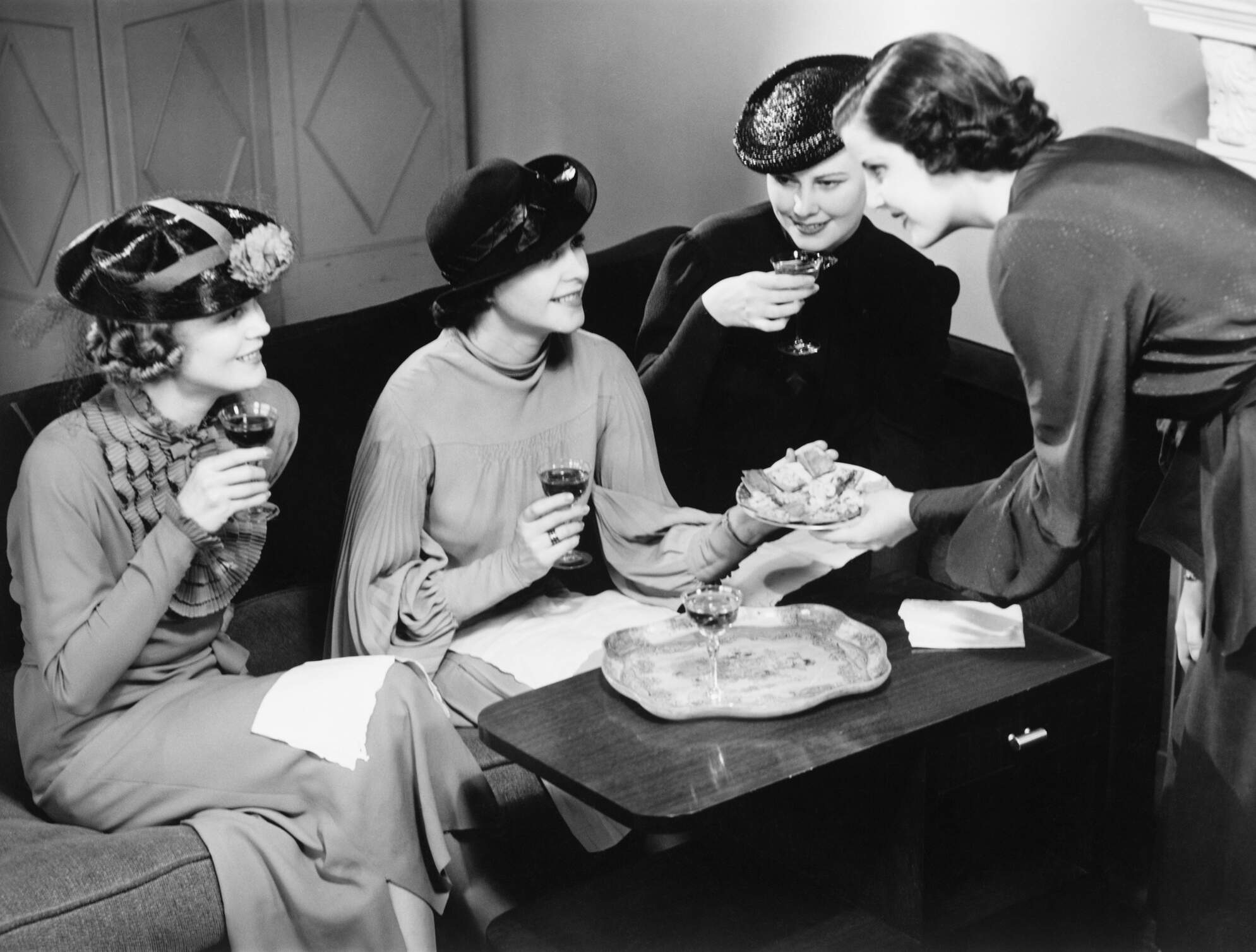
I belong to a book club that barely discusses books. Even though our host dutifully — and thoughtfully — selects a book for each meeting, even though everyone buys or borrows that book, and even though most of us read it (despite a strict judgment-free policy towards those who don’t), we hardly talk about the title at all.
We didn’t purposely form a coterie where the first rule of book club is: We do not talk about books. Good intentions paved our way. Aware that “book club” in suburban mom culture sometimes translates as “wine drinking and gossip,” we sought legitimacy (and sobriety) by meeting in the mornings when our kids were at school. We agreed to take turns hosting, with the host choosing the book and providing refreshments. Our first few meetings involved minimal scholarly discussion, but never a pause in the conversation, and no one complained. That’s when we settled for a “coffee drinking and gossip” vibe.
We must be doing something right because more than a decade later, the same six of us still gather regularly to discuss everything except the chosen book.
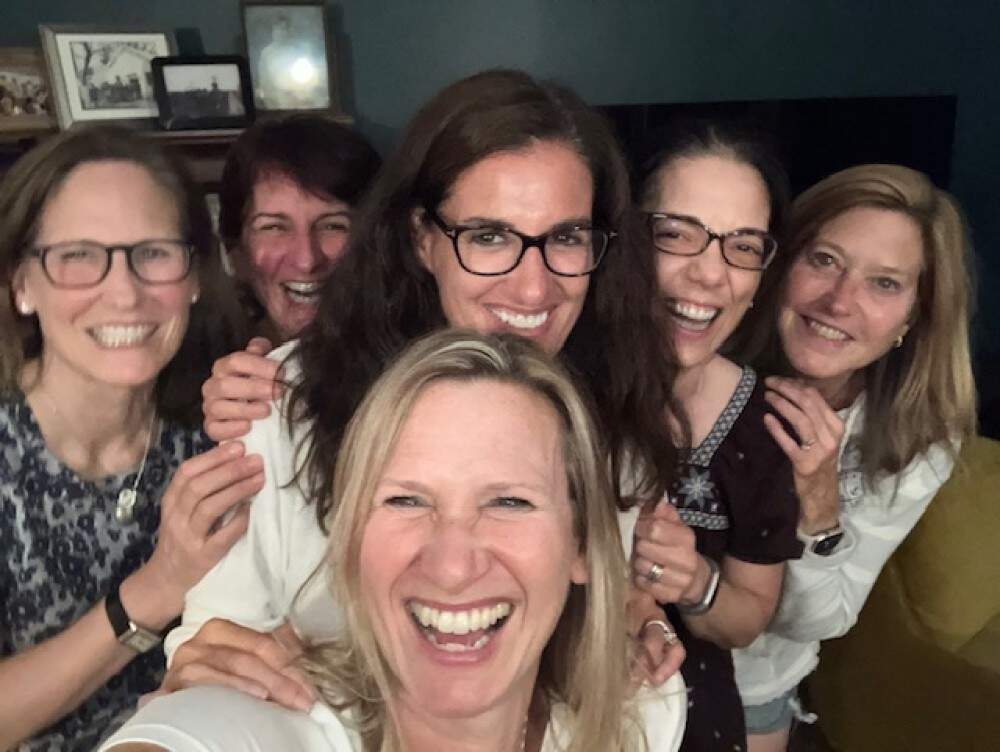
So what do we discuss? Well, we all liked Bruce Holsinger’s “The Gifted School,” but we mostly talked about how many seniors from our local high school got into Harvard, and how many of them are legacies. We spent an embarrassing amount of time venting about the fresh hell that is perimenopause, when ostensibly we had gathered to dissect Kazuo Ishiguro’s “Klara and the Sun.” And instead of marveling over the perfection that is Min Jin Lee’s epic novel “Pachinko,” I learned that if you don’t use an exclamation point at the end of a text to a member of Gen Z, they will think you’re angry.
We forged our friendships gradually, sticking to shallow chatter at first. We complained about school start times, debated whose in-laws are the hardest to host for Thanksgiving and opined on the rising cost of a Netflix subscription. Every exchange, every laugh and good-natured argument built our foundation. We have spent years bonding over the unwinnable game of work-life balance, the countless indignities of aging and how to apply the Alexander Technique to our daily lives (one of us is an acting teacher and she swears it will improve my posture). Thanks to these ladies, I know more than I ever wanted to about the Karen Read murder trial and I can use “rizz” in a sentence.
When COVID-19 arrived, our homes overflowed with husbands and kids back from college and remote school for everyone else; we really needed each other, and we definitely needed something stronger than coffee. As soon as the weather and the Centers for Disease Control allowed, we braved the elements at an outdoor table, holding — but not really discussing — Trevor Noah’s “Born a Crime,” and debated the likelihood we’d catch the ‘Rona by drinking wine out of someone else’s glass.
Over the years, the ties that bind us have morphed from delicate threads to strong connective tissue. We are now in our 50s and 60s; our familiarity with all aspects of the human condition is well established. Our children have suffered injury and illness, setbacks and successes. Our parents have aged; some have died. Our spouses have had accidents and cancer. We have been there for each other through divorce, pet loss, career change and biopsies.
Today we are basically a therapeutic support group masquerading a book club. How did this happen?
Every one of us joined this group because we like to read. The dozens of titles we’ve selected include Booker Prize short-listers, bestsellers and several blessed by Reese and Oprah – it’s not as if we don’t pick good books. And I’m sure we’d find discussing these books extremely interesting. We just find each other more interesting.
Nevertheless, we persist with our books. The discipline of reading them gives us a shared experience and a reason to gather; they give us an excuse to temporarily ignore work deadlines and long to-do lists. Somehow leaving the house with a book tucked under my arm feels more socially acceptable than leaving just to hang out with my friends. Book club is both my cover and my lifeline.
Our last book was “Vanderbilt” by Anderson Cooper and Katherine Howe, the story of Cooper’s wealthy and dysfunctional ancestors. We all read it and we all liked it. But we quickly pivoted to talk about more immediate and personal matters, like moving into a new apartment after a horrid divorce and scheduling a spouse’s cancer surgery. The Second Rule of Book Club is: No one suffers silently, or alone. We spill the tea as we drink the coffee.
So we’re more of an après-book club, and I’m grateful for that. Community and fellowship are simply more important to us than literary analysis, especially as we settle into our nearly empty nests and forge ahead. I look forward to our next book, of course, but also to our next chapter.