Support WBUR
Commentary
The choices we made for our family

When people meet my family, they see four of us: my husband, me and our two living children. But when I think of my family, we are six. I have long struggled with this inconsistency and it is one of the primary reasons I share my journey so openly and widely. I need the world to see my family as I do, for all of my children to be known and remembered.
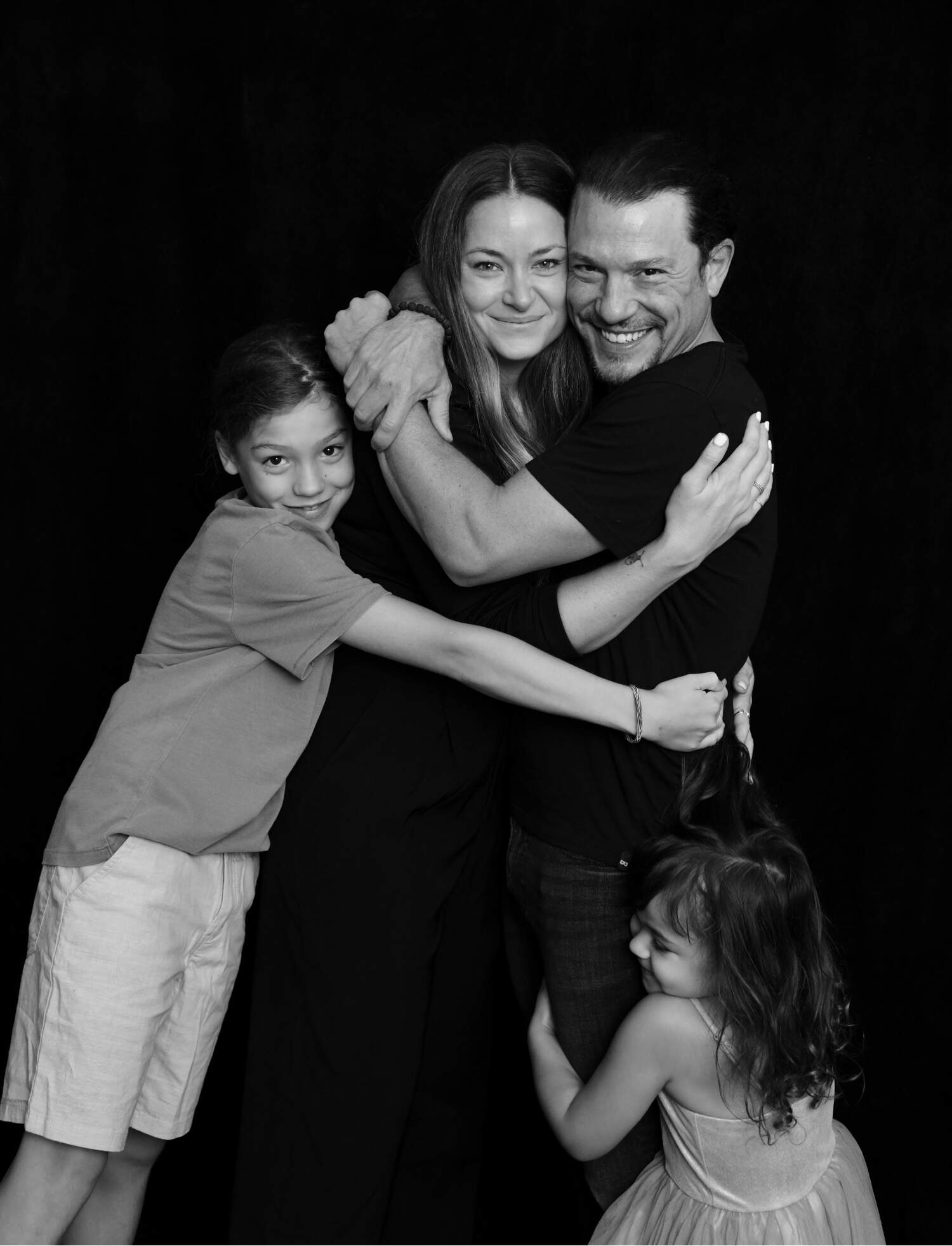
Thanks to my family’s advocacy work — as well as my husband’s more than 2,000 performances as Alexander Hamilton in the Chicago and New York productions of “Hamilton” — more people are aware of our daughter Adelaide, who passed away a few days shy of her fourth birthday. Over her life, Adelaide was treated for epilepsy, hypotonia, mast cell activation syndrome, dysautonomia and a variety of other symptoms at medical centers all over the country.
Her team of doctors ultimately determined that her underlying condition, which wasn’t identified until years after her death, was neurodegenerative. Sitting around a large table in a generic hospital conference room in May 2019, her doctors informed us that Adelaide’s brain was deteriorating and there was nothing they could do to stop, slow or reverse it.
I was aware that my daughter was dying, but remained willfully naïve about how long we had left with her. Then the medical interventions increased, her screams of pain became more frequent, and her ability and desire to interact with us plummeted. I could no longer ignore her suffering just because I didn’t want to imagine life without her.
With hospice services in our home, and her medical team on speed dial, we made the gut-wrenching decision to stop medical interventions and allow her to pass away in peace. We chose to let her die because as her parents, and in consultation with her medical team, we determined it was the right thing to do.
We have since learned that the likely cause of Adelaide’s medical complexities originated from her DENND5A gene, which is responsible for the creation of stem cells as the brain is forming in utero. All we ever could have done was treat her symptoms and love her for as long as her body allowed.
This was not the first time I had to make this kind of decision for one of my children. But it was the first time my decision was met with unmitigated compassion.
Five years earlier, I was lying on a table at the maternal-fetal specialist’s office as the ultrasound technician swiped her wand across my belly. Our 20-week ultrasound the day before revealed some concerns so I was having my second ultrasound in two days. I tried to count the pocked ceiling tiles above me, but my vision kept getting blurred by tears. Miguel and I already had one boy, and we were expecting another. Plans were well underway for his nursery, though we were still debating the baby’s name. In the meantime, my father had started referring to him as Elvis. With every tile I counted, our reality hardened.
Our baby was not ok.
Elvis was not ok.
We didn’t leave the hospital that day with a roll of fuzzy black and white ultrasound photos. Instead, we left with a fatal diagnosis of severe thanatophoric dysplasia and two phone numbers. Elvis’s chest cavity was too small, his heart too big and his lungs underdeveloped: He was going to suffocate and die at birth. The phone numbers were for two doctors who could perform an abortion if we chose to terminate.

Having to make the decision was torturous, but it was not a difficult decision to make. Especially when the word “thanatophoric” is Greek for “death bearing.” We thought of our 2-year-old son Jackson and how hard it would be for him to know that when Mommy went to the hospital, she would not come back with his brother. We thought of my physical health: Delivering a baby always poses a risk to the mother’s health; an abortion was safer. We considered my mental health, I was already susceptible to depression and anxiety. It also didn’t help that I worked in a client-facing sales position where I would have to field questions and comments about my growing belly from well-meaning strangers all day long. And, of course, we thought of Elvis. By terminating the pregnancy, we could prevent him from experiencing a painful death by suffocation.
One week later, I felt Elvis move inside me for the last time. Labor was induced, I was put to sleep, and when I awoke, I was empty.
I was not prepared for the grief I felt for a baby I never got to meet, snuggle or smell. I was not prepared for my milk to come in while I was taking a shower. And I was not prepared for the judgment I experienced when we told people what we had done to protect our son. People who I thought cared about our family, individuals without medical degrees or uteruses, people who didn’t hear what the doctors explained to us, told me I had murdered my baby.
Still, amidst the scorn, I remained grateful that I lived in New Jersey, a state where abortion after 20 weeks was legal. I was thankful I hadn’t needed to shoulder the emotional and financial expense of taking additional time off work to travel to another state for the procedure. I was lucky to be able to recover and grieve in my own home, surrounded by family.
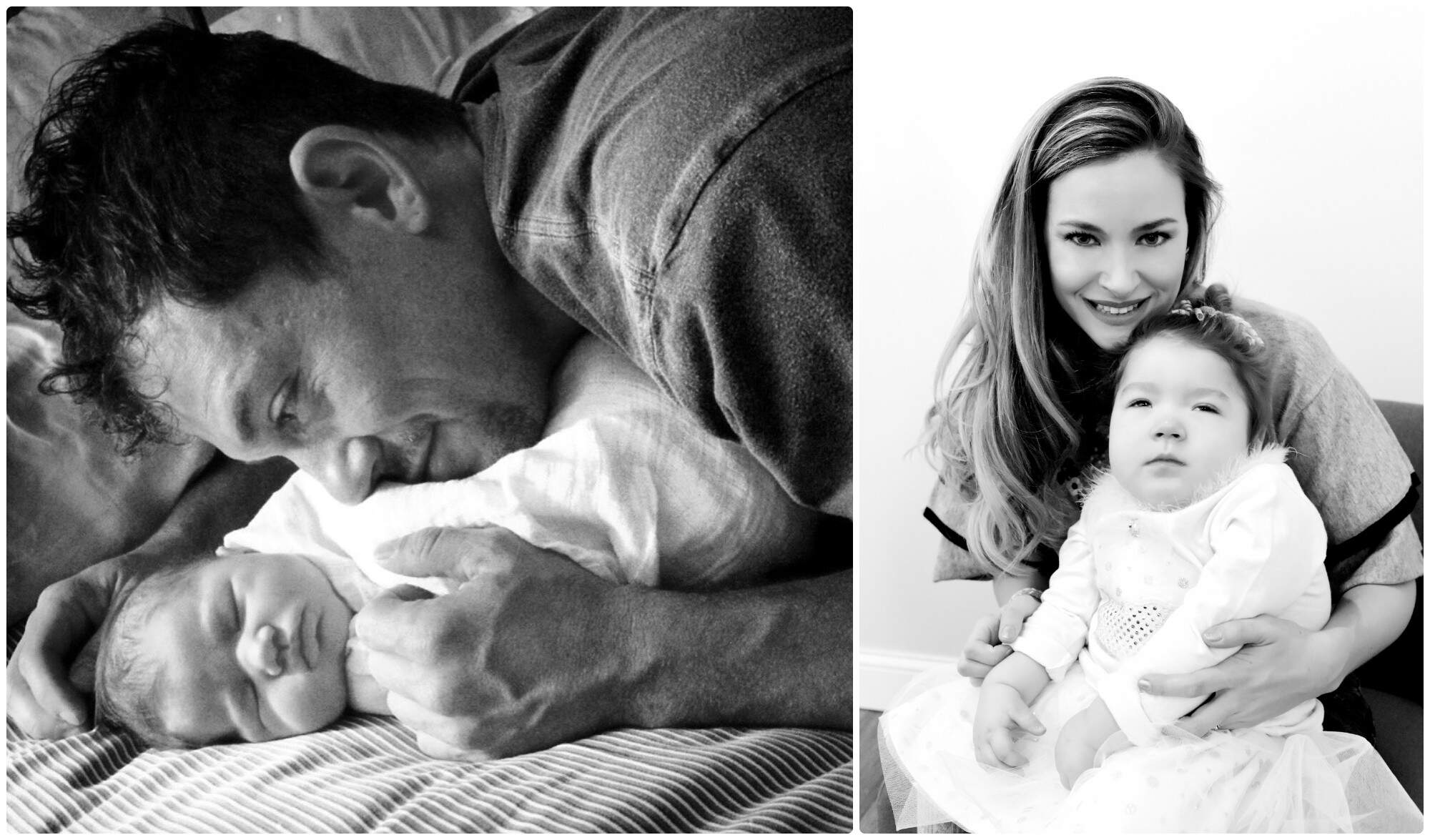
I share my story and plead with you to understand, in part, so that Elvis and Adelaide can be known and remembered without hesitation or accusations. I made the same decision for both children. The only difference is that one of those children was still living inside my uterus when I made the decision and the other was living on the outside. Yet one decision is completely legal in all 50 states and the other isn't.
Not a day goes by when I am not reminded of the individuals being forced to navigate similar decisions, but now in an even more hostile post-Roe environment. These hopeful parents desperately want their babies. They love them and will forever grieve them. The claim that women’s health care, and abortion in particular, has become a political talking point undermines the impact families are already feeling at the hands of the Supreme Court’s Dobbs decision and the fears of additional limitations that could be advanced by a president who is “proudly the person responsible” for that decision.
As parents we fight for the best interest of our children every day. Some days that looks like teaching them how to share, others days it might be guiding them through the college application process. For still others, it means making life-and-death decisions for their beloved child. And regardless of their age, gestational or otherwise, that must include the most difficult decision of all — when it’s time to let them go.