Support WBUR
Commentary
What happens when a woman takes power?
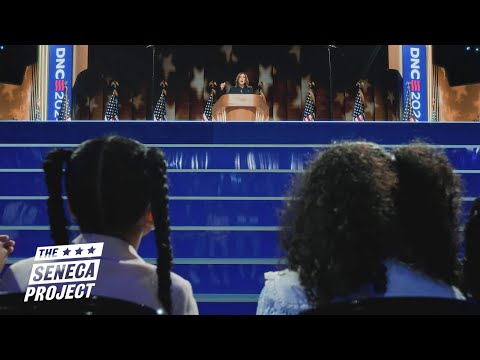
“What happens when a woman takes power?” ask the high school girls sitting on the stairs in a recent TikTok video. They look like my daughters and their friends did years ago. In fact, they look pretty similar to me and my pals in the halls of Pioneer High in the 1970s. As they sing, they snap and clap in a cadence familiar to any schoolgirl. Unlike the young women of my generation, they do not tap or shuffle their feet. They stomp them.
The musical question they pose is also unchanged since I was their age. Though it’s been over a century since women won the vote in this country, we still don’t know the answer.
Of the 60 women who have been heads of state since Sri Lankan Sirimavo Bandaranaike took office in 1960, none have been American. Indeed, as the Washington Post reports, with only 28% of the Congress being female, we trail much of the world when it comes to women in leadership. There are 70 countries ahead of us in the Women’s Power Index, which ranks countries on their gender parity in political participation.
But even in countries where women have served as head of state, most were not directly elected. Many, including Benazir Bhutto, Indira Gandhi, Corazon Aquino and Violeta Chamorro initially ascended into leadership thanks to family connections, taking office by succeeding assassinated fathers or deceased husbands. In parliamentary systems such as Canada, the United Kingdom and Israel, women including Liz Truss, Theresa May, Kim Campbell, achieved power by virtue of being the head of their party, not as individual victors in a general election.
Then there’s this: the names we know best — Margaret Thatcher, Golda Meir (who David Ben-Gurion described as “the only man in the cabinet”), the young Angela Merkel and now Giorgia Meloni — have been generally conservative at best, with some being flat-out reactionary.
The implication is inescapable: To win an election, you must be what historian Katie Pickles calls an “Honorary Man.” You must avoid being perceived as too compassionate, as someone who nurtures rather than disciplines, who empathizes rather than corrects.
That’s because until recently, the stereotype of femininity has been at odds with the qualities that people claim to seek in a leader. Of course this relies on gross and thankfully, increasingly obsolete gender definitions. But the double-standard for women in politics is alive and well. Men have drive, women are ambitious; men are assertive, women are shrill; men are competent, women are emasculating.
She acknowledges that she is a woman and a person of color but offers neither as a reason to vote for her. Still, she finds ways to convey her life experience as both -- and does it in ways that make her relatable.
Might Hillary Clinton have won in 2016 had she not referred to Trump supporters as “deplorables” or been, in her words, “kneecapped” by FBI Director James Comey? Maybe, especially since she got nearly 3 million more votes than Trump. But the lesson Kamala Harris’ campaign seems to have learned from Clinton’s is that running as a woman — as someone who would finally shatter the glass ceiling — could ensure defeat, especially against an opponent as crudely and boastfully misogynistic as Donald Trump.
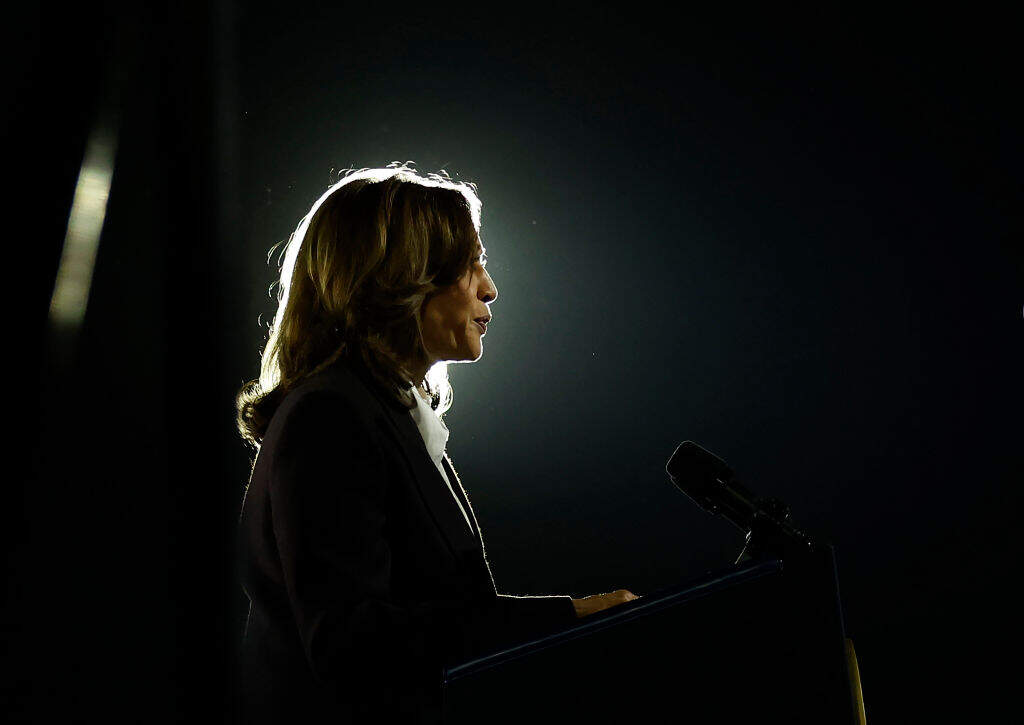
So, Kamala Harris resists presenting herself as a symbol. She acknowledges that she is a woman and a person of color but offers neither as a reason to vote for her. Still, she finds ways to convey her life experience as both — and does it in ways that make her relatable.
Yes, she’s tough. In her Fox interview with Brett Beir, she refused to be intimidated and called him on his interruptions and use of misleading video clips. In her debate with Trump, she showed the competence and integrity that he so glaringly lacks.
But leadership can and should be about more than toughness, and it’s in the videos where Harris talks about the most traditionally feminine pursuit — cooking — that you can see the subversively liberating potential of her candidacy.
Backstage, just after a rally in Savannah, she is chatting with a supporter who is also a chef. “I have a friend who had a Christmas Party Christmas Eve every year, and she asked me to make the greens for her party every year,” Harris confides. “And I am not lying to you, that I would make so many greens, that I’d need to wash them in the bathtub.” When asked for her recipe, she leans in conspiratorially and reveals her ingredients and process with the mix of pride and intimacy so familiar to anyone who loves cooking. She is not rejecting the domesticity associated with femininity. She is embracing it.
Is a man capable of being that observant and empathetic? Of course. Is it something we’ve demanded from our exclusively male presidents? Not until now. But we should.
In the slim collection of “Cooking with Kamala” videos produced during her 2020 run for the Democratic nomination, you can see other such moments. After preparing bacon-fried apples with Diedre, the leader of her 2020 Iowa campaign, she sits down to chat. At around the 4:08 mark in the video, Kamala tells the story of her encounter with an African-American resident of a senior center. She describes this woman with the kind of detail and admiration that only someone genuinely interested in others can muster, noting her “immaculately coiffed wig, perfect make-up, elegantly dressed. And she wasn’t expecting anyone that night.” She then goes on to offer a poignant insight into what this skeptical old lady was thinking and feeling.
Is a man capable of being that observant and empathetic? Of course. Is it something we’ve demanded from our exclusively male presidents? Not until now. But we should.
Diedre then asks Kamala what she told herself to keep going through the naysaying and discrimination she’s faced in her career. Without missing a beat, Kamala pivots from quiet storyteller to joyful warrior. “I eat ‘no’ for breakfast,” she replies.
Donald Trump has made it clear: If and when he comes back into power, his regime will be all about retribution. Kamala Harris offers a more affirmative platform. Though she wisely chooses not to highlight this, her victory will represent a massive repudiation of every sexual stereotype that has dogged audacious women for most of modern history. This woman who wears pant suits and pearls, sneakers and stilettos, is demonstrating that even traditional “femininity” is a powerful credential for leadership. Her understanding of what it means to be a woman is additive, not reductive.
I grew up looking for summer jobs in the “Help Wanted — Female” section of the newspaper’s classified ads, recognizing if not resigned to the fact that my career aspirations should be limited to waiting tables, taking deposits and answering phones. It would not even have occurred to me as a high school freshman or sophomore to wonder, as those these singing school students did, “What happens when a woman takes power?” Will she “rise above” and “lead with love”? Or will she lead like other standard issue Democrats, tacking towards the center and aiming for incremental gains?
Probably the latter. But what matters in this election aren’t probabilities. What matters for high school girls past and future, indeed for everyone in this soul-sick, eroding, but still capable country, is possibilities.
Follow Cognoscenti on Facebook and Instagram. And sign up for our weekly newsletter.