Support WBUR
Commentary
The weight of decisions my patients make behind exam room doors
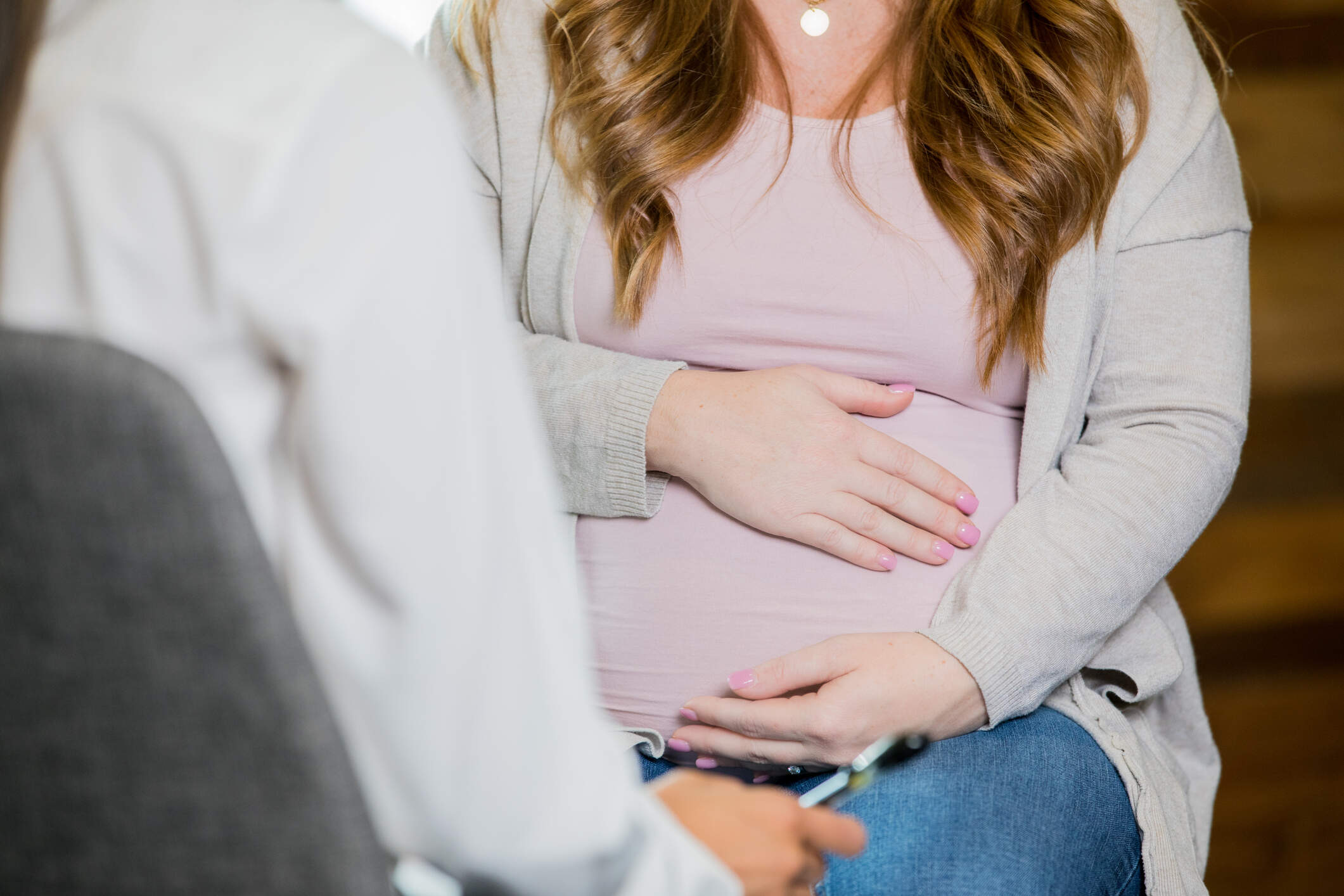
I always tell medical residents to sit. Preferably on a chair, or, with the patient’s permission, on the bed. As a fellow of maternal-fetal medicine, a specialty dealing with high-risk pregnancies, I myself have been known to perch awkwardly on trash cans or drag in stools from the nursing station. It doesn’t matter, I tell them: you must sit.
I don’t do this because sitting improves patient satisfaction or the perception of physician compassion and communication skills, though data shows both to be true. I tell residents to sit because during my training, a maternal-fetal medicine doctor told me to do the same. He was a gray-haired mentor of the old school, a towering figure who trained in a time when cigarettes were sold in maternity hospitals and doctors prescribed alcohol for preterm contractions. Nothing seemed to shake him. He would disappear for hours on end then emerge at the peak of some crisis, which he would handle swiftly and gracefully before taking us aside to list the many errors we had made during diagnosis and workup. Like my co-residents, I loved and feared him in equal measure.
One morning, as we rounded on the unit, this attending sat gently on a patient’s bed and asked her how she was feeling. She had been admitted after her bag of water broke at 18 weeks, the amniotic fluid pooling around her feet as she drove herself to the hospital. The condition, known as pre-viable preterm prelabor rupture of membranes (PPROM) carries a high rate of neonatal mortality; if she continued this pregnancy, there was a high likelihood her baby would be born severely premature or die shortly after birth.
Most pregnant patients will never meet a maternal-fetal medicine physician, but for those that do, the conversations can be fraught.
She had spent the night talking and praying with her family about what they should do next. Although this was a highly desired pregnancy, up to a third of mothers with PPROM who choose to stay pregnant will develop a life-threatening uterine infection. With a heavy heart, she had decided for the sake of her living children to proceed with a termination. And as my attending walked her through the procedure we would do that morning, I noticed tears rolling down his cheeks. As we left the room I asked him as carefully as I could: are we really supposed to let patients see us cry? He turned to me, still dabbing his eyes, and offered a rare smile. “The kind of person who doesn’t cry doing what we do every day is the not the kind of person I want to have as a doctor.”
It was for both the fantastical and factual intricacies of pregnancy that I chose to pursue training in maternal-fetal medicine, a sub-specialty responsible for handling everything from gestational diabetes to intrauterine fetal surgery. Pregnancy is an incredibly moving, powerful and ancient experience. It is also fascinating, involving almost heroic physiological transformations of the human body that defy understanding: the maternal immune system completely reprograms itself to prevent rejection of the placenta; the heart grows in size by a third and rotates inside the chest; the blood becomes less acidic and increases in volume by half.
Pregnancy is also an inherently dangerous condition, leading to the deaths of 800 women every day worldwide from preventable causes. In the United States, for every 100,000 live births, 50 Black women will die (for white women, the number is less than half of that). Pregnant and postpartum women are at risk for severe blood loss, heart failure, infections, and peripartum mood disorders leading to suicide. Some patients have pre-existing conditions that make pregnancy more dangerous, such as congenital heart defects and high blood pressure, but even the most healthy patients are at risk of unpredictable and life-threatening conditions.
Most pregnant patients will never meet a maternal-fetal medicine physician, but for those that do, the conversations can be fraught. Much of our profession is a Sisyphean battle against preterm birth defined by one essential question: how can we keep this patient pregnant for long enough to deliver a healthy child, when every day of pregnancy increases her risk for a stroke or a life-threatening infection or a stillbirth or an eclamptic seizure?
This is difficult work. It requires moral clarity and unflinching empathy, qualities that transcend politics and rhetoric.
Other times, we detect potentially catastrophic developmental problems in the fetus, usually through genetic testing and ultrasound in the mid-second trimester. Around 5% of births are affected by a birth defect, everything from clubfoot and cleft palate to devastating brain anomalies. Delivering this news to patients is one of the most challenging parts of our profession, but guiding them through the ensuing days of counseling and decision-making is among the most rewarding. Our treatment recommendations must balance the delicate calculus between keeping a patient pregnant long enough to deliver a healthy living child, while making sure she actually makes it to her delivery.
In the most dire cases, maternal-fetal medicine specialists and their colleagues can offer termination procedures to help patients to safely end a pregnancy early, if necessary. While one in four women will have an abortion by age 45, very few happen beyond the first trimester: less than 10% of all abortions in the United States occur after 13 weeks and less than 1% occur after 20 weeks. In the world of maternal-fetal medicine, however, access to abortion procedures is as important and routine in caring for my patients as antibiotics and epidurals. From my position, perched at the end of a patient’s bed, sharing in the emotional ordeal of a heartbreaking pregnancy outcome, I know my duty is to hold space for both the weight of their grief and the dignity of their choices. And sometimes, in these heartbreaking conversations, it’s impossible not to cry.
By the time I graduate from my fellowship, I will have spent nearly a third of my life in medical training. I will have had thousands of challenging conversations and counseled countless patients on the most intimate details of their lives. I will have received more Christmas cards, thank you notes and invitations to funerals than I can respond to. This is difficult work. It requires moral clarity and unflinching empathy, qualities that transcend politics and rhetoric.
When I knock on the next door, when I sit on the end of a bed to deliver devastating news to another unwitting couple, I can only hope that I am allowed to continue this essential duty: to heal, to guide and to honor the choices my patients make — free from the interference of those who cannot possibly understand the weight of the decisions made behind closed exam room doors.
Follow Cognoscenti on Facebook and Instagram. And sign up for our weekly newsletter.